| Author |
 Replies: 8 / Views: 2,549 Replies: 8 / Views: 2,549 |
|
|
Valued Member
United States
90 Posts |
Looking for info on the gloria exercitvs with one standard, what is the meaning behind the one standard? I noticed some with two standards. 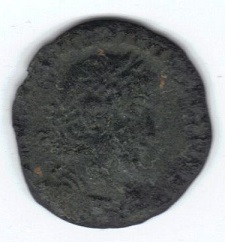 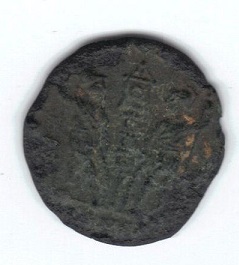 |
|
|
|
Pillar of the Community
United Kingdom
4208 Posts |
It doesn't seem to have a meaning. The ones with two standards are usually less ornate - perhaps theres a meaning to it lost to time? You often find the single standard issues with labelled banners.
|
|
Pillar of the Community
United States
5010 Posts |
|
|
Valued Member
 United States
90 Posts |
I thought it might have to do something with when Rome was divided into two, east and west
|
|
New Member
Italy
25 Posts |
single is when both the force stand to against opposition, is a simple and armature type. if not know this extra exchange then please read more before so doing identify on others.
|
|
Pillar of the Community
United States
549 Posts |
The two standard variety is earlier and larger; the one-standard is later and smaller. The switch happened, according to RIC, about 335. It is certainly sometime after 333 when Constans became Caesar, because he can be found with two standards, but rarely. I do not have a scholarly reference to hand right now that answers the question, but I think it marked a change in value. Harl (Coinage in the Roman Economy, 300 BC to AD 700) says "Sometime between 330 and 335 when the nummus fell to an AE4 module coin, the state and public began reckoning nummi at 1000 to the solidus." He says this while documenting the continual increase of the number of nummi per solidus until the FEL TEMP REPARATIO reform of 348. He does not answer our question, but it seems he thinks the weight of the coin mattered in reckoning its value, and then I deduce the smaller 335-337 GLORIA EXERCITVS would be worth less. Would the mint be honest enough to mark the lighter coins differently--with one standard? Here is an example of Constans with 2 standards, followed by one with one standard. The original photos are to the same scale and show the former is substantially larger (18 mm vs 16 mm), but this site enlarges my smaller picture to the same size as the larger so you can't see the difference easily. 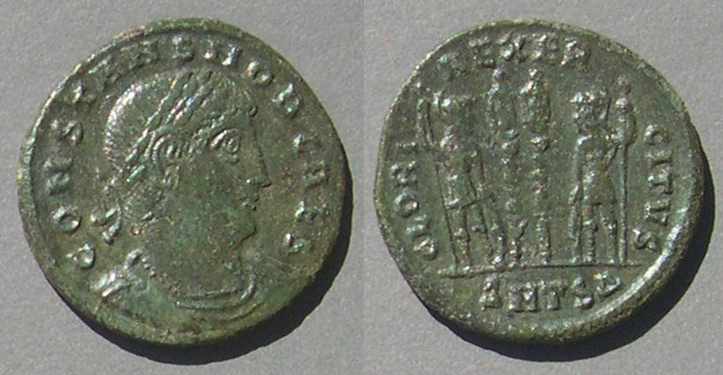 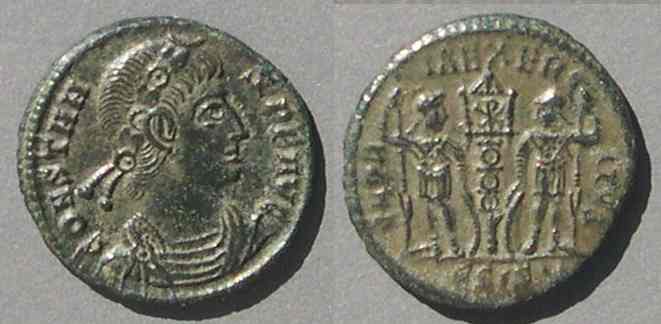 Edited by augustus1
12/28/2013 10:24 pm
|
|
Valued Member
United States
90 Posts |
Thanks Augustus 1. From my research, the star that is in the box on top of the standard represents Jesus Christ. Only used by Christian Emperors. My coin is roughly and slightly smaller than 15mm. It measures 14.8 mm. Thanks for the info.
The one on bottom is called the Christian Standard if my research is correct.
Edited by phillips5890
12/29/2013 1:02 pm
|
|
Pillar of the Community
 United States
993 Posts |
When the two standard GE was being issued, there was a ratio of 132 coins per pound. In A.D. 335, the number of nummus to a pound was raised to 192. The coins needed to be smaller, so there was only room for one standard.
|
|
Pillar of the Community
United Kingdom
4208 Posts |
I have had tiny barbarous coins which have crushed the 2 standards on...probably not one id keep though. Those guys did what they liked.
The 'star' is a Chi-Rho, the greek letters superimposed, which is an ancient way of shortening Jesus' name. they crop up all over the place from this point onwards.
|
| |
Replies: 8 / Views: 2,549 |
|







 Posted 12/27/2013 1:00 pm





