Well there is a problem with these coins when they are still in the Cheerios packaging.
When packaged, you can't see the reverse. But to know if you have the rare variety, with the "1999" reverse, you or a slabber would have to open the packaging.
Obviously most of the 5,500 Cheerios packages were opened long before anyone knew the dollar coins inside could be a rare variety. Loose coins can still be identified and slabbed, but those still in original wrappers are a leg up, expected to be the rare ones and obviously never circulated.
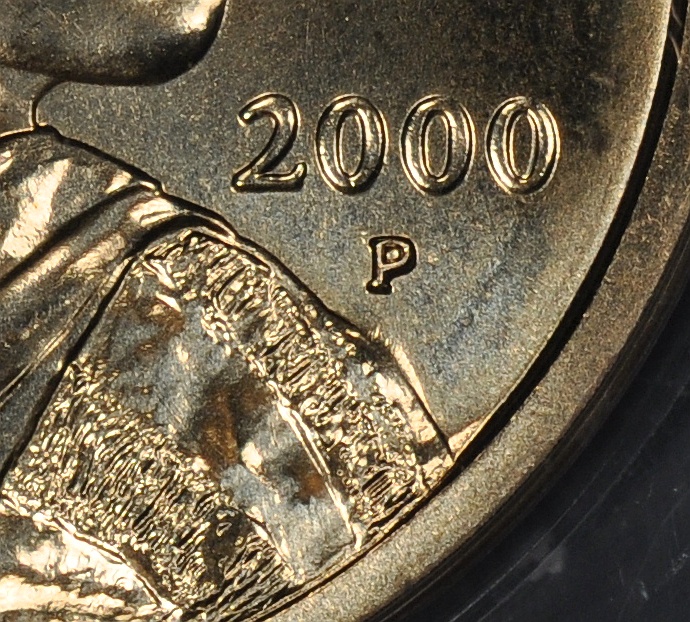
PCGS and NGC have both found "normal" dollars in Cheerios packaging, and consider them as having no premium.
The "no premium" part is the dilemma. Do we as collectors collect coins, or do we collect the packaging? A scarce variety was offered only in Cheerios packaging, but a rare few of those packages contain common coins!
So in an odd way, the common coin in a rare package becomes a scarce item - but the slabbers, probably correctly, attach no value to it and will not slab it as coming from a Cheerios promotion. That's probably a good thing because, if nothing else, it does not reward a crook who only has to duplicate the packaging to market a common coin as a rarity.
-Duncan
UPDATE BUT FROM AN EARLIER SOURCE: PCGS stated in 2008 that only the coins with the 1999 reverse would get the Cheerios designation when slabbed. I see that by 2008 NGC had slabbed at least one "normal" 2000 dollar as coming from a Cheerios cellophane package.
Edited by Duncan_Doenitz
02/02/2014 12:00 am












 Posted 02/01/2014 9:56 pm


