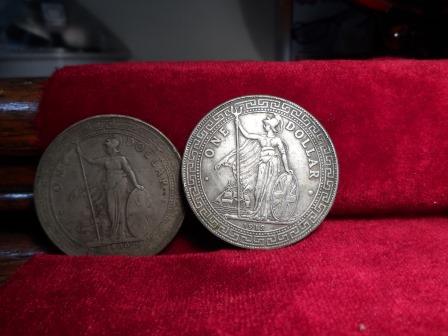
The first ones are indeed British
Trade dollars and, if they all came from the same album, they are most likely as fake as the rest of the coins in the album. Guilt by association. These "look better" than some of the others, but I wouldn't get my hopes up. Everything from that album is going to have to be assumed to be fake unless there's good evidence otherwise. British
Trade dollars are extremely commonly faked, and I can see clear signs on these pieces. For example, the way the edge denticles don;t actually seem to touch the edge but disappear - as if they are a dotted or beaded border, rather than the denticles they are supposed to be.
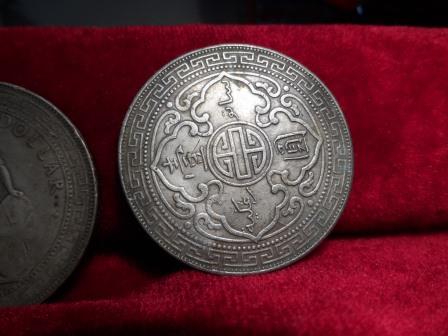
The second set of pics is a replica of an "Old Man Dollar" from Taiwan. The originals date from the late 1800s and, as
this example from mcsearch indicates, they not only look cruder than this but genuine coins are almost always chopmarked to death. Do a forum search for "Taiwan old man dollar" and you'll find a bunch more replicas just this one.
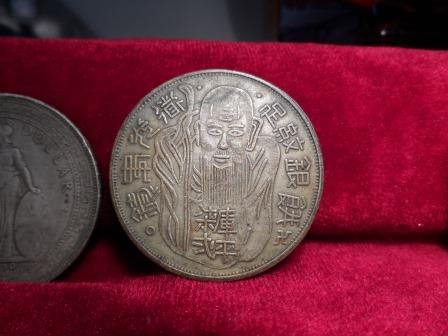
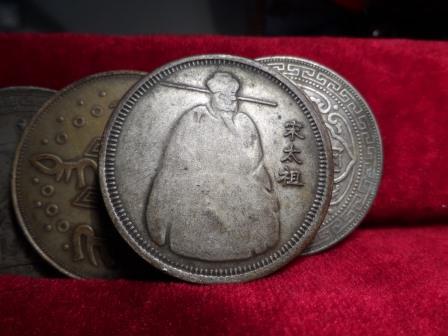
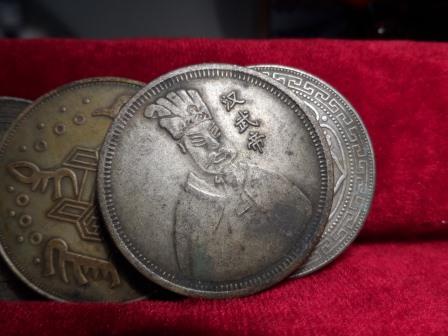
The third pair of pictures are of "fantasy dollars". These were never struck as genuine coins, but were privately made to commemorate gods and heroes from Chinese mythology, for sale to tourists. "Four famous beauties", "Eight Immortals", "Ten Qing emperors", that sort of thing. Again, do a forum search for "Chinese fantasy dollar hero" and you'll find more than enough similar coins in various threads.
This guy has a whole pageful of the things, from different sets.
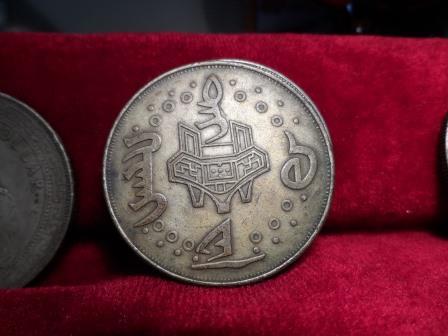
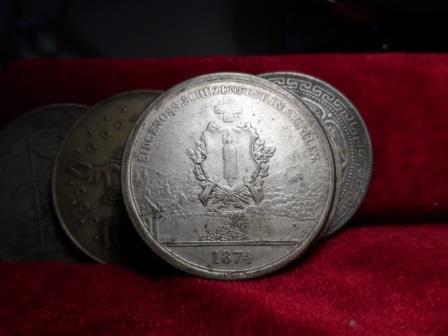
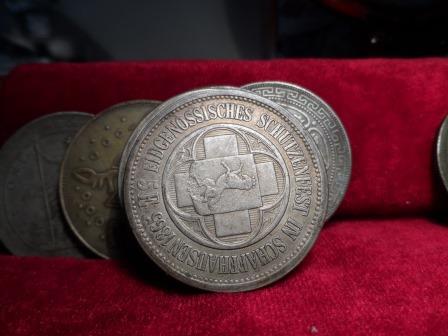
The final pair of pictures are, as I mentioned in one of your other recent threads, Swiss shooting thalers (or rather, replicas thereof).
Here's the 1874 coin on NGC, and
here's the 1865 one. The 1874 is a crude fake; the 1865 is better, but still too iffy-looking to trust; the denticles again, as well as the way the bottom of the shield appears to be dissolving.
Don't say "infinitely" when you mean "very"; otherwise, you'll have no word left when you want to talk about something really infinite. - C. S. Lewis











 Posted 02/15/2014 04:52 am


