| Author |
 Replies: 16 / Views: 2,550 Replies: 16 / Views: 2,550 |
|
Valued Member
Canada
210 Posts |
|
|
|
|
Pillar of the Community
Canada
4912 Posts |
Acid bath.
Feel free to call me Will.
|
|
Valued Member
 Canada
210 Posts |
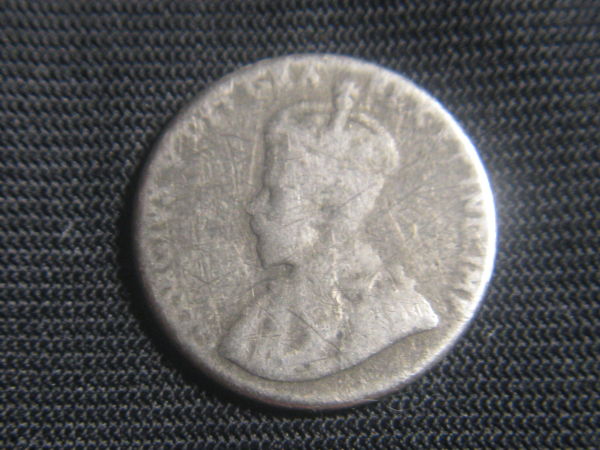
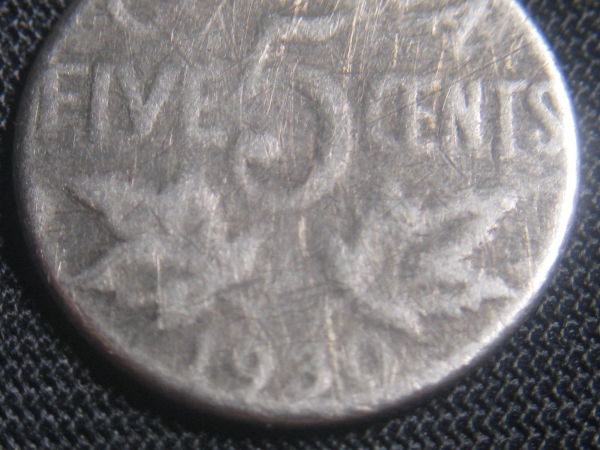
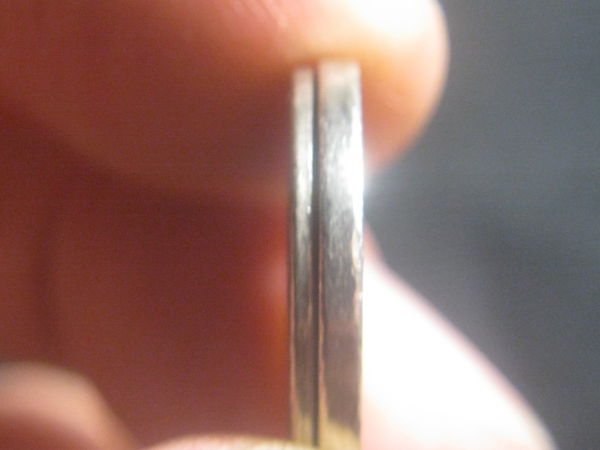
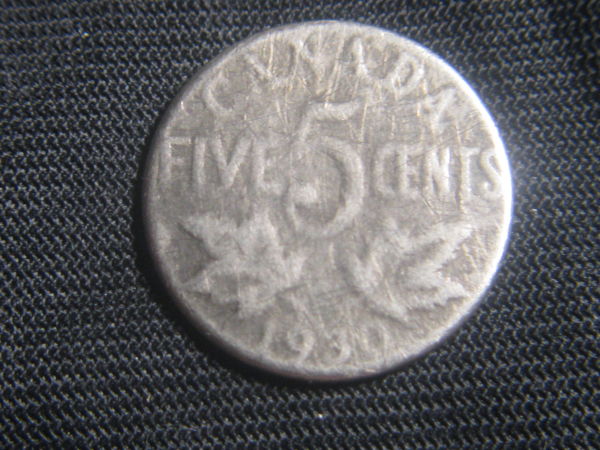
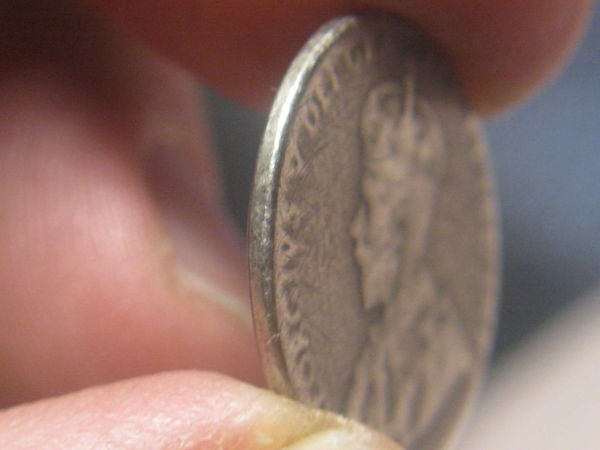
are you 100% sure of that? What sways me toward thin planchet weak strike is that, I would think if, this coin took an acic bath, would that make the planchet less than half the width, and still see most of the high devices? Also, what about the "S" in cents overlapping the border? I would like a second opinion, Thanks.
Edited by flinflon john
03/14/2014 12:46 am
|
|
Pillar of the Community
Canada
2632 Posts |
Is it magnetic? What does it weigh?
|
|
Valued Member
Canada
497 Posts |
If this were a weak strike it would still have a strong rim from the rimming machine, I think someone put a lot of time and effort into sanding,filing,grinding this down, maybe for a pocket piece.
|
|
Pillar of the Community
 Canada
9903 Posts |
Looks like acid attack.
"Dipping" is not considered cleaning...
-from PCGS website
|
|
Rest in Peace
1988 Posts |
|
|
Valued Member
Canada
210 Posts |
Tnx guys! Have to make sure on this, because I would not want to post up for sale with misleading info.You have the experience and eye for these types of coins, and I do not. Thanks for your input,and I will adjust accordingly.Thanks again for your input  |
|
Pillar of the Community
Canada
1049 Posts |
If it were mine, just for the fun of it, I'd mic the o/a thickness field to field on both and compare the dimensions to see if perhaps there's a large difference.....
|
|
Moderator
 Canada
10476 Posts |
Is it magnetic?
"Discovery follows discovery, each both raising and answering questions, each ending a long search, and each providing the new instruments for a new search." -- J. Robert OppenheimerContent of this post is licensed under a Creative Commons Attribution-NonCommercial 3.0 Unported License. See: http://creativecommons.org/licenses...0/deed.en_USMy eBay store
|
|
Valued Member
Canada
210 Posts |
Unfortunately, yes,it is magnetic. I was hoping for the struck on 10 cent, also, but no.
|
|
Pillar of the Community
Canada
618 Posts |
That much of a variation in thickness is so dramatic that I suspect a fake. Which would also explain the environmental damage to a non nickel composition. Remember this is 1930-----the height of the depression----time to make some money boys!
|
|
Pillar of the Community
Canada
2632 Posts |
It might be an acid bath but how could it reduce the thickness to half or less and the devices are still there? I also see a reduction in the diameter.
lambecolin - we dont know if its a non nickel composition it is magnetic.(possibly nickel)
Although possible it would be a very noticeable fake being smaller and thinner.
|
|
Valued Member
Canada
210 Posts |
ok, so we have possible acid bath, and counterfeiting, as for that well, I would say if they were to counterfeit a coin , why not a quarter, or even a dollar. Acid? At that diameter, there would be nothing left of the devices, so, then, I still hold to my first opinion, thin planchet, weak strike. Is it so hard to believe?, that in 1930, the mint MIGHT have made a mistake? thanks!
|
|
Pillar of the Community
Canada
9903 Posts |
An acid bath reduces all surfaces equally. If you leave a coin in acid long enough the fields will disappear before the devices and rims.
Odds of a smaller planchet strike being so well centered are slim to none.
"Dipping" is not considered cleaning...
-from PCGS website
|
|
Pillar of the Community
Canada
2303 Posts |
|
| |
Replies: 16 / Views: 2,550 |












 Posted 03/14/2014 12:33 am


