











 Posted 04/09/2014 02:53 am


I think the equivalent would have been the Ceylon Half Cent.
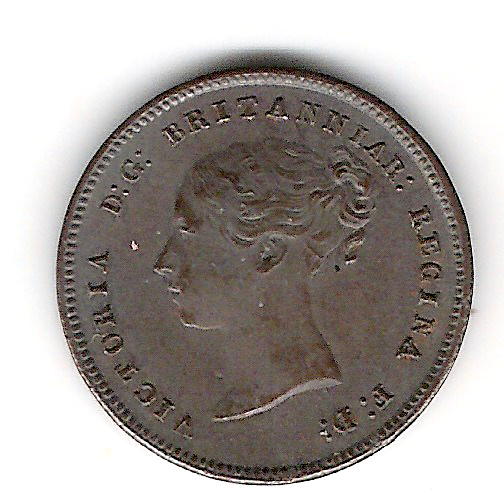
The patination on the obverse looks a little rubbed.
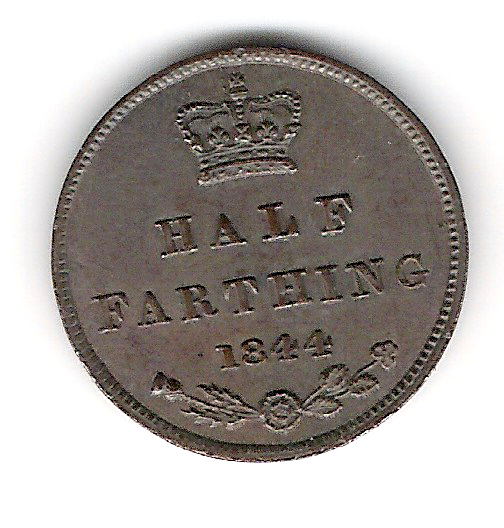
The reverse shows no sign of wear at all.
The fields appear to be unmarked.
Good EF (AU58)
Catalogue value probably twice what was paid for it.
Although the half farthing probably did not circulate in Australia, the farthing at this time most probably did.
It is the period 1825 to 1855 that particularly interests me. British coinage after 1825 was the sole coinage that was officially recognized, because it was from 1825 that British coinage was shipped to Australia as required.
British coinage 1825 to 1855 is an essential part of Australian numismatic history.
The patination on the obverse looks a little rubbed.
The reverse shows no sign of wear at all.
The fields appear to be unmarked.
Good EF (AU58)
Catalogue value probably twice what was paid for it.
Although the half farthing probably did not circulate in Australia, the farthing at this time most probably did.
It is the period 1825 to 1855 that particularly interests me. British coinage after 1825 was the sole coinage that was officially recognized, because it was from 1825 that British coinage was shipped to Australia as required.
British coinage 1825 to 1855 is an essential part of Australian numismatic history.


