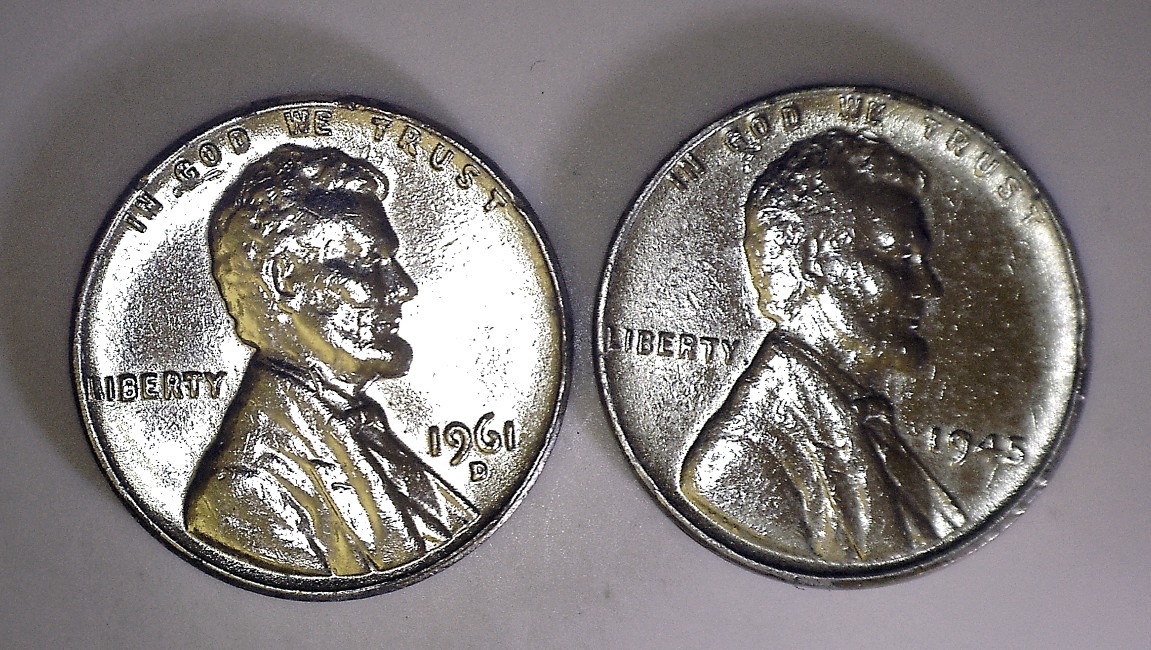
Zinc...no go. Cents weren't made of zinc (or at least not made of almost pure zinc and a copper plating) until midway through 1982.
Steel...again, probably not. Steel cents were unique to 1943 (and then 1944 errors). I'm sure there were other errors when the US did mint foreign coins, but none come to mind. Magnet test it just to me sure. It most likely isn't steel.
Silver? Possible. There have been a number of cents struck on dime planchets. And they're worth decently (or at least what I consider "decent"). But they're not as valuable as you might think. I'm not too sure on things like this (don't own one to do experiments on), but I'd suggest first determining if it's the same size as a dime or if it's the size of a cent (they might all be the size of a cent and that might be pointless). The second thing I'd suggest is (if it's shiny), the
tissue test (take a 2-ply tissue, remove one-ply from it, and place it over the coin, silver shows blast white if it's shiny, whereas nickel, etc. doesn't). Third would be to **gently** tap the coin's edge with another coin and listen for the distinct ringing sound of silver.
If all that fails, then you're basically down to a zinc plated cent, probably done as a chemistry experiment. I have one of those from 1954 as well (as odd as that might be). Mine was a bit easier to determine zinc plate (it is nicked in a couple spots, revealing the copper underneath).
Best of luck!










 Posted 09/24/2018 6:25 pm


 ,
, 

 To the Forum.


