| Author |
 Replies: 7 / Views: 2,128 Replies: 7 / Views: 2,128 |
|
|
New Member
United States
36 Posts |
Green means corrosion, right? I'm trying to do the best I can, removing corrosion from coins that were stored in plastic, in a humid safe for the last 25 years. I've attached two pics, showing the type of 70's holder some of these were in (I moved the coin so you can hopefully see the green). The second is a Franklin where I took a cotton cloth, wiped off the corrosion, then put in a air-tite. You can still see green at 2 o'clock. Now I'm reading about acetone, which I never would have considered using. So, better wiping of the grunge or using a chemical. Any help would be greatly appreciated. This is my first post, and first picture, so I'm certain things won't go right. Thanks 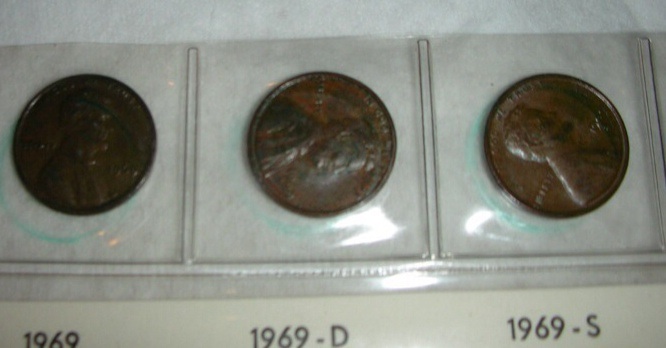 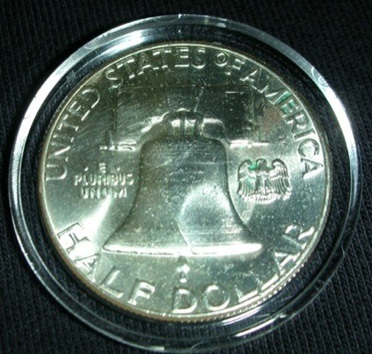 |
|
|
|
Moderator
 United States
23522 Posts |
Welcome to Coin Community, Jimos.
Those coins are in deep trouble. The green is caused by a reaction with the plasticizer ingredients used to soften the plastic sleeves in which they reside; we refer to this as "PVC damage" for short. And acetone is the solution for it. You can stop the reaction completely with acetone and make it go away, never to return as long as you use coin-safe (mylar or similar) sleeves in the future. Damage may have already been done, though - this reaction is literally capable of eating metal away.
Do some research in this forum for acetone. We discuss it with great frequency here, and you won't lack for accurate information on its' proper use. And don't hesitate to ask questions here as they come up.
|
|
New Member
 United States
36 Posts |
Thanks Super Dave. Sounds pretty serious, and I'll keep reading. Too bad this can't be remedied with some Saskatchewan seal skin bindings. I'd know where to go.
I'll keep reading through the previous posts. If anyone has opinions on how to apply, please feel free to share. Thanks again SD.
|
|
Bedrock of the Community
United States
20043 Posts |
Get your coins out of those PVC-based holders ASAP! As Dave mentioned your coins have what we refer to as "PVC damage". As PVC ages it decomposes, the plasticizer sort of melts away and lands on the coin. Over time, the plasticizer degrades releasing hydrochloric acid which will eat metal and, with copper, the acid forms a type verdigris (copper chloride) which produces the green color.
Since the green residue is an organic, gummy substance, it is easily removed with acetone. Do NOT use nail polish remover! You can buy 100% many places like hardware stores, that's what you need to use. Soak the coins in a sealed, glass container for 24 hours, remove the coins and rinse them with fresh, clean acetone. If you still see traces of residue, submerge the coin in fresh acetone and rub the area gently with a q-tip (while under fluid) and it will come right off.
Welcome to CC and good luck!
|
|
Bedrock of the Community
United States
20753 Posts |
 As already noted do some research on this forum for Acetone. However, you may want to purchase a copy of the Red Book by Whitman Publishing. In it you could see if spending money and time on somce coins is worth your time and money. You can purchase Acetone at almost any place that sells painting supplies. Usually at Walmart, Kmart, Menards, HomeDepot, etc. for about $4 a quart. Make sure you read everything in past posts about the safety situations using Acetone. It could be dangerous since it is highly flamable. And again, make sure your spending time and money on a coin or coins that are worth this effort. Regardless, do as has been suggested already and remove those coins from those plastic holders. |
|
New Member
United States
36 Posts |
Gents, Can't think you enough for the sound advice. There were essentially 3 albums/books that utilized this PVC type holder, 2 Wheat cent books, with dates starting in 1941 through 1975, and 1 album of misc Kennedy's and Ike's, couple of Franklins. I removed the coins from all but one of the wheat albums last year, but again, short of taking a clean, cotton T-shirt, and wiping the green off the coin, I didn't know what else to do. I'll go back with the acetone and do it right this time around. I've gone through most of the problematic coins, and have not seen anything of significant value. It's essentially just sentimental value, and I enjoy the hobby enough to want to do a good job, so my kids won't have to some day. Again, thank you. I'm on it. |
|
Pillar of the Community
United States
1511 Posts |
I agree on getting them out of the PVC ASAP and using acetone, it can be used safely and not leave the coins considered "cleaned". But... Wiping the coins with a cotton shirt (or anything) will leave marks (hairline scratches) on the coin, even if you can't see them with the naked eye... they're there, and quite frankly destroy most value they may hold. As you mentioned they're basically only sentimental value so it's not as big of a deal, but on coins such as the franklin you posted even wiping it with a shirt will kill any numismatic value over melt (silver weight)...
So again , just good for thought, but It's very frowned upon in coin collecting to "clean" coins, pretty much the only acceptable means are acetone and verdi-care as they don't affect the surface of the coin at all.
Edit** I should add that obviously you do want to get the PVC off ASAP, I was just saying that wiping the coins to do it is generally a very bad idea, lol.
Edited by NathanASE
05/01/2014 12:23 pm
|
|
Moderator
United States
23522 Posts |
And keep in mind, until they're properly treated that stuff is capable of rubbing off onto a "clean" coin with a touch, so don't let them contact other coins.
|
| |
Replies: 7 / Views: 2,128 |
|










 Posted 04/30/2014 5:19 pm


