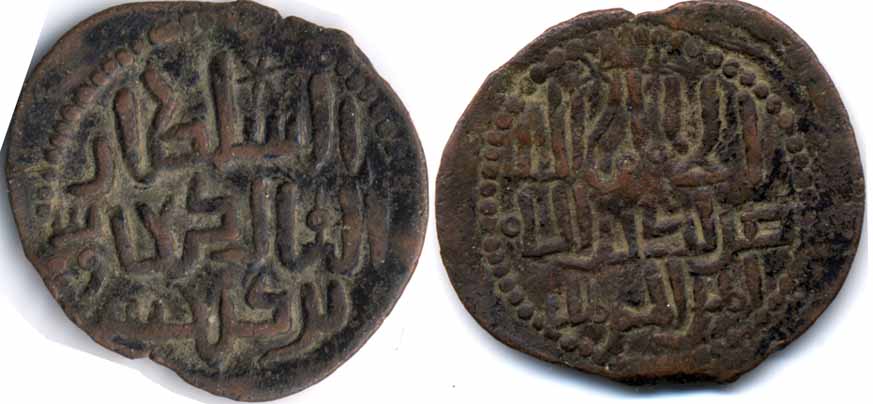
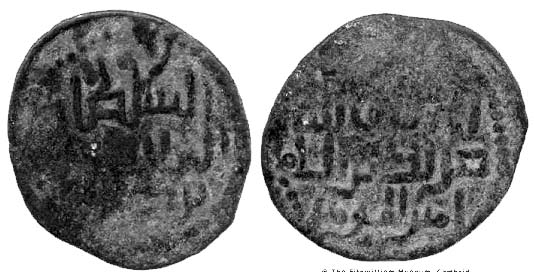
Looks like a match to me, near as I can tell.
It's not so much knowledge of the alphabet and/or language that causes technically incorrect spelling - the die-cutters would have had as good a working knowledge of the script as any Muslim. Rather, it's the combination if the evolution of the language itself, the technical skill of the engraver and the limitation of trying to put a long, verbose, grandiose title on such a small object as a coin. They were also pressed for time, too - the Sultan need his coins, and needed them NOW. Technical accuracy was sacrificed and only the most important details of the words were included, with the general population expected to be able to "fill in the blanks" which the die-cutter skipped.
You can see a similar effect on mediaeval European coins, where the same factors make legends in the Western alphabet hard to read with modern Western eyes. Dies were done in a rush, so letters were merged, skipped or mangled.
Don't say "infinitely" when you mean "very"; otherwise, you'll have no word left when you want to talk about something really infinite. - C. S. Lewis







 4.jpg
4.jpg


 Posted 08/04/2007 12:49 pm


 2335.jpg


