| Author |
 Replies: 16 / Views: 2,536 Replies: 16 / Views: 2,536 |
|
Pillar of the Community
United States
6370 Posts |
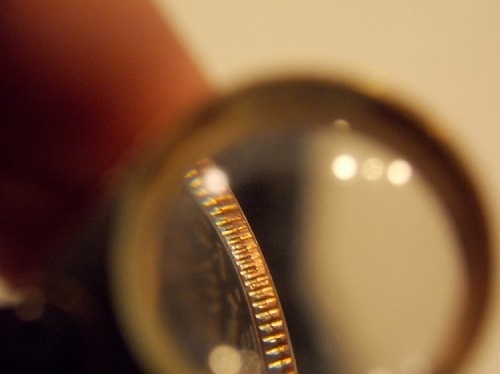
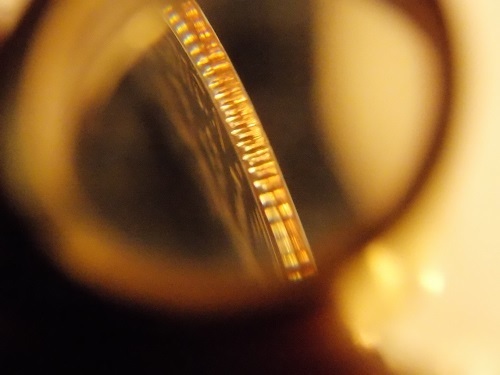
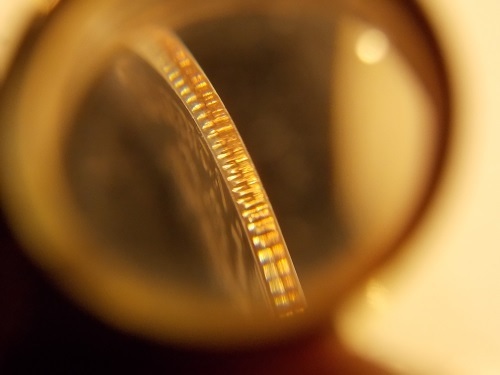
Hello! I recently found a 1996 P dime that seems to have Cuds on the edge of the coin. Is that even possible? Sorry, no pictures, but the main objective of this post is the question in the title. What I am seeing on the edge are some areas where the valleys between the ridges in the reeding are raised, almost as high as the reeding itself. It seems that some of the ridges in the collar broke away. |
|
|
|
Pillar of the Community
United States
2624 Posts |
Quote:Hello! I recently found a 1996 P dime that seems to have Cuds on the edge of the coin. Is that even possible? Quote:
What I am seeing on the edge are some areas where the valleys between the ridges in the reeding are raised, almost as high as the reeding itself. It seems that some of the ridges in the collar broke away. I do not know if they qualify as Cud or just chips. |
|
Bedrock of the Community
United States
62064 Posts |
Images would tell us more.
|
|
Pillar of the Community
United States
1699 Posts |
Just like an obverse or reverse die, the collar die can crack, chip, and break.
|
|
Pillar of the Community
United States
3640 Posts |
Could be just some debris in the collar that caused it. "Ring around the collar"  |
|
Bedrock of the Community
United States
17884 Posts |
Yes you can have raised lumps on the edge from a broken collar (where a piece of the collar breaks off and falls away) but They seem to be very scarce, I've only seen a couple of them.
|
|
Pillar of the Community
 United States
6370 Posts |
|
|
Bedrock of the Community
United States
62064 Posts |
Perhaps a little grease in the collar that prevented the reeding to show. First time I've seen this. On a partial collar you see part of the edge of the reeding and the rest raised. 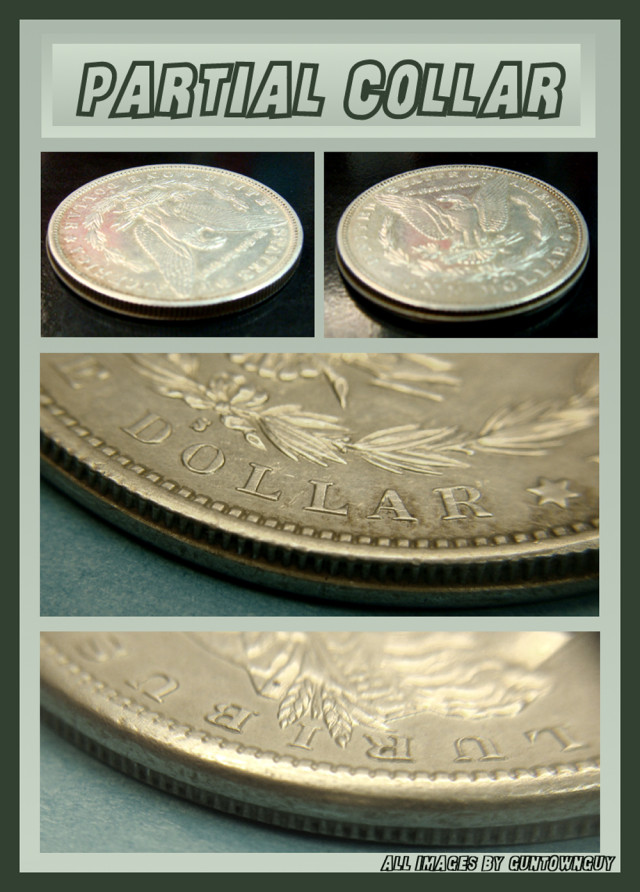 Bust the first sight of this to me. Probably went unnoticed? I don't see a premium for this though. Damage on the reeding could flatten an area also. Edited by coop
07/31/2014 09:19 am
|
|
Pillar of the Community
United States
6370 Posts |
I know it's not a partial collar; I have two of those, so I know what it looks like. I looked at the coin under a 10X glass and saw no damage. Grease wouldn't do this because the raised portions of the reeding would be lowered, not vice versa. I think the negative imprints in the collar were chipped, leading to the valleys within the reeding to be raised. At least that's what I'm seeing.
I'm not looking for a premium. I'm just wondering what happened.
|
|
Bedrock of the Community
United States
62064 Posts |
Like I said, I've not seen this reported before. Just a couple of ideas of what might have happened?
|
|
Pillar of the Community
United States
6370 Posts |
There's a coin club meeting this Saturday, so I'll show it to Bill Fivaz and get his opinion.
|
|
Bedrock of the Community
United States
62064 Posts |
Please report his findings here. Others would like to know as well.
|
|
Pillar of the Community
United States
1476 Posts |
|
|
Pillar of the Community
United States
6370 Posts |
Okaaaaayyyyy. Now I'm completely baffled. I just looked at the area in question under a 16x loupe, and the reeding seems to be doubled in just that area. I'll describe it in greater detail when I get a better grasp at what I'm seeing. I'll see if I can get pictures with my primitive setup. Any ideas?
I checked to see if it was damaged, but there are definitely raised areas between the ridges. The reeding on one side of the coin is perfect as if it just came out of the mint, while the other side, the side with the anomaly, is a bit mushier. I'm at a loss here.
|
|
Pillar of the Community
United States
6370 Posts |
Ok. I just looked at it again under the same magnification and I see something that can possibly give a logical answer to this. There is what looks like a thin die crack running the entirety of the circumfrence of the coin. It is not the seam between the copper and the nickel because the crack shifts significantly between the two layers. On the half with what looks like a Cud, the valleys in between the ridges are shallower, giving the appearence of being flattened, but below the crack-like line, the ridges are perfectly normal and everything is of the same height. Even more curious is that the reeding seems to be doubled above the crack and normal below the crack. My guess (but likely improbable) is the collar split horizontally, creating a top section, and a bottom section. Then the top section split at about the 2 o'clock position, or the location of the most prominent Cud as seen in the above pictures (you can see the crack leading up to it coming from the right). Then it expanded slightly after the first strike, causing the raised portion of the Cud to appear and causing the doubled and softer reeding to appear since there was a slight shift in the collar. Or the ridges in the collar used to make the valleys in the reeding chipped, forming raised areas in between the ridges. These are all conjectures as I have no definite idea as to what happened. I didn't get a chance to show Bill Fivaz as dummy me left it at home. Examination shows it is definitely raised and not PMD. |
|
Pillar of the Community
United States
6370 Posts |
UPDATE! I just showed this to Bill Fivaz and got a definite answer. It is an error called a collar clash, where the die (in this case the obverse one) was misaligned and struck the collar, deforming it by pushing the metal in the collar and putting Reeding Marks on the obverse die, which is observable on this coin. He says that he has not seen very many of them, but they have more of a "curiosity" value than a large collector value. A mystery solved! |
| |
Replies: 16 / Views: 2,536 |







 Posted 06/21/2014 3:58 pm