The question often arises: What is the first coin?
First, what is a coin? Various dictionaries cite the following basics: a token, typically a flat disc of metal,
marked with an official stamp and used as money.
In fairly short order, the region that is now western Turkey progressed from creating and using as money weighed and formed lumps of metal, to weighed formed lumps of metal with striations, to weighed and formed lumps of metal
with official markings: the Lydian Lion trite. The earliest of them were likely struck around 630-620 BC. For an example of this earliest type, check out
this collector's Lydian trite. His writeup is elegant and detailed too, so I will only hit some highlights here.
"Trite" means one third of a stater. Due to current convention and the weight of these coins, they are called trites even though no staters appear to have been minted in the 7th century BC.
These lion trites were minted from ~630 BC to ~564 BC. The sun on the earliest of them has four rays. The later and more commonly seen style has a globular rayed sun on the lion's forehead (often called a "nose wart").
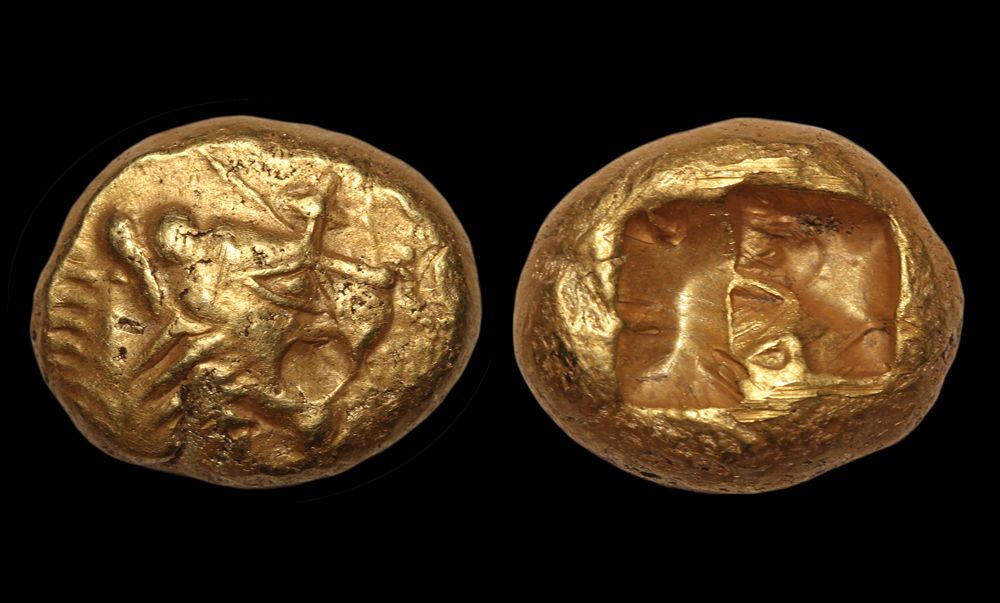 KINGS OF LYDIA, temp. Ardys - Alyattes
620-546 BCEL trite. Sardes mint.
Obv: head of roaring lion right, sun with four rays on forehead
Rev: two incuse square punches
Ref: Weidauer Group XV, 64; BMC 2
Until reading more about these Lydian electrum coins, I thought they were made from unrefined or minimally refined naturally-occurring electrum. Apparently that may not be the case, as the silver content is higher and gold lower than samples of electrum from around the area.
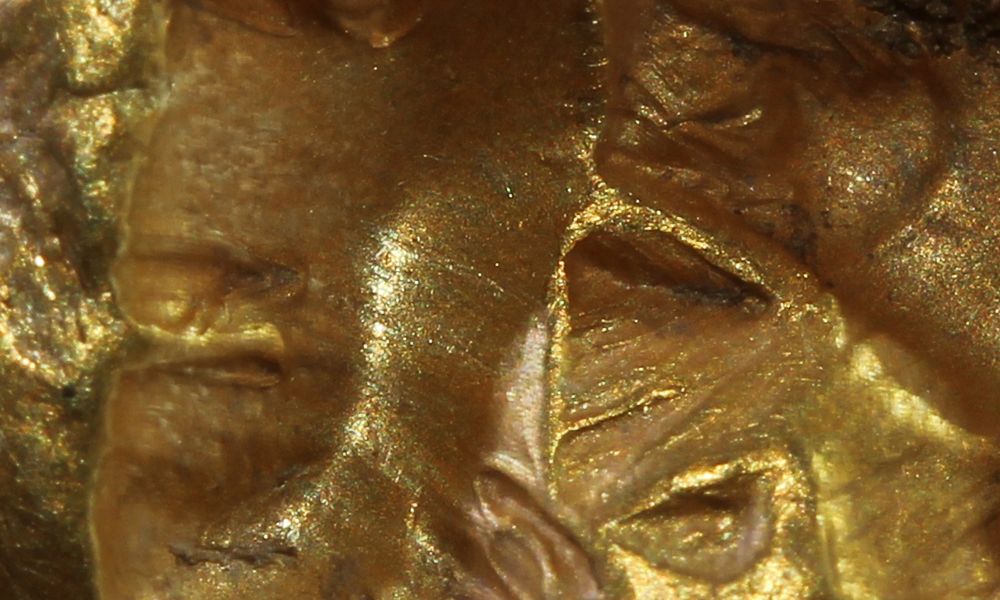
You can see a streakiness in my coin where silver (or some white metal) and gold are not well mixed. This seems to support the idea that the electrum was purposefully alloyed, lowering the gold content. Additional information on that, plus an in-depth discussion of this type of coin, can be found
here.
Lydian trites are not particularly rare but due to their appeal as the oldest official coin, demand exceeds supply.







 Posted 08/30/2014 9:59 pm





