| Author |
 Replies: 9 / Views: 2,434 Replies: 9 / Views: 2,434 |
|
|
New Member
United States
23 Posts |
On this coin Lincoln's face seems to be damaged. East of the face there is what looks to me like a curvy line out in the open field just beyond the melted zone. Is this an error coin or some sort of damage that the coin experienced during its life in circulation? Or both? Thanks for looking! 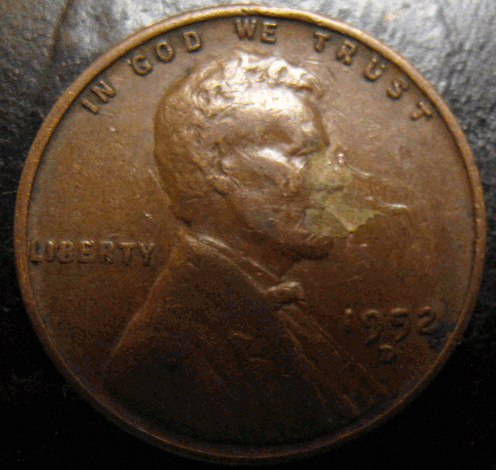 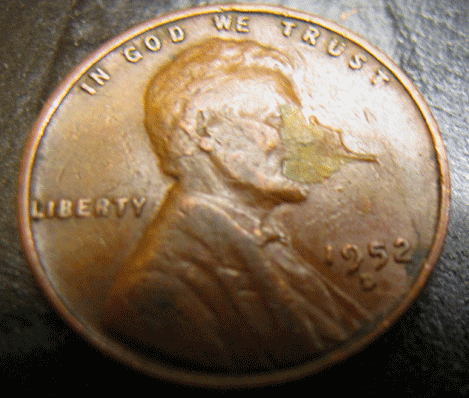 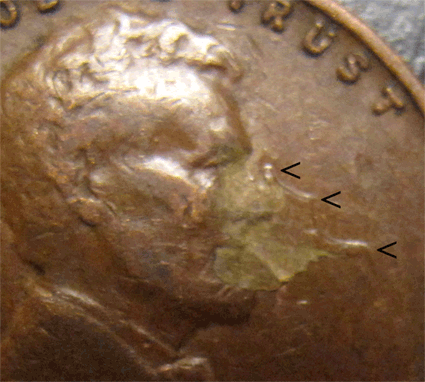 |
|
|
|
Bedrock of the Community
United States
17884 Posts |
Looks like it has something stuck to it, like glue.
|
|
New Member
 United States
23 Posts |
To the naked eye you can't actually see Lincoln's face in the melted zone; only the camera picked it up. I was surprised to see it. There is no raised area of residue like that of a glue. If anything, the area is physically lower as if it were erased. The curvy line on the other hand is raised and appears to be made of the coin's own material. It presents with the same color and texture. I can try and closer pictures if you think that would help?
|
|
Moderator
 United States
56855 Posts |
Try a 100% pure acetone dip then a new pic. John1  Edited by John1
09/20/2014 08:50 am
|
|
New Member
United States
23 Posts |
Acetone or Mineral Oil which is the safest in terms of the coins health?
|
|
Moderator
United States
56855 Posts |
No pro here but acetone is a lot faster then mineral oil. Maybe coop will chime in soon. John1 |
|
Moderator
United States
23522 Posts |
Quote:
There is no raised area of residue like that of a glue. Yes, there is, and your images are concrete proof. You've lit the coin from the 12:00 position, and right next to each arrow in your detail image is a bright spot. That's where your lighting is hitting the part of the "feature" begins to raise from the surface of the coin - had that been a negative instead of a positive, those bright spots would be dark because no light could reach them. |
|
Bedrock of the Community
United States
62064 Posts |
Acetone for circulated coins to remove surface imperfections. Always experiment on a dirty circulated run of the mill coin until you get the procedure down first.Mineral oil to soften grime around the devices on circulated coins. Soak in oil to loosen, then use a green thorn to free contaminate being careful because there may be sand in the grime and can scratch the fields. I sometimes use and old very soft toothbrush (I refer to this as bathing and not cleaning.Cleaning removes part of the surface of the coin, bathing just removes the residue around the edvices leaving the surface intact.) to remove this, but keep in mint the sand issue. Softly brushing in different directions and then patting it dry. It helps and does not remove toning if done just once. (Repeating can affect toning.) Neither will remove green spots (Patina from corrosion) or carbon spots (Impurity in copper). 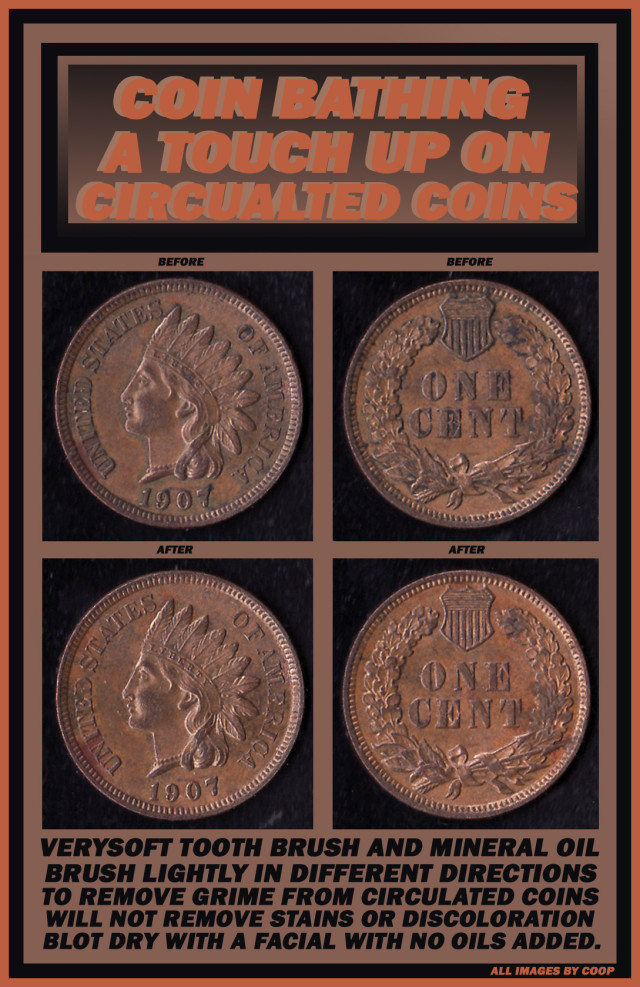 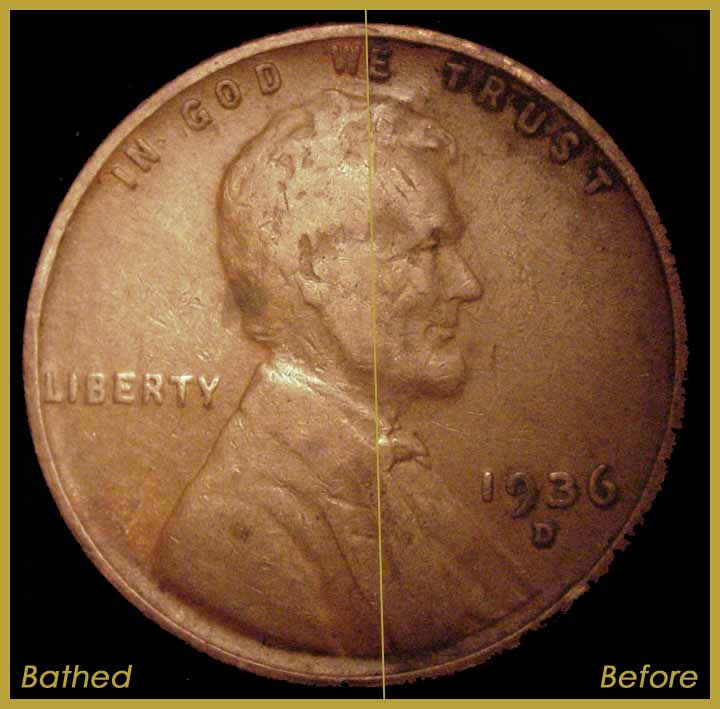 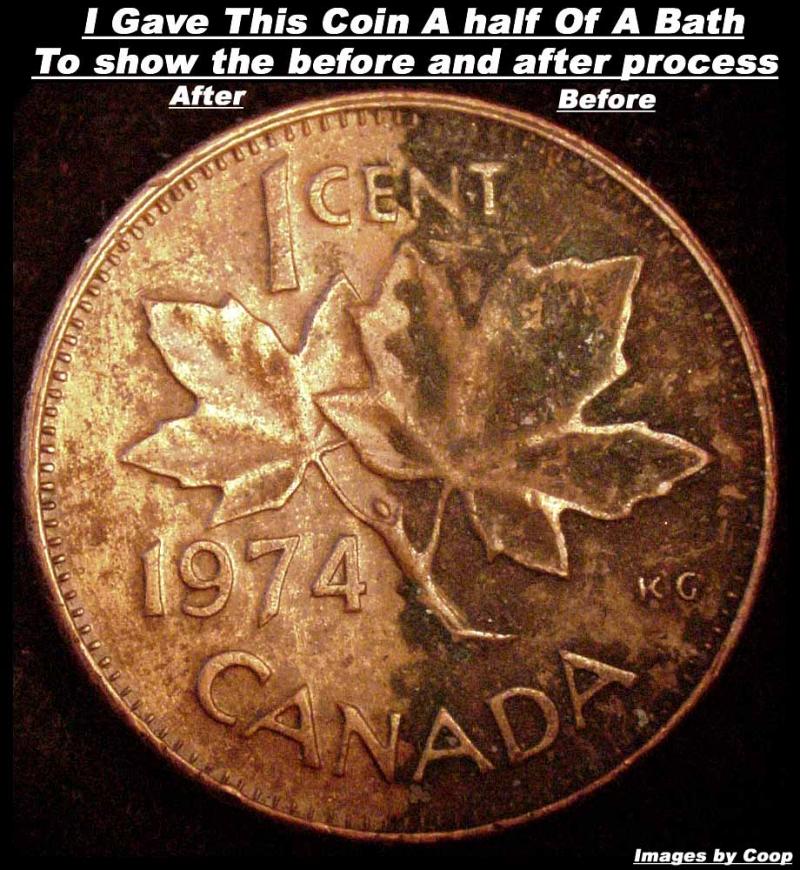 Always experiment on a dirty circulated run of the mill coin until you get the procedure down first. Always experiment on a dirty circulated run of the mill coin until you get the procedure down first.I prefer mineral oil rather than olive oil because olive oil is organic and can rot. Mineral oil is closer to what the coin would have been subjected to during the minting process. Edited by coop
09/23/2014 11:23 am
|
|
New Member
United States
23 Posts |
Having soaked and cleaned the coin in mineral oil I can tell you now it was some sort of adhesive or glue. The coin is back to normal. Thank you for the sound advice.
|
|
Bedrock of the Community
United States
17884 Posts |
|
| |
Replies: 9 / Views: 2,434 |
|







 Posted 09/20/2014 08:16 am


