| Author |
 Replies: 31 / Views: 5,918 Replies: 31 / Views: 5,918 |
|
|
|
Pillar of the Community
 United States
593 Posts |
|
|
Pillar of the Community
Russian Federation
5186 Posts |
I'd expect the 1930s issues to be a better fit than the 1990s issues for the Baltic states "as of circa 1980" (i.e. the northwestern parts of the USSR that some Western authorities claimed were technically still independent - I wonder what was the official opinion on Kaliningrad).
It might be a lot harder to find such coins, however.
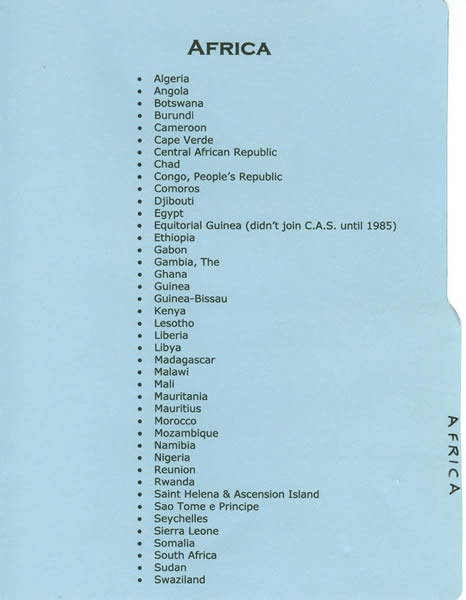
Several countries in your list that you have as "no native coins" did issue circulation coins early in the 20th century, but these coins likely went out of circulation well before 1980. I suspect that, if you look at your Krause carefully, you'd see that the Azores coins listed for 1901 are actual Azorean money (but I'm pretty sure there wasn't a single one still in circulation seventy-odd years later).
Edited by january1may
01/06/2015 5:08 pm
|
|
Pillar of the Community
United States
593 Posts |
Quote:
I'd expect the 1930s issues to be a better fit than the 1990s issues for the Baltic states I struggled with that question, and for the Baltics I can see it going either way. I opted for the 1990's coins because of the next point you raised. Quote:
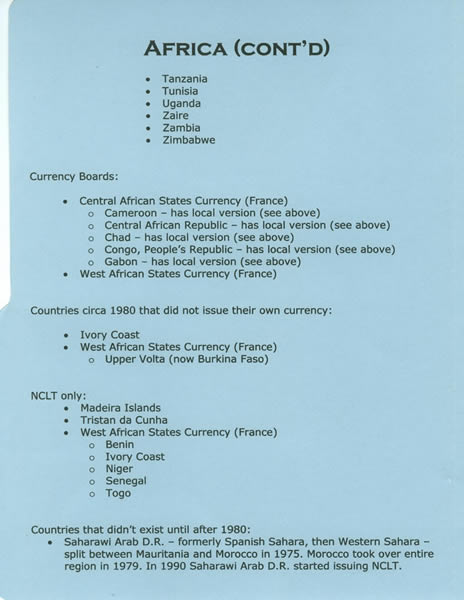
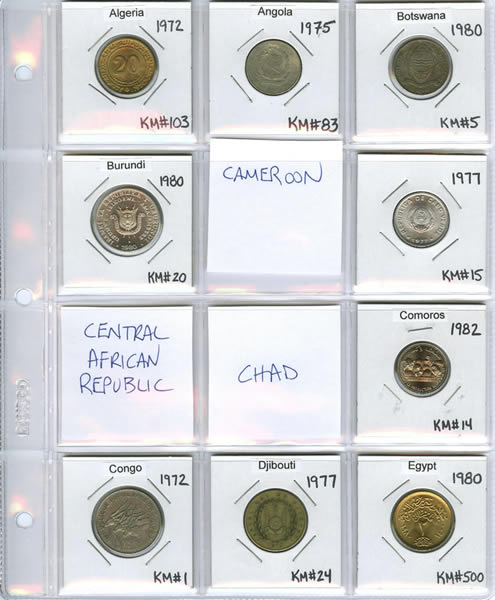
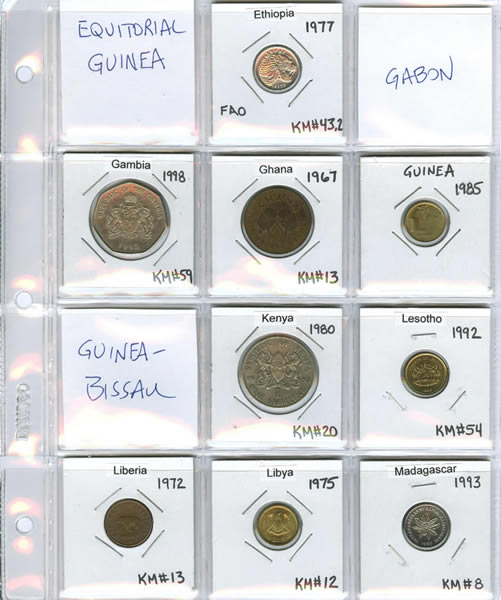
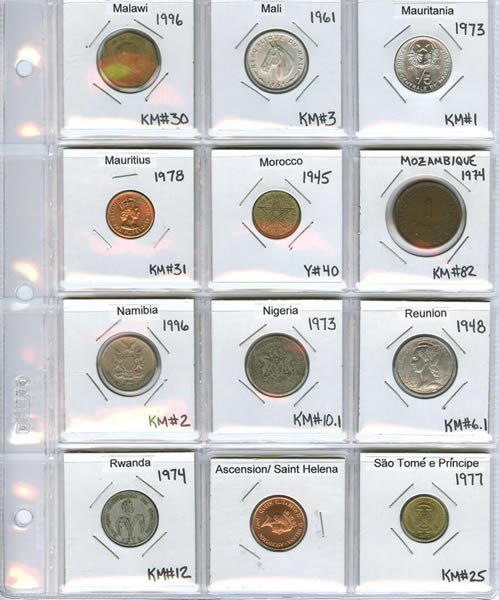
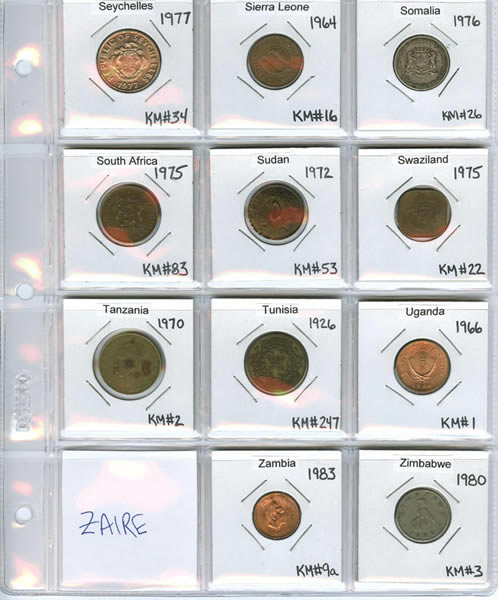
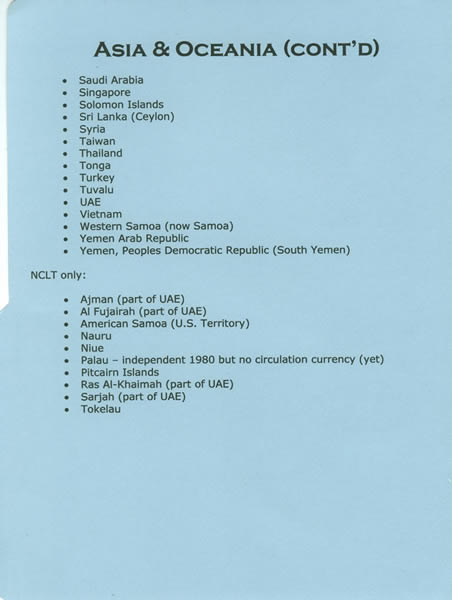
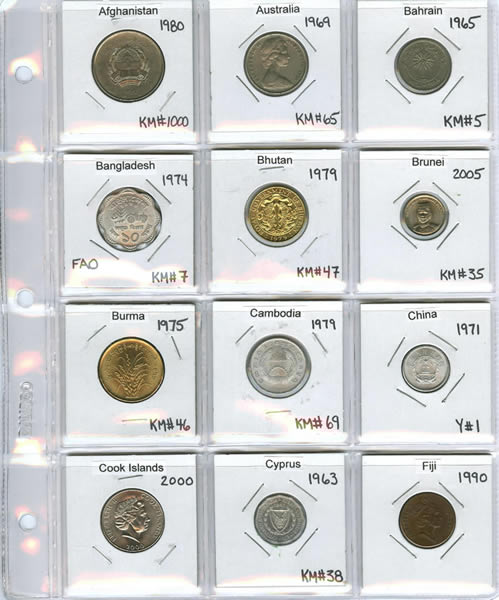
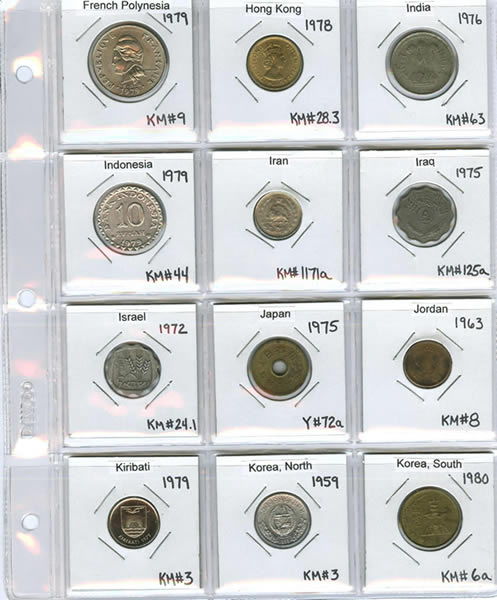
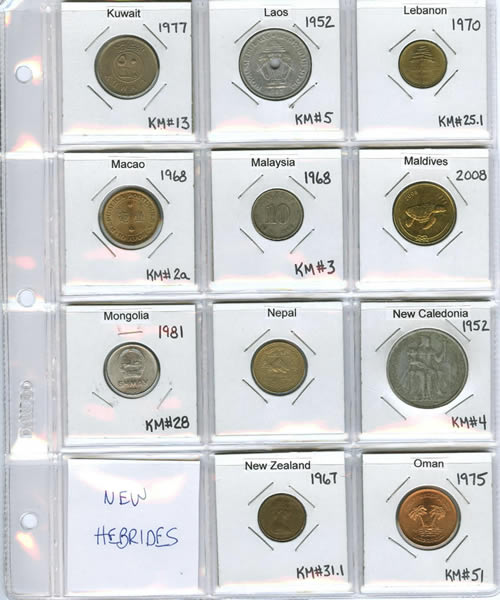
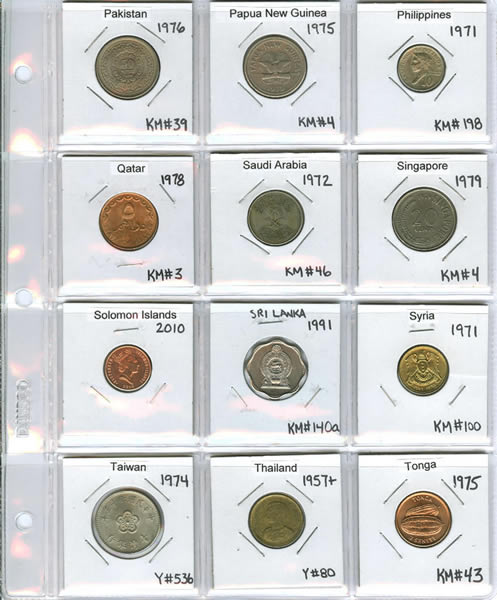
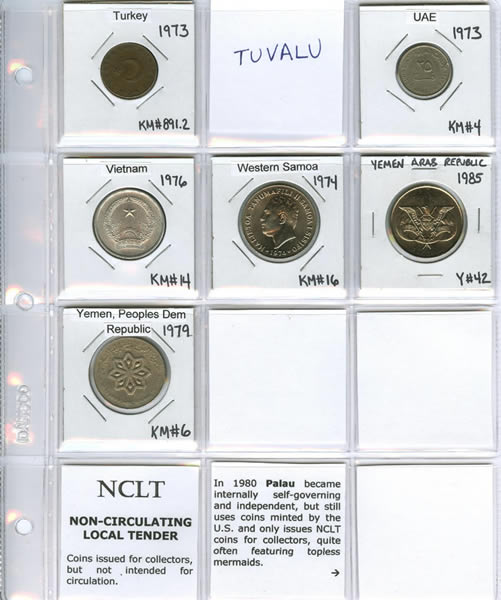
Several countries in your list that you have as "no native coins" did issue circulation coins early in the 20th century, but these coins likely went out of circulation well before 1980. I suspect that, if you look at your Krause carefully, you'd see that the Azores coins listed for 1901 are actual Azorean money (but I'm pretty sure there wasn't a single one still in circulation seventy-odd years later). Using Azores as an example, Krause shows two coins in 1901 listed under "Portuguese Administration". The issues of 1980 were listed under "Republic", so the country in 1980 was different than the country in 1901, so the 1901 coins would not be valid for my purposes. If the Azores does mint their own circulating coins in the future, I will include one as long as there isn't a fundamental shift in what the Azores is. For example, if the Azores are taken over by a Marxist regime and then issues a currency, I would not consider that a country that existed in 1980. If a Marxist regime takes over and Portuguese forces promptly defeat them and restore the government, then it's still the same country that existed in 1980. I recognize there are any number of dicey situations that can arise, but the list of non-issuing countries is there for me to keep an eye on and include if they ever issue circulating coins and are still essentially the same country that existed in 1980. I already have some countries I have to use coins after 1980, such as Comoros, although I am tempted to include an "Institut d'Emission" coin for that one. Turks & Caicos didn't issue circulation coinage (it appears) until 1981. Namibia didn't issue coins until 1993, but you could well argue that the publishers of the 1980 Atlas I'm using jumped the gun on that one. Independence was SUPPOSED to be declared December 31, 1978, but that was rejected by the UN and a decade of war followed (with SWAPO and South Africa and Angola and Cuba involved) until independence was finally achieved in March 1990. I like keeping that coin just as a reminder of how messy the birth of a nation can be! Some countries make things "tight". Iran fundamentally changed in 1979, so I need a coin from 1979 or 1980. To a lesser extent the Vatican changed when John Paul II's reign began, so I felt compelled to get a coin from 1979 to recognize the global geo-political significance of that change. Mozambique presents a different kind of challenge. They gained independence in 1975, but reform coinage was issued in 1980. The 1974 coin I currently have is clearly not acceptable, but do I have to get a 1980 coin, or would a 1975 coin be OK since it would likely still be circulating for some period of time in 1980? I was leaning toward 1980 when I checked the prices on 1975 and that one is now a simple decision! I really appreciate all of the critiques and food for thought, and I will change a few things based on what you have all said so far and any inputs based on the additional pages I posted today. (I bought the Palau coin, but I haven't received it yet, so sorry that is a blank spot for now). Thanks again everyone! Edited by larsdog
01/06/2015 8:25 pm
|
|
Pillar of the Community
3772 Posts |
Might have a closer look later, but two quick comments
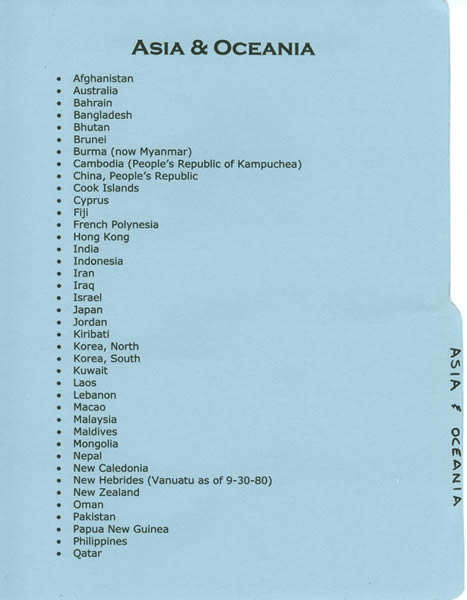
1. Some of the countries having been part of the USSR belong to Asia.
2. Where are the Marshall Islands? They fall into the same category as the Pitcairn Islands, ie first NCLT coinage after 1980.
|
|
Pillar of the Community
United States
593 Posts |
Quote:
Some of the countries having been part of the USSR belong to Asia Absolutely, my 1980 Atlas of Asia shows Turkmen S.S.R., Uzbek S.S.R., Kazakh S.S.R., Kirgiz S.S.R., and Tadzhik S.S.R all in Asia, along with the bulk of the landmass of Russian S.F.S.R. However, the Western tradition of 1980 was to place the USSR in Europe, list all of the satellite countries (Union Republics) with Russia, and I suppose it was placed in Europe partly because Moscow is in Europe, but also partly because the area of chief concern to Western nations at the time was the European frontier. I didn't split them up to maintain consistency with the traditions of the day. Do you think I should have split them up? Quote:
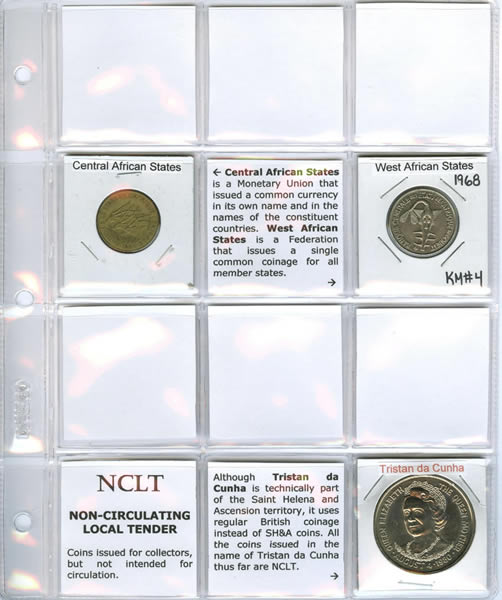
Where are the Marshall Islands? They fall into the same category as the Pitcairn Islands, ie first NCLT coinage after 1980. Perhaps my text is misleading. I'm not concerned that the FIRST Pitcairn Islands NCLT is after 1980, but that ONLY NCLT has been issued thus far (unless something changed recently). If Pitcairn Islands issues circulation coinage tomorrow, I will need to include a coin. In 1980 the Pitcairn Islands were listed as a separate country. The Marshall Islands were considered part of US Territory, like Puerto Rico. If the Marshall Islands or Puerto Rico gained independence and issued their own currency, they would be excluded (like Aruba) because they did not exist as a separate country in 1980. I realize there are several entities that one could argue aren't really countries at all - Guernsey, Jersey and Isle of Man come to mind. Instead of making those judgment calls myself, I depended on the 1980 Atlas and if a compelling argument is made to exclude something or include something I'm happy to consider it. |
|
Pillar of the Community
United States
593 Posts |
I have two comments as an aside:
1. I really appreciate having to defend my position and change it if it is proven flawed. It gives me more confidence that what I am putting together is more rigorous that average, so for that I am very grateful to you all.
2. The 1980 Atlas I am using lists countries with names such as Ivory Coast, Western Samoa, and White Russian S.S.R. (although they do put Byelorussian S.S.R. in parenthesis). They did change to Sri Lanka (with Ceylon in parenthesis) and Namibia (with South-West Africa in parenthesis), but most of the listings are as Vanilla-Anglo as you can imagine except one: Sao Tome e Principe. There isn't a hint ANYWHERE that it could be considered as Saint Thomas and Prince Island. Interesting!
|
|
Moderator
 Australia
17006 Posts |
Quote:
Krause shows two coins in 1901 listed under "Portuguese Administration". The issues of 1980 were listed under "Republic", so the country in 1980 was different than the country in 1901, so the 1901 coins would not be valid for my purposes. The status of the Azores with respect to Portugal has not changed much between 1901 and 1980; what has changed is the government of Portugal itself. When the monarchy was overthrown and the Republic established, one of the changes implemented was that the Azores would no longer have its own separate currency. Quote:
Where are the Marshall Islands? They fall into the same category as the Pitcairn Islands, ie first NCLT coinage after 1980. It's a "country that did not exist prior to 1980". In 1980, the United States still owned a large territory containing myriad small island groups, all captured from the Japanese during and after WWII. This Trust Territory of the Pacific Islands was broken into four pieces in 1986. Three of the pieces became independent republics: Marshall Islands, Micronesia and Palau. The fourth piece, Northern Mariana Islands, is still a US territory. In a similar category is the case of East Timor, which existed (as a Portuguese colony) up to 1975, and again (as a republic) from 2002, but was annexed by Indonesia during the timeframe in question. Alongside this can be considered Eritrea (former Italian colony, later independent, annexed by Ethiopia in between) and Somaliland (former British colony, now de-facto independent, annexed by Somalia in between). In such cases, neither the coins before nor the coins after reflect the status of those countries in 1980; they should therefore be treated as "countries which did not exist in 1980". Quote:
I wonder what was the official opinion on Kaliningrad Kaliningrad Oblast was formerly a piece of East Prussia, and part of Germany. East Prussia was split into two pieces by the Soviets when they occupied it; the southern half was given to newly re-independent Poland, the northern half the Soviets kept for themselves. Administratively, they attached it directly to Russia rather than Lithuania; perhaps they feared losing Kaliningrad if they attached it to Lithuania and were later then obliged to let Lithuania go again. As it was a piece of Nazi Germany before the war, the West basically did not care what happened to it - especially since the vast majority of the German population had already fled westwards by the time Soviet forces arrived there. They won it fair and square, it was weregild, they could do what they liked with it. Don't say "infinitely" when you mean "very"; otherwise, you'll have no word left when you want to talk about something really infinite. - C. S. Lewis
|
|
Pillar of the Community
United States
593 Posts |
Quote:
In a similar category is the case of East Timor, which existed (as a Portuguese colony) up to 1975, and again (as a republic) from 2002, but was annexed by Indonesia during the timeframe in question. Alongside this can be considered Eritrea (former Italian colony, later independent, annexed by Ethiopia in between) and Somaliland (former British colony, now de-facto independent, annexed by Somalia in between). In such cases, neither the coins before nor the coins after reflect the status of those countries in 1980; they should therefore be treated as "countries which did not exist in 1980". It looks like I have a lot of work to do on adding countries to my list of countries that didn't exist in 1980. I will definitely spend some time incorporating your comments into the text and checking for additional listings that should be included in that list. Thanks! |
|
Pillar of the Community
United States
514 Posts |
As has been said the difference between a hoard and a collection is in the organization and presentation. You have done a very good job.
As you have learned a starting simple question can lead to varied answers, some clear, some with murky shades of gray. Even simple questions like 'what is a country' have complex answers! I might quibble with some of the decisions you've made but that's part of what makes collecting a fun individual activity.
I bought a few old world almanacs from a thrift store for cheap. You might find them interesting. They have descriptions of the countries and usually a few color pages with maps and flags. At the time I found it a neat way to collect obsolete countries' flags but I think nowadays you can cut and paste them from wikipedia.
Maybe I missed the previous discussion as to why you picked 1980 in particular?
-wheatiefan
|
|
Pillar of the Community
United States
593 Posts |
Thank you for the kind words, wheatiefan! I think the gray areas are the most fun and interesting. Feel free to quibble. I'll take a look at anything you may have decided differently and if I am unable to defend my position I will change it. It's the only way I learn. The great thing about a project like this is that you can listen to all opinions and make informed decisions, but ultimately you get to make the final call. I, too, have an older map (in the front of a 1952 stamp album). That lets me see what has changed in the 28 years before 1980 and a recent almanac lets me see what has changed in the 35 years since 1980. That allows me to ignore 90% of the world countries and focus on the ones that changed and learn their histories. Why 1980? Mostly because that's the date of the old atlas I had laying around. It's the time frame when I graduated college, became aware of world events (Iran hostages and Soviets in Afghanistan), and began to travel outside of the US. It's not the world I was born into, but the world I launched into, I suppose. My main focus is stamp collecting and I had been working on a "Stamp from Every Country" collection. That is likely more in line with what serious coin collectors would attempt. For Germany, for example, there is a modern stamp, Berlin, DDR, Saar German Admin, Saar French Admin, League of Nations Admin, Danzig, Heligoland and 18 different German States. (At least stamps have been around for less than 200 years)! My US stamp collection is rather rigorous. My US coin collection consists of Lincoln wheats, Jefferson Memorial nickels, Mint Sets from 1959 (first year of Lincoln Memorial) to current and Proof Sets from 1968 (first S mint) to current. I added a few things to make it a bit more complete, but nothing really serious. Then I learned about the 7070 Type Set and I was hooked! I felt like I had a reasonably comprehensive US collection for a novice. I asked here about something similar to the "Stamp from Every Country", but for coins, and was quickly introduced to OFEC. I liked the idea, but had to figure out a way to make it more manageable for a limited budget. I hit on the idea of a fixed year and decided that if I picked a recent year the collection would look "outdated." If I picked a year far enough back, it would look "historical." The rest, as they say (amsd, if you're reading this - this pun is for you), is history. |
|
Pillar of the Community
United States
593 Posts |
Regarding St. Pierre and Miquelon coin of 1948, Medieval wrote: Quote:
Not sure that that coin would still have been circulating in 1980. With the change from old franc to new franc in 1960 the value of those coin became very low. Haven't been to St.Pierre & Miquelon [bucket list] but well before 1980 none of the old 1,2 or 5 Franc aluminum coins circulated in France, the larger old Franc denominations continued equal to the new Centime ones though. What about Reunion? Their coins, which have the same obverse as St. Pierre & Miquelon, span 1948 to 1973 without any note of revaluation. What is the difference between these two? |
|
Moderator
Australia
17006 Posts |
In 1948, France created for use in its colonies the CFA franc, which was not on par with the franc used in mainland France; the ratio was 2 French francs to 1 colonial franc. The Reunion and St Pierre francs were both pegged to the CFA franc. In 1960, France revalued the mainland franc, but left the CFA franc alone. Reunion opted to remain with the CFA franc; St Pierre opted to switch to the mainland franc. Reunion banknotes issued between 1960 and 1975 are dual-denominated in both Reunion francs and "New" francs, showing the 50:1 ratio; example. Reunion switched to using mainland French coinage in 1975. Reunion coins might have still been accepted by banks in 1980, but would have been unusual to find in change. Don't say "infinitely" when you mean "very"; otherwise, you'll have no word left when you want to talk about something really infinite. - C. S. Lewis
|
|
Pillar of the Community
United States
593 Posts |
Thanks for the clarification, Sap. Enlightening as always! One question though. When you say: Quote:
Reunion coins might have still been accepted by banks in 1980, but would have been unusual to find in change. How unusual? Can you compare it to what I would likely find in US change? pre-1982 penny unusual? wheatie unusual? pre-1965 dime unusual? I am going to have to make a call on this one. If it's wheatie unusual, I would be inclined to include it. If it's silver dime unusual, probably not. Edited by larsdog
01/17/2015 11:47 pm
|
|
Moderator
Australia
17006 Posts |
I'm afraid you'd have to ask someone who lived there at the time for confirmation of that one, but I suspect the answer after five years would have been "more unusual than any of those".
Comparisons with American coinage is difficult, because the American government has never actively withdrawn and melted down any of the coins you've mentioned; that means there's still plenty of them floating around out there. The French government has done so with it's obsolete coins, frequently - most recently with the introduction of the euro. Any Reunion coins deposited in the bank after 1975 would have been shipped back to France for destruction.
The other thing to note is that Reunion coins still in circulation would have stood out like a sore thumb; besides the difference in design, with the exception of the 50 francs they were quite dissimilar in size to their "new franc" equivalents - if they had an equivalent. So there would have been little opportunity for one to slip by in change un-noticed.
Don't say "infinitely" when you mean "very"; otherwise, you'll have no word left when you want to talk about something really infinite. - C. S. Lewis
|
|
Pillar of the Community
United States
593 Posts |
In that case it seems obvious that I should remove the Reunion coin. Thanks for the clarification!
|
| |
Replies: 31 / Views: 5,918 |
To participate in the forum you must log in or register.
Disclaimer: While a tremendous amount of effort goes into ensuring the accuracy of the information contained in this site, Coin Community assumes no liability for errors. Copyright 2005 - 2026 Coin Community Family- all rights reserved worldwide. Use of any images or content on this website without prior written permission of Coin Community or the original lender is strictly prohibited.
Contact Us | Advertise Here | Privacy Policy / Terms of Use
|
| Coin Community Forum |
© 2005 - 2026 Coin Community Forums |
| It took 0.58 seconds to rattle this change. |
 |
|






 First Page



 Posted 01/06/2015 5:05 pm


