Quote:
the number of letters and placement
Add to that the structure and you are nearly home.
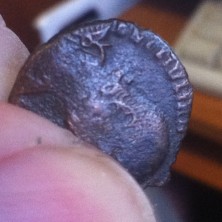
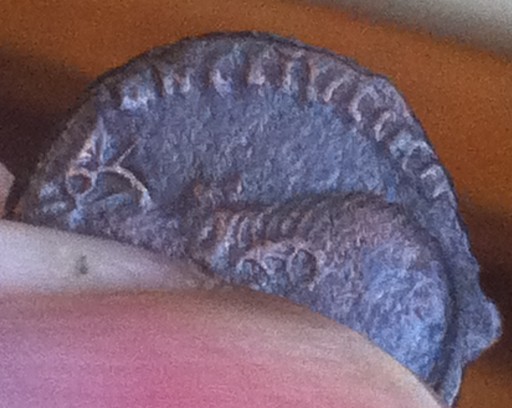
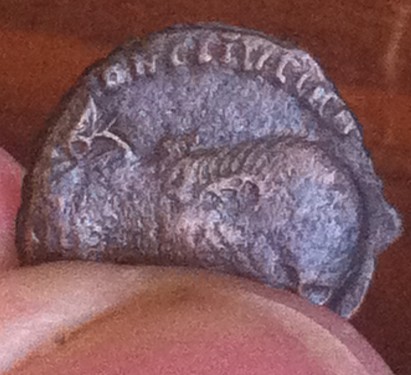
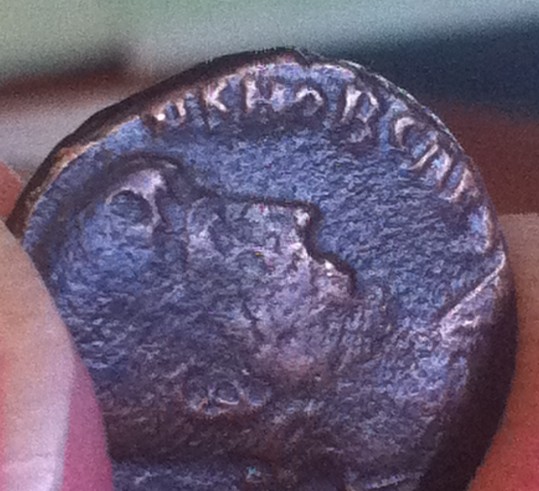
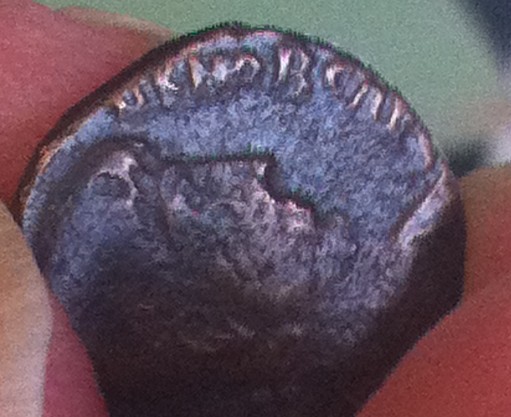
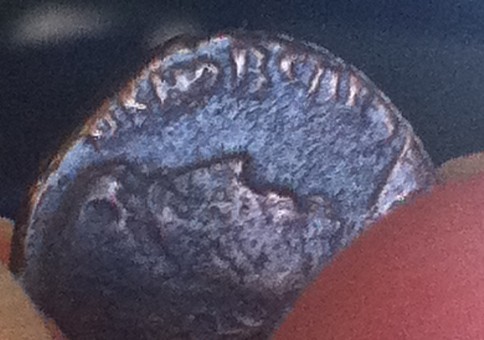
For the benefit of 'Topcat7', I'll go quickly through the mental processes while reading the legend on that coin:
1. Passing through the images, the N and the V on the obverse stand out, ie ".N...V..." break.
2. On the reverse the 'B' jumps out, now let's look at the structure:
[title(s), if present] name [title(s)]
There are no names of potential candidates which have a 'B' that late in the name, so it has to be part of the titles - NOB C and NOC CAES are the obvious candidates.
3. Looking a little closer, the NOB C is easily confirmed and with letters remaining, just need to check that AES makes sense.
4. Now the name usually ends in an S and before that only N or V make sense. So. now we have
.N...V... - [N or V]S NOB CAES
back to the obverse and since there are no names which have N as second letter it is a fair assumption that the letter in front is (or can be) a D.
4. A further short look confirms that it can be a D and shows something like a C next. So now the legend looks like
DN C? IV?..? - [N or S]S NOB CAES
5. Based on what the common legends are, it is easily confirmed that it is
DN CL IVL?.? - [N or V]S NOB CAES
6. Since there are not enough letters, first one can rule out CONSTANS, ie the V is fixed. This leaves 3 letters to be verified, which should be IAN and they are.
All that goes (off course) faster than it can be written down.
In the end it boils down to knowing the structure of the legend and the common element - school Latin can help to understand the meaning of the elements but is not necessary.
Not to forget an understanding in the variation of the script, eg A, B and R can look more or less the same.












 Posted 02/05/2015 02:38 am


