| Author |
 Replies: 9 / Views: 3,522 Replies: 9 / Views: 3,522 |
|
|
Valued Member
469 Posts |
Weighs 6.3 g and measures 23.8 mm in diameter. Closest I could find is the Two Cent Piece which is 6.22 g and 23 mm. What does everyone think? 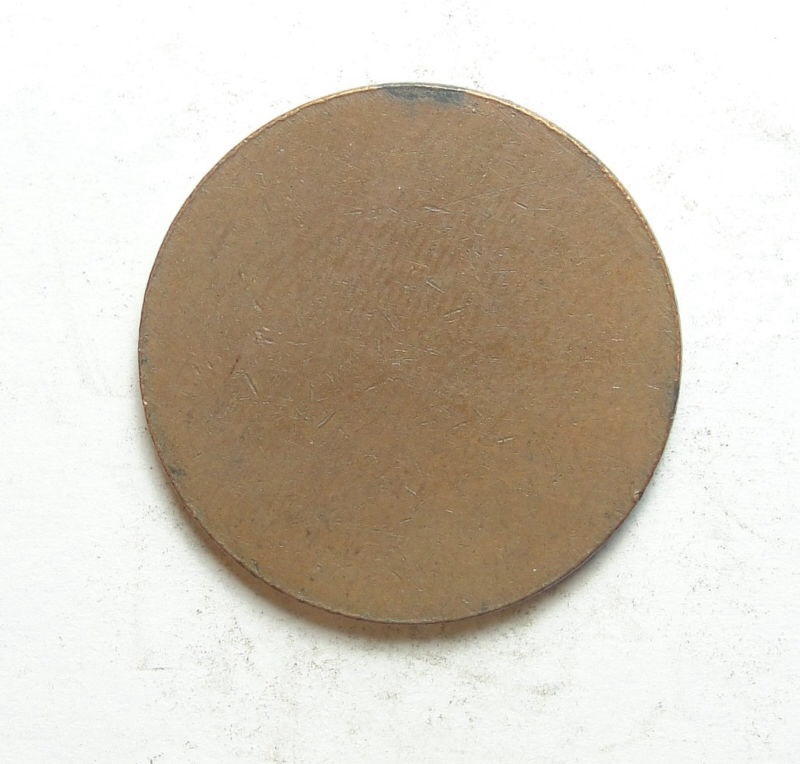 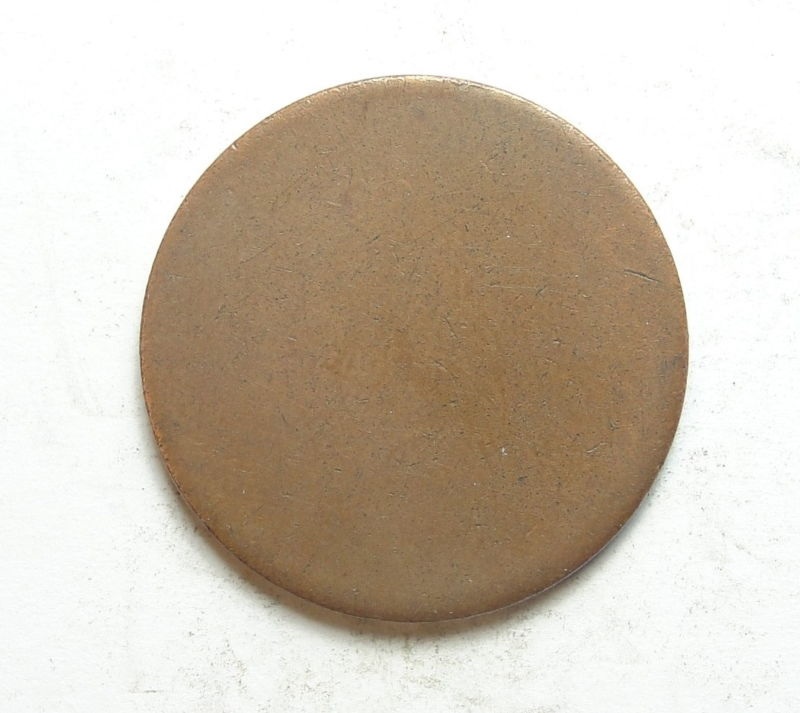 |
|
|
|
Pillar of the Community
United States
1192 Posts |
Occam razor will say it's just a copper drilling or punch out or something. Where and how did you find it?
|
|
Bedrock of the Community
Australia
21792 Posts |
Before striking it's either a blank OR a planchet, but not both.
The disks are punched from a strip of metal rolled to thickness (blank), then rimmed by raising the edge. (planchet).
This one is a blank. It may not necessarily be intended for a coin, although without knowing, it could be.
|
|
Valued Member
109 Posts |
If anything a blank planchet would have a slightly smaller diameter. Something like this would have to be TPG'd to have any market value. |
|
Bedrock of the Community
United States
17884 Posts |
I think it's a slug. I've seen other copper slugs about this size used as quarters. Oddly they tend to have reeded edges as well
|
|
Moderator
 United States
23522 Posts |
The blank loses diameter in the upsetting mill where it gets a rim; diameter seems right for that. The logical next step is XRF analysis, to see if the alloy is accurate. If that's true, I'd probably risk the cost of slabbing. My gut tells me it's not of Mint origin but my gut has been wrong before.
|
|
Valued Member
 469 Posts |
|
|
Pillar of the Community
United States
9810 Posts |
I'm with SsuperDdave on this one, it's entirely possible there are some blank Two Cent planchets out there, I don't know of any in my decades or chasing Two Cent errors and oddities. Frank Leone wrote up an article many years ago discussing the lack of error Two Cent Pieces considering the mintage figures. Very low, the mint apparently had little trouble making millions and millions of them with almost no errors, (lots of varieties though) only a few off center, capped dies, etc. are known today. I believe without looking over my notes I've seen two blanks of these one is slabbed by PCGS if I recall correctly. Quote:
What is XRF analysis? X-Ray ray fluorescence http://en.wikipedia.org/wiki/X-ray_fluorescenceBasically a (now handheld) device that measures the composition of metals via percentages by shooting x-rays through the object. Not exactly cheap enough to have in your arsenal of coin collecting tools, as most of them cost upwards of $10K and run into the mid five figures quickly. "Buy the Book Before You Buy the Coin" - Aaron R. Feldman - "And read it" - Me 2013! ANA Life Member #3288 in good standing since 1981, ANS, Early American Coppers Member (EAC), Colonial Coin Collectors Club member (C4), Conder Token Collector Club member (CTCC), Civil War Token Society (CWTS) member, Liberty Seated Collectors Club (LSCC) & Numismatic Bibliomania Society member (NBS), USMex, Member in good standing, 2¢ variety collector. See my want page: http://goccf.com/t/140440Edited by westcoin
03/06/2015 11:20 am
|
|
Moderator
United States
23522 Posts |
A large-scale gold buyer can be expected to have an XRF to test what customers bring in to sell. The Tri-city area should be large enough to have a dealer using them.
|
|
Bedrock of the Community
Australia
21792 Posts |
XRF is non destructive. As such it is only useful in examining the alloy on the surface, not in the core of the object. In the case of a 2 cent coin 1864 through 1873, it would depend on how closely controlled were the proportions of metal in the copper tin zinc alloy. The ANA may have a presentation study paper on coin alloys somewhere in it's records, against which an XRF analysis could be compared. Bullion dealers also should have access to industrial ultrasound and X-ray testing for investigating the core of suspicious coins or bars. Comparative ring tone testing against a genuine 2 cent coin would be of no use in this case. The object in question here is a blank, not a finished coin. |
| |
Replies: 9 / Views: 3,522 |
|










 Posted 03/06/2015 04:03 am


