| Author |
 Replies: 17 / Views: 2,538 Replies: 17 / Views: 2,538 |
|
Pillar of the Community
1121 Posts |
This guy is making copies of Ancient Roman Silver coins. I don't think that he is doing anything illegal because he identifies them as 'copies'. My problem is, "Will the next person up the 'food chain' be so up front?" What are your thoughts? ebay item number 151493629713Edited by Topcat7
04/08/2015 02:57 am
|
|
|
|
Pillar of the Community
Canada
1118 Posts |
He identifies them as copies in the description. The title is quite misleading.
|
|
Moderator
 United States
23731 Posts |
These are easy to spot as fakes by most collectors. But they can be passed off to less experienced collectors as originals by some dishonest seller. They should be marked on the coin copy, they are not. IMO this is fraud.
|
|
Moderator
United States
23731 Posts |
These coins are not even solid silver as he states, you can see the copper showing through the silver wash.
|
|
Pillar of the Community
Spain
629 Posts |
In Spain we have a lot of these (XXXXXX!)...
But here is not illegal at all!
If you copy a circulating coin, you´ll visit the jail for a while, but if is a coin actually not in circulation...
...you are free to do that!
THESE (XXXXX) ARE KILLING OUR HOBBY!
(I have sustituted a lot of spanish insults for XXXX, if anyone want to know, he can visit any spanish coin forum and look for "fake")
|
|
Pillar of the Community
United States
513 Posts |
Not marked "copy" and artificially worn. These are pretty obviously meant to be passed on as real by whoever buys them. I don't know if it's illegal but it'd deeply immoral.
|
|
Moderator
United States
23522 Posts |
Regardless of any moral considerations (it's despicable), he's not going to last long.  |
|
Bedrock of the Community
Australia
21792 Posts |
Wot no ".925" marked on it?
The Royal Australian Mint made a copyies of Olympia silver staters of Elis for the Athens 1996 Olympic games. They are marked ".925"
|
|
Pillar of the Community
United States
5010 Posts |
if any of you new collectors have lurked on this thread and it's isn't very obvious to you that these are fake coins, you need to stay off ebay for your coin purchases. yeah, it's kind of weird. if I were the king of ebay I would make them put "replica" in the listing title as well, it's seems they are hiding that in the "fine print" so to speak. also I would like them to be marked in someway to clearly show they are copies or fakes. but man, it hard to not spot those as fakes. it would almost be like making them put "this is a fake piano" on their silver piano necklaces. and they are selling them in the costume jewelry price range, not in the price ranges of the ancient coins they depict. so, I have mixed feelings. Edited by chrsmat71
04/08/2015 11:52 pm
|
|
New Member
United States
36 Posts |
Would you guys mind listing some things you see that tell you it is fake?
I am new to ancients, and think it would be helpful and beneficial...at least for me!
Thanks!
|
|
Pillar of the Community
Spain
629 Posts |
you must see all those small, round bubbles on all the surface, the "dull" appearence of the surface, the different colour (if it´s fine silver) with the colour of one genuine denarius of that epoch (made from much more debased silver)...
I have an idea...
I think that I have that type of denarius, I´m going to take an image to compare
|
|
Bedrock of the Community
Australia
21792 Posts |
@Manning19:
Calgary Coin (Canada) has very good tutorial (about 90 pages) on how to identify fake ancient coins.
Tesorillo.com (English mechanical translation), ( about 24 pages is also very good.
Also Google 'Counterfeit coin detection' (11 pages) which covers mainly ancient coins.
'Bulgarian school' by Prokopov, - counterfeits with diagnostics.
All of the above information is available on line and is covered by copyright, so it will have to be read off the screen. Make yourself familiar with these so you will know where to look within them.
'Numismatic Forgery' book by Charles M. Larson has good information of the manufacture of fake ancient coins and their detection. Book may be available for sale.
I think is is a very worthwhile exercise to buy fake ancient coins provided that they are sold to you as fakes copies or replicas at the appropriate price.
You would expect any dealer worth his salt to be very familiar with the identification of fake ancient coins.
One excellent for him to learn about them is to have a collection of them from which he can learn.
Therefore why should all collectors of ancient coins also acquire this very important skill?
|
|
Moderator
United States
23731 Posts |
Wayne Sayles who has put out and entire series of books on ancient coins has a book on fake coins which is a very good read. The book isn't expensive around $25 and you can probably find a copy on ebay. |
|
Pillar of the Community
United States
513 Posts |
It takes looking at hundreds or thousands of coins and paying attention to really be able to spot fakes, but these have a very classic sign of casting in the porosity of the surface.
Now that isn't to say that every coin with a porous surface is a fake, or especially that one without a porous surface is necessarily real, but if you see a surface that looks like this then you should be staying away.
|
|
Bedrock of the Community
Australia
21792 Posts |
It is well worth while to know how to identify a fake that has been struck from copy dies off a genuine coin, that has the same alloy as the genuine coin. This type of approach to fake production understandably produces some of the most dangerous fakes, and there is no substitute for experience in the handling of these.
Good quality fake American gold coins are often made in this way.
The best fakes are made in exactly the same way as the originals were made, that is, using the same methods, including hand die cutting for ancient coins. These fakes are usually spotted because of the fact that the modern hand die cutter is not of the same cultural mentality as his ancient counterpart, and it comes out in the tiny differences in the way the dies are cut.
Other modern methods include laser optic profiling of a coin into a digital model, the information of which is used to cut a die by the spark erosion method. These fakes have their own characteristic copy 'signatures' but they are very dangerous if you haven't seen one of these copies, and haven't been told what you are looking at.
Cast copies, by comparison, are reasonably easy to identify except with ancient coins which the genuine ones which may have acquired porosity from their burial. Some tests, such as comparative ring tone testing as with most ancient coins, is irrelevent.
|
|
Pillar of the Community
Spain
629 Posts |
Let´s see... 1.- This is the cast fake coin. 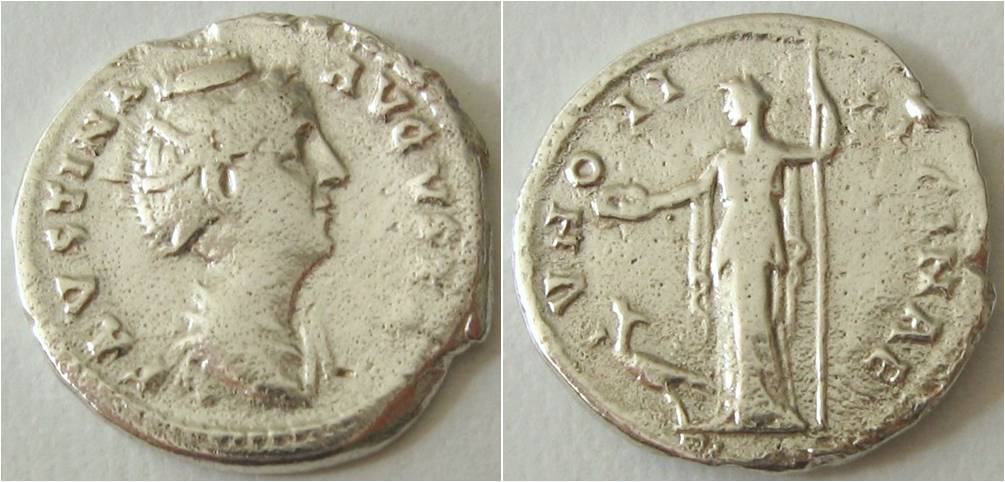 2.- this is a genuine coin of the same period... 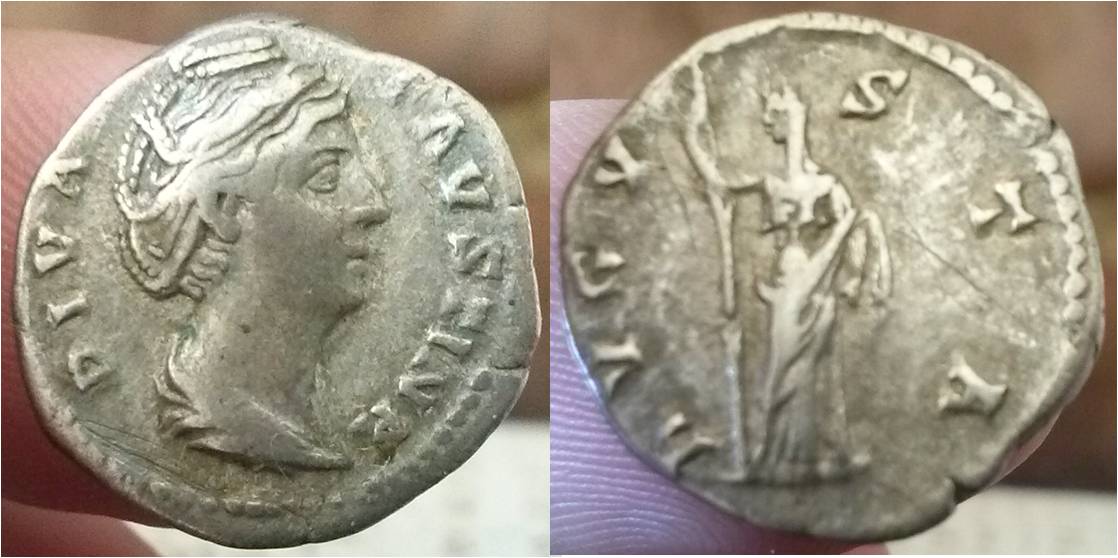 You must see that there is no bubles marks on the surface, the wearing is not uniform, the upper details are much more worn; in cast fake coins the worn is more uniform, the coin is "dull". 3.- Another sample, but in this case is a genuine fake... I must explain myself: Is an ancient counterfeit coin, made with a copper core covered with silver... 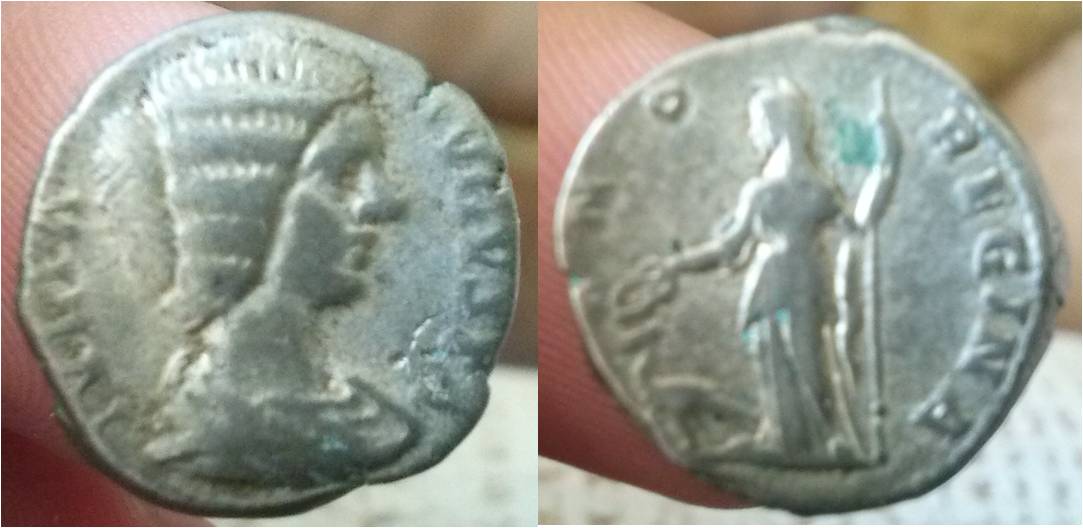 4.- and two more samples... 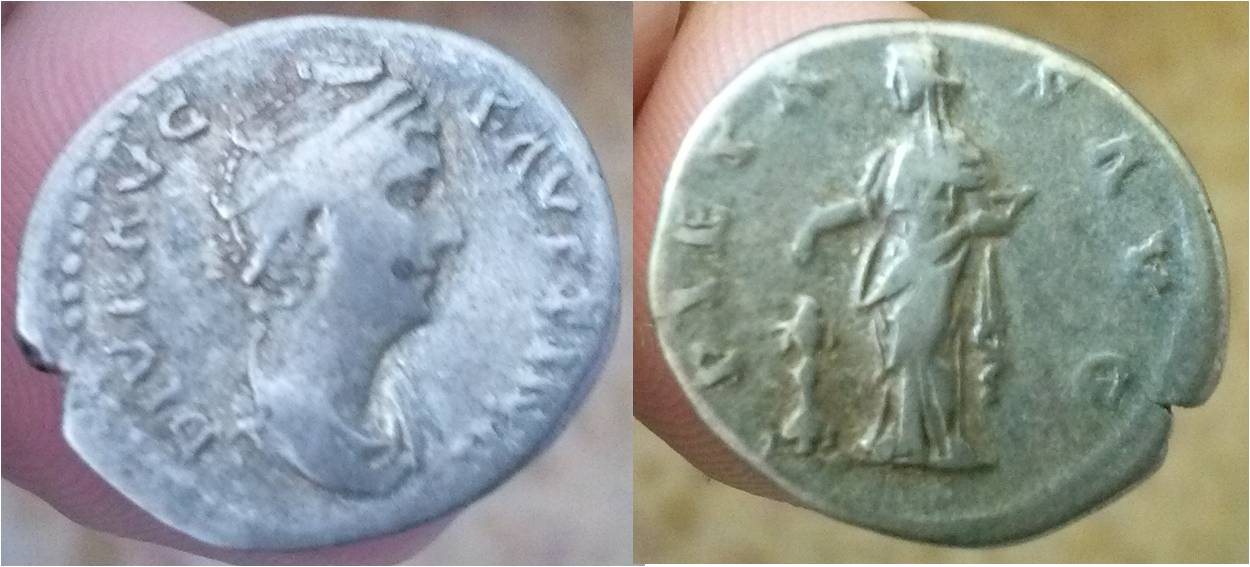 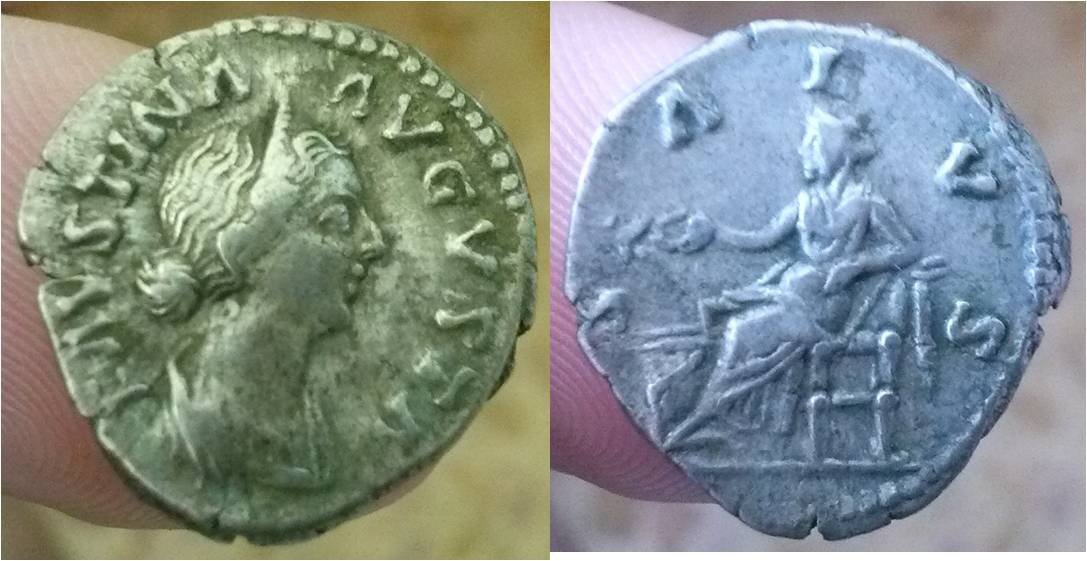 |
| |
Replies: 17 / Views: 2,538 |










 Posted 04/08/2015 01:26 am


