





 First Page


 Posted 04/22/2015 10:18 pm


Coop,
You can see modern press equipped with a feeder here:
You'll see them at 2:25 into the video. It goes by fast so slow it down by about 50%.
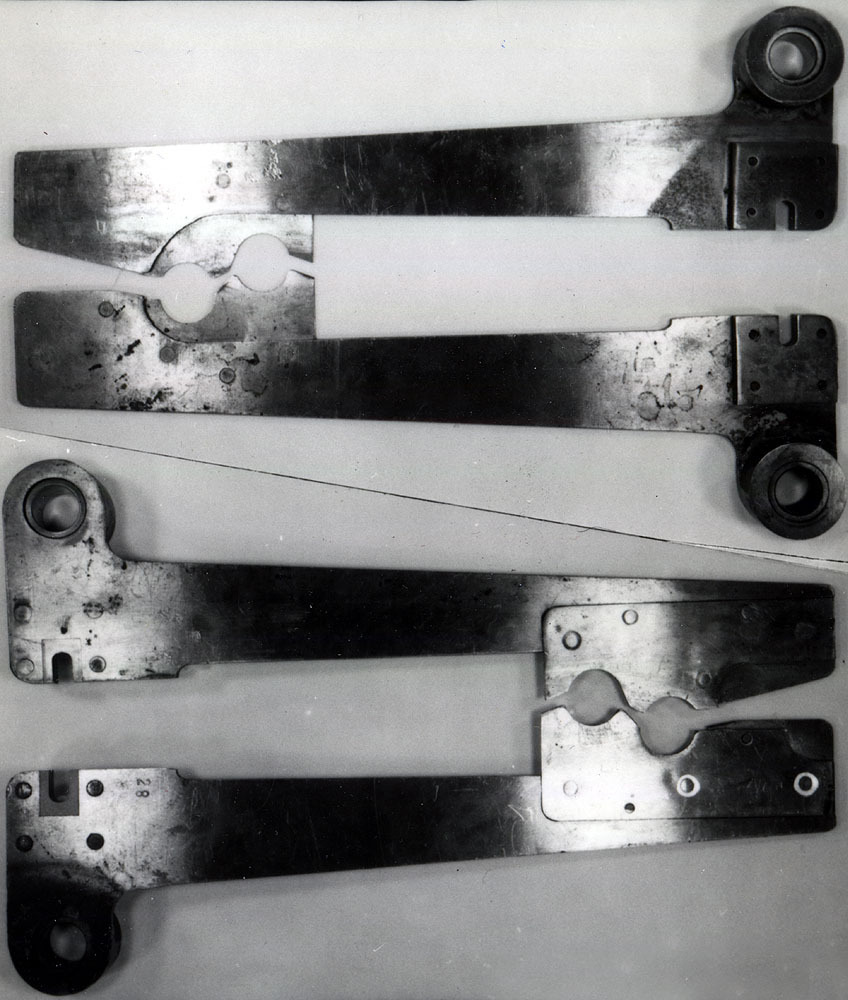
Here is a dual feed feeder finger from about the late 1960s/1970s.
For those that care:
This is a top and bottom view of "Duel Feed - Feeder Fingers". These (and variations of this concept) saw use in the US Mint from about the late 1960s and into the 21st century where many have been phased out by high speed presses fixed with single die pairs and more sophisticated feeder/ejector systems.
The lead end of the fingers are the portion that ejects coins from a duel-die set up. You'll notice that one side of the lead end is straight and the other machined at about a 12 degree angle. The side that is angled is able to catch and shift coins from the die that is off set from to the right of other die and eject them both without incident (or not -- to the delight of error collectors). Study the two "holes" within to see the placement of the dies in relation to each other.
Improper feed and/or misshapen planchets are often the cause of feed-related errors such as Off Centers and Double Strikes.
Image courtesy of Marilyn Van Allen/Leroy Van Allen.
From CONECA's Introduction To Mint Errors & Varieties PowerPoint Show.
You can see modern press equipped with a feeder here:
yHu4Aqn__1M
You'll see them at 2:25 into the video. It goes by fast so slow it down by about 50%.
Here is a dual feed feeder finger from about the late 1960s/1970s.
For those that care:
This is a top and bottom view of "Duel Feed - Feeder Fingers". These (and variations of this concept) saw use in the US Mint from about the late 1960s and into the 21st century where many have been phased out by high speed presses fixed with single die pairs and more sophisticated feeder/ejector systems.
The lead end of the fingers are the portion that ejects coins from a duel-die set up. You'll notice that one side of the lead end is straight and the other machined at about a 12 degree angle. The side that is angled is able to catch and shift coins from the die that is off set from to the right of other die and eject them both without incident (or not -- to the delight of error collectors). Study the two "holes" within to see the placement of the dies in relation to each other.
Improper feed and/or misshapen planchets are often the cause of feed-related errors such as Off Centers and Double Strikes.
Image courtesy of Marilyn Van Allen/Leroy Van Allen.
From CONECA's Introduction To Mint Errors & Varieties PowerPoint Show.
Edited by koinpro
04/22/2015 10:30 pm
04/22/2015 10:30 pm


