Stack's Bowers - World Coin of the Week - Sun Yat-sen was born in 1866 to a poor peasant family in the south of China, near Macau. His elder brother left China seeking work in Hawaii, and Sun Yat-sen followed him at the age of 12. Honolulu offered Sun Yat-sen an opportunity to learn English and receive religious education at an Anglican Church School. Upon returning to China, he studied in Hong Kong, officially converted to Christianity and married. By the time he attained his doctorate in medicine, revolutionary ideas had begun to form. An early attempt at fomenting rebellion in Canton failed as Sun Yat-sen and his associates were discovered. With great difficulty the group escaped capture and avoided execution. From this point Dr. Sun Yat-sen became a refugee, studying medicine in London and travelling throughout Europe, America and the Far East. While on his travels, he spread his revolutionary ideas to overseas Chinese students and expatriates, many of whom donated funds towards the downfall of the Manchu Imperial dynasty. Sun Yat-sen settled in Japan, which proved a fertile staging ground for his revolutionary group.
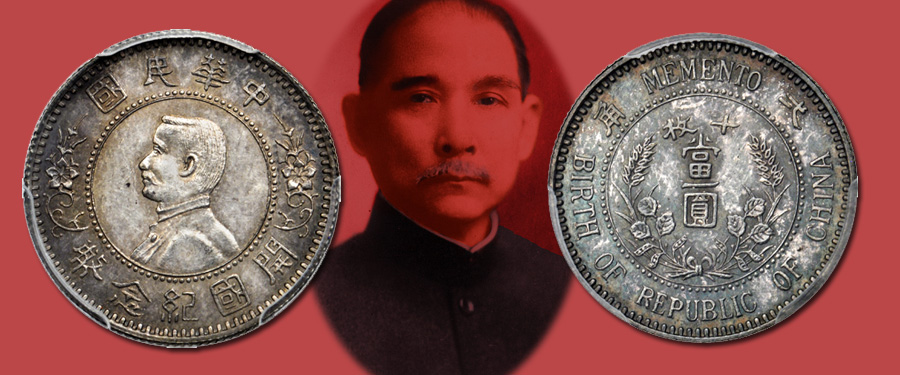
On October 10th, 1911, revolution broke out in China. Just months later, the Manchu emperor abdicated and his government collapsed. Dr. Sun Yat-sen then led the country as the President of the Provisional Republican government in Nanking. An election was held later, and Yuan Shih-kai became President, while accepting the Provisional Constitution provided by the National Council at Nanking. Despite this near-constant struggle and frequent exile, Dr. Sun Yat-sen is widely renowned for his role as a founding father of the Republic of China. He continued to lead revolutionary governments throughout the Warlord Era. His legacy is positive due to his lifelong sacrifice in service of his people, as well as his political philosophy of nationalism, democracy and protecting the people's livelihood.
Read the Entire Article 








 Posted 04/30/2015 3:11 pm


