| Author |
 Replies: 11 / Views: 1,390 Replies: 11 / Views: 1,390 |
|
|
Valued Member
Canada
488 Posts |
k, so I got this little cruster for free so I am up. I am suspicious that the guy I got it from may have dipped it before he gave it to me as when I first saw it the silver that isn't crusted over was surprisingly much more brilliant before he gave it to me. now it has kinda a dull tone to it, but still looks silver. I have had it soaking for a couple weeks in olive and scrub with a toothbrush once a week. I am to see more of the silver. So my questions are: IF the pictures are clear I would love to know what it is. (I have been searching and have found similar with six layer two turret but haven't found any examples in silver.)With that I would love to know if there is any value to it in the condition it is in. And if there is anything other than olive oil that will clean this baby up. Thanks in advance! 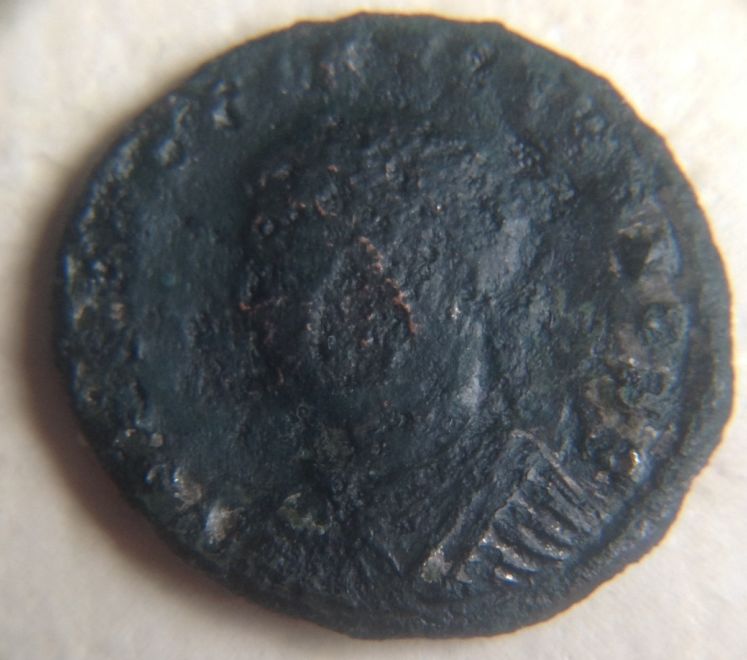 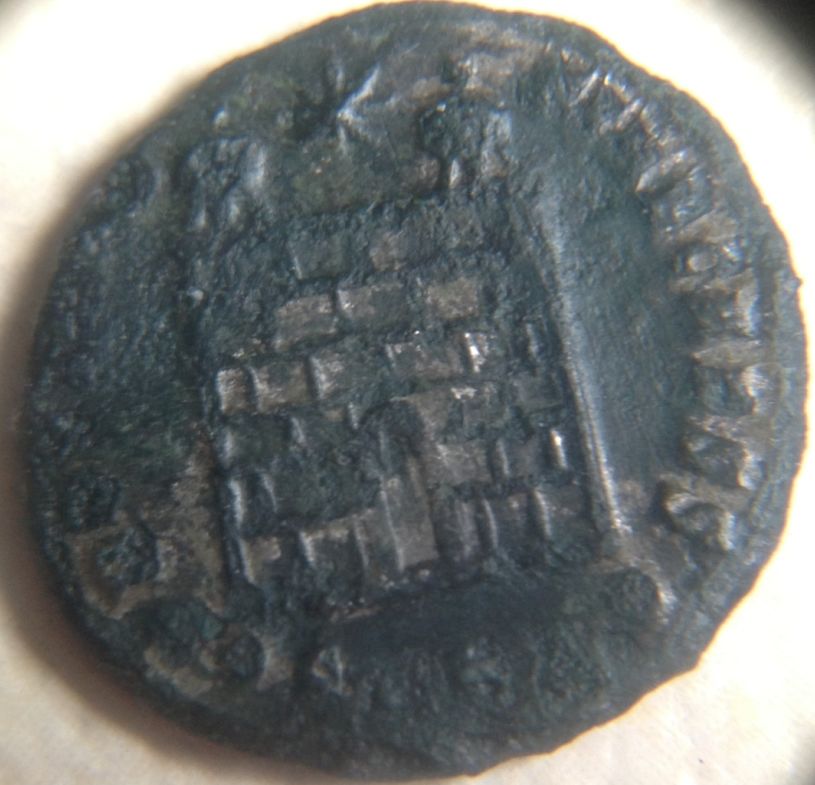 |
|
|
|
Moderator
 United States
23731 Posts |
The coin is none as a Camp Gate because the reverse depicts the facade of a Roman forts gate. The only art of the legend I can make out is NOBC which wonder indicate that this is not an Augustus but a Caesar. My best guess is Constantine II. The coin is not silver but did have a silver was on it. Some of which still remains.
|
|
Pillar of the Community
United States
5010 Posts |
the coin is bronze, but was silvered (was given a silver dip), I don't think it will clean up much more. I can't read the legend but it is probably constantine ii or constantius ii.
|
|
Pillar of the Community
United States
5010 Posts |
got to be fast to beat ski to the punch!
|
|
Pillar of the Community
Italy
1790 Posts |
Either Constantine II or Constantius II.
|
|
Valued Member
 Canada
488 Posts |
Ok. That makes sense. I was confused because the spot on the cheek looked bronze or copper but silver in other parts.
Worth a few bucks?
|
|
Valued Member
Canada
488 Posts |
A question comes to mind now. Was this supposed to be silvered or was it just done buy some person in the garage?
|
|
Pillar of the Community
Italy
1790 Posts |
Yes! These are a left over from the Crisis of the 3rd century coinage debasement. 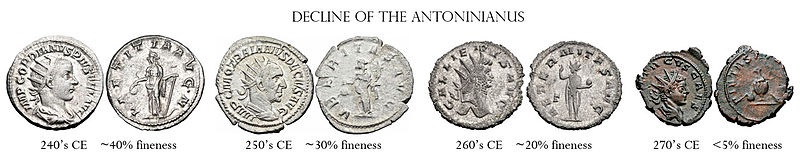 As you can see, the silver content decline and the government resorted to just silvering a few microns of Silver on a base metal coin. This system ended with the coinage reform of Valentinian I in the late 360's. |
|
Pillar of the Community
Canada
1269 Posts |
@Augustus Maximus
Thanks for that interesting depiction of coin debasement. I assume that the 1st century AD denarii still had a high percentage of silver?
|
|
Pillar of the Community
Italy
1790 Posts |
@orfew
Good Question.
The Roman Denarius under the early Empire was nearly pure silver ( 97-99% fine). Nero debased the Denarius to around 80% in 64 CE; he then "rebased" the coin to 90% fine in his final year. The Flavian Emperors mostly kept the 90% standard ( except for early Vespasian issues and most of Domitian's coins that were 95-99% )
Trajan put the denarius on the 80% standard midway into his reign. This standard remained until late in Marcus Aurelius' reign. Marcus was forced to debase to coin to around 68% fine. Septimius Severus debased to coin to around 41% early in his reign. This was due to his massive recruitment programs for the Army and Auxiliaries.
|
|
Pillar of the Community
Canada
1269 Posts |
@AM
Thanks so much for the extensive answer!
|
|
Valued Member
Canada
488 Posts |
I see! That is some amazing info. Thanks!
|
| |
Replies: 11 / Views: 1,390 |
|







 Posted 05/04/2015 10:53 pm





