| Author |
 Replies: 8 / Views: 1,328 Replies: 8 / Views: 1,328 |
|
|
Pillar of the Community
United States
1911 Posts |
I apologize for not having pics yet (and no "before rinse" at all) but I dipped a random penny with a bunch of junk on it in 100% acetone (fingernail polish remover) and I saw a few little specks but from what I could tell there is no huge difference? Does it depend on what the "stuff" is for acetone to help remove it? I will get an after pic up later. I soaked the penny in acetone for about 20 mins, then took out and put into a different acetone container for one more rinse for about 5 minutes. Just thought I would share it.
|
|
|
|
Moderator
 Australia
17037 Posts |
For starters, it should be pointed out "fingernail polish remover" and "100% acetone" are not necessarily the same thing, as fingernail polish remover is often diluted with water and/or has fragrances added to help mask the strong acetone smell. Secondly, yes, it does make a great deal of difference what the "stuff" is. Acetone is a chemical, not magical; it will only dissolve or depolymerize certain things, in obedience witht he laws of nature. If the "junk" is actually corrosion, acetone won't do anything at all to it, for example. Using acetone on a random coin will rarely do harm, but will rarely actually do anything visible at all. I recall trying to clean a pile of Thailand coins with acetone that had been glued to a piece of cardboard for decades (as is commonly encountered in "tourist sets" from that region). The tin and silver coins cleaned up great, the bronze ones only with difficulty and the cupronickel ones remained stained by the acidic vapours of the glue. Since you say the acetone didn't remove much, then posting an "after" pic is going to be almost as good as posting a "before" pic. So post away.  Don't say "infinitely" when you mean "very"; otherwise, you'll have no word left when you want to talk about something really infinite. - C. S. Lewis
|
|
Pillar of the Community
 United States
1911 Posts |
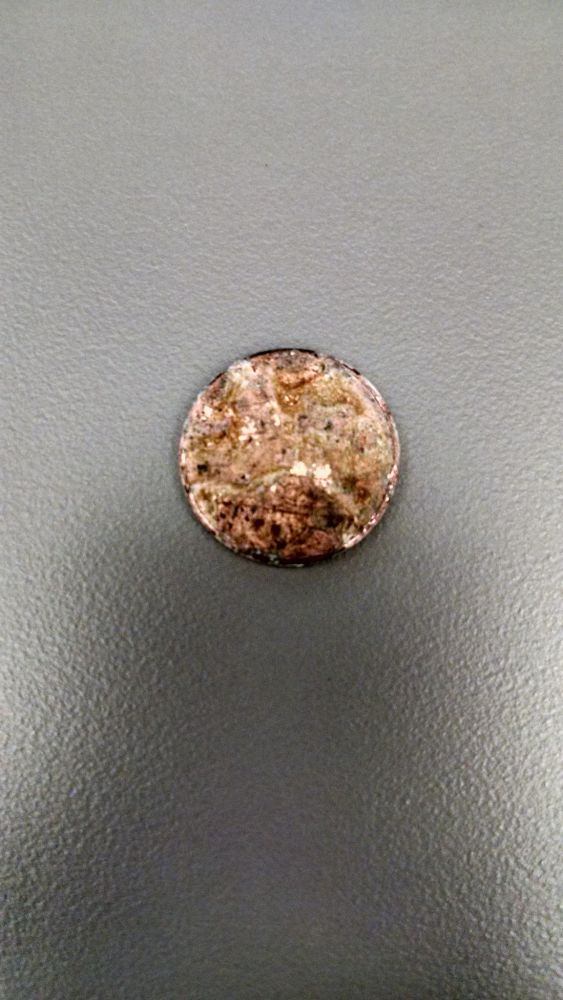 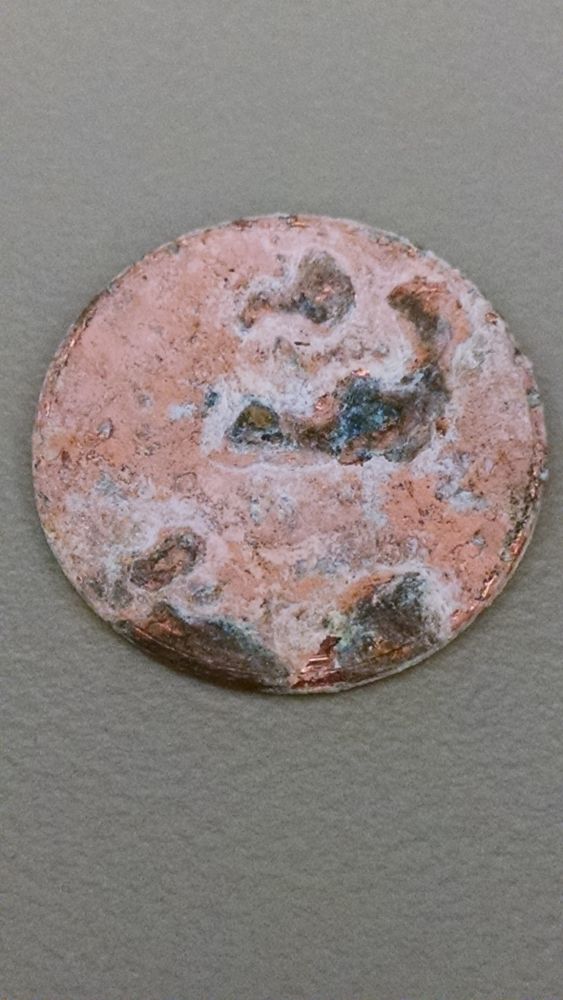 Here are the pictures. I am not sure what the stuff is on the penny and that may be what I need to focus on as actually using acetone doesn't seem like a hard process but need to know if it would actually work on my coin or not. |
|
Bedrock of the Community
United States
20753 Posts |
What Sap said is about it. And as to those coins you just posted, I'm not sure anything would help those. They appear more damaged than coated or plated or anything.
And if your going to use Acetone, remember it is a lot cheaper to get the pure stuff in a can from almost any place that sells paint and usually a lot cheaper than finger nail polish remover.
|
|
Pillar of the Community
United States
1911 Posts |
Alright I had saw that a lot of posts say fingernail polish remover wasn't the same and it did have three ingredients in the bottle. It was only 80 cents for the bottle though so not too bad. And as for the coins I can see there is nice detail underneath but have no clue how long this stuff has been on it. Just wanted to try and see what would happen with it. Thanks for the info!
|
|
Bedrock of the Community
United States
17884 Posts |
That coin is covered with corrosion. Acetone won't touch it.
|
|
Pillar of the Community
United States
1911 Posts |
How would one tell corrosion from other stuff? Is it pretty easy to tell, or where could one learn this, unless just a Google search?
|
|
Rest in Peace
United States
18456 Posts |
It is usually easy to tell the difference between corrosion and other stuff. just takes a little time . just remember; acetone will eliminate grease, oil, fingerprints, some dirt and contaminants.
as far as corrosion; an electric wire wheel, another words forget about it !
|
|
Pillar of the Community
United States
1911 Posts |
Lol yeah that is true. I found this penny on the ground in a Walmart parking lot so I am not too sad about it, especially since I can see it is a newer Lincoln shield penny. |
| |
Replies: 8 / Views: 1,328 |
|







 Posted 05/11/2015 10:33 am


