











 Posted 12/23/2007 11:11 pm


It is indeed from "around 1300", just not 1300 AD. 
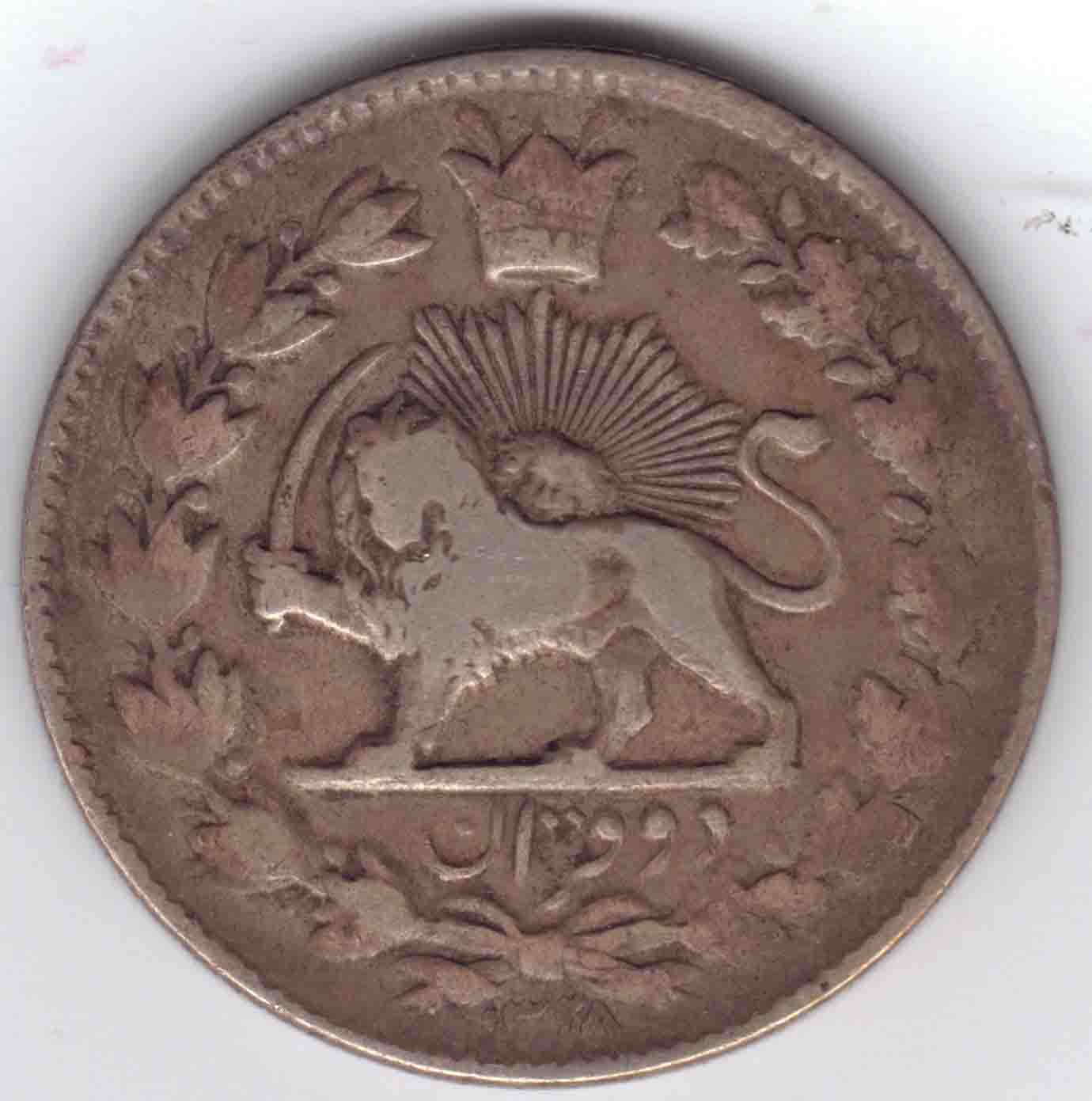
The date in this case is on the lion-side, at the very bottom, beneath the ribbon. It's very hard to make out, even on that highly magnified pic, but I can make out "1328" in Persian/Arabic numerals. That would be the year according to the standard Islamic calendar, corresponding to 1910 AD.
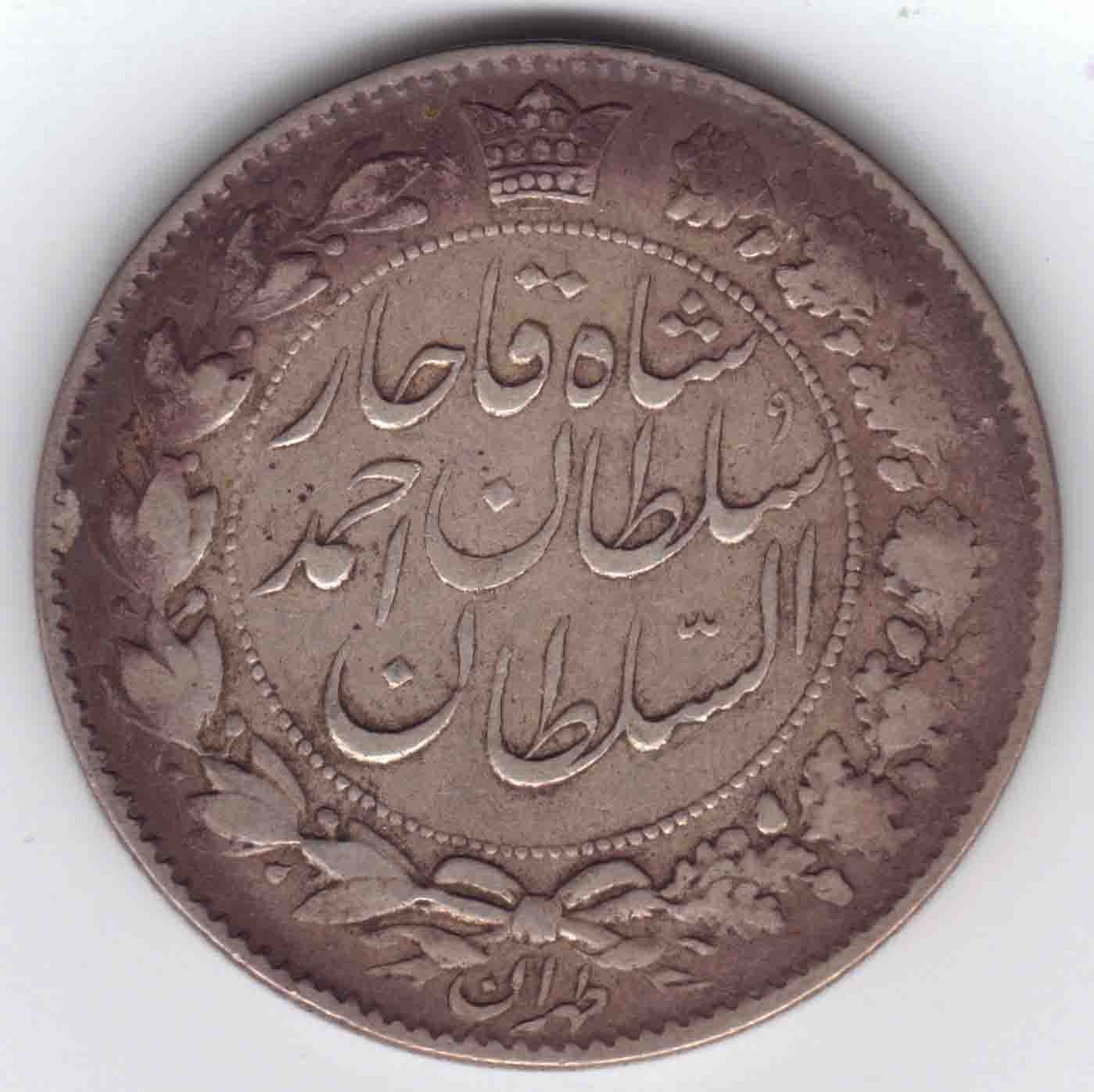
Below the lion it says the denomination, "2 krans". On the reverse, the central text is the king's name and titles: "Shah Qajar Sultan Ahmad, the Sultan". At the bottom of the reverse, below the ribbon, is the mint-name, "Tehran".
Note: Krause's guide to the titles and translations for Iran (in my 2006 33rd edition, anyway) seems to be almost completely wrong.

The date in this case is on the lion-side, at the very bottom, beneath the ribbon. It's very hard to make out, even on that highly magnified pic, but I can make out "1328" in Persian/Arabic numerals. That would be the year according to the standard Islamic calendar, corresponding to 1910 AD.
quote:
Would appreciate translation as to what is written below the lion and on the reverse,the text in the middle and below the ribbon.
Below the lion it says the denomination, "2 krans". On the reverse, the central text is the king's name and titles: "Shah Qajar Sultan Ahmad, the Sultan". At the bottom of the reverse, below the ribbon, is the mint-name, "Tehran".
Note: Krause's guide to the titles and translations for Iran (in my 2006 33rd edition, anyway) seems to be almost completely wrong.
Don't say "infinitely" when you mean "very"; otherwise, you'll have no word left when you want to talk about something really infinite. - C. S. Lewis


