This was my presentation to my Theory of Knowledge class about collecting coins. Most of them knew I collected coins (small class of <30 students), but none of them understood why someone would invest in such a thing. This was a required presentation, so I decided to explain the "why?" to them. I got a near-perfect score for this presentation.
Initial Scenario: I walk into a coin store and see two of the same kind of coin. They are both certified by a third-party grader and they both have the same numerical grade.
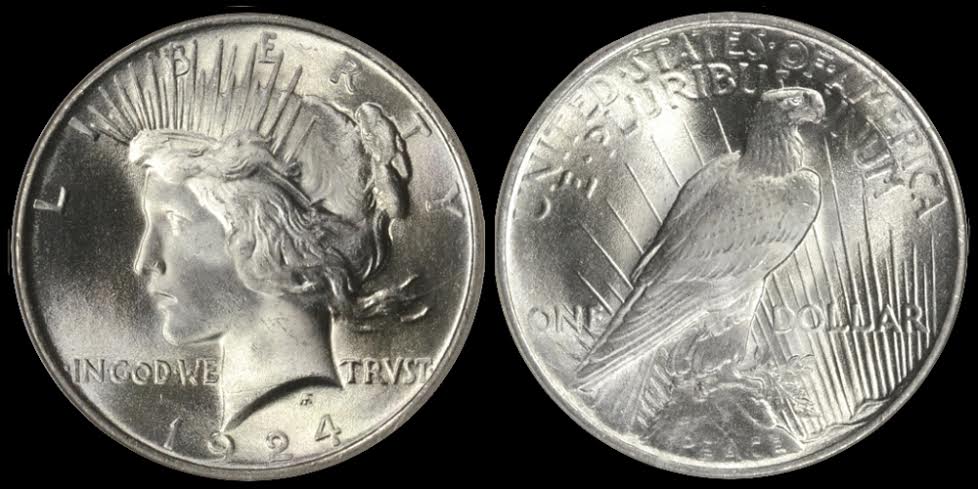
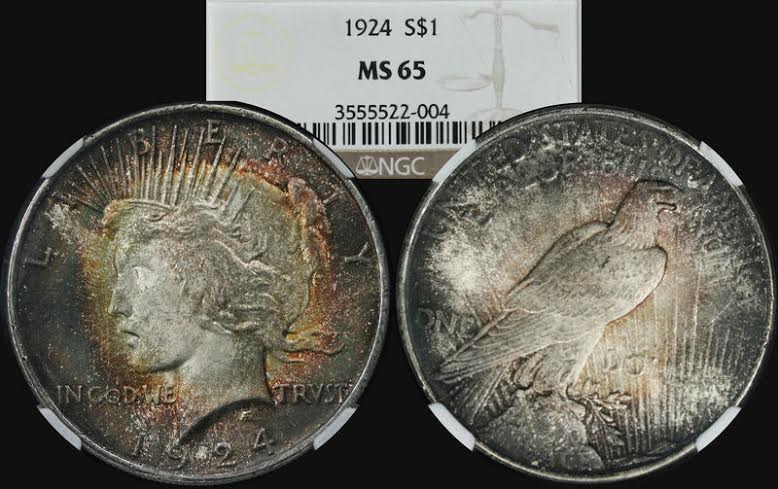
However, one has mottled toning with subdued luster while the other is a beautiful, vibrant coin with blazing luster. They both sell for the same price, just because they both have the same numerical grade. This in itself presents many different knowledge issues. Firstly:
Knowledge Issue 1: Why do people put so much trust and importance on numbers?
Before I answer this question, I will give a little background info on the grading of coins. In numismatics, all coins and paper money are graded on a 70-point scale developed by William H. Sheldon, with 1 being the worst and 70 being an absolutely perfect coin. Coins whose grades range from 1-59 have wear from circulation, and those between 60 and 70 have no wear whatsoever, so they are deemed 'uncirculated.'
Anyhow, to answer the question of why humans put so much importance on numbers and quantification, humans like the quantification of everything because numbers are a technicality that don't lie, have no bias or opinion; numbers and math are purely logic.
But there is a shortfall, a doubt in this system:
Knowledge Issue 2: Can numbers be applicable for everything?
Are they applicable when describing beauty? Some argue that, yes, numbers can be used to describe beauty. For example, Greeks and Renaissance artists explored their fascination with the golden ratio and proportionality in their paintings, sculptures, and architecture.
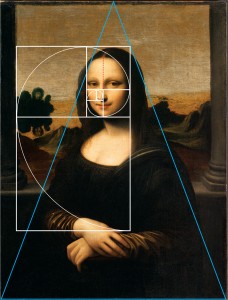
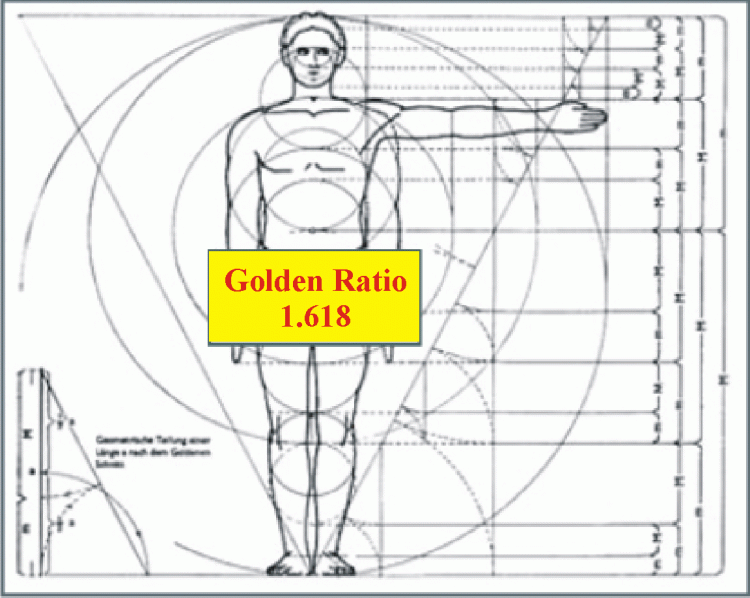
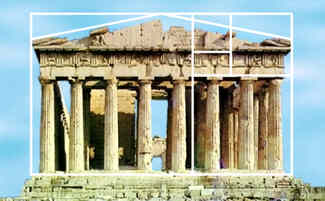
In addition, they also expressed a fascination with the symmetry and patterns in nature, like snowflakes and flowers.

However, there are some examples of beauty that can't be quantified. For example, when I was in district band in 10th grade, the director told the band that articulation could be quantified, with staccato notes being a 50% value, an accent being 75%, a legato note being 100%, and so on.
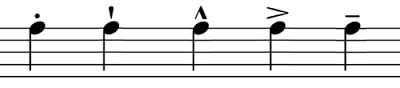
However, our new band director, Mr. Thompson, told us that the type of articulation is based on the style and the airflow that make up a note. For example, staccato notes only had to be light and separated, with no mention of length, and accented notes have an emphasis at the beginning of the note, also with no regard for the length.
[I played examples of both interpretations for the class]
Which is more attractive? [The class unanimously agreed that the stylized articulations were more attractive] Though the stylized articulation could be scientifically quantified, it is hard to quantify the style and expression in the articulation.
In addition, the same idea also applies to numismatics. In numismatics, the term used to describe beauty is "eye appeal" Numbers are never used to describe eye appeal because it cannot be quantified.
As a result, dealers and auctioneers resort to using adjectives to describe the beauty of a coin, either by describing the colors present, surface quality, or any other combination of physical attributes. In addition, third party graders (businesses to authenticate, grade, and encapsulate [slab] a coin) use special symbols such as a plus or star, to designate an above-average eye-appeal, or, in other words, a beautiful coin.
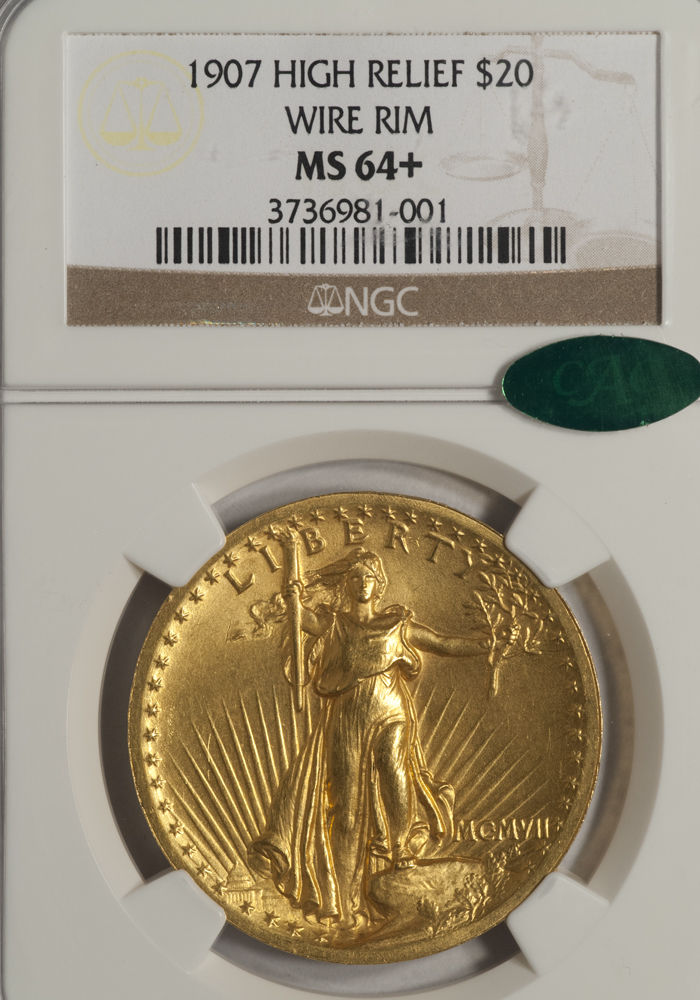
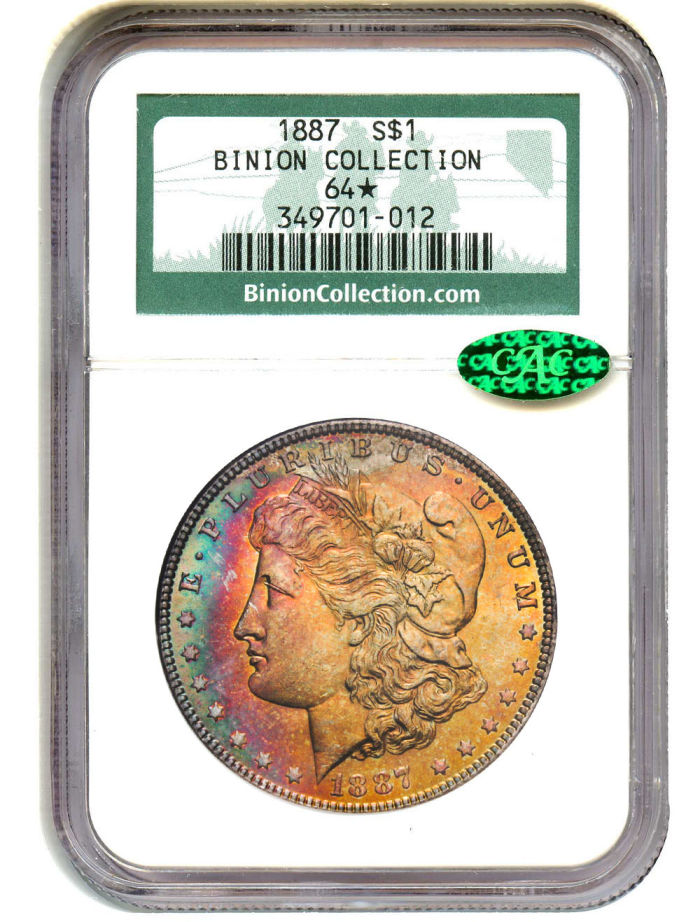
To illustrate an example, I have three examples of the same type of coin, including the coins presented in the initial scenario. Which one is the most beautiful, or has the best eye appeal, to you?
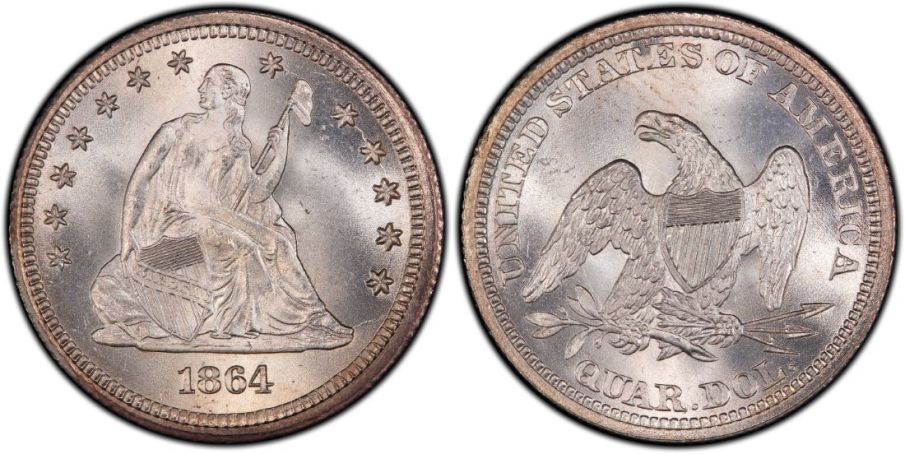
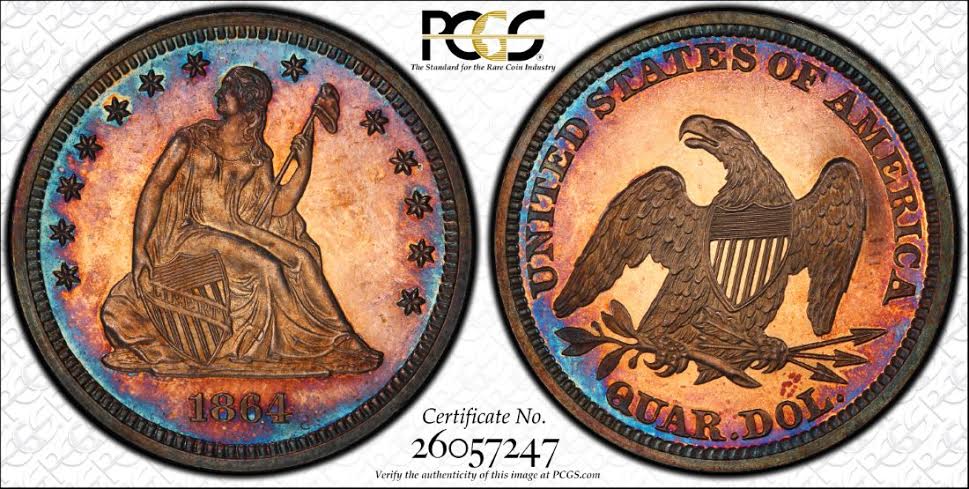
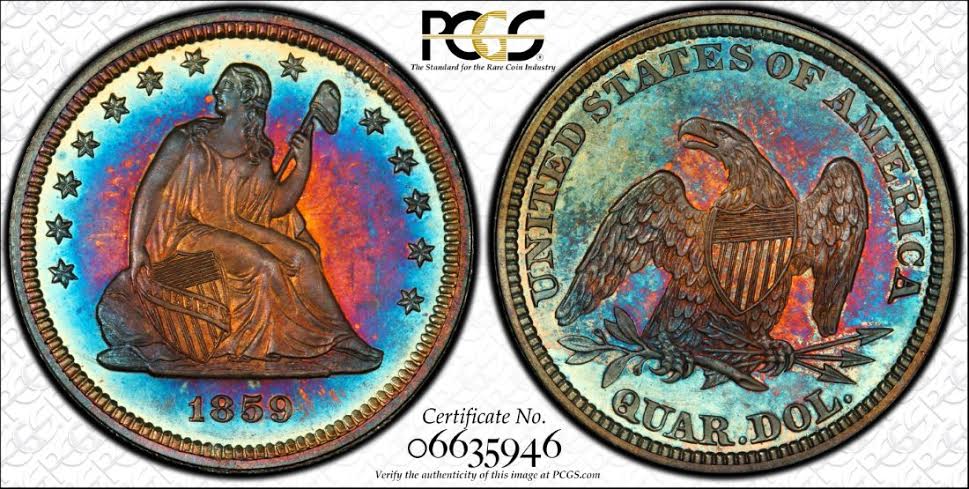
[The class unanimously aggreed that the third one was the most attractive]
As you can see, beauty is sometimes an opinion not backed by numbers. There is something more that numbers can't describe.
Since eye appeal is just an opinion then...
Knowledge Issue 3: What is beauty? Is there something more subjective to beauty?
Beauty is all personal preference just like in the cliche expression "beauty is in the eye of the beholder" As a result, this makes the definition of beauty very subjective. Is it the intricacy of a piece? Or the design of a work? Or the intent behind the work? Or you could also judge beauty by the objective qualities, such as symmetry, patterns, colors, etc. However, there are deeper meanings and interpretations in beauty that can't really be described objectively or numerically in the Area of Knowledge of art.
For example, the
Gobrecht dollars are regarded as some of the most beautiful coins produced in the US.
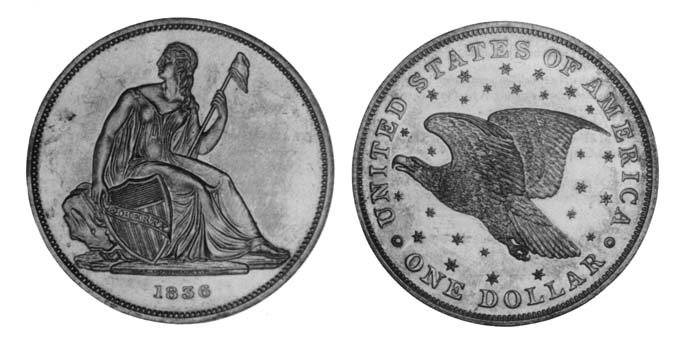
Is it because of the of the powerful and majestic depictions of Liberty and the Bald Eagle, or is it because of the subtle symbolism that represents the strength of the United Stated and the power of Liberty? Though neither answer is wrong, neither is technically right as there is no unanimous answer as to why the
Gobrecht dollars are beautiful.
In numismatics, Eye appeal and grading are the most complicated, finicky, and opinionated things in numismatics. However, there are other aspects to coin collecting that make it more fun than frustrating. They are the artful designs on the coinage and money of our past and from around the world. In that context...
Knowledge Issue 4: What is art?
Semantic distinction: I will semantically define art as the expression of one's self in a way that others can understand and experience. In the numismatic community, many collectors of
US coins consider our past money to be more artful than that of the present, myself included. Why do we feel this way?
I have four different coin designs, two modern and two that came immediately prior. Which do you like better?
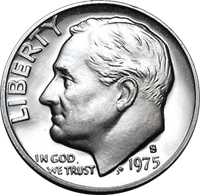
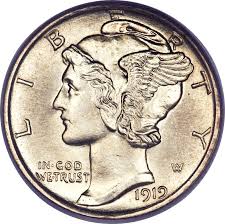
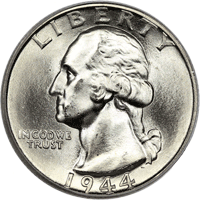
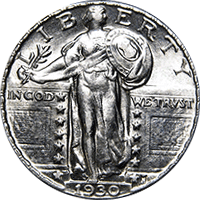
[The class unanimously agreed that the older designs were more attractive]
Is it because we're used to and bored with the current designs and like to see other designs? Or is this feeling the result of a deeper meaning?
To examine this, we have to ask: What is the purpose of art? Is it to make us happy? Is it to express ourselves to everyone? Or is it simply to have fun?
I believe that Art can have any meaning to the artist and to the audience and can take any form. However, What if there is no meaning to the piece of art, or what if we don't understand it? Is it then not art? For instance, there is Rap. As many of you [my classmates] might know, I dislike rap. This is because I don't see the art and meaning in it. However, the new band director, Mr. Thompson, says he can appreciate rap as he believes there is no "bad music." Because our views are different, does that mean one of us is wrong? No! It just means that we have different opinions of what art is. The same is also true for some forms of modern art. [specific example removed as it may offend others on this forum and may push the family-friendliness of this forum]
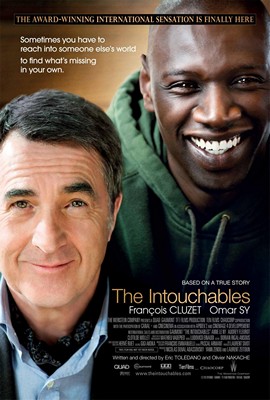
However, many ask: Who are we to say whether or not something is art? I will counter this question by saying that it is a matter of opinion of what is attractive or not. This debate is relatable to a Scene from the movie 'The Intouchables.'
In this scene, a rich and eccentric crippled man looks to buy a piece of modern art that looks like a nosebleed on a canvass.
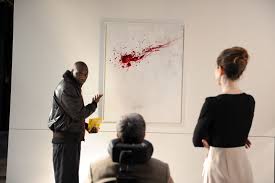
The man's nurse aid, a black man from the ghetto part of France, tries to persuade the man from buying it as he did not believe that it was art. He then says that he could paint something just as good, if not better. The rich man decides to purchase the painting anyway for €50,000. The aid holds up his word and BSes a random painting without any meaning.
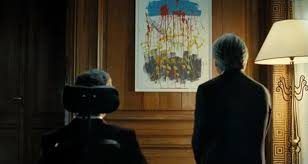
He then asks various members of the household what they thought of the painting and asked them to interpret the meaning of it. They all have different interpretations. He later sells it for €12,000. Therefore, not all works that are considered art have deep meanings and intentions. We can infer that it sold only because someone was attracted to it and had their own interpretation of its beauty.
This attraction to certain things leads to my last point:
Knowledge issue 5: How does one assign value to something?
This Depends on many factors, both objective and subjective: intention (to invest, collect, to have status symbol, etc), beauty, history (the sacredness of holding something from an important era from the past), rarity, uniqueness (whether or not it will be available again and if it creates a special meaning in someone), and emotional attachment. In essence, The value of something depends on whether or not it make me or the beholder happy or if it has meaning in my life
The numerical value Boils down to what someone will pay for it, physically or emotionally for the purposes of love, religion, life, priorities, pride, and happiness.
Conclusion:
So, are there rules for objective beauty? Greek mathematicians found patterns and ratios that are appealing to the human eye, but with the evolution of society, the opinions of beauty have also changed. Therefore, it is up to the individual to determine the beauty and value of something based on what they associate it with.
Solution #15: I had a momentary existential crisis when I was trying to buy an 1839 half dollar or a book about the Titanic for a research essay. I came away with the book and an 1829 half dollar.









 Posted 06/10/2015 12:43 pm


