
Coin Community Family of Web Sites Join Thousands of Coin, Bullion, & Money Collectors
Join Thousands of Coin, Bullion, & Money Collectors Vancouvers #1 Coin and Paper Money Dealer Specializing in Modern Numismatics 300,000 items to help build your collection! Coin, Banknote and Medal Collectors's Online Mall Royal Canadian Mint products, Canadian, Polish, American, and world coins and banknotes. Royal Estate Auctions - $1 Coin Auctions


Username:
Password:
Save Password
Forgot your Password?


This page may contain links that result in small commissions to keep this free site up and running.

Welcome Guest! Registering and/or logging in will remove the anchor (bottom) ads. It's Free!

Double Die Learning

To participate in the forum you must log in or register.
Author Previous TopicReplies: 4 / Views: 913Next Topic  
Pillar of the Community
Garoyn's Avatar
United States
513 Posts
 Posted 07/11/2015  11:45 am Show Profile   Bookmark this topic Add Garoyn to your friends list Get a Link to this Message Number of Subscribers
I am trying to learn more about errors, how/why they happen, how to identify them, etc. I got a roll of mint 2009-P dollars (accidentally, really, I didn't want a "new" roll) and thought I'd look for stuff out of the ordinary.

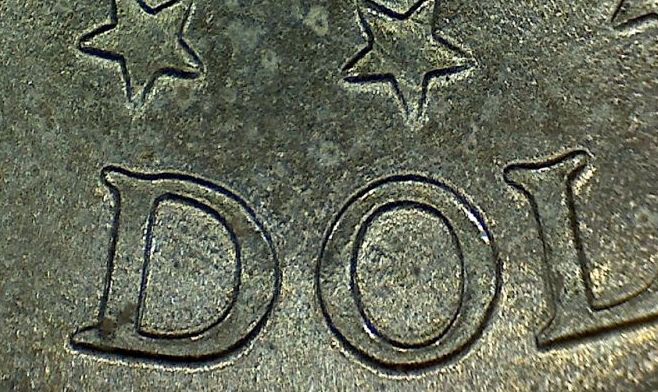
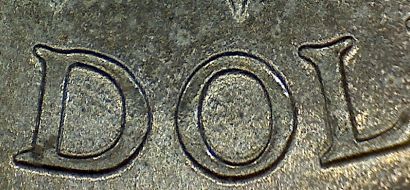
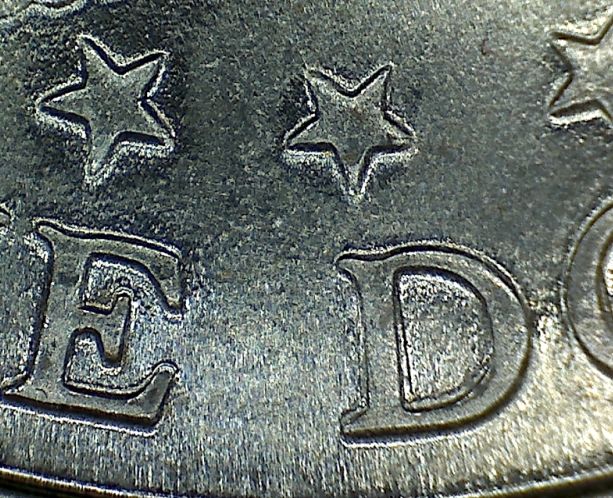
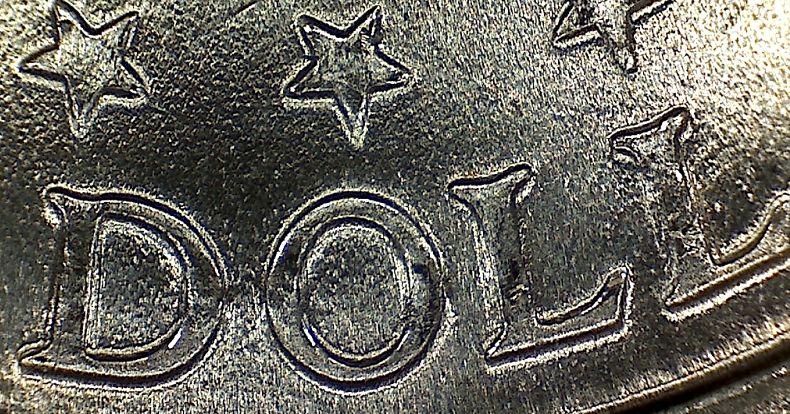
I found stuff out of the ordinary with "DOLLAR." Is this doubling? What is this? Look at the "D." All coins in this roll have this anomaly.

"Normal" 2009-P (first 2 pics)


Double-Die-Learning


Double-Die-Learning

out of the ordinary (next three pics)


Double-Die-Learning

Double-Die-Learning

Double-Die-Learning
Bedrock of the Community
coop's Avatar
United States
62064 Posts
 Posted 07/11/2015  12:37 pm  Show Profile   Bookmark this reply Add coop to your friends list Get a Link to this Reply
The last three images are show coins struck from a VLDS (Very Late Die State) die. Note the die flow lines on the fields running to the rim. That is extreme die wear. So that tells me the die is reaching retirement. But also you have die movement during the strike. This is called Machine Doubling. (actually damage to the coin) The best way to tell this from hub doubling is this the devices are reduced in size from the normal overall design. Note on your last image the reduction in size of the device? This is actually damage caused by the movment of the normal die making marks on both sides of the devices. Also note that the areas in question are like a step down. The die movement only affected part of the devices. (always reducing the devices) On hub doubling, the die is actually doubled and show a rounded enlarged devices. Machine Doubling while looking interesting, is not a doubled die and varies from strike to strike. Happens a lot on coins. (Making normal coins and damaged coins during the same run)
Pillar of the Community
Garoyn's Avatar
United States
513 Posts
 Posted 07/11/2015  1:06 pm  Show Profile   Bookmark this reply Add Garoyn to your friends list Get a Link to this Reply
Many thanks, Coop. That also explains why the coins in the roll seem to exhibit different degrees of the anomaly--varied strike to strike.

So on hub doubling, you'll actually see two devices (or relevant part thereof), instead of the "shadowing" or "chatter" apparent in the above examples?
Pillar of the Community
jdiablo30's Avatar
United States
946 Posts
 Posted 07/11/2015  4:12 pm  Show Profile   Bookmark this reply Add jdiablo30 to your friends list Get a Link to this Reply
http://doubleddie.com/58222.html plenty of good reads on this site about the information you are seeking.
Bedrock of the Community
coop's Avatar
United States
62064 Posts
 Posted 07/12/2015  8:37 pm  Show Profile   Bookmark this reply Add coop to your friends list Get a Link to this Reply
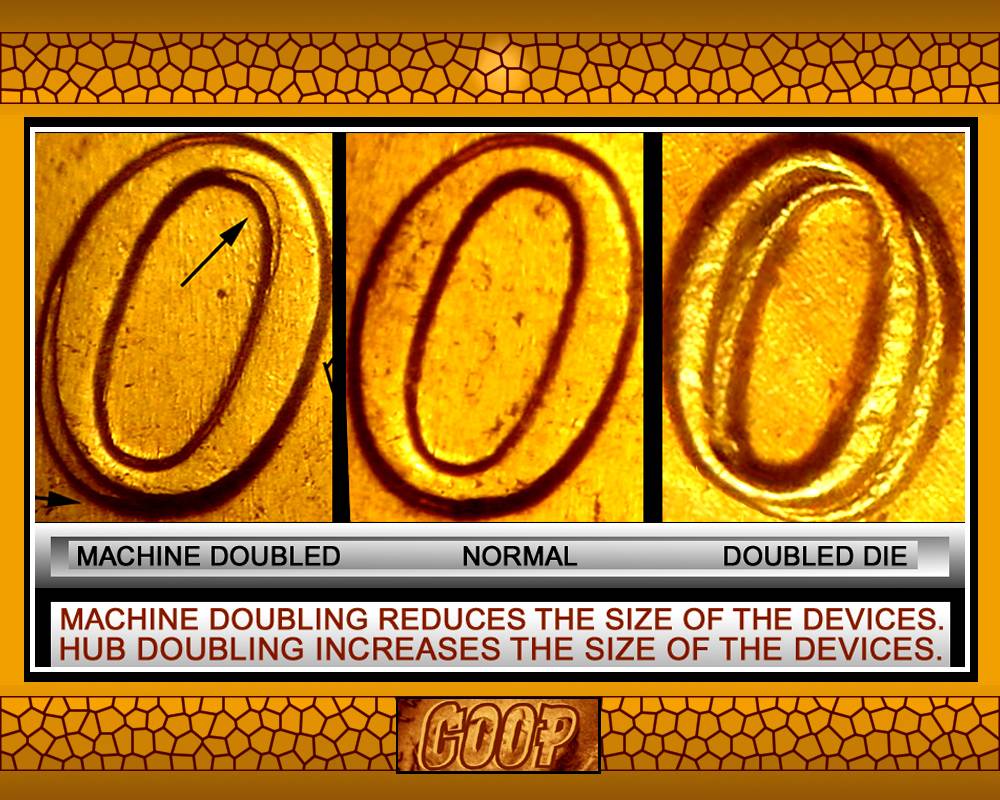
Look at these three examples.
Double-Die-Learning
The example on the left is Machine damaged. Not how it reduces the over all size of the device?
The middle example is a normal coin. Note the overall size of the devices. Note how the example on the left show both the overall size and the reduction on the upper part of the device?
The last example is a hub doubled die. Note how the devices are enlarged because they are doubled on the die, thus the term doubled die. All coins struck with a doubled die will show the exact same offset. (die wear is factored in because of die wear on the outside devices. This may show less on later die states)
  Previous TopicReplies: 4 / Views: 913Next Topic  

To participate in the forum you must log in or register.


Disclaimer: While a tremendous amount of effort goes into ensuring the accuracy of the information contained in this site, Coin Community assumes no liability for errors. Copyright 2005 - 2026 Coin Community Family- all rights reserved worldwide. Use of any images or content on this website without prior written permission of Coin Community or the original lender is strictly prohibited.
Contact Us  |  Advertise Here  |  Privacy Policy / Terms of Use

Coin Community Forum © 2005 - 2026 Coin Community Forums
It took 0.21 seconds to rattle this change. Forums