|
This page may contain links that result in small commissions to keep this free site up and running.

Welcome Guest! Registering and/or logging in will remove the anchor (bottom) ads and the security checks. It's Free!
To participate in the forum you must log in or register. | Author |
 Replies: 30 / Views: 9,673 Replies: 30 / Views: 9,673 |
|
|
|
Valued Member
 United States
243 Posts |
Thanks all for the kind words.  |
|
Valued Member
United States
243 Posts |
 From left to right: Mirabeau B. Lamar, Ben Milam (in Cameron), Anson Jones, George Childress. The Medallion, Texas Historical Commission, Special Commemorative Edition, Statues of the State, July/August, 2011, p. 6." From left to right: Mirabeau B. Lamar, Ben Milam (in Cameron), Anson Jones, George Childress. The Medallion, Texas Historical Commission, Special Commemorative Edition, Statues of the State, July/August, 2011, p. 6."The Texas centennial of 1936 provided sculptors with an opportunity to create enduring works of public art that still remain today. Among its various Centennial projects, the State of Texas sponsored a public statuary program that memorialized 19 historical figures in 20 bronze statues erected across the state. The Board of Historians selected the historical figures who were to be the subjects of the proposed statues and picked geographic locations for the statues. In June 1935, the three board members—Louis Wiltz Kemp, J. Frank Dobie, and Paul Foik—held public hearings in Austin to receive proposals from counties or cities that wanted one of the bronze statues. Kemp dominated the decisions made by the Board of Historians. The final selection of statue subjects and locations reflected his historical opinions. Kemp had a very traditional, Anglo-centric view of Texas history with a heavy emphasis on politics and government as the chief components of the Lone Star State's past. When the Board made its final decisions, every appointed and elected president of the Republic of Texas became the subject of a statue, along with Moses Austin, Stephen F. Austin, and R.E.B. Baylor. Military heroes James Bowie, Richard Dowling, Sidney Sherman, James Butler Bonham, and Ben Milam were also selected as statue subjects.  From left to right: George Childress, Henry Smith, J.O. Meusebach, David Burnet. The Medallion, Texas Historical Commission, Special Commemorative Edition, Statues of the State, July/August, 2011, p. 7. From left to right: George Childress, Henry Smith, J.O. Meusebach, David Burnet. The Medallion, Texas Historical Commission, Special Commemorative Edition, Statues of the State, July/August, 2011, p. 7.
There was one case of duplication. The people of the Alamo City insisted on a statue of Ben Milam to be placed in downtown Milam Park near the Santa Rosa Hospital, in so doing immortalizing the famous 1835 battle cry, 'Who will follow old Ben Milam into San Antonio.' Kemp, however, was a native of Cameron in Milam County, and he too wanted a Milam statue for the county of his birth. Hence, Ben Milam became the subject of two centennial statues by different sculptors; one in San Antonio and the other in Cameron. Once selection of the statue subjects and proposed locations had been made by the Board of Historians, John V. Singleton as head of the Centennial Board of Control, and a committee of artistic advisors chaired by sculptor Evaline Sellors, began its work. This consisted of choosing the individual sculptors and issuing contracts to be paid with state funds for the respective statues. On March 26, 1936, several dozen sculptors brought approximately 60 small statue models, or maquettes, to the State Capitol in Austin, where they were arranged in the basement hallways for inspection by the selection committee of seven jurors headed by Evaline Sellors. The jury examined 'the models and based their recommendations on historic accuracy and artistic value.' In the end, Singleton and Sellors awarded only four bronze statue contracts as a result of the March 1936 competition, which were paid for with state money. These were the statues of Dick Dowling at Sabine Pass, Jim Bowie at Texarkana, Richard Ellis at Waxahachie, and John O. Meusebach in Fredericksburg. These four statues carry the credit line 'Erected by the State of Texas 1936.'  From left to right: Jose Antonio Navarro, James Butler Bonham, James Bowie, Stephen F. Austin, Richard 'Dick' Dowling, The Medallion, Texas Historical Commission, Special Commemorative Edition, Statues of the State, July/August, 2011, From left to right: Jose Antonio Navarro, James Butler Bonham, James Bowie, Stephen F. Austin, Richard 'Dick' Dowling, The Medallion, Texas Historical Commission, Special Commemorative Edition, Statues of the State, July/August, 2011,
p. 8.After these four statue contracts had been awarded state funds ran out and no additional money was available to implement the Board of Historians' recommendations. In the late summer of 1936, the United States Centennial Commission came to the rescue of the project and assumed fiduciary control of the bronze statuary program. Webb Roberts thereafter oversaw completing the remainder of the proposed statues. By the start of 1937, most of the contracts for the remaining 16 of the proposed statues had been issued with federal government funds and the artists were busily at work under Robert's supervision. The 16 statues underwritten by the United States Centennial Commission each carry the notice: 'Erected by the State of Texas 1936 with funds appropriated by the Federal Government to commemorate one hundred years of Texas independence.' In spite of this inscription, most of them were finished in 1937 or 1938. Between the two phases of the program, 20 statues were sculpted including Jose Antonio Navarro (Corsicana), James Butler Bonham (Bonham), Stephen F. Austin (San Felipe), Sidney Sherman (Galveston), Richard Ellis (Waxahachie), James Pinckney Henderson (San Augustine), R.E.B. Baylor (Waco), Ben Milam (two statues, one in Cameron and one in San Antonio), Anson Jones (Anson), Mirabeau B. Lamar (Richmond), Henry Smith (Brazoria), James Bowie (Texarkana), Thomas J. Rusk (Henderson), Peter H. Bell (Belton), Richard 'Dick' Dowling (Sabine Pass), George C. Childress (Washington-on-the-Brazos), David G. Burnet (Clarksville), Moses Austin (San Antonia), and John O. Meusebach (Fredericksburg).  From left to right: Richard 'Dick' Dowling, R.E.B. Baylor, Peter H. Bell, Sidney Sherman, Moses Austin. The Medallion, Texas Historical Commission, Special Commemorative Edition, Statues of the State, July/August, 2011, p. 9. It is impossible to make some general observations about these bronze statues that rendered sculptural portraits of 19 individuals from Texas history. The four statues erected with Board of control Funds are smaller, different if proportion from one another, and have variance in artistic styles, especially in the design of their pedestals. The 16 statues of the second wave supervised by Roberts are larger, have a common style, and have very Art Deco-like bases that show a common architectural norm. All 20 statues are located in a place somehow related to the life of the individual memorialized. The statues reflect the historical viewpoints of Kemp regarding a heroic vision of the Texas Revolution. Only one statue, Dick Dowling, is from the era of the Civil War. All the others are historical figures related to Anglo-American settlement or who were active in the Texas Revolution. All of the subjects are male and all but one is an Anglo-American. The exception is Jose Antonio Navarro, whose statue was placed at Corsicana. Although the Texas Centennial is often identified today as a high point of the Art Deco architectural movement, perhaps because of the iconic buildings still standing at Fair Park in Dallas, these 20 statues hark back to the artistic style of Beaux-Arts neo-classicism that centered in the City Beautiful movement. And, importantly, it must be noted that each of these statues has survived for more than 70 years. Although several statues have been moved short distances from their original locations, sometimes only a few steps away, each of them still stands at the general site where3 they were placed during the Texas Centennial celebration. These statues constitute a living artistic legacy for Texas that te4lls us as much about the historical proclivities of the Texas Centennial as they do about the historic figures they memorialize. "55 The Medallion, Texas Historical Commission, Special Commemorative Edition, Statues of the State, by Dr. Light T. Cummins, the State Historian of Texas. July/August, 2011, p. 6-9.
|
|
Moderator
 United States
196424 Posts |
Now I wish I had paid more attention to the statues all of those times I visited Texas when my dad lived there. I think I would have a better appreciation for them now.
|
|
Pillar of the Community
United States
7732 Posts |
Thanks again!
I'm from Collin County Tx and during the Centennial they put up a statue of James Throckmorton (former Governor) on the northeast side of the courthouse. The statue was designed by Coppini (the same guy that designed the Centennial Half dollar). Throckmorton's hand is outstretched as if welcoming people to Texas. Just so happens us wayward juveniles of the 50's and 60's figured out that Throckmorton's outstretched hand would also conveniently fit around a beer bottle.
There were many weekend nites that Gov Throckmorton "shared" a beer with us! Another Texas tradition!
|
|
Valued Member
United States
243 Posts |
  The Medallion, Texas Historical Commission, Special Commemorative Edition, Mapping the Texas Centennial, July/August, 2011, p. 10 & 11. The Medallion, Texas Historical Commission, Special Commemorative Edition, Mapping the Texas Centennial, July/August, 2011, p. 10 & 11. The Medallion, Texas Historical Commission, Special Commemorative Edition, A Modern Perspective, July/August, 2011, p. 12." The Medallion, Texas Historical Commission, Special Commemorative Edition, A Modern Perspective, July/August, 2011, p. 12."To promote the 1936 Centennial, Texas placed ads in national magazines and plastered announcements in the subway tunnels of New York City. It was the biggest bragging fest the state had ever orchestrated, and the celebration's promotional and architectural efforts are considered Texas' first formal heritage tourism initiatives. Because commemorative events and marker dedications occurred in every Texas County, most communities have stories to share today. Through research, modern-day preservationists can learn which stories each county chose to tell (along with the placement of markers and selection of monuments) and interpret those stories through the lens of the 1930s. This vantage point sheds light on life during the Depression, the Dust Bowl, the changed world view after World War I, the country's outlook before World War II, and experiences in the United States prior the civil rights reforms. All are significant aspects of local and state history, potentially adding tremendous educational value to heritage tourists' experiences wherever they are woven into the community or site narrative. 'At its core, the Centennial was designed to lure and impress visitors with the Texas experience,' says Terry Colley, the Texas Historical Commission's Deputy Executive Director. 'Now, 75 years later, the architecture, sculpture, and markers, along with the story of the Centennial itself still hold the power to attract visitors and send them home with an experience to marvel over and brag about.'  The Medallion, Texas Historical Commission, Special Commemorative Edition, The Gonzales Memorial Museum and Amphiteater, a sleek 20th-century jewel of a Centennial landscape, connects visitors with cultural elements of the time, July/August, 2011, p. 12. The Medallion, Texas Historical Commission, Special Commemorative Edition, The Gonzales Memorial Museum and Amphiteater, a sleek 20th-century jewel of a Centennial landscape, connects visitors with cultural elements of the time, July/August, 2011, p. 12.
Most of these attractions remain in plain sight, although some are in need of repair and identification. When seen as a whole, however, the Centennial was an initiative of mythic Texan proportions offering potentially complex and unanticipated rewards for today's heritage travelers. For example, visitors may arrive at a site expecting to learn about frontier or independence struggles, only to be surprised to discover a sleek 20-th century jewel of a museum building, complete with reflecting pool, monument, and amphitheater. Such a setting may require visitors to take pause to regain their historical bearings. Finding an explanation on descriptive marker relating the site's 1930s Centennial context, visitors can then connect the site with cultural elements of that time, such as Depression-era artwork or period architectural styles. Centennial monuments and sculptures depicting Texas legends can be enjoyed simply for their heavily stylized heroic figures that invoke hints of the 1930s romance with the machine age and the drive to embrace all that is new. Personally relating to the 1930s comes easily to many heritage tourists who grew up conducting business in (or currently work in) Art Deco or Art Modern buildings. Design elements of today's automobiles and kitchen appliances as well as contemporary fashions have stylistic connections to this era. And, many will have memories of grandparents or parents reminiscing about the volatile economy or drought. This recent-past context of the Centennial can serve as an opportunity to take a fresh look at the valuable historic resources throughout the state. Preservationists should consider documenting their Centennial markers, monuments, community centers, park improvements, sculptures, grave markers, and highway markers. They can also educate local officials, youth, and residents about these resources and the importances of their preservation. If markers are missing, there are engaging ways to spread the word throughout the county to see if anything can be discovered and recovered. |
|
Moderator
United States
196424 Posts |
I have not been to Texas in over 15 years. If I ever get back there I will have plenty of things on my to-do list.  |
|
Valued Member
United States
243 Posts |
You're right jbuck. I have family near Houston. Next time I visit I'll have to check some of this out.   The Centennial's Modern design elements were reflected in the bold style of cars and architecture. The Medallion, Texas Historical Commission, Special Commemorative Edition, The Gonzales Memorial Museum and Amphitheater, a sleek 20th-century jewel of a Centennial landscape, connects visitors with cultural elements of the time, July/August, 2011, p. 13. The Centennial's Modern design elements were reflected in the bold style of cars and architecture. The Medallion, Texas Historical Commission, Special Commemorative Edition, The Gonzales Memorial Museum and Amphitheater, a sleek 20th-century jewel of a Centennial landscape, connects visitors with cultural elements of the time, July/August, 2011, p. 13. The Centennial's Advertisements on subways in New York City. Heritage tourists still enjoy stylistic connections to the era throughout Texas. The Medallion, Texas Historical Commission, Special Commemorative Edition, A Modern Perspective, July/August, 2011, p. 13.' The Centennial's Advertisements on subways in New York City. Heritage tourists still enjoy stylistic connections to the era throughout Texas. The Medallion, Texas Historical Commission, Special Commemorative Edition, A Modern Perspective, July/August, 2011, p. 13.'Make the story of what your county or community accomplished during the Centennial available to the public,' Colley says. 'It will certainly benefit local residents encourage appreciation of these stories and resources, and add value to the tourism experience in your community.' He adds that Centennial projects are a great hook to attract cultural heritage travelers who seek stimulating learning opportunities about history while traveling to places where the buildings and surroundings have retained their historical character. Seeking Centennial projects is not a new idea for Sarah Reveley and Barclay Gibson, who, along with several other 'Internet volunteers,' have challenged themselves with locating every Centennial marker across the state. These champions of everything centenary have been traveling throughout Texas since discovering the 1938 book Monuments Commemorating the Centenary of Texas Independence by the Centennial Commission.  Art Deco designs played a significant role in Texas' Centennial-era projects, including Fort Worth's stylized buildings (at left). The Medallion, Texas Historical Commission, Special Commemorative Edition, A Modern Perspective, July/August, 2011, p. 14. Art Deco designs played a significant role in Texas' Centennial-era projects, including Fort Worth's stylized buildings (at left). The Medallion, Texas Historical Commission, Special Commemorative Edition, A Modern Perspective, July/August, 2011, p. 14.
Reveley's photo documentation began in 2009, when she started spreading the call for help through historical organizations and newspaper articles. Responding to an article in the San Antonio Express News, Ruthie Cade brought her a 'treasure'—a photo collection of granite markers taken over a 10-year period and a county-by-county list of their locations with special notes of those difficult to find. Reveley was fascinated by the stories of Cade's decade-long search, and her photographs included many of the landowners, or friends who facilitated the discoveries along the way. Marion and Steve Daughtry also shared their large photograph collection of markers and locations with Reveley, adding to the growing list of newly discovered markers. Reveley says locating hundreds of Centennial markers and structures has been a labor of love, likely attributable to her fond memories of Sunday drives with her parents and grandparents and their lively discussions about how many historic sites they could visit before dark. One of her favorite recent history adventures culminated in finding the Centennial marker with the Inscription, 'Site of Orozimbo, the home of Dr. James A. Phelps, a member of 'Old Three Hundred' of Austin's colony, hospital surgeon of the Texas Army at San Jacinto. Here Santa Anna was detained as a prisoner from July to November, 1836.' When a gate halted her initial search, Reveley sought information from the Brazoria County Historical Museum in Angleton. This resource yielded remarkable historic photographs of the Phelps home and the marker under the heritage tree, the Orozimbo Oak. Also in the file were subsequent photos of the marker amidst remnants of the famous tree burned by an accidental fire in 1981.  The Orozimbo Oak (left), burned by an accidental fire in 1981, once shielded an inaccessible Centennial marker dedicated to Texas Army Surgeon James Phelps, a member of Stephen F. Austin's Old Three Hundred. The Medallion, Texas Historical Commission, Special Commemorative Edition, A Modern Perspective, July/August, 2011, p. 14. The Orozimbo Oak (left), burned by an accidental fire in 1981, once shielded an inaccessible Centennial marker dedicated to Texas Army Surgeon James Phelps, a member of Stephen F. Austin's Old Three Hundred. The Medallion, Texas Historical Commission, Special Commemorative Edition, A Modern Perspective, July/August, 2011, p. 14.
The End. Hope you all enjoyed the journey.
|
|
Pillar of the Community
United States
2244 Posts |
Oh wow! Very interesting facts!
|
|
Pillar of the Community
Canada
2805 Posts |
Are there any Centennial monuments in Loving County? I have been interested in the county ever since I found out that only 82 people live there.
|
|
Pillar of the Community
United States
1431 Posts |
Quote:
Are there any Centennial monuments in Loving County? I have been interested in the county ever since I found out that only 82 people live there. Yes, I found this page that has a picture of it (lots of other interesting texas-related info on the site as well): http://www.texasescapes.com/TOWNS/M...urthouse.htm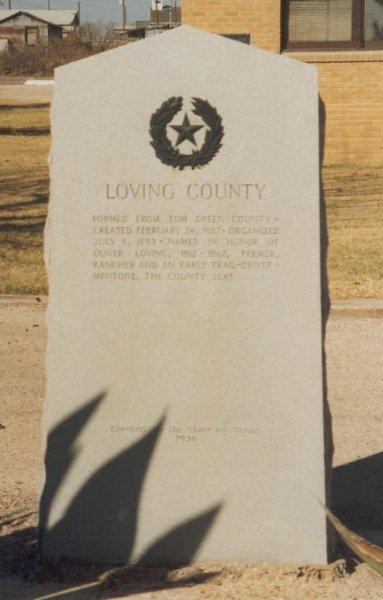 I've actually been planning a camping trip to west Texas for later this fall, and was planning to pass through Loving Co. on the way. Edited by Kefiroth
08/15/2015 4:32 pm
|
|
Pillar of the Community
United States
1431 Posts |
Also, I should say, that as a native Texan and lifelong resident of the state, this topic has compelled in me a desire to acquire a Texas Centennial Half (this would be my first US commemorative).
The only question now is which date? I have no idea why they struck these in years other than the actual centennial year (okay, I do. For the $$$, of course). 1936 being the actual centennial makes a strong case for 1936, but on the other hand I do have a liking for first year issues. Decisions!
|
|
Moderator
United States
196424 Posts |
Quote:
You're right jbuck. I have family near Houston. Next time I visit I'll have to check some of this out. My dad lived there for six years. A good friend just moved from there this summer, so I no longer have an immediate reason to go. At some point I want to drive across the country with my family like I did when I was younger. That will be my best opportunity. Quote:
this topic has compelled in me a desire to acquire a Texas Centennial Half (this would be my first US commemorative). Excellent! |
|
Valued Member
United States
243 Posts |
CalzoneManiac - Thank you. nalaberong - Happy to see that Kefiroth answered your question. Kefiroth - I'm very glad that I had a small part in you getting a Texas Commemorative half dollar. They are addicting. The 1937 year does come PL. Thanks again all for your contributions. |
|
Pillar of the Community
United States
7732 Posts |
Kefiroth...
They issued multiple years of Texas Half dollars, along with different year coins from other events around that era, to raise as much money as possible. This abuse eventually led to the banning of commems in 1954 until the Washington Half was issued in 1982.
Being a Native Texan, I've always been partial to the Texas Centennial Half and at one time accumulated a pretty good hoard of around 150 of them. (It has long since been dispersed but I've started another one since prices are a little depressed right now). For strike, quality and symbolism I've always favored the 1936's. For ease of getting a coin the 1934 is the way to go. For mintage rarity you can go with a 1938. By and large the toughest coins to find with nice strike and luster are the 1938's. They seem to generally come poorly struck and fairly ugly with very subdued surfaces.
The coin has a very busy design but is addicting. Good luck in your search!
|
|
Valued Member
299 Posts |
That's very nice guys ; thanks for the info !
|
| |
Replies: 30 / Views: 9,673 |
To participate in the forum you must log in or register.
Disclaimer: While a tremendous amount of effort goes into ensuring the accuracy of the information contained in this site, Coin Community assumes no liability for errors. Copyright 2005 - 2026 Coin Community Family- all rights reserved worldwide. Use of any images or content on this website without prior written permission of Coin Community or the original lender is strictly prohibited.
Contact Us | Advertise Here | Privacy Policy / Terms of Use
|
| Coin Community Forum |
© 2005 - 2026 Coin Community Forums |
| It took 0.5 seconds to rattle this change. |
 |
|
| |
| |






 First Page


 Posted 08/09/2015 05:35 am


