|
This page may contain links that result in small commissions to keep this free site up and running.

Welcome Guest! Registering and/or logging in will remove the anchor (bottom) ads and the security checks. It's Free!
To participate in the forum you must log in or register. | Author |
 Replies: 30 / Views: 9,737 Replies: 30 / Views: 9,737 |
|
Valued Member
United States
243 Posts |
The history behind the coins in the early commemorative series is my thing.  This is a fairly long chapter so several days to get through it. I hope all enjoy it.  A brochure in my numismatic library." A brochure in my numismatic library."The colorful romance of a handful of disappointed seekers of homes and freedom who wrested an empire from a despot and left the world a page of its grandest history has continued in the development of this heritage. The bravery of those who fought and died at the Alamo and at Goliad, who fought and won at San Jacinto, has not been lessened in the struggle to transform this vast domain of untrammeled wilderness, piney woods, prairie lands and mountainous regions into the present State of Texas. The color, the romance, the grandeur of this picture has been retained to the present. The Texas Centennial Central Exposition, the 1936 presentation of this picture, will retain in all its color, and its romance-that picture started in those tortuous times, fifty days between March 2 and April 21, 1936. Nations have fought other nations; peoples have rebelled against despots, but the history of Texas is unique in its every detail. Great battles have been won and lost. Tales of bravery have been heralded from time immemorial, but not until 1836 was the story of Texas told. The story which is not yet finished has been written in classical terms. Stephen F. Austin dreamed. Wm. B. Travis, James W. Fannin and their small bands of embittered patriots fought. Sam Houston, the military genius, prevailed when Texas won its independence. More than 30,000 souls lived in the Republic of Texas. Stephen F. Austin, imbued with the dream of his father, Moses Austin, persevered until he obtained a land grant for 300 immigrant families. He dreamed and lived to see his dream of a great republic fulfilled. Sam Houston, who proved himself one of the greatest strategists of all times-in winning the Battle of San Jacinto-achieved a niche in the hall of fame alongside that of the Duke of Wellington and Marc Anthony, the only men to ever capture the combined head of a government and an army. Sam Houston and Stephen F. Austin left a heritage. This heritage has been sacredly preserved and today Texas stands ready to give to the memory of these two immortals an accounting of the talents left in their trust. The Texas Centennial Central Exposition will be just as original as were the plans of General Sam Houston-he ignored every rule of war in his famous retreat. The Exposition will be just as colorful as were the braveries displayed at the Alamo, Goliad and at San Jacinto. The Texas Centennial Central Exposition will present a picture of Texas today. From the wilderness inherited from our forefathers, the Exposition will show cotton farms, livestock ranges, garden products, mineral productions and many other sources which bring our average annual income to the TWO BILLION DOLLAR MARK. Twenty-five million dollars in buildings will be constructed to show this new picture-a picture of diversified climate, diversified farming, diversified productions of minerals, diversified manufactures, diversified fishing, hunting, shipping, health resorts, and pleasure resorts-a picture complete with the progress of this state, this nation and the entire world during these 100 years. Color, romance, and grandeur have been preserved for Texas and the great Southwest. It is land where the hospitality of the South blends with the color of the Golden west-a land of rolling farm lands, vast prairie lands, timber, mountains. It is a picture within itself.  From same brochure as above.Much more to follow. From same brochure as above.Much more to follow.Edited by LeeG
07/24/2015 07:26 am
|
|
|
|
Moderator
 United States
197600 Posts |
A nice introduction. Looking forward to the rest. |
|
Valued Member
United States
278 Posts |
Really interesting write up. I like the brochure photos as well. I'm looking forward to part 2!
|
|
Pillar of the Community
United States
7736 Posts |
I wasn't around during the 1936 Exposition but have managed to make up for it by visiting the Fairgrounds in Dallas over the years. The history there is amazing. It's almost like stepping back in time.
One of my other collecting interests has been souvenirs and memorabilia from the Expo. It can be addicting ... Just like coin collecting!
Looking forward to part 2. Thanks!
|
|
Moderator
United States
15997 Posts |
Thanks for the informative post ...
David
Take a look at my other hobby ... http://www.jk-dk.art |
|
Valued Member
 United States
243 Posts |
Thanks all for the kind words.  Here is the next part:  Stephen F. Austin Stephen F. AustinPlan now that you will see this picture of romance as unfolded during these 100 years. See for yourself a state equal in size to most nations, equal in production to most nations, with its great system of cardinal highways, its lateral system of byways, this land of color, romance and progressiveness. The world has recognized it-plan now to attend the Texas Centennial Central Exposition, opening at Dallas, June 6, 1936. DALLAS, boasting but few of the years of other Texas cities, presents the most progressiveness, the greatest return on the investment of Sam Houston, Colonel Fannin, Colonel Travis and other immortals who made possible the freedom enjoyed by Texas during these 100 years. Dallas had only one log cabin on February 16, 1846, when President Anson Jones of the Republic of Texas lowered the Lone Star flag, raised the Stars and Stripes and said 'the final act in this great drama is now performed, the republic of Texas is no more.' Since this statehood, Dallas has gone forward. Recognized as the leading city of the state, it gives the world the most imposing skyline of any city in America with one exception-New York; it gives to the world a clean city where buildings are unsmirched of coal dust and soot, where its citizens are looking forward and ever building a greater city. Dallas is the capital of the Southwest. Situated at the center of one of the richest farming belts in the entire world, it has progressed. It is the jobbing center of the Southwest, where 15,000,000 people reside. Dallas is the largest inland cotton market in the world. Within a day's drive of the city 65 percent of all the oil in the United States is produced. Dallas ranks fourteenth in the United States in volume of business. The largest terminal warehouse in the United States, outside of New York City, is here. More national concerns maintain branches in Dallas than in all other cities of Texas combined. The third largest telegraph office is located here, as well as the largest telephone toll office south of Chicago. Within six miles of the business district 690 factories are located.  Sam Houston Sam Houston Dallas has $30,000,000 worth of hotel rooms in which to house visitors to the Texas Centennial Central Exposition. It has more than 5,000 acres in parks, is the financial and commercial center of the Southwest. In the center of eleven railroads and four interurban lines, is the aviation center of the Southwest, has hourly bus connections with every city in this section, and has more than 700 manufacturing establishments. The City of Dallas has a Council-City Manager form of government. This city, with its Chamber of Commerce, its Clearing house Association, its numerous business houses, each one of its 325,000 citizens, invites you to come to the Texas Centennial Central Exposition, to be held in this city, beginning June 6, 1936.  Jim Bowie Jim BowieStephen F. Austin came to Texas in 1821. Sam Houston followed Austin in 1835. Prior to their arrival in this state, the flags of France and Spain had flown over the 263,000 square miles. The Mexican flag flew over these lands when they came. Since they have dreamed and fought, the flags of the Lone Star of Texas, a nation, the United States of America, and the Confederate States of America have flown over these millions of acres of land. The Stars and Stripes, since 1865, have flown over the Capitol at Austin, Texas. After coming to Texas, Austin lobbied the Colonization Law through the Mexican congress, and obtained a charter granting him the right to bring 300 families to Texas. Around these early settlers which came to Austin's colony on the Brazos and the Colorado has grown the history of Texas.  Davy Crockett Davy CrockettAustin was rightfully called by Sam Houston-'The Father of Texas.' Houston was born in Virginia and raised in Tennessee. His first training was in the war of 1812, where as a lieutenant he covered himself with glory and commanded the admiration of Andrew Jackson. He was elected to the United States Congress by the people of Tennessee and later was governor of this state. Marital troubles caused him to resign as governor of Tennessee upon the eve of his re-election. He returned to the Indians of Arkansas and Oklahoma, where he became a United States Commissioner for Indians. Sam Houston came to Texas. From his arrival until his death, his movements are history. His command of the Texas army brought him fame comparable to the great chieftains of world's battles. Houston defeated Austin for the honor of being the first president of Texas. Austin carried on a few months, and died. Houston continued in his glories, serving his state as the first United States Senator and later as Governor. More to follow. |
|
Moderator
United States
197600 Posts |
We shall be waiting.  |
|
Valued Member
United States
243 Posts |
  Dallas Skyline Dallas SkylineThe history of no nation rigs with truer greatness than that of Texas. The story of the lives of no two men, rings with greater greatness than those of Austin and Houston. The romance of no country has been told under as many flags-French, Spanish, Mexican, Texan, American, Confederate, as that of Texas. The color of these many flags has not faded . . . it is still to be found in the rolling farm lands, the prairies, the mountains. Texas is color itself. The Texas Centennial Central Exposition will be just as colorful as these Stars, these Stripes, the Bars, which have flown over these 265,896 square miles of beauty ."22. Central Exposition, Dallas, Texas 1936 Centennial Brochure. A brochure in my Numismatic Library.
 Texas Centennial Exposition Ad. Courtesy LOC. Texas Centennial Exposition Ad. Courtesy LOC. The Medallion The Medallion, Texas Historical Commission, Special Commemorative Edition, Celebrate Texas 175th Birthday by Revisiting THE 1936 CENTENNIAL. July/August, 2011, cover page.  The Medallion The Medallion, Texas Historical Commission, Special Commemorative Edition, Celebrate Texas 175th Birthday by Revisiting THE 1936 CENTENNIAL. July/August, 2011, p. 2. "In 1936, the Lone Star State threw itself a Texas-sized party and invited the world to attend. Planning for the 100th birthday of the Texas Revolution began years before, and the 44th Texas Legislature officially launched the effort in May 1935 with the creation of the Commission of Control for Texas Centennial Celebrations. The activities of the commission were broad, including restoration of historic buildings, coordination of statewide historical pageants and ceremonies, and development of a central exposition at Fair Park in Dallas modeled after the World's Fairs. The state also designed buildings and museums in towns large and small, stretching from Lubbock to Corpus Christi, and Alpine to Tyler. The Centennial's tourism activities were designed to bring visitors to the state, and to educate and inspire Texans about their own rich history. Today, one of the most enduring aspects of this effort is the wide variety of more than 1,100 granite and bronze monuments, markers, statues, and plaques the state placed throughout Texas' 254 counties to commemorate Texas history for posterity. Because the effort coincided with the depths of the Great Depression, the project combined nostalgia for the state's romantic past with a desire to address a hopeful future. Noted architects such as Wyatt Hedrick, Donald Nelson, and Elmer Withers along with renowned sculptors such as Enrico Cerracchip, Pompeo Coppini, and Raoul Josset created timeless tableaus of Texas history. Carved from gray or pink granite, these stately stones adorned with bronze stars, wreaths, and descriptive plaques marked important historic sites and have become significant works of public art spread all around Texas. Nearly every county in the state received a marker with the date of its establishment and the source of its name. The Texas Centennial marker program was so big, one even landed in Pendleton, South Carolina (at the graves of the parents of Thomas Jefferson Rusk).  The Medallion The Medallion, Texas Historical Commission, Special Commemorative Edition, Celebrate Texas 175th Birthday by Revisiting THE 1936 CENTENNIAL. July/August, 2011, p. 3. Granite historical markers from 1936 identified significant sites and topics statewide, ranging from ancient Native American villages and Spanish missions to battlefields and oilfields. Some were erected in public places with inscriptions that begin 'in this vicinity' when the actual site could not be accessed, allowing visitors and residents to learn about local history. Other times, particularly with gravesites, the marker was placed at the exact site on private land; many times, the Centennial grave marker is all that remains above ground in a historic cemetery. When the Texas Legislature created the Texas State Historical Survey Committee (now the Texas Historical Commission) in 1953, the new agency was given responsibility for the stat's 1936 markers, some of which had been damaged or lost after 17 years. The THC has coordinated repair, restoration, and promotion of Centennial markers, all of which are included on the THC's online Atlas, and searchable by keyword, county, and location. The Commission of Control for Texas Centennial Celebrations achieved its goals of documenting and preserving Texas history for posterity. Today, the Centennial markers and monuments are admired for their aesthetics as much as for their historical value, and their quality craftsmanship ensures they will be appreciated for many years to come ."3Enjoy. |
|
Moderator
United States
197600 Posts |
Enjoyed. |
|
Valued Member
United States
243 Posts |
3 San Antonio (Tx.) Express, National Recognition Of The Texas Centennial, Friday Morning, June 15, 1934. Ticket to the Exposition." Ticket to the Exposition."Governor Allred, my Friends of Texas: I have come here today to bear the tribute of the Nation to you on your hundredth birthday, for you are one hundred years young! I am here also because I conceive it to be one of the duties and the privileges of the Presidency of the United States to visit, from time to time, every part of the Union. Many years ago when I was appointed Assistant Secretary of the Navy by President Woodrow Wilson in 1913, I had visited, as I recall, only about twenty States, but during the next few years I had the fortunate opportunity of going into all the others. Seeing things at first hand is a mighty good habit. I have been fortunate indeed, for as a result of personal contacts with every part of the United States during many years past, I have tried honestly to visualize the problems of every part of the land in their relationships to the problems of every other part, and in their relationships to the unity of the whole. This great Centennial Exposition is not for Texas alone; it is for the people of all the other forty-seven States as well. I hope and I believe that they will take full advantage of it. During these past three years, with the return of confidence and the great increase in prosperity, the excellent custom of getting acquainted with the United States has asserted itself. We see a great tide of travel by rail, by plane, by ship and by automobile. We Americans are indeed seeing things at first hand. May the habit spread.  President Franklin D. Roosevelt attended the ground breaking ceremony. President Franklin D. Roosevelt visited Austin while campaigning, and also attended the ground breaking ceremony. He set off the dynamite to begin construction of the Texas Memorial Museum on June 11, 1936. A steam shovel started excavation for the first of three proposed units during late 1936 and early 1937. Original plans called for wings extending north and south of the present-day building. President Franklin D. Roosevelt attended the ground breaking ceremony. President Franklin D. Roosevelt visited Austin while campaigning, and also attended the ground breaking ceremony. He set off the dynamite to begin construction of the Texas Memorial Museum on June 11, 1936. A steam shovel started excavation for the first of three proposed units during late 1936 and early 1937. Original plans called for wings extending north and south of the present-day building. This great Centennial Exposition is not for Texas alone; it is for the people of all the other forty-seven States as well. I hope and I believe that they will take full advantage of it. During these past three years, with the return of confidence and the great increase in prosperity, the excellent custom of getting acquainted with the United States has asserted itself. We see a great tide of travel by rail, by plane, by ship and by automobile. We Americans are indeed seeing things at first hand. May the habit spread. Coincident with this return of better days, we have witnessed three great Expositions—the Century of Progress in Chicago, so popular that it was kept open for a second year; the California International Exposition in San Diego, which is open again this summer in its second successful year; and now the third is this fine Exposition commemorating the Centenary of the Independence of Texas. May you good people have all the fine luck that you so well deserve! You down here live in the biggest State in the Union. But it is not mere acres that count in this world; it is, rather, the character of the people who dwell upon them. You, the people of Texas, have been tried by fire in these hundred years. You have come through. You have commenced a war for independence. You have apparently been defeated; years. You have come through. You have commenced a war for independence. You have apparently been defeated; and then you have won out. You have gone through the difficult days of the War between the States and the trials of Reconstruction. You have had to fight against oppressors from within and oppressors from without. More than a generation ago your farmers were among the first to rebel against exploitation. In those years it was exploitation by the railroads. In that period of monopoly, of combinations, of overcapitalization, of high rates and poor service and discrimination against the small shipper, you in Texas established a landmark in the regulation of public utilities for the good of their users. Later, when industrial development came to Texas, you were confronted, as other people have been before and since, by corporations that got out of hand. Here again you called into play the old Texas spirit of freedom for the individual, and out of it came your anti-trust laws, preceded by only one other State in all the Union.
|
|
Pillar of the Community
United States
7736 Posts |
Very enjoyable reading! Thanks!
|
|
Moderator
United States
197600 Posts |
Always interesting to hear (read) what FDR had to say. Thank you for sharing this latest update. |
|
Valued Member
United States
243 Posts |
 A young Madge Roberts. Courtesy The Medallion, p. 4." A young Madge Roberts. Courtesy The Medallion, p. 4."Most baby books contain locks of hair or height and weight measurements. But San Antonio resident Madge Houston Thornall (now Roberts) has a book filled with photos and newspaper clippings of governors, senators, and other dignitaries posing with her at events that captured the imagination of young Texans. Roberts had a front-row seat to parades, ribbon-cuttings, and other events associated with the 1936 Texas Centennial, designed in part to educate and inspire Texans about their Heritage and identity. Roberts was a 6-year-old Houston resident at the time, and her family connections allowed her to participate in once-in-a-lifetime occasions throughout the state. Roberts is the great-great-granddaughter of Sam Houston, and her namesake grandmother, Madge Houston Hearne, was president of the San Jacinto chapter of the Daughters of the Republic of Texas (DRT), responsible for many of the dedication ceremonies during the Centennial. As a result, young Madge became a flag-bearer, unveiler, mascot, and guest of honor at historical commemorations during the 1930s.  At age four, Roberts unveiled a bust of Sam Houston at the Virginia State Capitol, and joined the granddaughter of the Mexican Consul at the 98th anniversary of the Battle of San Jacinto. She also saw miles and miles of Texas when she accompanied her mother and grandmother to numerous planning meetings throughout the state. Roberts recalls a visit to Mineral Wells 'at the Crazy Water Hotel or something—it has some strange name to it,' with a swimming pool, and was fascinated by it. She also remembers wandering around at many graveyard ceremonies, where she saw beautiful glass vases and jelly jars that had been colored by the sun and rainwater. 'I can remember how gorgeous the glass was,' she says. 'I would pick up the glass very carefully and I'd hold it up to the sun, and look at all the different colors and everything. Then I'd put it back very carefully where it had come from. 'On January 1, 1936, Roberts was named an honorary princess when the Alabama-Coushatta inaugurated their new chief, Bronson Cooper Sylestine (Tie-Ca-Che), at the first of many statewide events in Texas' Centennial year. She recalls pondering the type of gift to give an Indian chief. Considering many of the reservation's homes did not have electricity at the time, Roberts choose a flashlight. When she returned 50 years later, she brought another flashlight. Although the chief had reached an advanced age by this time, he recognized Roberts, gesturing her childhood height with his hand, saying, 'I remember you! 'Also in 1936, Roberts presented Jesse Jones with the official Texas Centennial pin at the groundbreaking for the San Jacinto Monument ( 'They were breaking the ground with an ox-drawn plow, and the plow broke. I remember that, ' Roberts said). That same year, she joined Louis Bryan (descendant of Stephen F. Austin) in cutting the ribbon to open the gates of the Centennial Exposition in Dallas, and she unveiled granite historical markers all across Texas. A movie newsreel program, 'The March of Time, ' covered several of these ceremonies, so Roberts and her friends would repeatedly sit through the Saturday movie to see themselves on the silver screen 'over and over and over. 'Roberts also recalls the anxious moments before the celebratory parade on Dallas' downtown Main Street preceding the official gate opening for the Centennial Exposition. She particularly remembers being on the steps of a historic hotel, jumping up and down while waiting for a car to pick her up for the parade. 'My mother kept saying, 'You're not going to fall and break a leg and you're not going to be able to go cut the ribbon to open the Centennial if you don't stop that. ' She says. 'Of course it made no impression on me and I kept right on. 'Roberts' love and passion for Texas history continued throughout her life, playing a role in her job as a teacher during the State's sesquicentennial celebration in 1986, and as the president-general of the statewide DRT (following her grandmother's footsteps). She was on the DRT committee involved with the preservation and stabilization of the Alamo shrine, working with the Texas Historical Commission (THC) in the early 1990s. 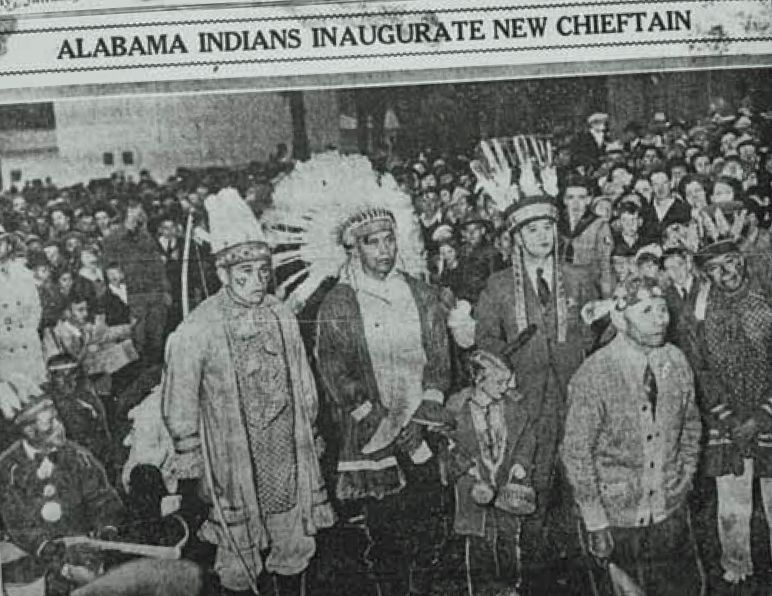 The Medallion, Texas Historical Commission, Special Commemorative Edition, Remember the Centennial! San Antonio Resident Helped Dedicate Celebratory Events as a Young Girl in 1936. July/August, 2011, p. 4. (Image from The Houston Chronicle, Thursday, January 2, 1936). The Medallion, Texas Historical Commission, Special Commemorative Edition, Remember the Centennial! San Antonio Resident Helped Dedicate Celebratory Events as a Young Girl in 1936. July/August, 2011, p. 4. (Image from The Houston Chronicle, Thursday, January 2, 1936).She says her most treasured possession is her T. R. Fehrenbach Book Award, presented by the THC in 1996 for her book The Personal Correspondence of Sam Houston, Vol. I: 1839-1945. Roberts speculates that most Americans didn't know much about Texas until the Centennial, noting that at the time; most of the state's residents were native Texans. 'I think that's what a difference with the Centennial—it was big, big, big, ' she says. One of Roberts' fondest recollections of the Centennial was a specially designed fragrance called Bluebonnet Perfume. Though she suspects it was 'the cheapest-costing perfume that could create, because they gave it away everywhere, ' she still recalls the charming little bottles and even the fragrance. 'If I were to smell it today I could identify it, ' she says. 'It really didn't smell all that bad. 'Finally, Roberts remembers family visits to the San Jacinto Battlefield site, particularly the oak tree where her ancestor Sam Houston lay when he was wounded. She says the tree was eventually killed by water pollution associated with shoreline erosion. 'Even the encroachment of the oil refineries was not there when I was a child. It was a place where people picnicked with their families. Lots of things have changed through the years, ' she says. 'It just broke my heart to see that happen, because we used to picnic under the tree. It just doesn't seem the same to me. "44 The Medallion, Texas Historical Commission, Special Commemorative Edition, Remember The Centennial, San Antonio Resident Helped Dedicate3 Celebratory Events as a Young Girl in 1936, by Bob Brinkman of the THC's History Programs Division, July/August, 2011, p. 4-5. |
|
Moderator
United States
197600 Posts |
I was hoping a new post was coming.  A very interesting part of the grander story. |
|
Pillar of the Community
United States
7736 Posts |
|
|
Rest in Peace
United States
17900 Posts |
I certainly appreciate all the work you've done in assembling so much information and providing very interesting related memorabilia. I enjoyed being "brought in" to the occasions with the many tie ins you've provided. Thank you.
|
| |
Replies: 30 / Views: 9,737 |
To participate in the forum you must log in or register.
Disclaimer: While a tremendous amount of effort goes into ensuring the accuracy of the information contained in this site, Coin Community assumes no liability for errors. Copyright 2005 - 2026 Coin Community Family- all rights reserved worldwide. Use of any images or content on this website without prior written permission of Coin Community or the original lender is strictly prohibited.
Contact Us | Advertise Here | Privacy Policy / Terms of Use
|
| Coin Community Forum |
© 2005 - 2026 Coin Community Forums |
| It took 0.63 seconds to rattle this change. |
 |
|
| |
| |




 Posted 07/24/2015 11:55 am


