| Author |
 Replies: 16 / Views: 2,066 Replies: 16 / Views: 2,066 |
|
Valued Member
United States
106 Posts |
I'm still learning 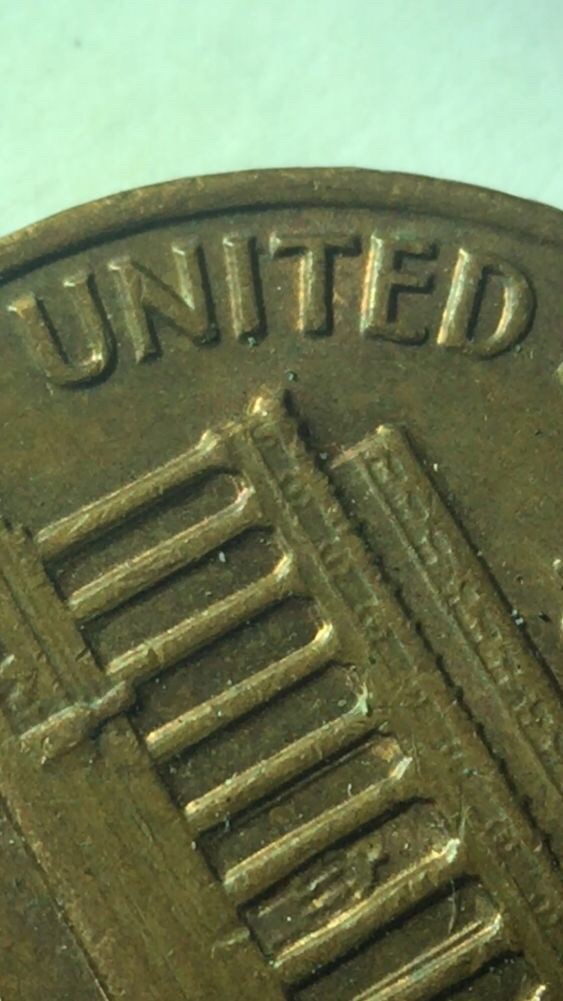 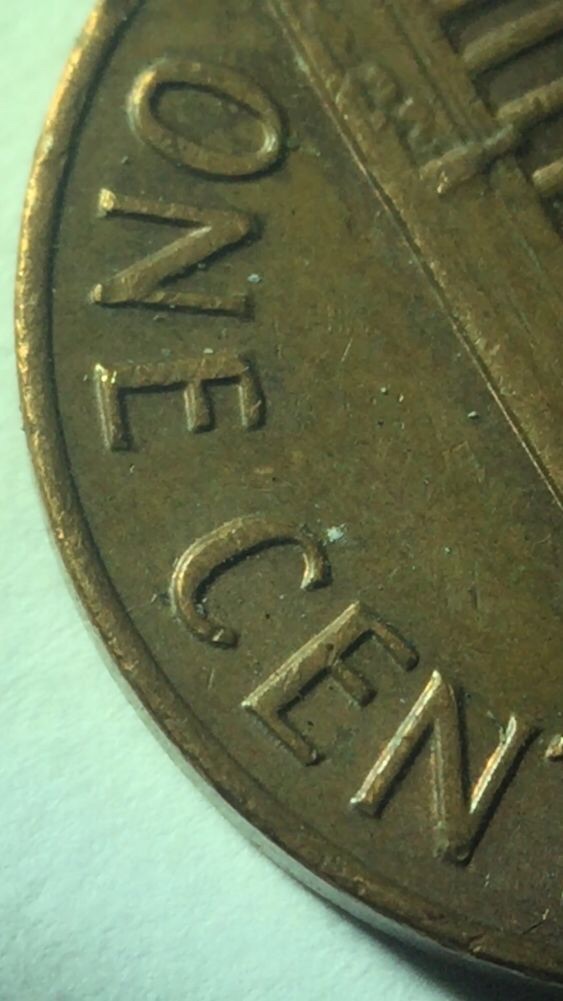 |
|
|
|
Pillar of the Community
United States
6478 Posts |
Yes, MD. It is flat and shelf like.
|
|
Pillar of the Community
United States
7390 Posts |
For me, on this one, the tell is the N. See how the bottom corner is reduced in size quite radically.
|
|
Bedrock of the Community
United States
94367 Posts |
|
|
Pillar of the Community
United States
3463 Posts |
I can't really see any doubling on that coin. Sometimes, rarely, but sometimes it can be difficult to tell the difference. An example would be the 1950 DDR-001 cent. 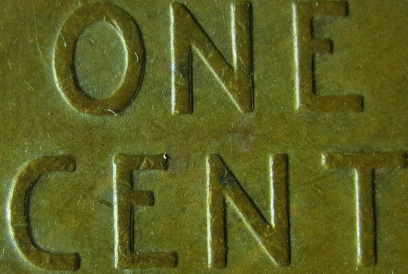 By the way, I found this one a while back, looking through some old wheat cents that I had in the closet from years ago. Edited by cwb
07/24/2015 3:57 pm
|
|
Valued Member
 United States
106 Posts |
Thank you everyone for all your help and sharing the knowledge
|
|
Valued Member
United States
241 Posts |
Btw, what's the date of the coin you posted. It looks (to me) somewhat similar to a 1966 DDR that was only dicovered 2 or 3 years ago now. Found on the "CONECEA Archives, Recent Finds. 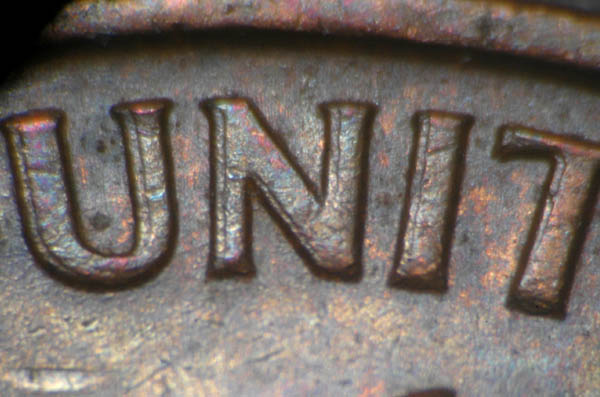 Edited by rayof315
07/25/2015 03:29 am
|
|
Pillar of the Community
United States
3463 Posts |
|
|
Valued Member
United States
241 Posts |
Yes, that's the one - just showing a different area of the same coin. I'm still in the learning stage, but this coin and the 1950 you posted have a look similar to Machine Doubling to me. Edited by rayof315
07/25/2015 03:46 am
|
|
Pillar of the Community
United States
3463 Posts |
The 1950 does resemble MD, but if you look on the photo you posted, you can clearly see the raised secondary image. It isn't flat and shelf like at all, and at a distance the devices appear wider, not smashed narrow like MD. I'm still not seeing the doubling the original poster is referring to. This page shows shows a few examples: http://www.lincolncentsonline.com/m...oubling.htmlCoop has some images that explain it well. Edited by cwb
07/25/2015 12:34 pm
|
|
Bedrock of the Community
United States
62064 Posts |
Edited by coop
07/25/2015 12:45 pm
|
|
Pillar of the Community
United States
3463 Posts |
Edited by cwb
07/25/2015 2:00 pm
|
|
Bedrock of the Community
United States
62064 Posts |
Comparing those images with the ones on coppercoins, there are slight differences. So that makes me questioning this die. The "E" in CENT appears to taper in and reduce the devices. I'd like to see many of the different examples of this die number. I'm not convinced with this attribution yet. 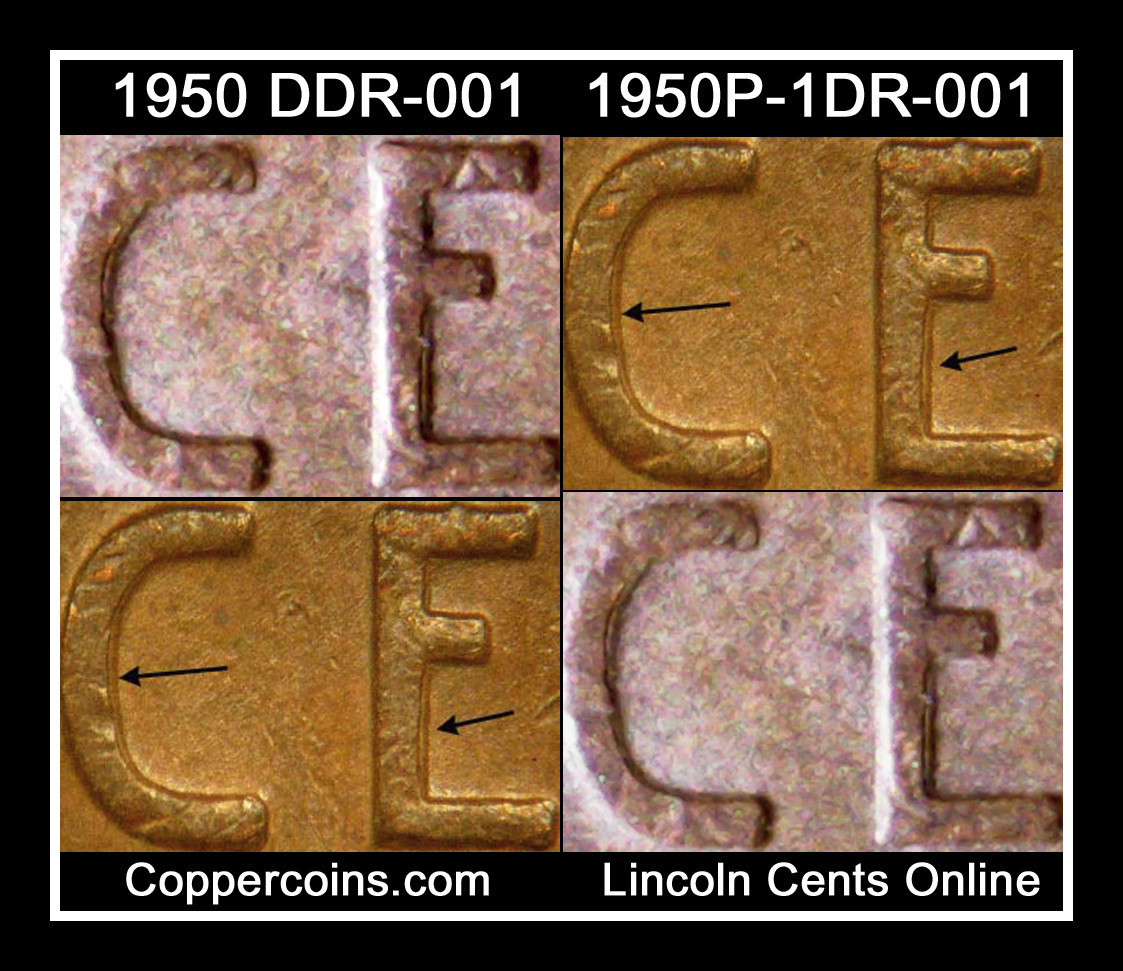 Edited by coop
07/25/2015 3:00 pm
|
|
Bedrock of the Community
United States
62064 Posts |
Ok, I don't give up easily. But the 1950P-1DR-001 is a true hub doubled example. I had the brain going on this one and did a side by side with a normal coin and the 001 from coppercoins. It is what you need to see side by side to prove it. 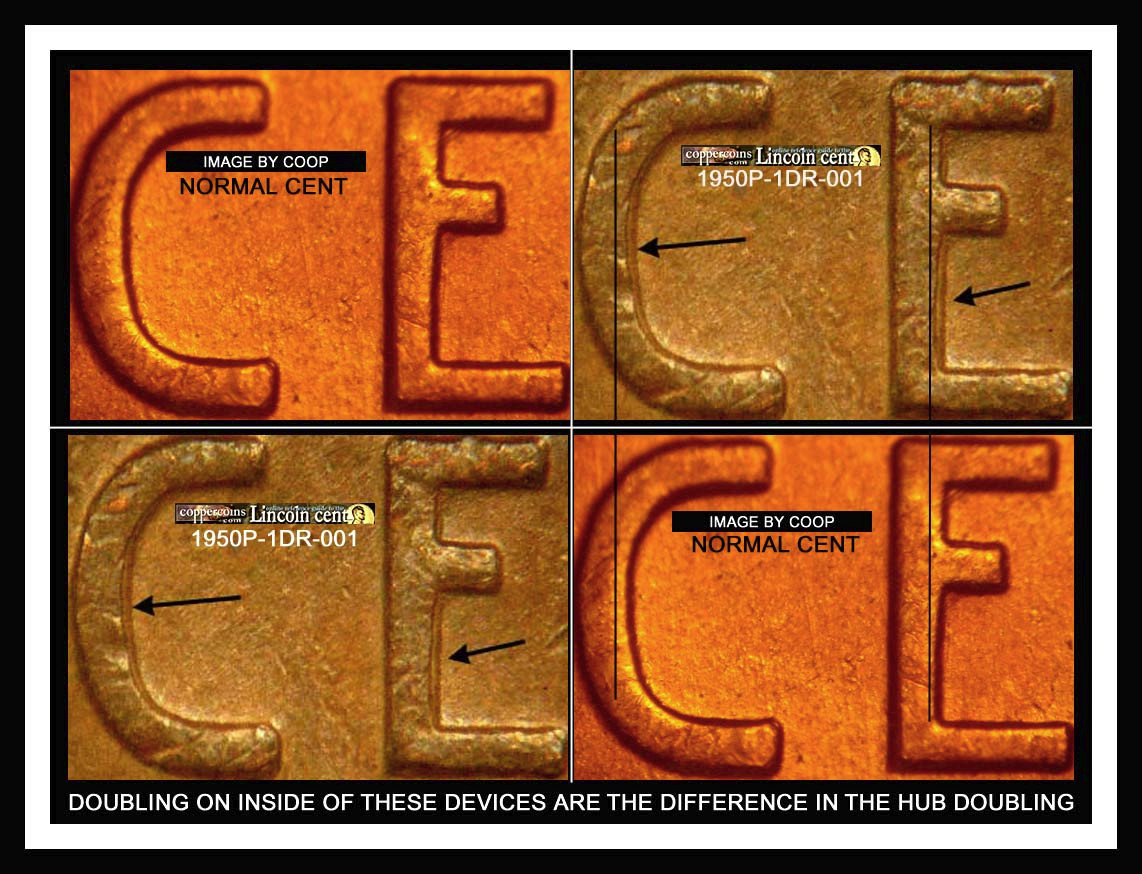 Folling the black lines on the images on the right, you can see where the edge of the normal reverse and the hub doubled example are wider. (the doubling is rounding and not exactly vertical) but it is what I needed to see to be convinced. |
|
Pillar of the Community
United States
3463 Posts |
|
|
Valued Member
United States
241 Posts |
Another helpful discussion - especially the side by side comparisons, which really help with the understanding. Thanks cwb and coop.
|
| |
Replies: 16 / Views: 2,066 |






 Posted 07/24/2015 1:42 pm





