| Author |
 Replies: 13 / Views: 2,322 Replies: 13 / Views: 2,322 |
|
|
New Member
United States
28 Posts |
I don't collect coins, so I don't necessarily know what I'm doing. I'm in the process of sorting and disposing of coins to help my wife's family with an estate. When I first looked up this coin, I was absolutely flabbergasted at the number of varieties. A little research led me to http://www.vickycents.com/ and a few minutes of research there totally blew the top of my head off! I could really use some 'expert' advice and guidance on identifying the particular variety of this coin and a guesstimate of value. I'm using a 8X loupe so I may be missing some errors. On the obverse, I've identified a double print N and something wrong with the top of the C that could be a clogged die, both in CANADA. On the reverse, I've identified a lower 9, a major die crack at 9 o'clock with associated missing vine, a minor die crack over the E in ONE extending from the rim down over the leaf, and missing vine that I don't believe is due to wear at 4 o'clock. I didn't find any mention of either of these cracks or the missing vine at vicky's site. All input is welcomed. This site has been fantastic with the help I've already received so I'll say "Many Thanks!" in advance. The original 1200dpi photos are here: http://s284.photobucket.com/user/da...ort=3&page=1 [hope that turns out, I don't use photobucket] and reduced images below. 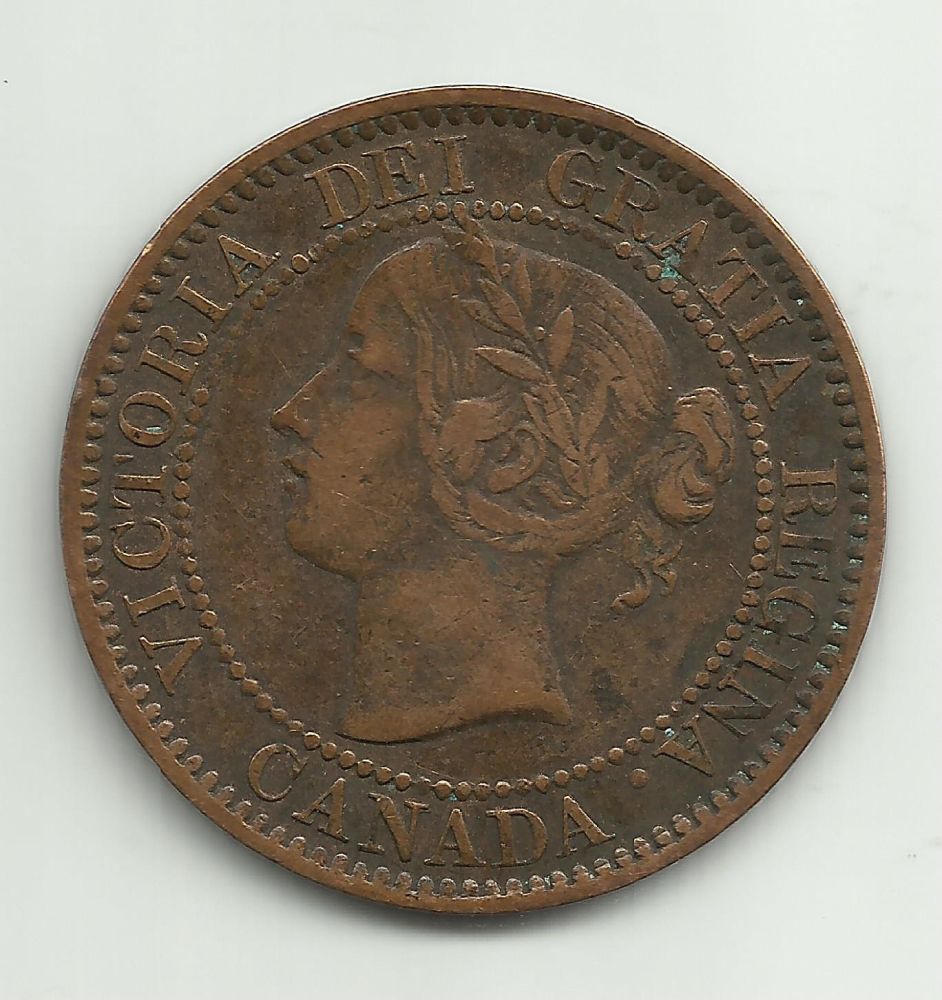 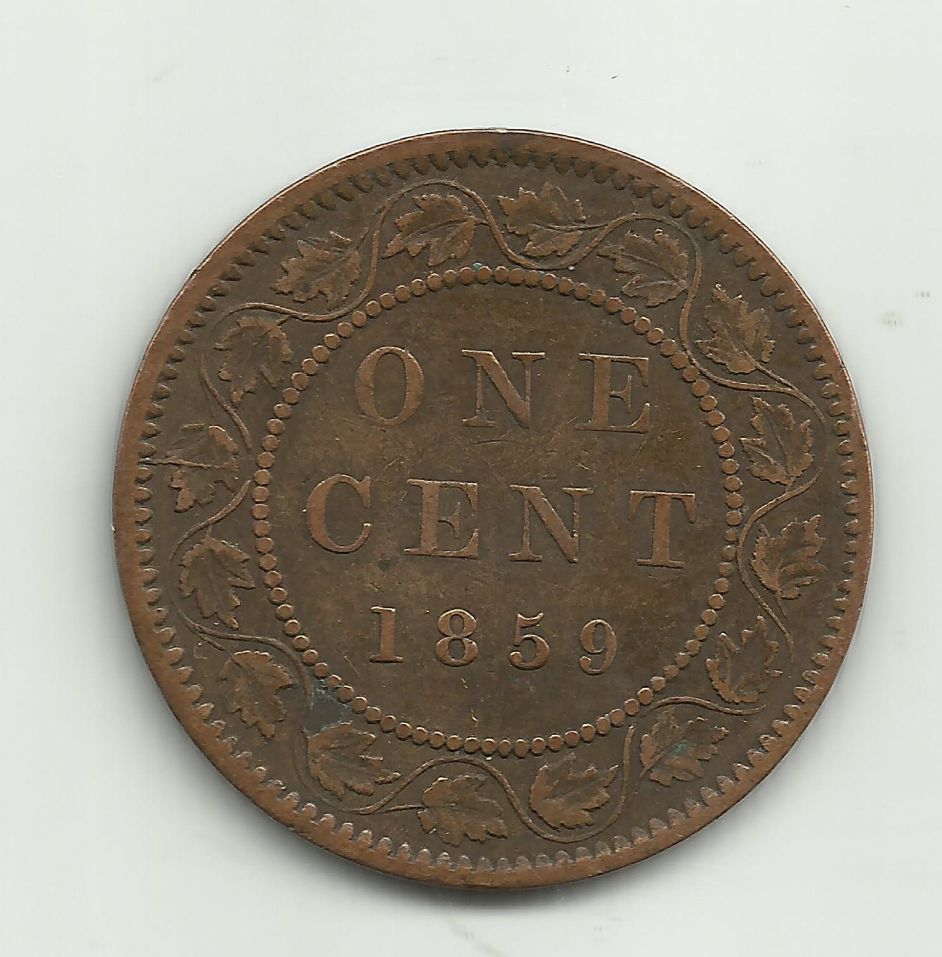 |
|
|
|
Pillar of the Community
United States
840 Posts |
This is identified by Doctor Haxby as
Obverse 332 / Reverse E 35a.
Doctor Haxby further identifies many
clogged letters and beads of this variety.
Haxbyvickycents.
doug
|
|
Pillar of the Community
United States
840 Posts |
Commence with the obvious. On this coin, the die-crack to
leaf 13 is prominent. Engage Dr. Haxby's Reverse section,
click on leaf 13 and a page of die-cracks appear. Scroll
through the selection and you will find the die-crack, click-on
the entry and you will be taken to Reverse 35a. Compare the
photo and data with your coin. Next, scroll to the Obverses
mated with this reverse. Click on each until you find the
proper Obverse. Dr. Haxby also supplies short-cut grids to
assist in minimizing the contenders.
Concerning the reverse, Dr. Haxby separates the die-cracks
according to the reverse (E, F, G, I, J, K, L, M, N, O, and P).
Some leaves will have a number of die-cracks and oftentimes
you can save time my focusing the specific reverse variety.
The UGH is when there are no die-cracks to the leaves and you
were unable to use any obverse markers. On the lower section
of the Reverse page (below the photo), Dr. Haxby provides 4
groupings E, (FGHIKNO), J, and P. Determine which reverse you
have, and then engage the proper selection. Scroll through the
selection and compare you token with each photo of leaf 9. Once
found,engage the selection and verify the obverse and reverse
photos with your token.
doug
|
|
Pillar of the Community
New Zealand
1679 Posts |
 perfect Doug Cheers Don
Vickies cents and GB Farthings nut.
"Old" is a figure of speech and nothing more
|
|
New Member
 United States
28 Posts |
Doug - That's very easy for you to say. When I've got some time tomorrow morning, I'll see if I can follow your walkthru without wanting to bang my head on the table. You make it seem easy but we'll see how bad my inexperience can mess it up. Many thanks for your help.
Edited by DavidS
07/24/2015 7:56 pm
|
|
Pillar of the Community
United States
840 Posts |
Like anything else, things become better with practice.
Read all nine chapters in the ARTICLES section (on the 1st line).
When attributing I choose the most conspicuous Die-Crack, whether
from the obverse or reverse. Remember, Dr. Haxby's work is a work
in progress. It is the most extensive work available, but there is
additional data yet to incorporate. Thankfully Dr. Haxby made this
work available before it was 100 percent complete. Dr. Haxby's present
work is more than sufficient to attribute known vickies. Yet, some
minor diagnostics remain to be added; this is why it is best to
select the most conspicuous diagnostic.
If no die-cracks are discernible, select a conspicuous re-punched
letter and work from that perspective.
And it is most difficult to determine the variety when the diagnostics
are buried under decades of crud and grime. In some situations the
crud has to be carefully removed.
Determining the reverse type often aids in the process of elimination.
doug
|
|
Valued Member
United States
493 Posts |
Doug, always a pleasure to watch you dissect an identification. :)
|
|
Valued Member
Canada
491 Posts |
Well said Doug the walk through works perfectly to follow
|
|
New Member
United States
28 Posts |
Thanks, Doug. Following your instructions, I was able to arrive at the same destination but I don't think I could have managed that on my own without a whole lot of trials and aggravation. All I can say is thank god for this site that makes numismatic gurus available to the uniformed like me. Would anyone care to venture opinions on possible grade and value? Remember, my intent is to put this up on ebay for the estate. |
|
Pillar of the Community
United States
840 Posts |
Your coin grades VF 20 and should sell for ten dollars or so.
Dr. Haxby's site is still in the infancy stage concerning a population
census of variety (insufficient data has been accumulated). Over the years
collectors have looked for 'interesting' (obvious) stuff such as re-punched
dates and letters (especially on the reverse). And due to the lack of
knowledge (adequate reference materials) most of the 'vanilla' coins were
ignored and never identified.
Only recently did Charlton's expand upon the Re-Punched 9's. Dr. Haxby
identified hundreds of different varieties, some of which are much rarer than
the RP 9's. Some varieties I have 90 of, others 50, some only 2 or 3, and
some none. Given time, hopefully, the numismatic community will identify
their varieties, and a population census will begin to develop. And none of
this would yet be available absent the dedication of Dr. Haxby.
doug
|
|
Pillar of the Community
New Zealand
1679 Posts |
Quote:
Only recently did Charlton's expand upon the Re-Punched 9's. Dr. Haxby
identified hundreds of different varieties, some of which are much rarer than
the RP 9's. Some varieties I have 90 of, others 50, some only 2 or 3, and
some none. Given time, hopefully, the numismatic community will identify
their varieties, and a population census will begin to develop. And none of
this would yet be available absent the dedication of Dr. Haxby.  Totally I am doing my bit. I have only 25 all different and I think the rarest I have is the bridge die N2. And I would love to get more to check for varieties Cheers Don
Vickies cents and GB Farthings nut.
"Old" is a figure of speech and nothing more
|
|
Pillar of the Community
 Canada
5646 Posts |
It was a labor of love for Dr Haxby. He collected the cents for years and started the immense die tracking project. I'm not a die tracker, but rather just a hoarder and collector of varieties (some odd and obscure), not the dies. I sent Jim maybe 1000 1859's to help with his accumulation for the project (I don't remember the exact number, but a bunch). He also had some admirable help with the project and database from a younger afficianado from Brooklyn. What he did was a huge asset for us in the variety niche.
|
|
New Member
United States
28 Posts |
|
|
New Member
United States
28 Posts |
Ended up going for $7.52 and went to someone in Canada.
|
| |
Replies: 13 / Views: 2,322 |
|








 Posted 07/24/2015 5:42 pm


