

 Posted 09/01/2015 6:21 pm


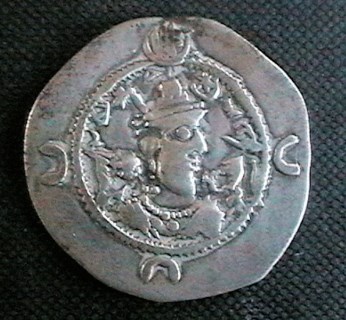
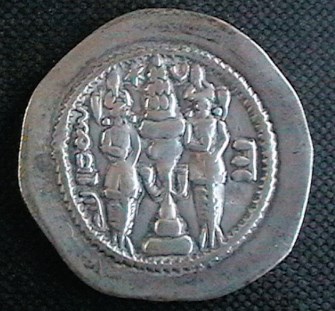
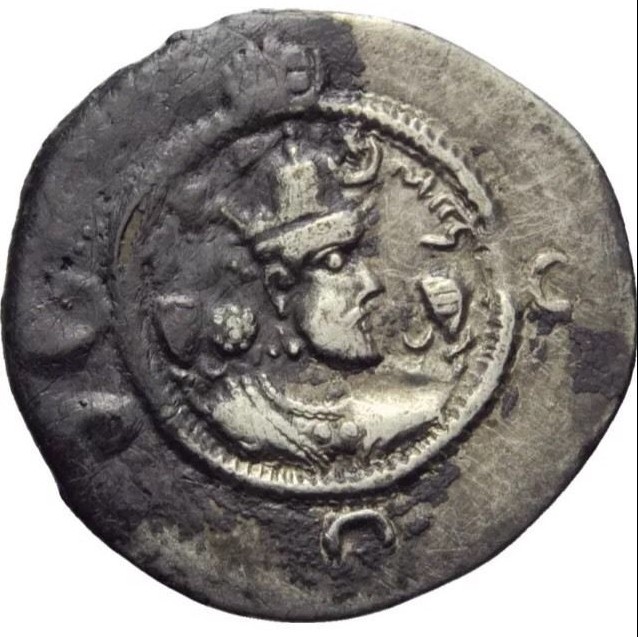
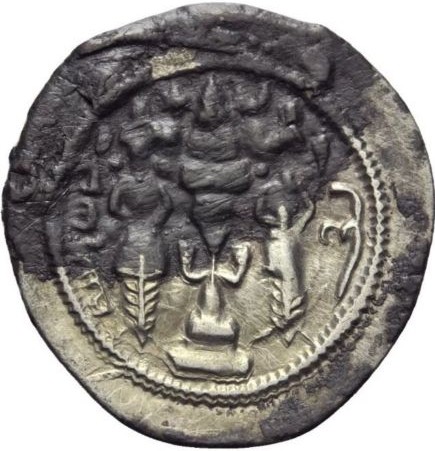
Nice coin... and if you forgive the direct quote from Wiki maybe this will be of interest.
The Sasanian Empire (/s#601;#712;s#593;#720;n#618;#601;n/ or /s#601;#712;se#618;n#618;#601;n/; also known as Sassanian, Sasanid, Sassanid or Neo-Persian Empire),[9] known to its inhabitants as #274;r#257;nshahr[1] in Middle Persian language, was the last Iranian empire before the rise of Islam, ruled by the Sasanian dynasty from 224 AD to 651 AD.[2][11] The Sasanian Empire, which succeeded the Parthian Empire, was recognized as one of the leading world powers alongside its neighboring arch rival the Roman-Byzantine Empire, for a period of more than 400 years.[12][13][14]
The Sasanian Empire was founded by Ardashir I, after the fall of the Parthian Empire and the defeat of the last Arsacid king, Artabanus V. At its greatest extent, the Sassanid Empire encompassed all of today's Iran, Iraq, Eastern Arabia (Bahrain, Kuwait, Oman, Qatif, Qatar, UAE), the Levant (Syria, Lebanon, Israel, Jordan), the Caucasus (Armenia, Georgia, Azerbaijan, Dagestan, South Ossetia, Abkhazia), Egypt, large parts of Turkey, much of Central Asia (Afghanistan, Turkmenistan, Uzbekistan, Tajikistan), Yemen and Pakistan. According to a legend, the vexilloid of the Sassanid Empire was the Derafsh Kaviani.[15]
The Sasanian Empire during Late Antiquity is considered to have been one of Iran's most important and influential historical periods, and constituted the last great Iranian empire before the Muslim conquest and the adoption of Islam.[16] In many ways, the Sassanid period witnessed the peak of ancient Iranian civilization. Persia influenced Roman culture considerably during the Sassanid period.[17] The Sassanids' cultural influence extended far beyond the empire's territorial borders, reaching as far as Western Europe,[18] Africa,[19] China and India.[20] It played a prominent role in the formation of both European and Asian medieval art.[21] Much of what later became known as Islamic culture in art, architecture, music and other subject matter was transferred from the Sassanids throughout the Muslim world.[22]
The Sasanian Empire (/s#601;#712;s#593;#720;n#618;#601;n/ or /s#601;#712;se#618;n#618;#601;n/; also known as Sassanian, Sasanid, Sassanid or Neo-Persian Empire),[9] known to its inhabitants as #274;r#257;nshahr[1] in Middle Persian language,
was the last Iranian empire before the rise of Islam, ruled by the Sasanian dynasty from 224 AD to 651 AD.[2][11] The Sasanian Empire, which succeeded the Parthian Empire, was recognized as one of the leading world powers alongside its neighboring arch rival the Roman-Byzantine Empire, for a period of more than 400 years.[12][13][14]The Sasanian Empire was founded by Ardashir I, after the fall of the Parthian Empire and the defeat of the last Arsacid king, Artabanus V. At its greatest extent, the Sassanid Empire encompassed all of today's Iran, Iraq, Eastern Arabia (Bahrain, Kuwait, Oman, Qatif, Qatar, UAE), the Levant (Syria, Lebanon, Israel, Jordan), the Caucasus (Armenia, Georgia, Azerbaijan, Dagestan, South Ossetia, Abkhazia), Egypt, large parts of Turkey, much of Central Asia (Afghanistan, Turkmenistan, Uzbekistan, Tajikistan), Yemen and Pakistan. According to a legend, the vexilloid of the Sassanid Empire was the Derafsh Kaviani.[15]
The Sasanian Empire during Late Antiquity is considered to have been one of Iran's most important and influential historical periods, and constituted the last great Iranian empire before the Muslim conquest and the adoption of Islam.[16] In many ways, the Sassanid period witnessed the peak of ancient Iranian civilization. Persia influenced Roman culture considerably during the Sassanid period.[17] The Sassanids' cultural influence extended far beyond the empire's territorial borders, reaching as far as Western Europe,[18] Africa,[19] China and India.[20] It played a prominent role in the formation of both European and Asian medieval art.[21] Much of what later became known as Islamic culture in art, architecture, music and other subject matter was transferred from the Sassanids throughout the Muslim world.[22]