| Author |
 Replies: 13 / Views: 1,906 Replies: 13 / Views: 1,906 |
|
|
Valued Member
United States
264 Posts |
|
|
|
|
Pillar of the Community
United States
4963 Posts |
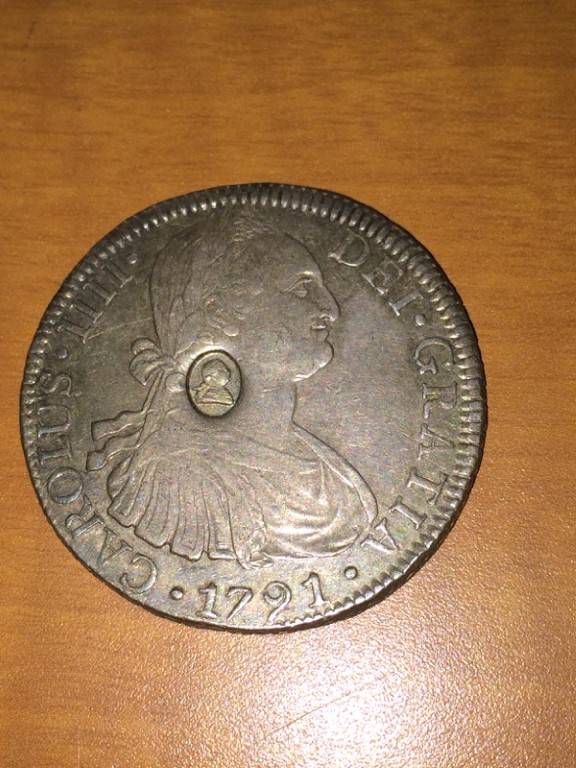
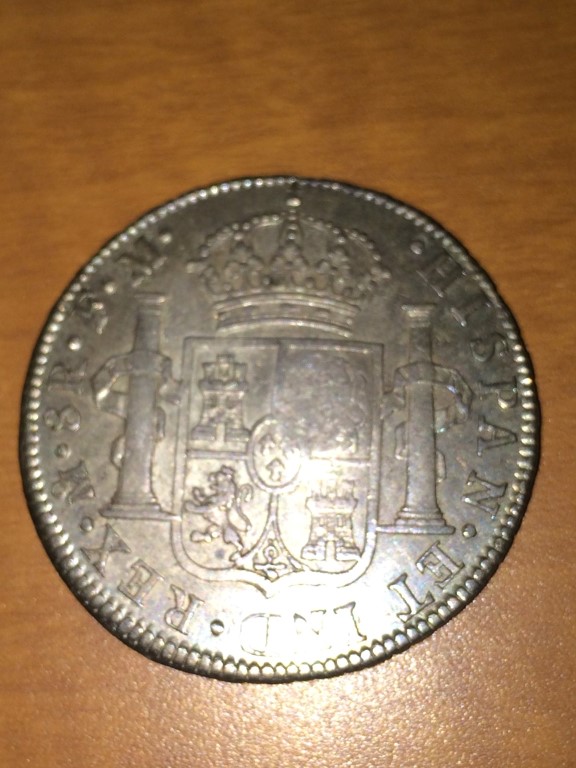
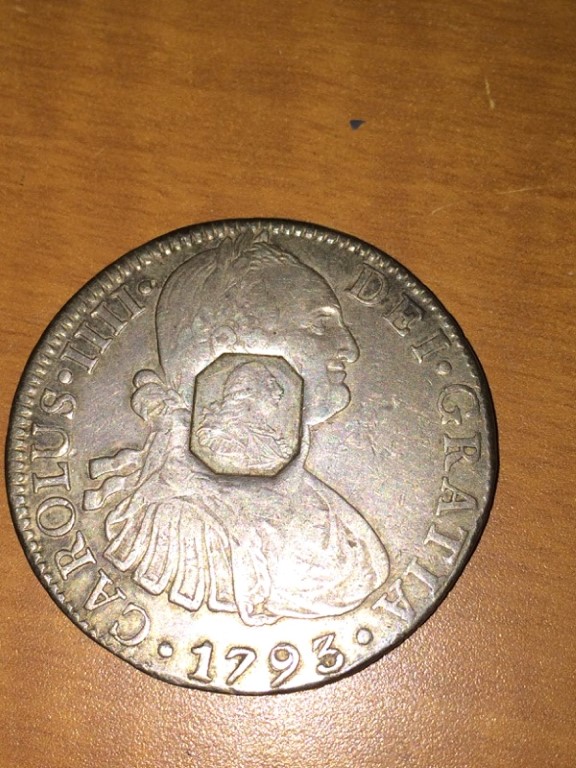
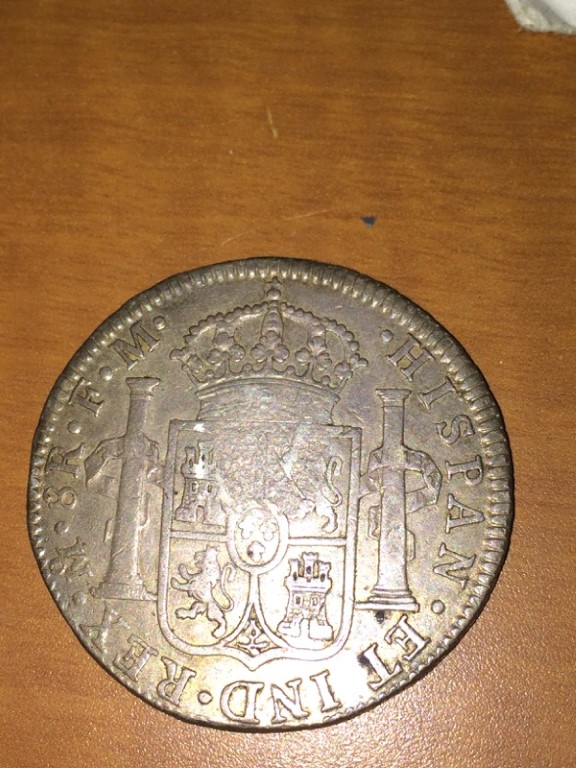
I'm not sure what a pistareen is, but the coins you have here are Spanish colonial 8 real pieces, also known as pillar dollars or pieces of 8. They were struck under Carolus IV at Mexico City (Mo mintmark). The counterstamps were placed on the coins at a later date by the British as a sort of 'emergency' coinage. I'd wait for an expert to give you better details, though.
If anything I said is wrong, by the way, please correct me.
|
|
Pillar of the Community
United States
4963 Posts |
By the way, I believe the counterstamps depict George III of Great Britain.
|
|
Pillar of the Community
United States
731 Posts |
They appear to be British counterstamps of George III on Mexican 8 Reales. They look good to me, but I am sure Swamperbob will have more expert opinions on them when he sees them.
|
|
Valued Member
 United States
264 Posts |
Thank you. I will wait to see if Swamperbob weighs in.
|
|
Valued Member
Belgium
464 Posts |
|
|
Valued Member
United States
264 Posts |
Thank you for all the good information. This is an inherited collection and I have not found anything that is not genuine yet, except a few pieces labeled "fake". Unfortunately, much of the collection is not labeled, and just trying to identify the pieces has been difficult, This forum has been very helpful with the ones I have had the most difficulty finding a match for. :) |
|
Pillar of the Community
United States
4963 Posts |
That's the great thing about this site- even if you have no clue what something is, there are plenty of people here who can get you going in the right direction.
|
|
Valued Member
United States
309 Posts |
Look for a third coin in your collection dated 1804 with George III that says Bank of England "dollar" on the reverse. These two counter marked eight reales of Mexico are purportedly Bank of England "Emergency Issues" from the Napoleonic Wars. The small oval indicates the Mexican eight reales should trade at four shillings, nine pence in England in 1797. The larger octagon shape shows the effect of inflation where the same type of eight reales coin had increased in value to five shillings and is the scarcer of the two. In 1804 the Bank of England issued a "dollar" that completely overstruck pieces of eight, leaving slight indications of the undercoin as assurance of authenticity. They did this up to 1811. Now with all the difficulty of Great Britain fighting Napoleon, with France allied with Spain, and its dominions in Central and South America, and the discovery of a new process for making silver on a copper core "Sheffield Plate" a goodly number of these Emergency Issue coins were counterfeit, with good stamps, and later made counterfeit with counterfeit stamps. These still date from the latter Napoleonic Wars era. I suspect your host coins may not be legitimate issues of Mexico. A good weight on a digital scale is the first of several confirmations whether they are correct or whether parameters are way off. I don't like the missing obverse "denticals" for one thing, which should be present, and radially-oriented, on regal coins. SwamperBob wrote the book on these counterfeits and can further classify and date these contemporary counterfeit pieces to likely makers. In America we might agree with the contemporary observation describing these coins as "the head of a fool on the neck of a butt." You have a short set with a long and interesting history.
P.S. Pistareens are Spanish two reales which oddly took five, to equal one of these Mexican pieces of eight (Spanish "reales" being different (lighter) than Mexican "reales" for the international trade). Think "double dimes" but not quarter dollars. I don't think many, if any pistareens were so stamped, but a few Mexican two reales (quarter dollars) did have the oval George III mark being worth a shilling / tuppence / farthing. The oval stamp floated around long after 1797 and may be found on somewhat more modern coins. It resembles the Georgian hallmark used on English silver since 1784.
|
|
Valued Member
United States
264 Posts |
I will weigh them and let you know.
|
|
Pillar of the Community
United States
4963 Posts |
Thanks for the great information, Pistareen. And an appropriate username, given the title of the thread.
|
|
Valued Member
United States
264 Posts |
One weighs 26.84 grams and the other is 26.96.
|
|
New Member
United States
20 Posts |
Here is an article that summarizes some of the actual history and numismatic history of these coins and their countermarks. BOE Countermarked Dollars 1797-1804These marks are found both as genuine marks and contemporary counterfeit marks, and they are found on both genuine 8 reales and contemporary counterfeit 8 reales. They are a fascinating area to get involved with. For more information on contemporary counterfeit 8 reales in general, I would refer you to this book: Contemporary counterfeit 8 reale bookI believe all the authors are regular contributors to this forum. Hope this helps! |
|
New Member
United States
20 Posts |
Sorry about that. I am new to this site and obviously don't understand how to post external links. The article is entitled "Countermarked Dollars of the Bank of England 1797-1804". It is by H.E. Manville and it is published in the Journal of the British Numismatic Society. If you google the title and the author's name, it should come up as the first listing. The book is called "Counterfeit Portrait Eight Reales: The Un-real Reales" and it is by Robert Gurney, Gord Nicols, and John Lorenzo, It is available on Amazon. Peter |
| |
Replies: 13 / Views: 1,906 |
|









 Posted 09/18/2015 4:15 pm





