 American Numismatic Society
 - Recently on Pocket Change I wrote about Chinese Ming paper notes. Afterward, I was pleased to hear from an expert on the subject, Bruce Smith, who has been studying Chinese coins and paper money for forty years. Most of the information he conveyed comes from a talk he gave at the Chicago International Coin Festival in April 2013.
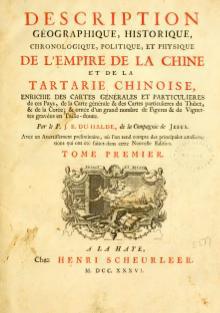
The earliest western description of the Ming notes that Bruce could find comes from The General History of China, a translation of a 1736 French work by Jean Baptiste DuHalde that was a compilation of reports by Jesuit missionaries. Early descriptions can also be found in articles by John Williams for the Numismatic Chronicle (1863 and 1864) and in two Journal Asiatique articles, "Sur l'Origine du Papier Monnaie" by Jules Henri Klaproth (1822) and "Memoire sur le Systeme Monetaire des Chinoises" by Edouard C. Biot (1837).
In the twentieth century, much of the writing on early Chinese notes, including the article by John Sandrock (parts 1&2) cited in my original post, was based on the research of Andrew McFarland Davis in the 1910s. Davis, an authority on U.S. Colonial notes, stepped outside of his area of expertise when he published descriptions and illustrations of early Chinese notes taken directly from Ch'uan Pu T'ung Chih, a work supposedly compiled in the early nineteenth century. The resulting study by Davis and translator Kojiro Tomito, Ancient Chinese Paper Money as Described in a Chinese Work on Numismatics (1918), was used by subsequent writers such as Henry Ramsden and Howard Bowker. Unfortunately, according to Bruce, the Chinese book on which it is based is a fraud. "All of the notes listed and illustrated in the work are bogus fantasies—they never existed," he says, so any work based on Davis's writings are suspect, including the Sandrock article.
Read the Entire Article 







 Posted 10/23/2015 2:39 pm


