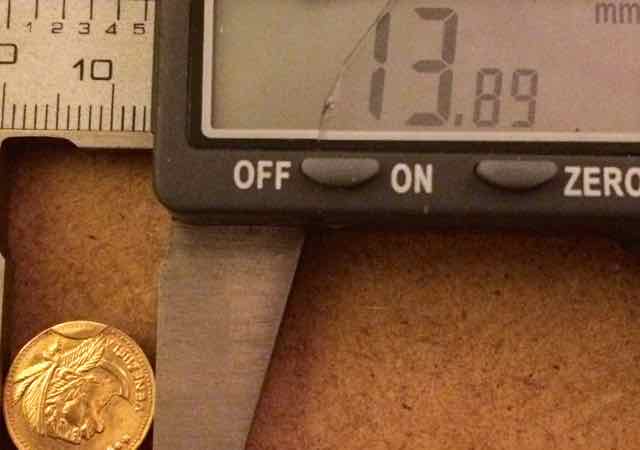
I don't know what it is, but I can speculate.
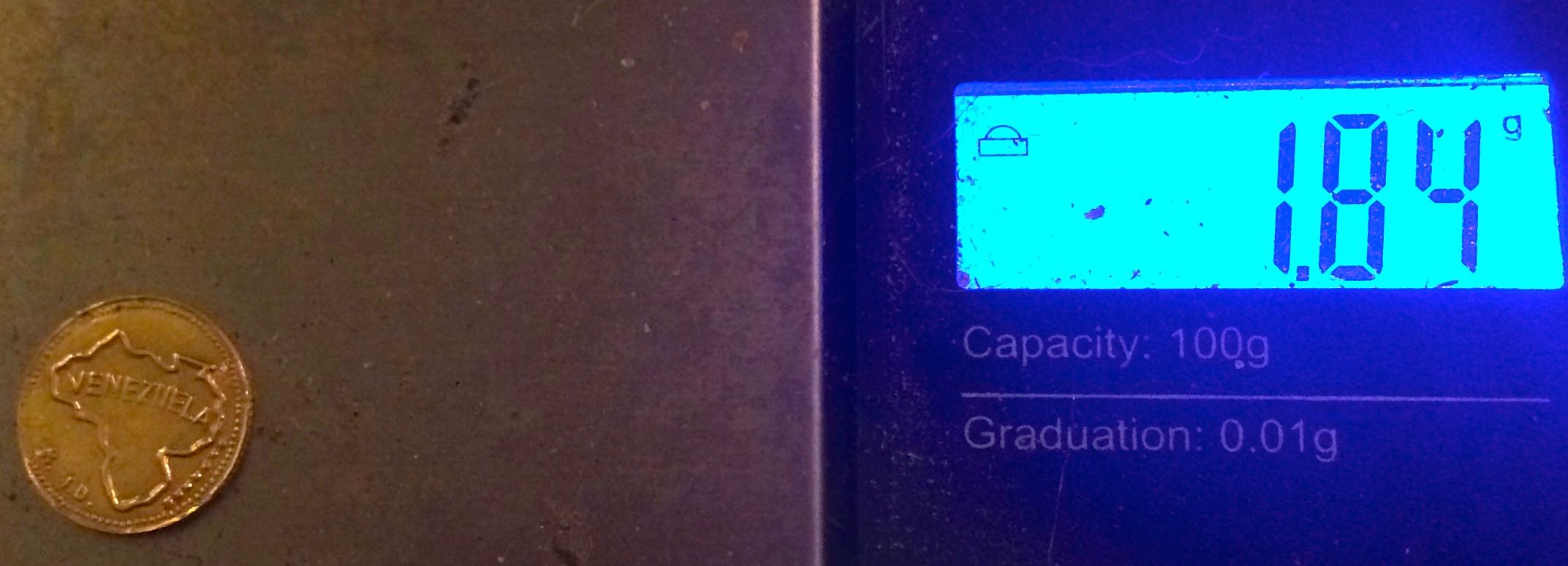
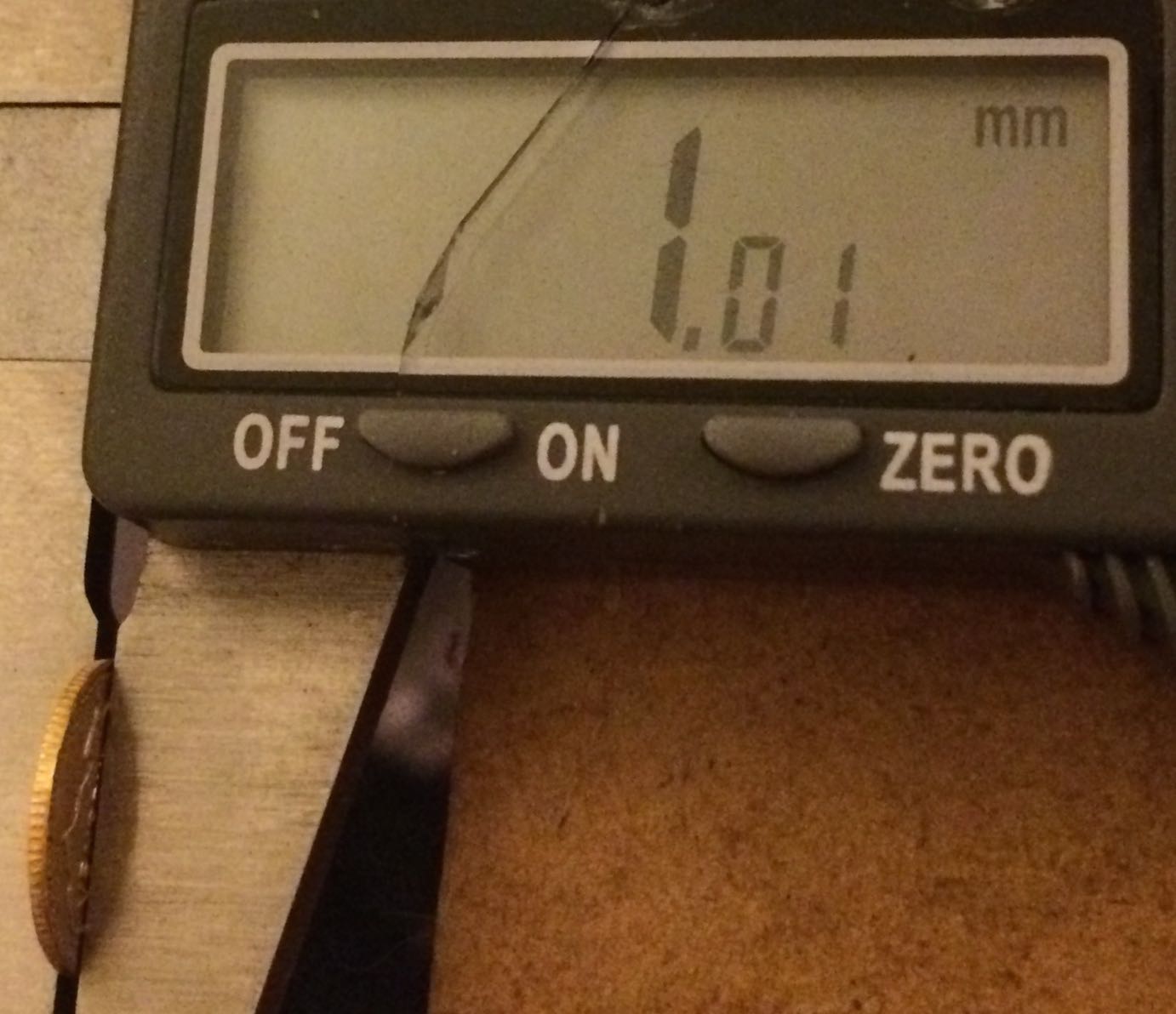
At those dimensions, it calculates to have a density of 16.4 g/cm3, which is way too high for brass, or anything else other than fairly high purity gold - 22k I'd guess, 18k at the minimum.
People generally didn't make "tokens" out of gold, unless it was a gold rush area with no official coinage about. Venezuela never really had a gold rush, so I think that theory can be discounted.
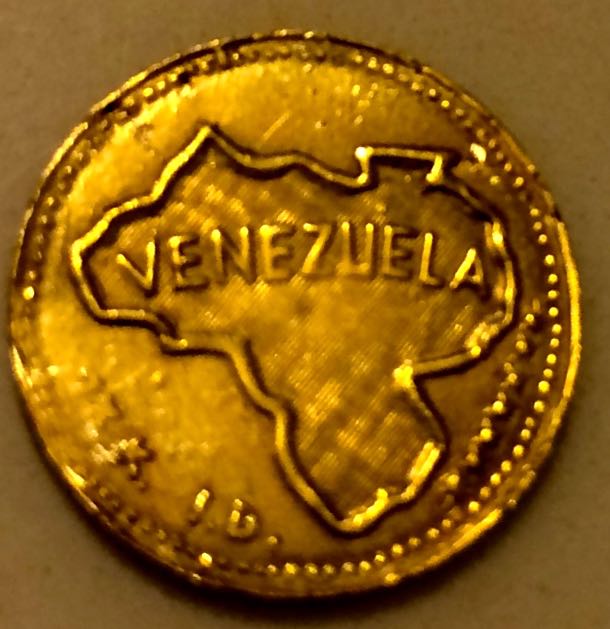
So, if it's not a coin and not a token, then it's a medal of some kind. It's not official government issue - the artwork is too crude. Which means it's a privately made medal.
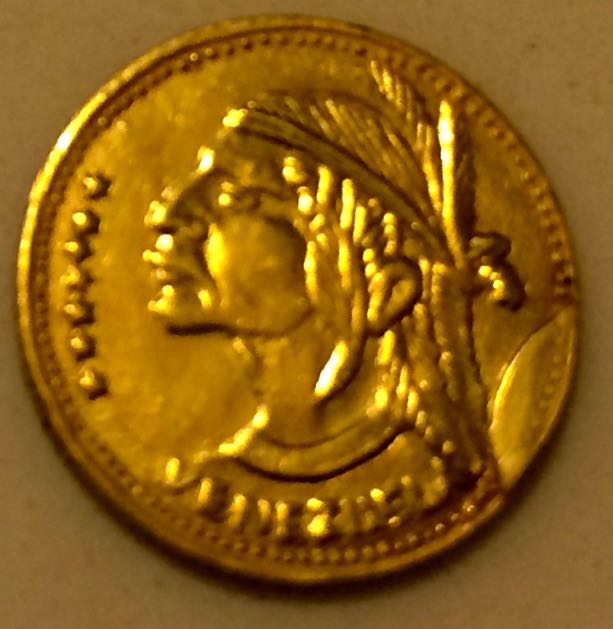
Such items are most often made for jewellery purposes. This one, with the name of the country on both sides, could well have been a souvenir piece of some kind. The differently-coloured elliptical "clip", visible on the obverse behind the native's head, is presumably where it was attached to whatever object it was originally attached to.
The map may be helpful in narrowing down a date, as the borders of Venezuela changed quite a bit during the 19th century. If you look a the right hand side of the map, you see the bulge in a fairly uniform curve, rather than the jagged boundary the country has today. Perhaps this is lazy artwork by the medallist, but I suspect this medal was made in the late 1800s, when Venezuela and Britain had a dispute about the exact border with British Guiana (now known as Guyana). In 1898, the decision (arbitrated by the United States) was that Venezuela surrender those claims and the border rest where it is today. So I'm guessing the piece dates from around the time of the dispute, which garnered considerable public interest in the US where it was widely seen as a test for the
Monroe Doctrine.
Don't say "infinitely" when you mean "very"; otherwise, you'll have no word left when you want to talk about something really infinite. - C. S. Lewis










 Posted 11/16/2015 10:01 pm