| Author |
 Replies: 15 / Views: 2,108 Replies: 15 / Views: 2,108 |
|
|
Pillar of the Community
United States
3495 Posts |
What to make of this one ? Came in a small group of 3 coins. The other two I am 99.9% sure of. But this one ....... 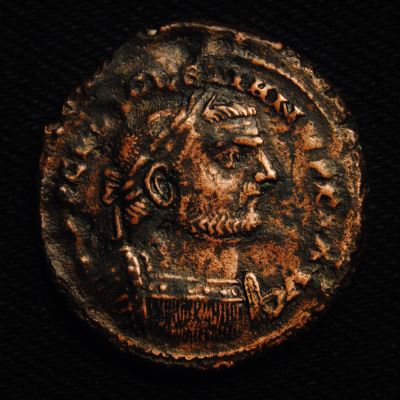 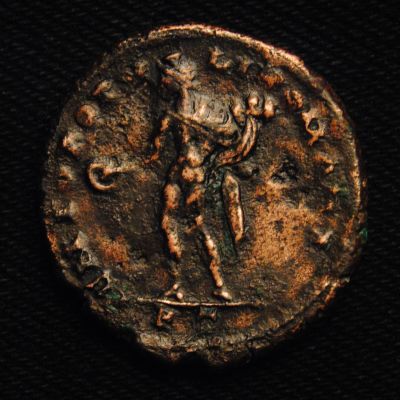 First the portrait is wrong ! It looks like Carausius but the mint appears to indicate Ticinum. At least 3 years after Carausius began 'pushing up daisies' ! Second the weight is a bit heavy ! 12.75 grams while not unheard of is unusual at best. Third the composition ! As far as I can determine it is bronze (possibly copper). Fourth the diameter measures 28-30mm ! A rather grand size for a tetrarchy follis which tend towards 27-8mm. Of course I want it to be real ! Some green spots dissolved away like normal when I gave it a 'bath'. A few remaining green areas are hard like normal patination and do not dissolve in acetone. The coin seemed quite interesting when I spotted it and even after it arrived it intrigued me. But if it walks like a duck And it quacks like a duck |
|
|
|
Pillar of the Community
 United States
3495 Posts |
I did forget to mention that the legend reads Diocletian.
|
|
Pillar of the Community
Spain
629 Posts |
I think that you are a bit paranoic...
I really think that is a genuine coin.
As you said Carausius was "pushing up daysies" when this coin was struck, but that doesn´t mean that the workers of the deceased Carausius mint were "pushing up daysies" too. Probably these hightly qualified worked were transferred to other mints as happened in other moments of the roman history...
Why not Ticinum?
Measures and weight are quite erratic in these coins to be considered enought arguments to consider fake a coin...
I think that is genuine
|
|
Moderator
 United States
23731 Posts |
I would have to defer to your knowledge of Roman bronze coins. I don't know on this one.
|
|
Bedrock of the Community
Australia
21792 Posts |
Speculation:
Would the Ticinum mint be far enough away for the ursurper Carasius in Britain to be not known by mint officials in northern Italy?
|
|
Pillar of the Community
United States
3495 Posts |
But the fact that it appears to be 'copper' makes me suspicious.
I was certain it was genuine ........ at first
But when I added up all the peculiarities I began to doubt.
I would love to proven wrong !
In fact I posted it as fake hoping someone might persuade me otherwise.
I remain ......... Uncertain !
|
|
Pillar of the Community
United States
1047 Posts |
Correct me if I am wrong but I only see this bust type (Laureate and cuirassed) for Trier. Any chance the mint mark is really PTR with the R missing from wear or from a die clog.
|
|
Pillar of the Community
United Kingdom
2838 Posts |
I have a theory, but think I'll wait to see what others come up with first  |
|
Pillar of the Community
United States
5010 Posts |
|
|
Pillar of the Community
United States
3495 Posts |
I have a theory too Ian !
I think the same joker who made the bearded Nero asses is having another laugh !
The coin is copper as far as I can determine. As I have mentioned before I live adjacent to one of the best Polytechnic schools in the US.
It's about time I checked to see if I can interest any grad students in Roman metallurgy.
Copper makes no sense at all to me. The maker of this may well have an unusual sense of humor.
As far as I can see the mark is P T with nothing missing.
|
|
Pillar of the Community
United Kingdom
2838 Posts |
Well, these are my thoughts. I think the coin is genuine and official, I can't see the point in faking such a low grade coin and in a series of coins that has variants in the 1000s. Then hiding it in amongst other coins that look to all have come from the same hoard, nah, no chance. Without a spectroscopy test (is that what it is called?) it is very difficult to say for certain what the metallic make up is, maybe you have access to one? The style is odd but every now and then these oddities pop up, looking at the bust I would have put money on it being from London but I've backed many 3-legged horses in my time. Below is a srceen grab showing all of the GENIO coins produced at Ticinum for Diocletian, Maximian, Galerius and Constantius listed in RIC.  Notice how only one of these coins is cuirassed, even then it is listed as rare. Variants were usually made for all the Tetrarchs, I think your coin is from a late, short run at the mint and very few have survived, hence them missing from RIC. 'Not in RIC's are not hugely rare, this though, I would say is one of the better ones. |
|
Pillar of the Community
Canada
1463 Posts |
It's genuine. Issued post death. Posthumously, they earned God status. No reason to fake a coin like that and add a patina, and so on. Nice coin.
|
|
Pillar of the Community
United States
3495 Posts |
I believe it is time for me to send a package off the Mssr Sear. I have 2 others which I would also like an expert opinion on. I will accept his determination ! If it is quite genuine then I believe as a laureled and cuirassed bust of Diocletian from Ticinum it would be well worth the $50 to get a disinterested opinion.
Maybe after Christmas !
|
|
Pillar of the Community
United States
3495 Posts |
Once again I have swung to the opposite extreme.
As Athalbert and 'Ian' have so confidently endorsed the coin, and my wise old owl brother is still trying to relieve me of the burden of owning it !
I am now of the opinion that it is "good". The fact that the seller asserts that it was actually found in situ with the coins which it came with certainly helps too !
My major objection was/is the composition.
But my brother has made a necessary connection. I had spoken of how the edges reminded me of a copper As of Claudius.
The connection ?
He opined that this follis was probably overstruck on an As of that period !
The only real test left is to see if I can interest a student at the Polytechnic here in Worcester to compare the alloy. If it can pass such a test then the coin not only makes the grade ....... It makes it too the head of the class !
|
|
Pillar of the Community
United Kingdom
2838 Posts |
The overstruck theory is certainly a possibility. Coming from a manufacturing background it would be interesting to know more about the 'nitty-gritty' of the minting process, often, dry scholarly accounts don't consider practical problems caused and solved by the people at the 'coalface'. Anybody who has ever worked in a factory, even a modern high tech one knows no matter how hard you try to engineer standardisation into a process the human involved often finds a new and soul destroying way of not doing it correctly  Maybe the alloy mix was inconsistent for the run your coin came from, maybe it was just plain incorrect, maybe it was overstruck, sadly we'll probably never know. Would love to hear a Ticinum mint fans views on this coin. Somebody must specialise in these coins. |
|
Pillar of the Community
United States
3495 Posts |
I suddenly had a 'brain storm' !
But now that I feel better another (remote ?) possibility occured to me.
As many of us know (a few anyways) late 3rd century there had been repeated attempts to bring back the glorious good old days.
Note that this coin does appear to have been struck upon a flan which may have been dented with a "ball-peen" hammer. In particular the obverse 10-12 o'clock. Now checking my handy Sear what do I find ?
Number 12830 ! Bronze reduced sestertius ! This was a pre-reform attempt to continue the efforts (starting with Aurelian) to reintroduce the old denominations. A possible lead may be finding the specific weight and diameter (Sear gives 24-5mm) of this reduced bronze sestertius. Might the mint have as part of the recall of pre-reform coins simply hammered the bronze issues and reminted them with the follis dies at hand ? Possibly this happened at the very start of the new follis denomination (explaining the curious portrait style ?).
A hammered flan might explain the large diameter 28-30mm and seems evident in the curious marks on the obverse. Additionally it seems possible that irregularities in the fields may be from the previous image now all but obliterated.
I need find a bronze "sestertius" of Diocletian to compare.
Ian you are great at finding such details. If we both search perhaps we might find the answer.
One last thought
The coin when 'new' must have been a bright copper color.
Perhaps the cuirassed bust was used to indicate a separate lesser value ?
Having no silver content it would have been less desirable.
|
| |
Replies: 15 / Views: 2,108 |
|










 Posted 12/03/2015 06:58 am


