| Author |
 Replies: 5 / Views: 1,399 Replies: 5 / Views: 1,399 |
|
|
Valued Member
United States
356 Posts |
This is a RIC V 14 Aurelian. It is a very rare coin, so I am having a hard time finding one to match with it. The one on CNG has the bust in a different direction and the portrait looks totally different. Experts weigh in? Thank you. Weight: 4.68 g. Diameter: 22 mm. 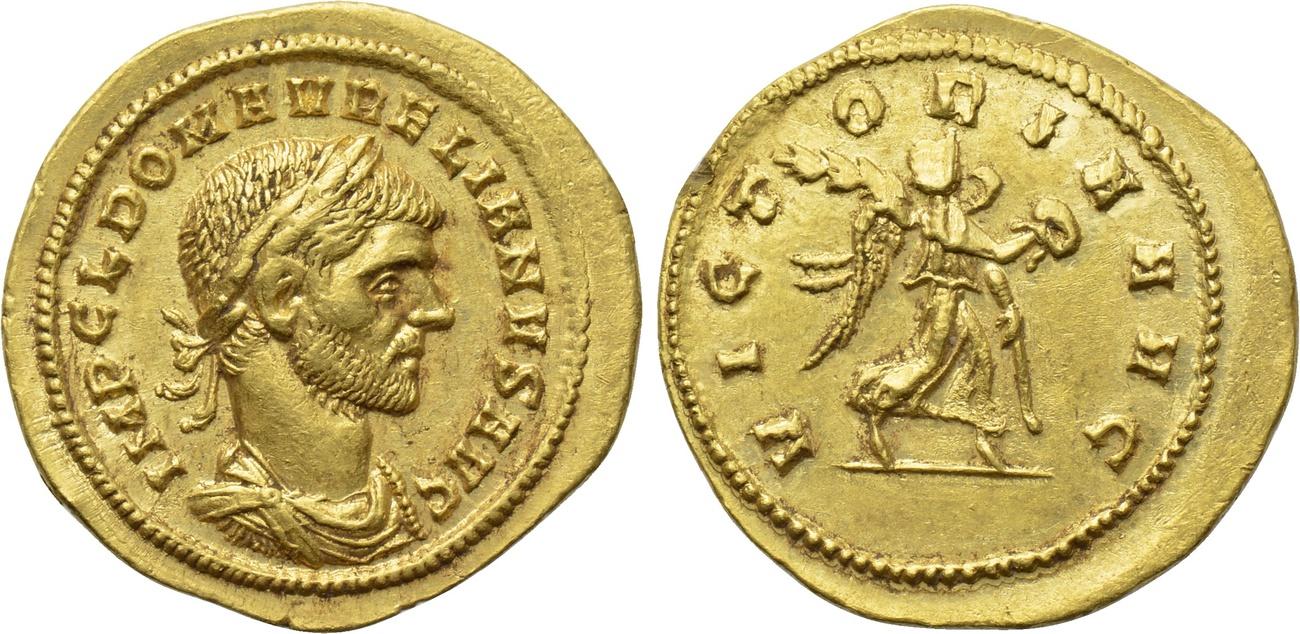 Edited by caesar77
12/13/2015 12:14 am
|
|
|
|
Bedrock of the Community
Australia
21792 Posts |
All we can go on here is 'style,' based on the pictures. Continue to search the forgery data bases.
Provenance - Where did it come from? - Will that information be provable?
Need to know the weight.
I have access to hand held XRF, which many coin collectors don't. That would give major information to 'fabric'. I would certainly take advantage of this fortune, it it was in hand.
Most bullion dealers do indeed have access to XRF, so if you can take it there, do so, looking for trace elements, not gold. Same applies to international coin dealers of the highest reputation.
Also search:
'coin aurelian gold' on Google Images.
I have found Google Images a very useful numismatic tool. It is perhaps under utilised for numismatic purposes.
Modern fakes are often made from either .900 or 22ct gold., with only copper or silver in the alloy.
Get it confirmed by an international coin dealer, with specialist knowledge in Roman gold, if you are able.
Edited by sel_69l
12/13/2015 12:28 am
|
|
Pillar of the Community
United Kingdom
2624 Posts |
I am not an expert but it certainly looks a very attractive piece, if it can be verified as authentic it would be a highlight for anyone's collection.
Sel's advice seems sound to me...
|
|
Moderator
 United States
23731 Posts |
I would also agree with Sel's advice.
|
|
Valued Member
 United States
356 Posts |
Online Auction, impossible to inspect especially with machine mentioned. I am suspicious because the quality is so high, and this one from CNG, the only other one I could find to reference is different. See below: 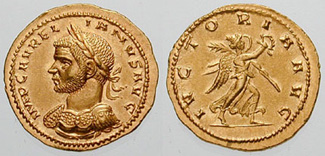 |
|
Bedrock of the Community
Australia
21792 Posts |
Commonly, gold fakes are made from .900 or 22 ct modern coin gold, and only have copper or silver only in the alloy.
It is almost impossible to reproduce the variation in trace elements found in ancient gold coins.
The ancients did not have the same high gold industrial refining techniques that exist in modern times.
That is why you look for trace elements (not gold), when using XRF examination.
At least, XRF does not damage the coin in any way, but it can only examine the elements in the surface layer. If you want to get into the core, X-Ray examination is required, looking for a tungsten core, (usually when examining bullion bars).
Major museums aroud the World have done some research on the proportion of trace elements found in ancient gold coins. The problem here is that the ancient coin to be examined is either severely damaged or completely destroyed in the chemical analysis pricess. They use both mass spectrometry and XRF analysis.
Fakes of modern gold coins use modern coin alloys, recycled.
|
| |
Replies: 5 / Views: 1,399 |
|










 Posted 12/13/2015 05:02 am


