| Author |
 Replies: 14 / Views: 3,275 Replies: 14 / Views: 3,275 |
|
|
Valued Member
United States
434 Posts |
This coin appears to be thinner than a n mormal silver quarter. It is the same size as a normal silver quarter, just the thickness of the rim is much less. I do not have a coin scale, but it feels lighter than a normal silver quarter. I welcome your feedback. 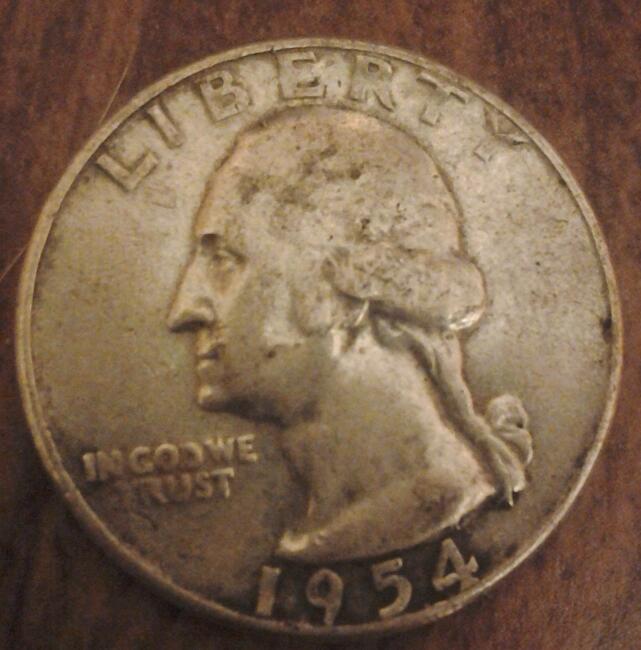  The coin on the right is the thin 1954 S. 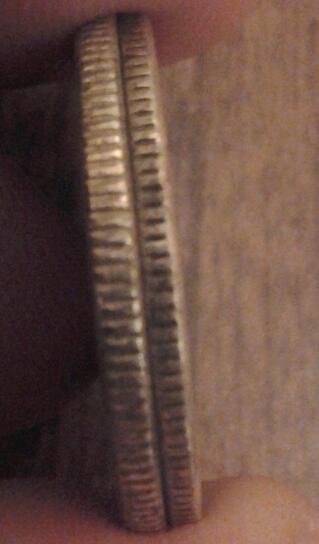 |
|
|
|
Pillar of the Community
United States
1005 Posts |
Could be struck on dime stock, but you'd want to get an accurate weight to confirm.
|
|
Valued Member
 United States
434 Posts |
Maybe. It is silver, and dimes were silver at that time too. Thanks!
|
|
Pillar of the Community
United States
740 Posts |
Hmm..  It does look like dime stock. Get a scale |
|
Valued Member
United States
434 Posts |
I'll go to the coin shop one day and have it weighed. I know if it was struck on a dime PLANCHET it would be the size of a dime and called struck on dime planchet. What is the term for a coin struck on the wrong stock? What kind of premium would this have if it is struck on dime stock?
|
|
Pillar of the Community
United States
1005 Posts |
|
|
Pillar of the Community
United States
740 Posts |
MS70Error5: What is the term for a coin struck on the wrong stock?
-Exactly that. Wrong stock, or struck on dime stock is the technical term.
You're also correct, struck on dime planchet is a completely different error
|
|
Pillar of the Community
United States
1959 Posts |
Very interesting. I've collected my entire life and never seen something like this. Nice coin!!
|
|
Pillar of the Community
United States
2752 Posts |
Quite a few underweight quarters were produced in the San Francisco Mint between 1952 and 1954. Weights range from 4.9 - 5.4 grams, with most over 5 grams. They're presumably rolled-thin errors, as all of them have proven to be heavier than dime stock. Nevertheless, quite a few have been erroneously slabbed as dime stock.
Error coin writer and researcher.
Edited by mikediamond
12/19/2015 2:55 pm
|
|
Valued Member
United States
434 Posts |
Thank you all for the great information and comments. I will get the coin weighed one day and post its weight when I do so.
|
|
Pillar of the Community
United States
1005 Posts |
There you go, you learn something new every day!
I wonder if the rolled-thin error is a cost cutting measure to save silver, or if they just didn't check the thickness of the roll before punching planchets. I would have thought they would check the thickness on every roll but maybe it was just the tail end of the roll that was too thin so they didn't catch it.
|
|
Valued Member
United States
434 Posts |
I don't know. That is a good question how the thin quarters made it out in circulation. My quarter weighs 5.47 grams. I'm guessing thin rolled planchet? Any price range or level of rarity ideas? Thanks all.
|
|
Pillar of the Community
United States
2752 Posts |
A silver dime stock quarter should weigh around 4.6 grams. So presumably your coin is rolled-thin quarter stock.
Error coin writer and researcher.
|
|
Valued Member
United States
434 Posts |
Oh ok. Thanks for the info.
|
|
Bedrock of the Community
United States
17884 Posts |
Quote:
I wonder if the rolled-thin error is a cost cutting measure to save silver, or if they just didn't check the thickness of the roll before punching planchets. That's a good question, how do rolled thin planchets occur? It wouldn't be deliberate because the coins would be out of spec and technically not legal to issue. Since you are rolling down thicker strip into thinner strip you would never set the distance between the rollers to less than the desired thickness and the thicker strip would not come out of the rollers at thinner than the distance between the rollers. |
| |
Replies: 14 / Views: 3,275 |
|







 Posted 12/18/2015 11:42 pm





