











 Posted 12/31/2015 1:03 pm


dcarr Well said. 
For a coin to be a contemporary counterfeit it must pass a "red face test".
dcarr answered the question of could it have been made but without stating specifically that you first need to determine IF the coin would have been made by a counterfeiter.
Counterfeiters make coins to circulate alongside genuine coins. To do so two things must happen. First the coin being copied must be a very common coin in circulation. Coins that are not seen often attract too much attention. Second the coin has to look like the average coin of that type and date in circulation. The coin is silver so wear rates are well fairly well known - average life of a dollar in circulation circa 1790 was about 30 to 50 years (allowing for reduced levels of circulation hand to hand of larger coins). After that wear had reduced the weight by 6 percent on average and they were withdrawn for melting. At that wear level there were no rims visible and lettering is half gone.
Wear rates can still be seen for circulating silver coins by sorting through any random bag of silver change. In the US silver quarter dollars were not made after 1964. The quarter dollar is the most common coin in circulation in the US. So sort out a bag of quarters and look at the wear patterns. You find a ton of high grade 1960-1964 coins but for every year back there is an increase in wear. In the 1950s (after 10 years wear) most are VF. In the 1940s (after 20 years wear) most are VG. Most of the 1934 coins (30 years wear) are near the re-melt point.
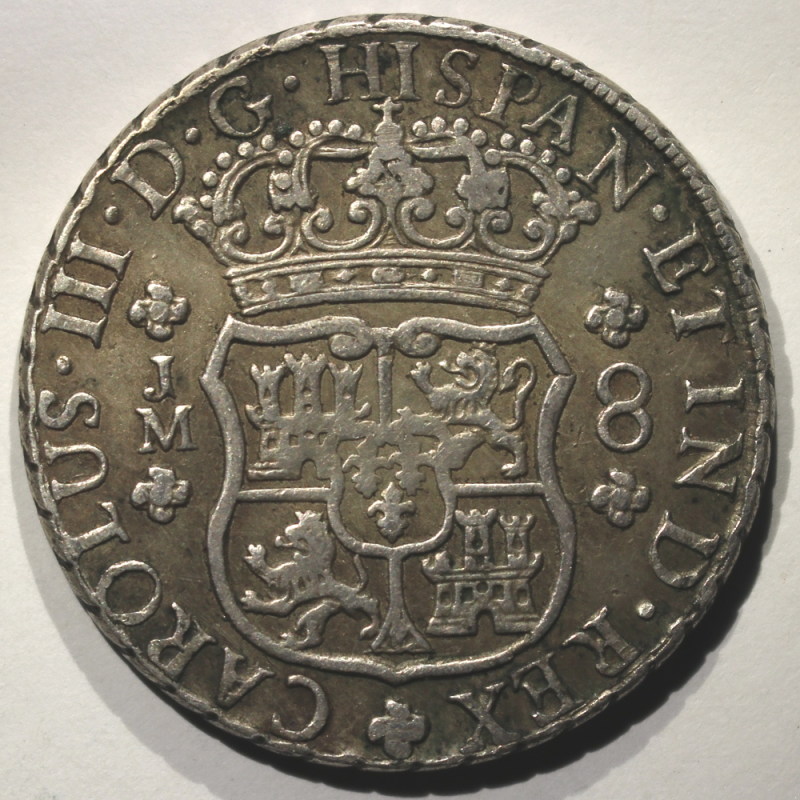
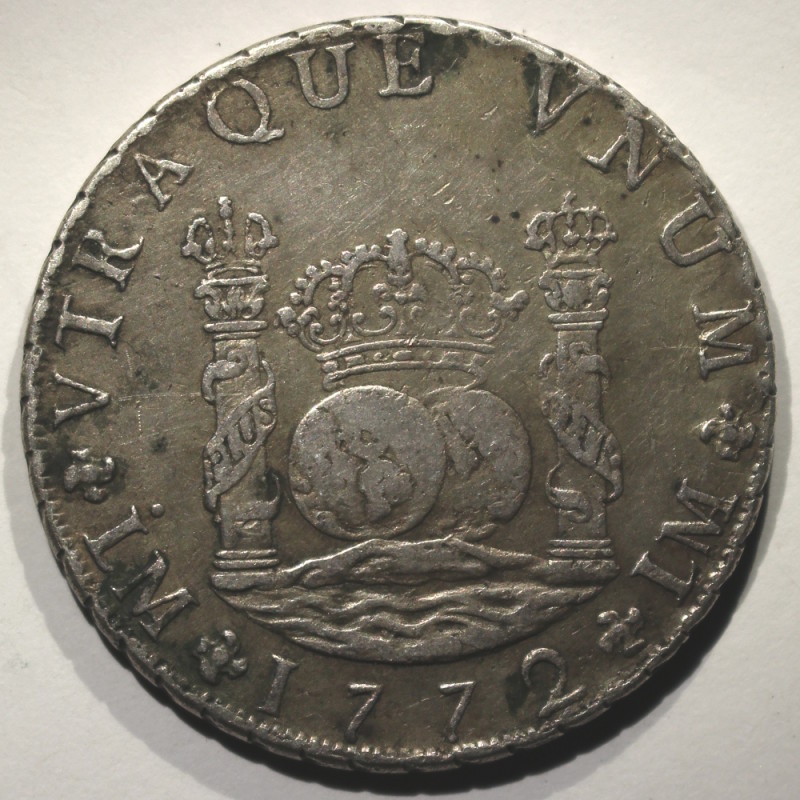
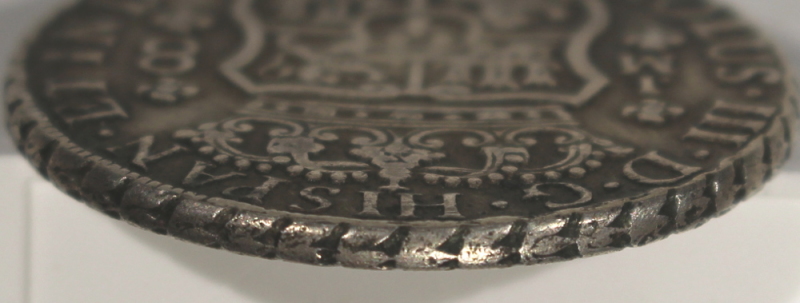
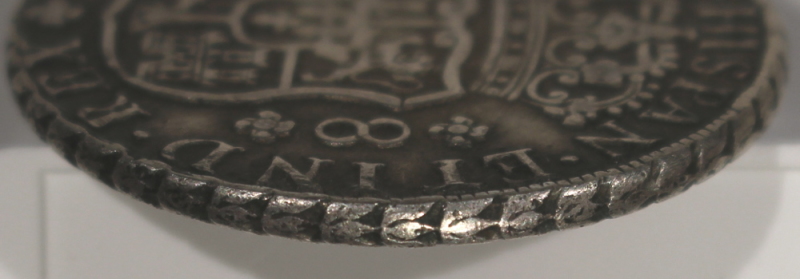
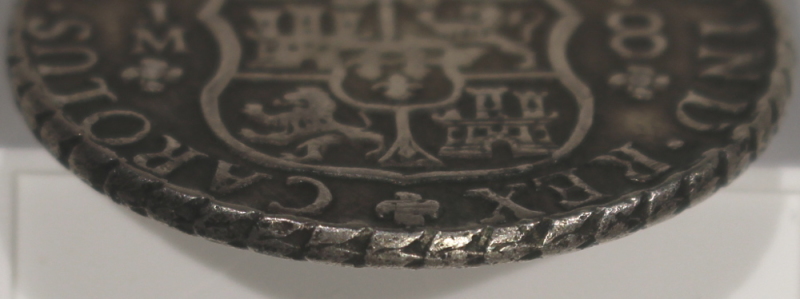
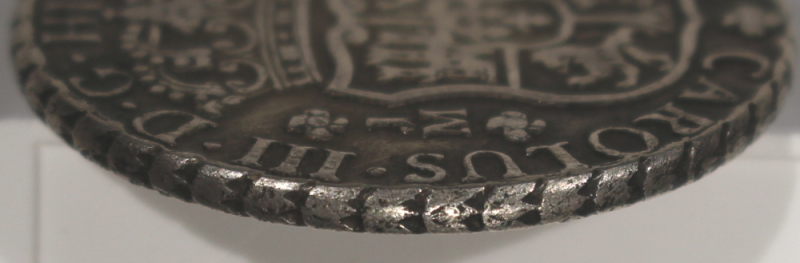
So, going back to the 1772 8 reales, we have a coin that would have been worn slick before die duplication technologies were first introduced in the 1830-1840 time frame (about 60 years). The coin would not have been made in this high grade as a counterfeit to circulate in 1835. It would have stood out like a sore thumb.
Sorry for the detail but I saw an opportunity for a teaching point.
This is an example of how simple science (rational thought based on observable facts) can intersect with coin collecting to provide answers that in the past have often been merely guess work.
For a coin to be a contemporary counterfeit it must pass a "red face test".
dcarr answered the question of could it have been made but without stating specifically that you first need to determine IF the coin would have been made by a counterfeiter.
Counterfeiters make coins to circulate alongside genuine coins. To do so two things must happen. First the coin being copied must be a very common coin in circulation. Coins that are not seen often attract too much attention. Second the coin has to look like the average coin of that type and date in circulation. The coin is silver so wear rates are well fairly well known - average life of a dollar in circulation circa 1790 was about 30 to 50 years (allowing for reduced levels of circulation hand to hand of larger coins). After that wear had reduced the weight by 6 percent on average and they were withdrawn for melting. At that wear level there were no rims visible and lettering is half gone.
Wear rates can still be seen for circulating silver coins by sorting through any random bag of silver change. In the US silver quarter dollars were not made after 1964. The quarter dollar is the most common coin in circulation in the US. So sort out a bag of quarters and look at the wear patterns. You find a ton of high grade 1960-1964 coins but for every year back there is an increase in wear. In the 1950s (after 10 years wear) most are VF. In the 1940s (after 20 years wear) most are VG. Most of the 1934 coins (30 years wear) are near the re-melt point.
So, going back to the 1772 8 reales, we have a coin that would have been worn slick before die duplication technologies were first introduced in the 1830-1840 time frame (about 60 years). The coin would not have been made in this high grade as a counterfeit to circulate in 1835. It would have stood out like a sore thumb.
Sorry for the detail but I saw an opportunity for a teaching point.
This is an example of how simple science (rational thought based on observable facts) can intersect with coin collecting to provide answers that in the past have often been merely guess work.


