| Author |
 Replies: 67 / Views: 17,481 Replies: 67 / Views: 17,481 |
|
Pillar of the Community
2087 Posts |
This week I received a new enlarger lens.....I didn't expect much from it. I purchased it on ebay and had put a sub US$10.00 bid on it and got it(unfortunately). It arrived a couple of days ago and was in spectacular condition hardly used. I have a pretty good idea why it is in such good condition....it failed to even match my low expectations... it was horrible. Today it was a nasty snowy day so I fiddled around with my macro rig and I conducted a comparison of three enlarger lenses to set a base line I used a modern AF macro lens as a base line. The lenses 1. Minolta Rokkor E 75mm F 4.5: this is the new, and useless, lens.2. Rodenstock APO Rodagon 90mm F4: cost me US$90.00 a year or so ago it is not a true APO.3. Schneider Kreuznach APO-Componon HM 45mm F4: this was OMG thats so cheap purchase. I wouldn't normally buy a 45mm, but the lens came with an SK UNIFOC focusing helicoid ( for machine vision). New the UNIFOC costs US$400+. The lens and Helicoid together became mine for US$250.00) The Focusing Helicoid fits my camera with a T2 adapter. This lens appears to be a true APO The comparison lens is the very new Sony FE90mm F2.8 macro. the Sony produces pictures that I can not differentiate from those produced by the Printing Nikkor 105mm. Although its not advertised as such I believe it is a true APO it has an Ultra ED element and an Aspherical ED element. Now to ensure the test was fair I focused all lenses manually using the cameras manual focus assist and full focus peaking. ( this is not always the best way to nail the focus but I used it to ensure focusing consistency between the lenses. The FE lens has manual focusing by wire which I am still getting to know( I used to hate it but am starting to enjoy it). I used F 5.6 for each lens this is just over one stop below the diffraction limit for the cameras sensor. I left the lighting the same for each shot and kept the same magnification. Obviously the 45mm has a very close working distance and you can see the left side of that shot is dark...I would normally set the lighting up differently for that lens. The 100 % crop from the 45mm has benefited from the lighting slightly( more shadow producing better contrast). Lighting was diffused by Aluminium honeycomb. For all photos the magnification was 1-1( some very slight difference) Results. 75mm is shocking!! the Rodenstock surprised me.... its not as good as I had thought it was(this is the first time I have compared its performance to other lenses..). It has good performance but the SK 45mm is much better. I suspect the newer 80mm APO rodenstock would perform better. I also wonder whether mine being a well used version with Schneideritus might have less contrast than a better example. You can see in the photos the difference resulting from non APO , partial APO and full APO( or very close to it) I forgot to use the rocket blower n the penny so there is some dust in evidence on the coin  In this following 100% crop the pictures are in the same order as above  Edit: I should add that the Rodenstock cost 1/10th of the price of the Sony and the SK was less than a quarter of the cost of the Sony. It does show the value in going for enlarger lenses. Edited by austrokiwi
01/23/2016 2:32 pm
|
|
|
|
Pillar of the Community
United States
9395 Posts |
Interesting results -- I'm surprised you can see that much difference between lenses.
Some months ago, I tried something similar, looking only at central resolution with a small AF test target. All 3 lenses I tried gave about the same resolution, about 1 line pair for 3 pixels. I'm guessing the anti-aliasing filter prevented reaching 2 pixels per line pair (but only if pixels and lines could be aligned just right). In order to see any real difference between the lenses, I had to project the areal image from the lens onto the sensor using a low-power microscope objective. The lenses could resolve about 2x better than the sensor.
|
|
Pillar of the Community
 United States
4051 Posts |
Looks like the clear winner is the 45HM.
Contact me for photographic equipment or visit my home page at: http://macrocoins.com |
|
Pillar of the Community
Canada
2784 Posts |
austrokiwi. you know I find I read a lot on different forum. every body has a different idea. but if one takes the time. while reading these different forum. you find with there recent post all of a sudden ebay will be loaded with those lens. plus other auctions so you start to realize. one has to be very careful in following directions. from these people who publish all these fact. what I like here is the lens are tested and published. you can see the results. if any person investigates. the fact on this forum you can soon see that. here is where tester get to the real results. not saying that the others forum are wrong. just that some of them it is more about selling. so anyone interested in lens has to be very careful. make sure you do your home work. its all about your money. great job austrokiwi. |
|
Pillar of the Community
 2087 Posts |
Quote:
Looks like the clear winner is the 45HM. Yep it is. though the working distance is a pain... that said with it costing a quarter of the sony its extremely good value for the money. Looking at the 75mm I suppose its not that bad... when I use manual focus assist the image is magnified 5X and 12X( electronic) for focusing. That magnification really highlights differences between lenses as you are focusing. Edited by austrokiwi
01/23/2016 2:36 pm
|
|
Pillar of the Community
2087 Posts |
reading pepactonius's post I went back and at the same magnification I tested each of the lenses Using a standard USAF 1951 resolution target
The 75mm resolved up to group 5 element 5 which equates to 50.8 cycles per mm.
The Rodenstock 90mm resolved group 6 element 1 = 64 cycles per mm
the SK 45mm Resolved group 6 element 3 = 80.6 cycles per mm
And the Sony 90mm won out ( but that should be expected as the lens was designed for the sony A7rII) at group 6 element 4(the sensors limit) = 90.5 cycles per mm. this is also the max, on this camera, for the Printing Nikkor 105mm
Edited by austrokiwi
01/23/2016 3:19 pm
|
|
Pillar of the Community
Canada
2784 Posts |
austrokiwi I thought I would try 3 of my favourite lens. the camera Sony A7R markII first lens Schneider kreuznach componon-s 4/80 set lens. novoflex Germany auto bellows noflexar 1/105 rodenstock apo rodagon D1/4 75 lighting single ottlite Russian enlarger stand same light angle for every photo here they are the photo are in order of listing. #1 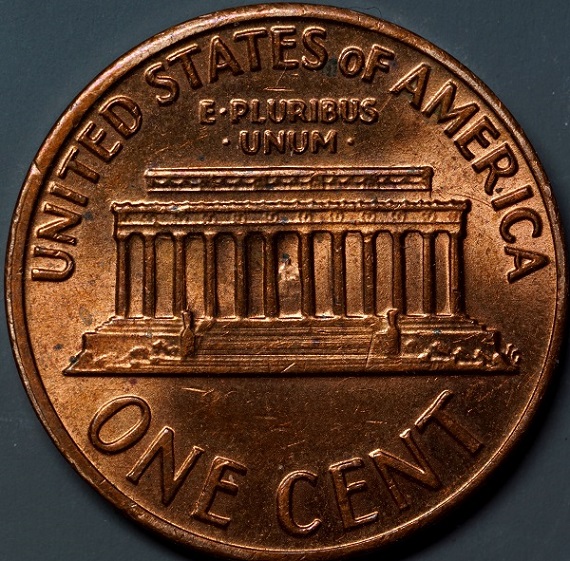 #2 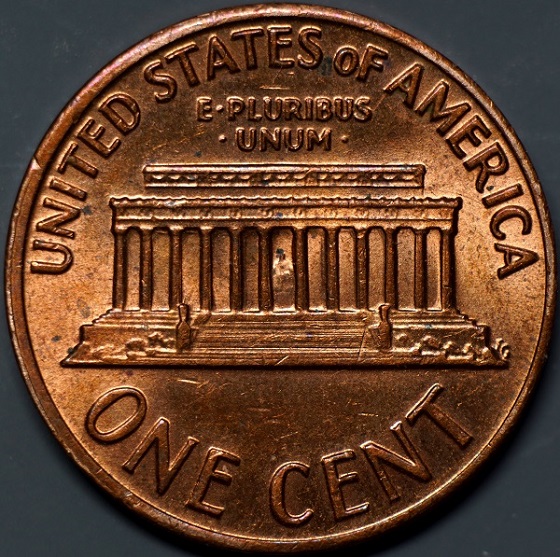 #3 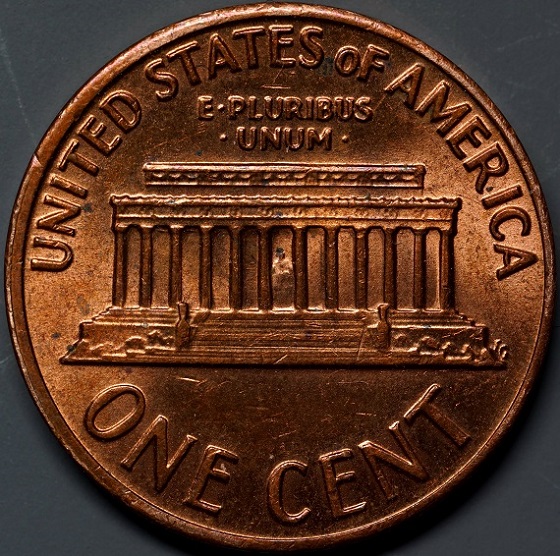 |
|
Pillar of the Community
2087 Posts |
100 % crops would help to highlight the differences
|
|
Pillar of the Community
United States
9395 Posts |
It might be interesting to use a microscope objective to enlarge the image from the Sony 90mm and the 105mm Printing Nikkor to see if the Sony is really as good as the Nikkor. - - - - - - - - - For comparison, my results for 1:1 magnification (using Canon T6s with 3.72 micron pixels and standard anti-aliasing filter) with and without enlargement using a 10x Mitutoyo objective: - EL-Nikkor 75mm at f/4 : group 6 element 3 or 4 - EL-Nikkor 75mm at f/5.6: group 6 element 3 or 4 - EL-Nikkor 75mm at f/8: group 6 element 2 or 3 - Olympus 80mm bellows lens at f/4 : group 6 element 3 or 4 (group 7 element 3 or 4, with 10x enlargement by objective) - Olympus 80mm bellows lens at f/5.6: group 6 element 3 or 4 (group 7 element 1 or 2, with 10x enlargement by objective) - Olympus 80mm bellows lens at f/8: group 6 element 2 or 3 - APO Rodagon D 1x 75mm at f/4 : group 6 element 3 or 4 (group 7 element 4 or 5, with 10x enlargement by objective) - APO Rodagon D 1x 75mm at f/5.6: group 6 element 3 or 4 (group 7 element 1 or 2, with 10x enlargement by objective) - APO Rodagon D 1x 75mm at f/8: group 6 element 2 or 3 The central resolution of the Rodagon seems about 1 element better than the Olympus at f/4, but the sensor cannot capture this diference without the aid of the microscope objective (which itself can resolve way better than group 7 element 6). There might be less chromatic aberration at f/4 with the Rodagon, too. Apertures are f/4, f/5.6, and f/8 indicated -- effective apertures are f/8, f/11, and f/16 due to 1x magnification. Also note that whether or not lines are resolved is somewhat subjective -- I didn't do any contrast measurements, etc. ======================================================== Here are the supporting test shots of the USAF test chart (1000% crop of group 6 element 2 through group 6 element 5), taken at f/4 for each lens (O = Olympus 80mm, R = APO Rodagon 75mm 1x, N = EL-Nikkor 75mm): 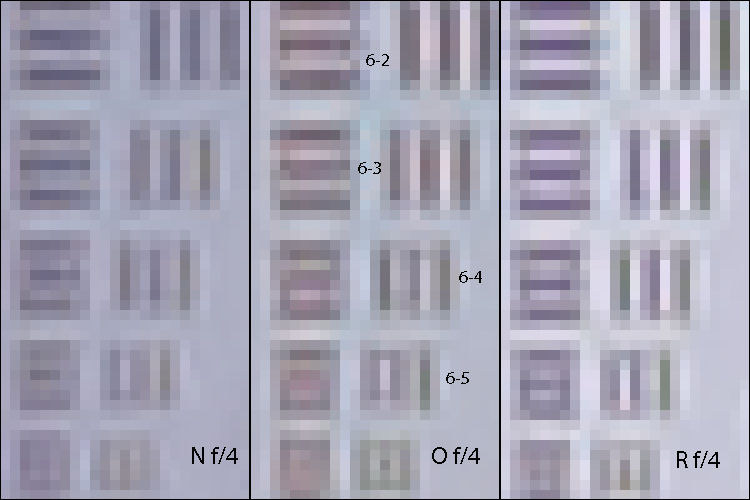 Here is the same thing at f/5.6: 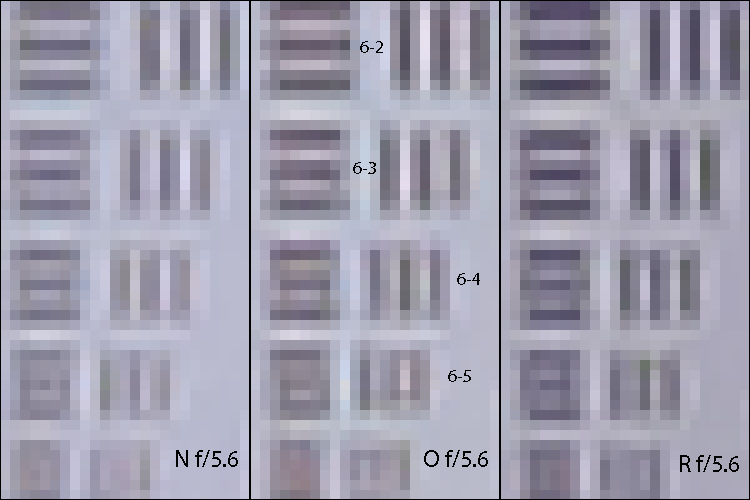 And at f/8: 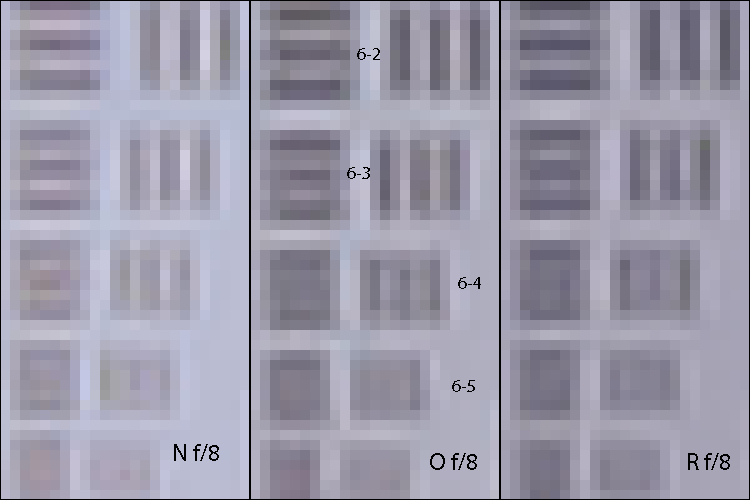 Here are shots using the 10x microscope objective to enlarge the image at the sensor (100% crop) compared to the 1000% crops above: Olympus f/4: 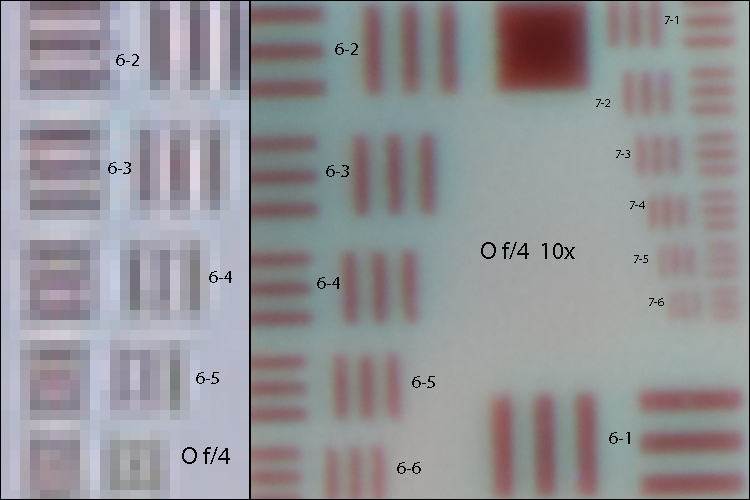 APO Rodagon at f/4: 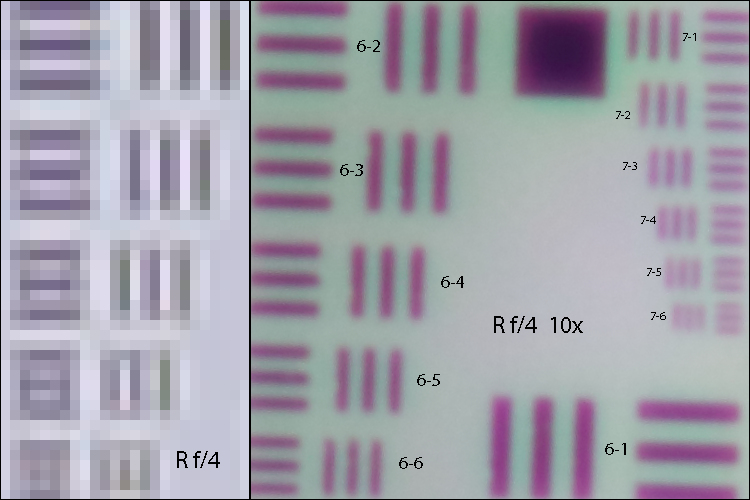 Edited by pepactonius
01/23/2016 10:52 pm
|
|
Pillar of the Community
Canada
2784 Posts |
I thought I would do one more. the Olympus om system 80mm 1/4 all was process the same. all with f8 aperture. and all done with a single ottlite. olympus 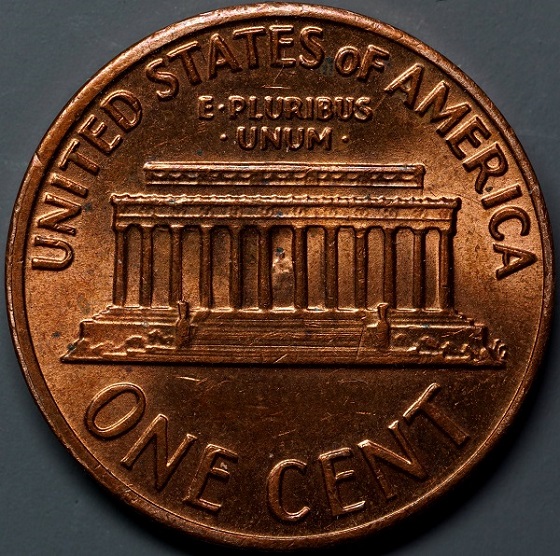 |
|
Pillar of the Community
2087 Posts |
pepactonius thanks for you reply. I have always been slightly puzzled by the method of using a micro scope objective to enlarge the image from the lens. I know how to set it up. I also understand the principle behind it, it just seems like cheating) I can do it for the enlarger lenses but not the Sony 90mm( no direct manual control of aperture and the focusing without connection to the camera). I am as yet to get a mitutoyo 10X objective( as an aside would a 28mm Ultra micro Nikkor do a similar job? I don't have that exotic lens) I keep finding coins to buy instead of the objective.
Like you I suspect that the Printing Nikkor 105mm will out resolve the Sony. I would like to know how big a difference there is the Sony is supposed to be able to out resolve a 100 mp sensor ( ignoring the diffraction issue of course) Rik (photomacrography forum) was the one who told me the Sony A7rii sensor limit was around 6-4 and that was assuming I wasn't projecting onto a microscope objective.
Edited by austrokiwi
01/24/2016 12:22 am
|
|
Pillar of the Community
United States
9395 Posts |
Quote:
I am as yet to get a mitutoyo 10X objective( as an aside would a 28mm Ultra micro Nikkor do a similar job? I don't have that exotic lens) I keep finding coins to buy instead of the objective.
I would guess that any microscope objective that easily outresolves the lens being tested, and also magnifies at least 3x or 4x would do (if you have pixels that are a few microns in size). The NA of the objective needs to be higher than the lens being tested, and this should normally be the case. The 10x/0.28 easily outresolves these lenses, and my cheap USAF test chart, too. Here is a 500% crop of the smallest lines on AF test chart, taken directly by the 10x objective: 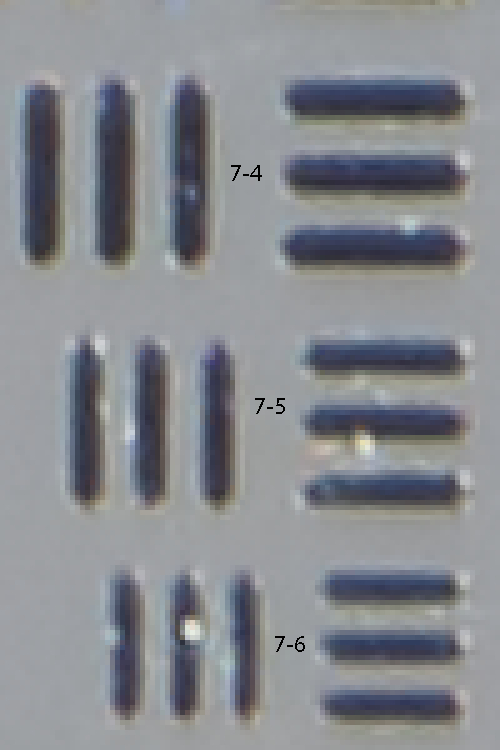 |
|
Pillar of the Community
2087 Posts |
yes my cheap 10X microscope objective easily resolves 7-6. Just to clarify with the lens tests you placed the lenses in front of the microscope objective rather than the microscope objective in front of the lens? I am confusing my self I think
MY 10X objective has an NA of .25 IS that OK. It needs 170mm extension. I can easily set up a bellows and rail rig ( it will just take some time and fiddling to get all the focal distances correct) with an enlarger lens projecting on to that objective. It will take a few days and then I will come back with more formal resolution target results... I won't be able to test the Sony lens. ( I don't have the necessary adapters not sure they exist and I fear my clumsy hands might damage it)
Edited by austrokiwi
01/24/2016 12:50 am
|
|
Pillar of the Community
United States
949 Posts |
Forgive a basic question, but your use of enlarger lenses for macro work is tempting to me. I am using a Nikon D80, with bellows, and various rings to mount a 60 mm micro Nikkor. How are you mounting the enlarger leses to the camera body, i.e. what kinds of boards and adapters are you using.
Suppose I wanted to mount a Rodenstock 45mm lens. What is the preferred lens choice and mounting setup?
|
|
Pillar of the Community
2087 Posts |
This has been covered in much greater details else where in the forum: I have a different camera mount to yours but the principle is the same ( you just have to ensure the adapters match your cameras mount) I predominantly use a bellows but from time to time I just resort to extension rings. My bellows is a Minolta AB III this is a tilt shift bellows. For the M 39 ( Leica screw mount) enlarger lenses I have a M 39 to Minolta MD adapter. I then fit the camera to the bellows using a Minolta MD to Sony E mount adapter. Points to note: Any bellows will do but as a general rule the more expensive the bellows the more Utility you will get out of it. For Nikon the PB6 is the best you can get( I believe) There is also a canon (FD mount)equivalent that is also very good. The minolta ABIII is probably the worst of the three because the mount is less common( the Nikon being the best option). I discovered only recently my Minolta bellows has an interesting feature: the Bellows un-clips from the front standard ( the lens mount) allowing the front standard to be rotated a full 180 degrees. This enables a lens to be reversed without using a reversing ring. The bellows has a clip that allows it to be fastened inside of the mounted lens' filter ring. I assume the PB6 has the same feature. As I said any bellows will do as long as you get the correct adapters. But the most useful bellows units see both the front and rear standards moving along the rail. Also look for bellows that come with a focusing rail. The tilt shift bellows can be very expensive...I have two Minolta ABIIIs and both cost me around $120.00 each but it took a long time to find them at that price ( some ebay sellers expect $300.00+ A cheap bellows can be found found for US$30-50.00 its well worth starting out with a cheap bellows and just waiting to find one of the better models at a bargain. NOvoflex sell a very nice bellows new but it is more than US$300.00 standard and over US$700.00 for Tiltshift Edited by austrokiwi
01/24/2016 5:00 pm
|
|
Pillar of the Community
United States
9395 Posts |
Quote:
Just to clarify with the lens tests you placed the lenses in front of the microscope objective rather than the microscope objective in front of the lens? I am confusing my self I think
First, the enlarger lens is set up just like when it is taking a photo with the camera. Exact focus is obtained the usual way by adjusting a microscope focus block holding the test chart. The magnificaion is checked to make sure it's as close to 1x as possible. Then, the camera is removed from the bellows, and a second module with the microscope objective and tube lens is attached above the bellows, so that the microscope objective is focused where the sensor was. The camera is then attached to the 2nd module, and this module is positioned so the test chart is at the best possible focus (With my setup, this can't be done accurately, since the tube lens module has no fine focusing itself, and it must be slid up and down by hand to get approximate focus.) Critical focus is then obtained by adjusting the focus block holding the test chart as usual -- this changes the magnification slightly, of course, but hopefully not too much. Quote:
MY 10X objective has an NA of .25 IS that OK. It needs 170mm extension. I'd guess it will be OK. This assumes you will be testing at 1x magnification, in which case the microscope objective just needs to have resolution much better than the enlarger lens. 10X seems to work well for me. It spreads 1 micron of subject over a few camera pixels, allowing lens resolution to become the limiting factor, rather than sensor resolution. |
| |
Replies: 67 / Views: 17,481 |





 Posted 01/23/2016 2:14 pm





