|
This page may contain links that result in small commissions to keep this free site up and running.

Welcome Guest! Registering and/or logging in will remove the anchor (bottom) ads and the security checks. It's Free!
To participate in the forum you must log in or register. | Author |
 Replies: 25 / Views: 4,426 Replies: 25 / Views: 4,426 |
|
|
|
Moderator
  United States
34562 Posts |
Irbguy, wow thanks! You put way more into figuring this out than I have or even intended to do. I can see that I need to step up my game a little bit when helping others with their attributions. You rock!
"If you climb a good tree, you get a push."
-----Ghanaian proverb
"The danger we all now face is distinguishing between what is authentic and what is performed."
-----King Adz
|
|
Pillar of the Community
United States
949 Posts |
Thank you for the compliments. It is my pleasure to help in any way I can. I'm just glad you weren't put off by the detail as some are, but some things cannot be done well in a tweet style.
You have in interesting coin variety there, and I was intrigued by it more as I got into it. Thanks for bringing it to us.
|
|
Pillar of the Community
Belgium
1194 Posts |
very interesting arguments for your hypothesis of a Victory,Irguy,congrats,it is a lot of work to write that ,but I still think it is a Greek coin because : -the lion theme is classic for coins and has been used by many cities in East and West . Hereby a tetradrachme from Babylon with a walking lion , only the tail differs and other examples from the book:Greek coin types and their identification (Richard Plant-Spink) 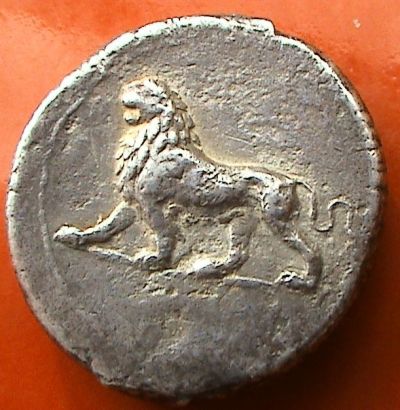 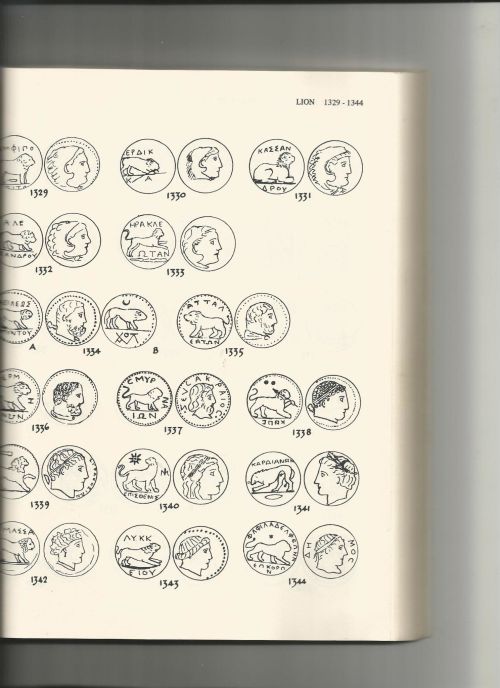 -the coin and the inscription are all in Greek style , by Roman coins the letter letters follow the edge , by Greek coins usually there are on a right line, just as here. If you compare the letters of your AE coin with these of the coin of spence, you see there is a big difference with this official coin. If you have a barbarous coin,then the difference is bigger. 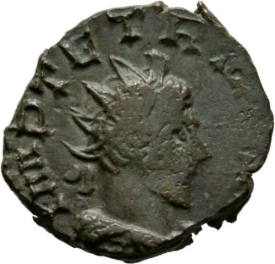 -if you consider this coin as a Greek one , nearly all the die is struck , as Roman coin , it is only one quarter - the inscription ends with a P = R in greek,and not with a R : I suppose it is the beginning of the name of a magistrate . -if there was no inscription , it is impossible to see a Victory in this design ,but it is easy to recognise a lion. -if you study the rotated photo,posted by Echizento , there the tail has a natural shape , what is not the case if it is an arm and there is a big space between the hand and the wreath you suppose to be there. I think this are enough arguments to clarify my point of view .Maybe it is easier to resolve the discussion if we had the coin in hand. |
|
Pillar of the Community
United States
5010 Posts |
the lettering just doesn't strike me as roman, at least official stuff. could it be some type of imitative or unofficial coin with a victory reverse?
|
|
Pillar of the Community
United States
949 Posts |
Albert, in your comments about the use of a lion motif on Greek coins you did not mention the sizes of those coins, their metal, nor the completeness of the figure (head only vs whole body). My experience with lions on Greek coins is not as deep as with Roman, but I think that Greek coins with full body lions are mostly on silver, and always with flans larger than 15mm. When the flan gets small, the lion is reduced to a head alone.
This coin is a 10 mm bronze with an off-center strike for the reverse, so it should not be a surprise that the design is not complete. But what Greek coin can you point to that would meet the specific criteria of this coin as I have done for the Roman? So far the principle argument for a Greek origin is that the lettering does not conform to the curvature of the beading or the edge, but appears to run in a straight line at least for the portion that is visible. Yet that is not convincing inasmuch as no Greek examples have been shown to correspond to anything like this. Nor can we tell how much or what might be missing from a Greek example. Errant lettering could be an indication of unofficial imitation, and that must be considered.
As for the lettering not "striking" one as official Roman, it must be recalled that the lettering on this coin no longer appears as it did when it was first struck. The letters have been mashed down over time, and appear flattened. I don't think the letter shapes are going to be a reliable guide for determining whether the coin was officially produced or not. Their alignment and orientation certainly will however. For me that is still an unknown and open question, but in the absence of obvious blundering, I cannot default to "imitative." But for the reasons I gave earlier I cannot rule out that this coin may not have been standard issue. (sorry for the double negative).
Edited by lrbguy
01/31/2016 01:30 am
|
|
Pillar of the Community
Belgium
1194 Posts |
Thanks for your reply .Coins with a walking lion ara in all sizes and materials . Most represented Greek coins are silver because the AE ones are very often very worn and if you want to buy them as expensive as silver coins.In the first added picture is the first coin an AE13 coin from Comana Pisidia , this for the size . For the inscriptions , you look at nr 1329 , a AE21 coin from Amphipolis Macedonia. There are only a limited munber of examples here as there are to many cities with walking lions.My coin from Babylon pe is not mentioned. About the small sized Roman coins , there are many examples of late AE coins with a full design ,I agree that often the inscription is damaged .Here in this coin , I think we see only the upper part as the coin is bad struck . For me it is a late Greek coin of the last centuries BC. As you said youare familiar with Roman AE coins,do you know a catalogue of barbarous coins , if it exists. I find it easier to ask for than the look for,loosing a lot of time . 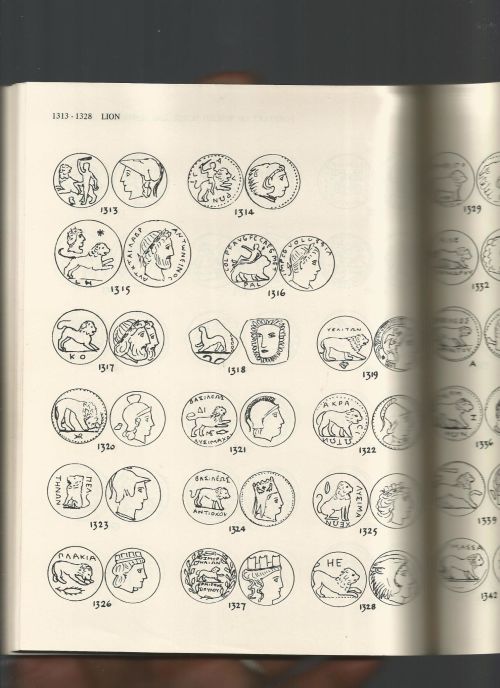 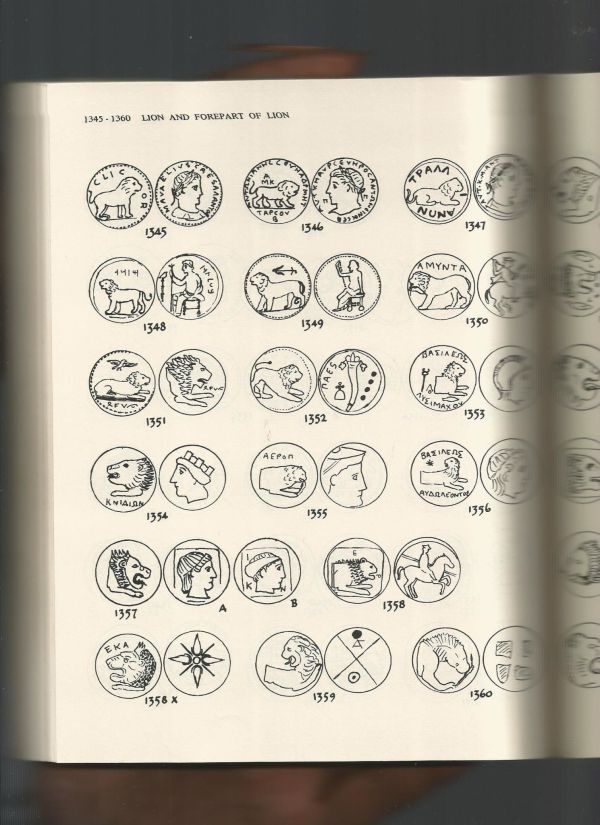 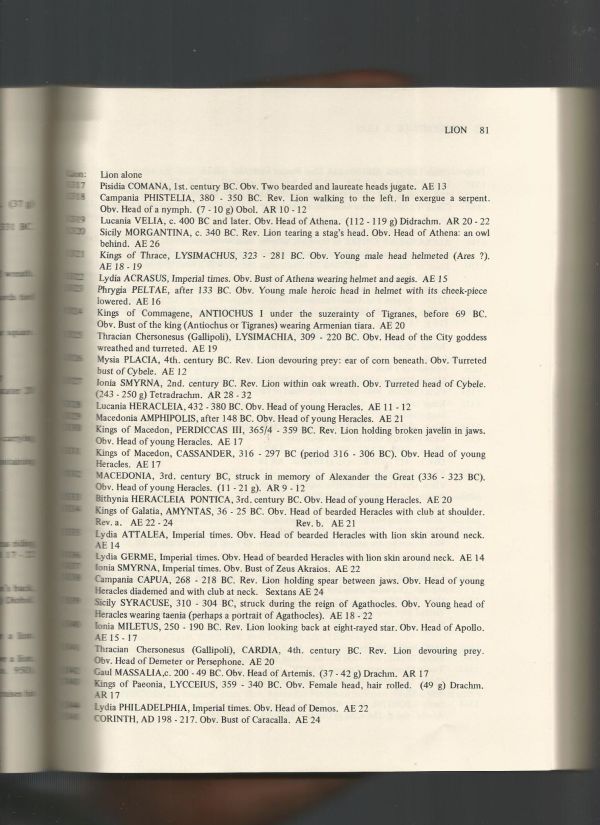 |
|
Pillar of the Community
United States
5010 Posts |
|
|
Pillar of the Community
United States
949 Posts |
Quote:
how about a valentinian iii? like this one.... Excellent suggestion!!  I think it has more going for it than mine, let alone the suggestion that it is an unspecified Greek piece. I checked in RIC X, and coin numbers 2086 and 2087 are illustrated and show the same characteristics as the coin you found on V-coins, but without any field marks. Those marks on the coin you found was the big drawback for me, and that turns out not to be an insurmountable objection. Moreover, in the RIC examples from the mint at Rome the legs of the figure of Victory conform better to the style of the figure on the OP coin. Using the V-coins example as the type exemplar for ValIII, and after making allowances for flan size difference (12mm vs 10 for the OP coin) and the off-center strike, a coin for Valentinian conforms better in module, crudeness of the lettering, and position of the arm with wreath. You have a convert.  Without an obverse and with so much missing from the reverse we still cannot pin it down to a specific issue, but RIC X 2086 or 2087 are close. |
|
Pillar of the Community
Belgium
1194 Posts |
Ric X 2086/2087 are silver coins , half siliqua .For AE4 coins with Victoria Augg , there are only coins with a controlmark in the field . There is also no circle of beads . If you rotate the victoria on the coin presented by chrsmat,there is no resemblance with a lion .
|
|
Pillar of the Community
United States
949 Posts |
Albert is quite right about the half siliquae. I was too focused on the pics and the fine details of the coins illustrated and lost track of the section they are in. He is also correct that the AE4 bronze coins for Val III are all listed with a field mark in the left field. I might also add that this type is also listed for an AE3 module, but the disposition of the arm with wreath is as before under Valentinian II. All that notwithstanding, however, my earlier suggestion about the OP being an irregular strike from a die meant for production in silver might be applied here as well. As for the beading, the examples in RIC X don't show it. However, here is an example of 2086 presently being offered on V-coins (if you have the $1400). It measures 14mm across: 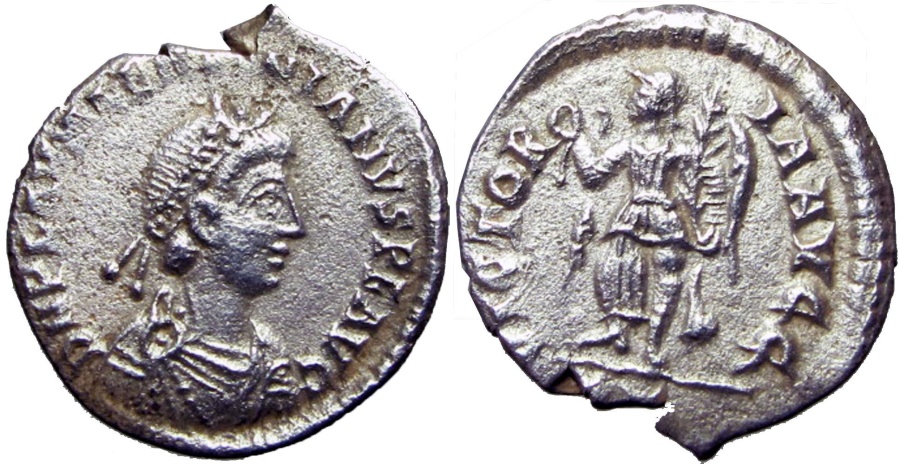 Two things to note: first, the strange figure floating in the left field. RIC has a note in its verbal description of the coin which states, "..., usually trace of second wing in l. field." This example shows such a trace remnant both below and above the arm of the figure of Victory (lending credence to my earlier interpretation of that detail on the coins of Valentinian II I showed). However, the examples in RIC X do not appear to show the lower trace as we see here. The language and the images suggest that it is not always present. Secondly, this example of the half siliqua shows a prominent beading around the design on the reverse that the better centered examples in RIC do not. Presumably it runs completely around the perimeter of the coin, or at least far enough to encompass the lettering on the left. If we allow for the fact that the striking of the OP coin was irregular, then we cannot rule out a mis-strike from a die of Valentinian III intended for a half siliqua. However, I am a little concerned about the relative size problem. It seems to me on further reflection that too much of the reverse design on this smaller module is missing from the OP coin, even allowing for as much shift off center as it shows. If the OP coin is indeed an irregular mis-strike from a die for production in silver, I think it is more likely to have occured as we see it from a die for a siliqua than a half siliqua. However, this type with the details we are seeing was not struck for Valentinian III in either a siliqua or a solidus (gold), so our exemplar must revert to Valentinian II for the larger module. With that I think I have said about as much as I can about how this type could account for the partial image we see on the OP coin. I am quite convinced that something along these lines is the truth of the matter. To assert a Greek origin for the imagery on this reverse we need to see something more specific to this design than what has been offered so far. In the images of lions on reverses so far presented, I have tried to find an example that matches the details of what we are seeing on the OP coin, and I cannot. Interestingly, I did find examples of "whole-body" lions on small module bronzes for a successor of Valentinian III, namely Leo I (pun on the royal name, of course). Here are a couple of examples: 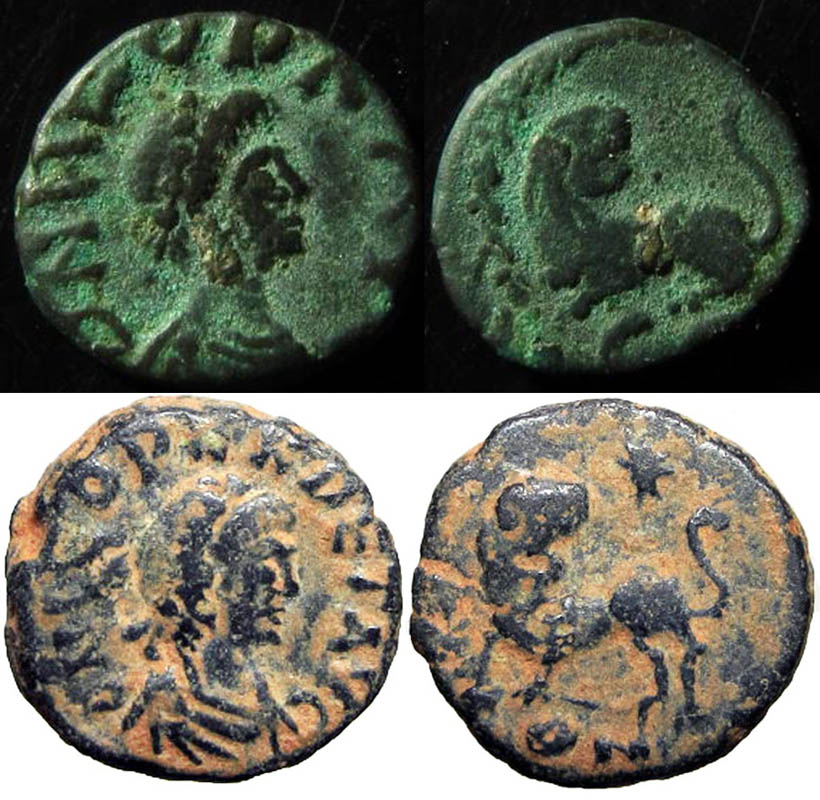 While the overall configurations of these reverses preclude seeing them as candidates for explaining the coin in question, they do give us a sense that some coins this size can and do have lions that would otherwise fit. These even have the tail up but do not have the final loop at the end which I have been reading as the wreath in the VICTORIA AVGGG reverses. Now we need to see a Greek example that is at least as close to the configuration on the OP bronze as we could get with the Victory reverses, looped tail and all. If there is a Greek roaring lion prowling about, let us find and devour it (before it gets us). Edited by lrbguy
02/02/2016 4:15 pm
|
| |
Replies: 25 / Views: 4,426 |
To participate in the forum you must log in or register.
Disclaimer: While a tremendous amount of effort goes into ensuring the accuracy of the information contained in this site, Coin Community assumes no liability for errors. Copyright 2005 - 2026 Coin Community Family- all rights reserved worldwide. Use of any images or content on this website without prior written permission of Coin Community or the original lender is strictly prohibited.
Contact Us | Advertise Here | Privacy Policy / Terms of Use
|
| Coin Community Forum |
© 2005 - 2026 Coin Community Forums |
| It took 0.3 seconds to rattle this change. |
 |
|
| |
| |







 First Page


 Posted 01/28/2016 3:28 pm


