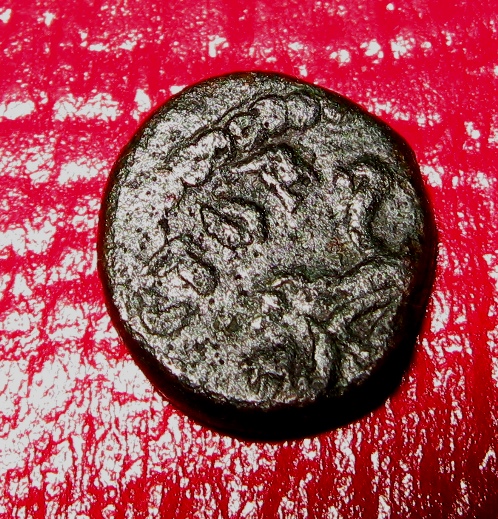
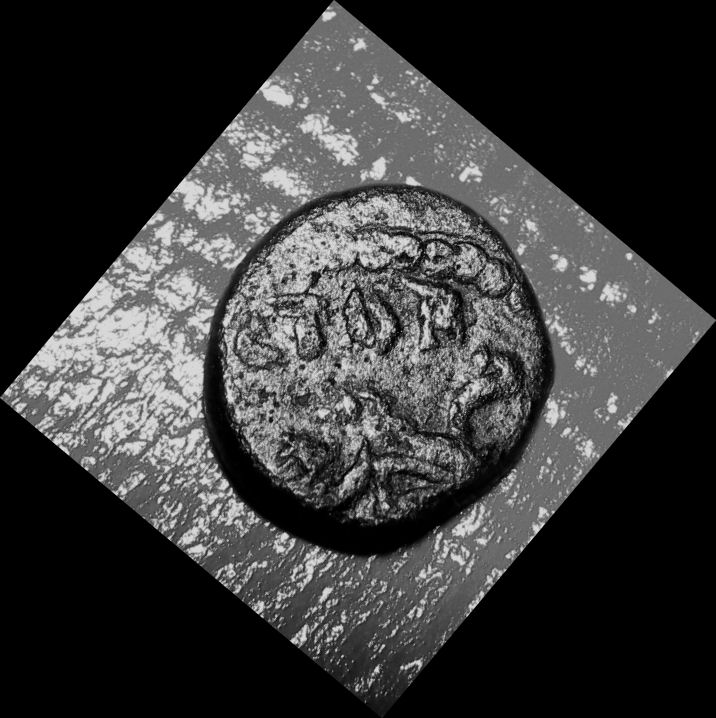
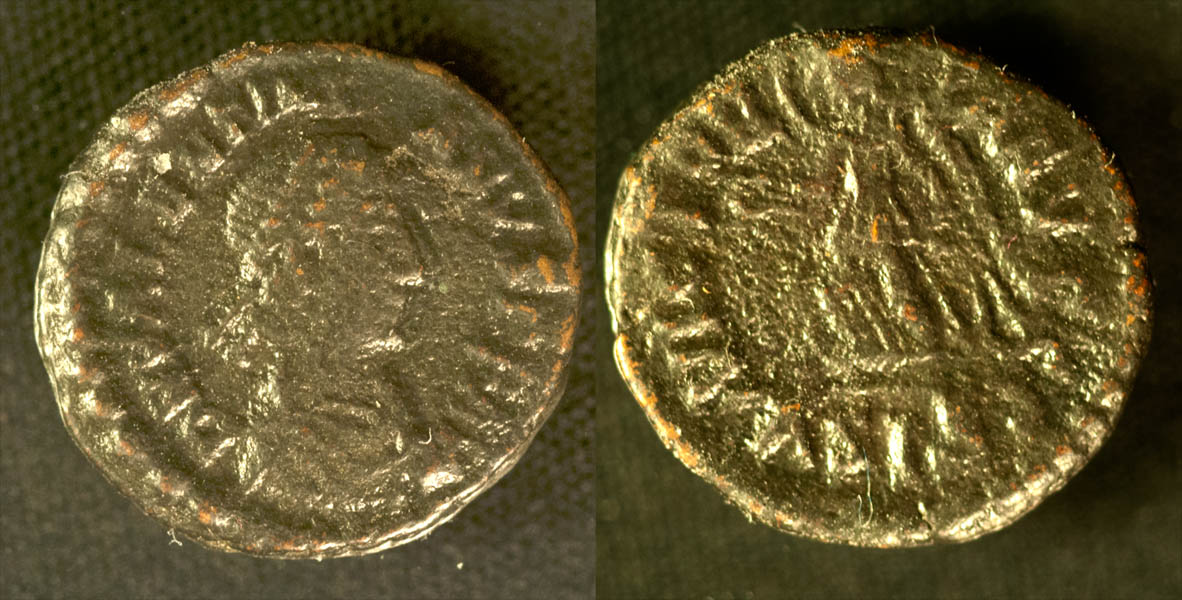
Okay, here goes. Please bear with me.
Quote:
Greek .The letters are to big to be a part of an inscription
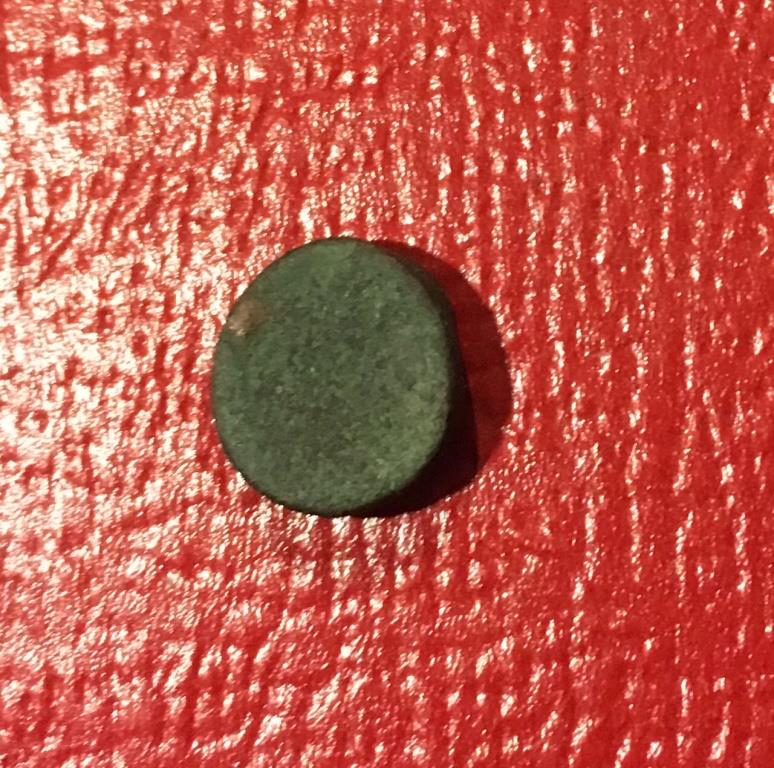
Sorry to have to disagree with you, Albert, but I think you are being thrown off by the magnification. The coin is only one centimeter across, and the location of the beading makes it clear that the reverse was not well centered on the flan.
Here, on left, is a clearer image of the Victory type as it appears on a siliqua of Valentinian II. The siliqua measures 13mm across, so I have tried to scale the scan we were given for the OP coin relative to the dimensions of the siliqua (which also happens to be the size of the AE4 I had showed) so as to preserve the size differential of the actual coins. Let us compare. Note the features of the design on the siliqua; the contour of the body and forward leg, the relation of the extended arm holding a wreath to the body; the proximity of the wreath to the lettering, the content of the lettering and its size in relation to the body contour.
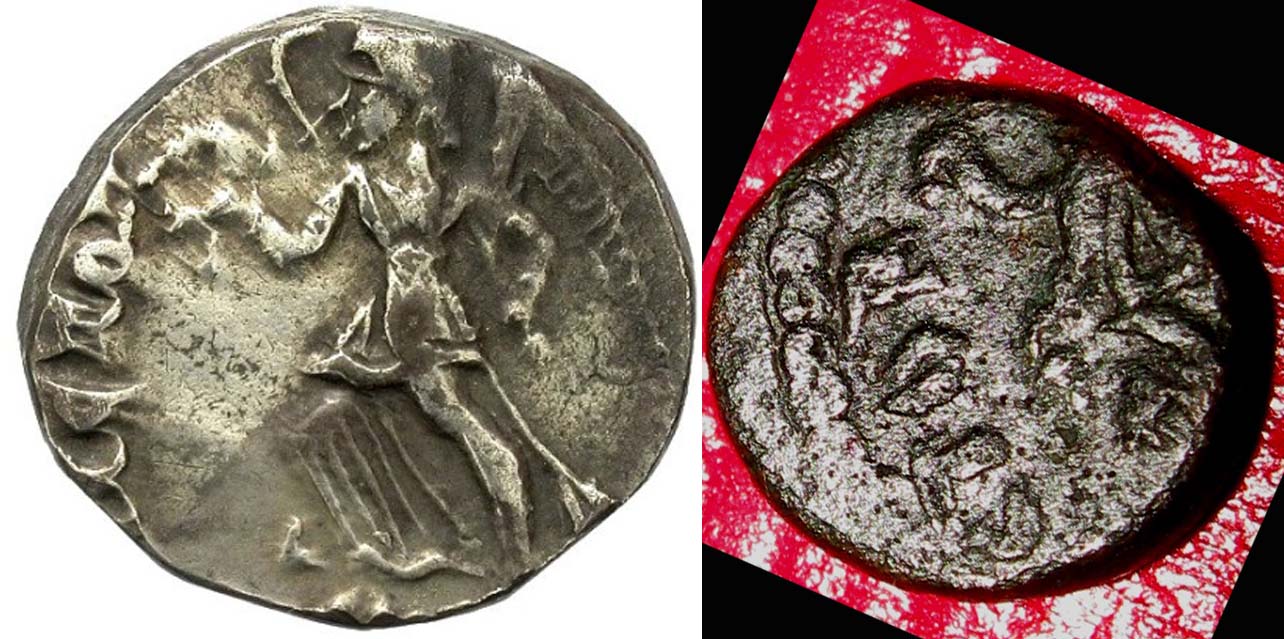
When rotated for comparison the figure which you are calling a "lion" with tail in the air (as Ron suggested) corresponds in every detail with the figure of Victory advancing left holding forward a wreath in her right hand. The "lion's tail" is her arm with the wreath, and the curve of her body with leg advancing forward corresponds to the back and head of what you are calling a "lion." Note that the lettering is in a similar proportion on the siliqua as on the bronze, but differs in the angle of proximity to the body. However, the die of the siliqua was intended for a silver coin. We might dismiss it as a comparison of apples and oranges. So, for bronze let me offer the following comparison:
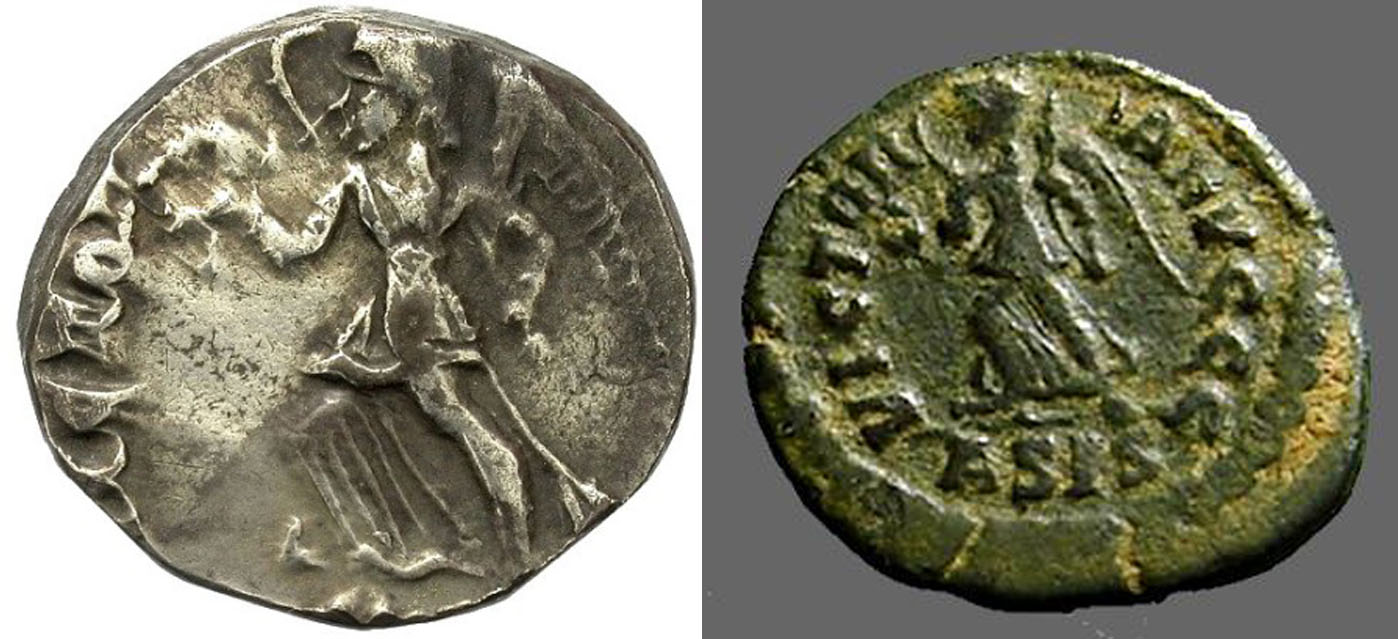
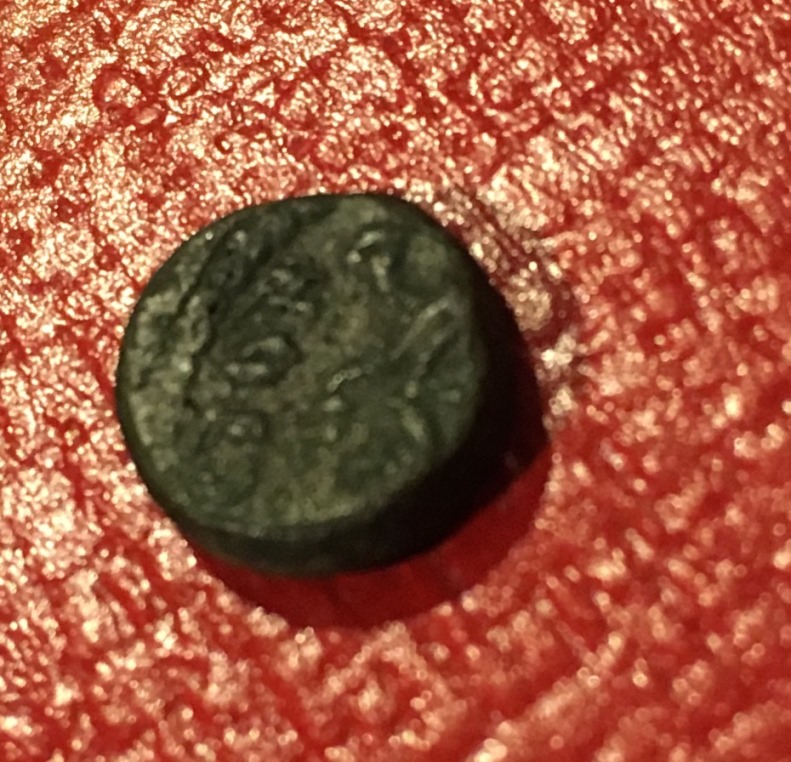
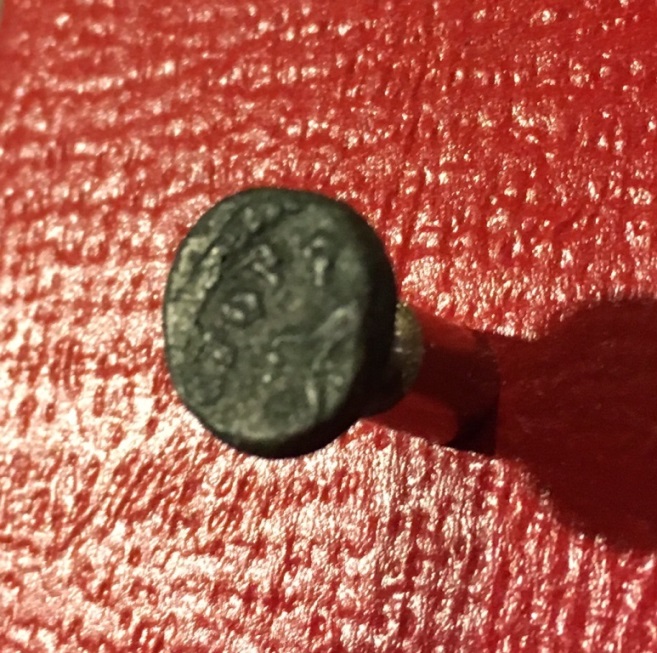
The item on the right is a better version than what I had illustrated earlier. Note the size of the lettering in relation to the design, and the large size of the beading at lower right. This size relation corresponds to what we see in the OP coin, which has been shifted so that the left beading is completely seen with margin to spare, but much of the design is off the flan to the right. Based on all these images I must object to the claim that the lettering is too large for this to have been the design behind what we are seeing on the OP coin.
However, I concede that there were a couple of inaccuracies in my earlier comments which I would like to set straight.
1. the curved line before the face of Victory
I had identified this with the wreath bearing arm on the example I had shown above. Not so.
Note that on the siliqua there is a curve extending up from the shoulder in front of the face of Victory. This is a consistent feature among the siliquae I was able to find online. However, this curve is inconsistent on the bronze. I have three examples of this coin from the mint at Siscia; one shows this curve as you see it in my earlier post, one shows it partially or weakly, and one does not appear to show it at all. The online example I offer here shows it completely. In no case does it extend beyond the forehead, so I do not think it represents a nimbus, but rather is suggestive of the outline of the wing held behind Victory's body. Be that as it may, it is NOT the extended arm holding a wreath (off flan) as I had reported earlier.
2. the position of the wreath in relation to the lettering
All the well defined examples of this bronze type I was able to find online, and in my collection, show the arm with the wreath as extending BELOW the lettering. In the example I gave above this feature is not clear, and I mistook the curve just described for that arm. On the OP bronze it is clear that if we accept the Victory type for this coin, then the wreath bearing arm does extend up into the path of the lettering. While that is not typical for bronze, it is a feature of the siliquae. It is also common for the wreath to impinge on the letter "R" in such a way as to deform it to some degree, as you see here. Here is another example from Trier showing the same thing:
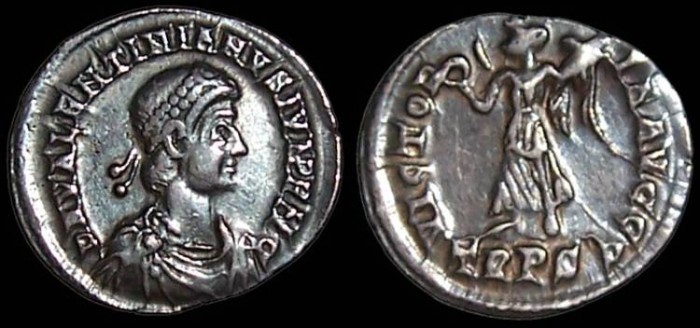
But note that the example from Trier does NOT show the same forward extension of the leg as we saw on coins from Siscia. I have not examined enough examples from other mints to try to reconstruct the way this image was treated outside of Siscia. But what we have seen so far leads to a slight conundrum. If we accept that the OP minimus coin is showing an incomplete strike of the VICTORIA AVGGG reverse, then it was not struck from a die for bronze. It may have been struck from a die for silver. The fact that the obverse is not struck at all lends credence to the suggestion that this coin was irregularly stuck from a die intended for another metal. More study of the way this coin type for Valentinian II was treated by the various mints in silver and in bronze might allow us to determine just what did happen, but for now we have a working hypothesis of what may have happened.
All of the details I have given are consistent with the details of the coin we see, and can be substantiated with examples. For my part I am inclined to attribute the coin to a type from the reign of Valentinian II. Whether it was officially struck in error for an authorized mint, or unofficially produced from a counterfeit die in a still smaller module is not yet clear. But the coin is an interesting numismatic study in any case. However, I submit that speculative suggestions of how the appearance MIGHT be interpreted need to be brought to the same level (substantiated with examples of actual coinage) before they can be given serious credence as alternatives.












 Posted 01/23/2016 9:29 pm