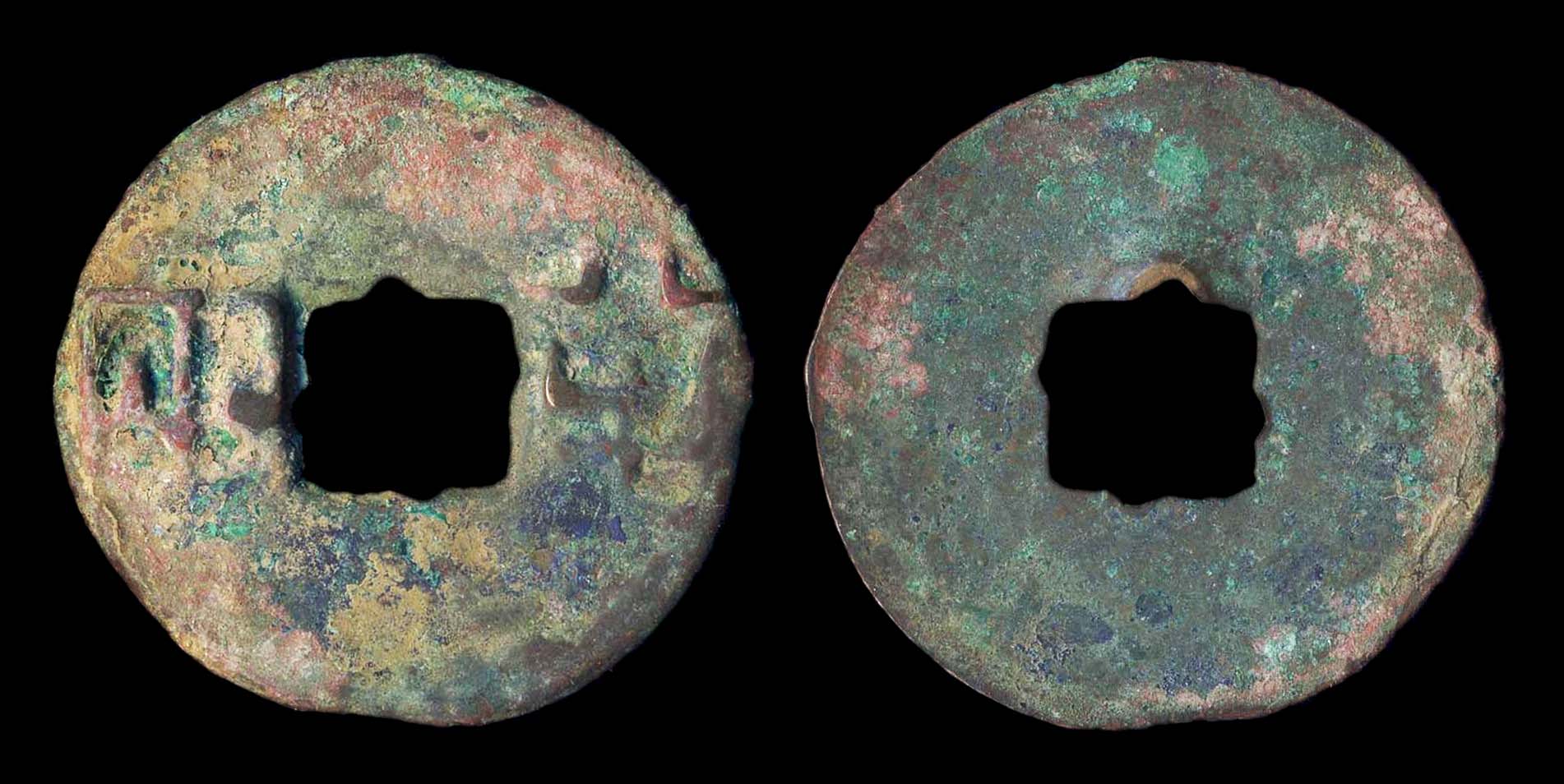
As the title suggests, I recently acquired this early Ban Liang from Bob Reis. It is 35mm in diameter and weighs over 7g, meaning it was likely cast by the Qin dynasty well before they unified China in 221 BC.
The significance of this coin is that it has a flower hole, meaning the hole has 8 points instead of 4. The Chinese adopted a mentality early on that 4 was unlucky because it sounded like the word for death, and 8 was lucky because it sounded like the word for fortune. Though the early coins with the flower hole may have been errors by the mint when the coins were put on a square rod for filing (the hole was not lined up properly, so the rod bent the hole out of shape), they appeared to become more regular and with higher precision and accuracy during the North Song period. There is no question that the coins with the flower holes were more highly valued by the contemporary Chinese than those without. This could mean that the flower holes eventually became intentional. This is manymore's web page on the matter:
http://primaltrek.com/flowerhole.htmlThe particular significance of this coin is that it is the oldest Chinese coin with a flower hole that I know of to exist. The only other large-size Ban Liang that I know of that has a flower hole is a specimen ca 180 BC owned by our manymore, which he thought was the oldest one known. If manymore can provide any insight into this coin, I would be happy to hear it.










 Posted 02/03/2016 1:56 pm


