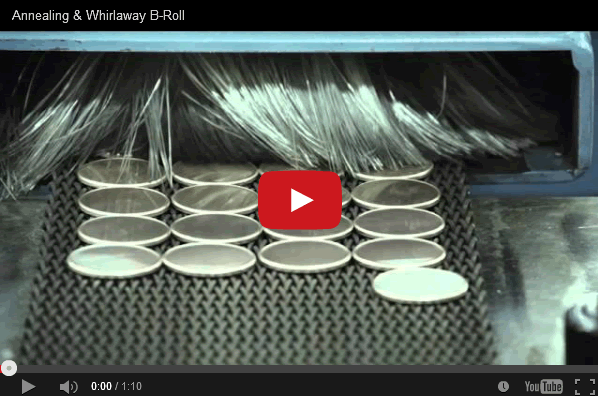
US Mint - This video shows the blanks arriving at the annealing furnace, where they will be heated to soften the metal. For most coins, annealing is done in a large furnace. However, because this process is difficult to capture on film, this video includes a shot of a 3-inch medal being annealed by a blowtorch. Because medals are made in lower quantities, it is possible to anneal them by hand.
From the furnace, the blanks drop into a quench tank to reduce the temperature. Next, the blanks travel through a huge cylindrical tube called the "whirlaway." Suspended high above the ground, these tubes tilt at a 45-degree angle toward the washing and drying station. As the blanks travel up the whirlaway toward the washer, excess liquid is drained.
After leaving the whirlaway, blanks are placed in a washing machine. Similar to the washing machine process you might have in your home, the blanks go through a series of cycles that soak and shake the blanks in various chemicals. This is to remove any oxides, tarnish, discoloration or contamination that remains after annealing.
Great videos. Hnry, I think you are talking about the rim and not the edge. The edge is formed at the time the coin is struck but the rim is form two times. First the proto rim is formed in the set up process (which is one of the videos posted). Then during the strike both the obverse and the reverse dies form the design rims.
Disclaimer: While a tremendous amount of effort goes into ensuring the accuracy of the information contained in this site, Coin Community assumes no liability for errors. Copyright 2005 - 2026 Coin Community Family- all rights reserved worldwide. Use of any images or content on this website without prior written permission of Coin Community or the original lender is strictly prohibited. Contact Us | Advertise Here | Privacy Policy / Terms of Use












 Posted 02/26/2016 3:25 pm


