| Author |
 Replies: 27 / Views: 5,383 Replies: 27 / Views: 5,383 |
|
Pillar of the Community
2087 Posts |
I have been trying to familiarize myself with my new second camera while still trying to become comfortable with the lap top. The Lens Olympus OM zuiko 135mm F4.5 at 5.6 ( the absolute limit on the camera as far as diffraction goes). Still learning the ropes on this tiny Camera.... It can't be tethered and as yet I don't have a cable shutter release so I set EFCS to a 15 second delay( over kill but until I know how the camera works on my rig I will be over cautious). The native 60mm macro is due next week, tried the PN 105mm but it really needs Photo stacking from what I have seen so far. I would appreciate suggestions( they will help me navigate through the cameras menu system) Gold coin is a 14th century Hungarian Florin it is the same size as the one cent:  100 % crop 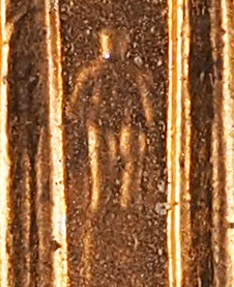  100% crop 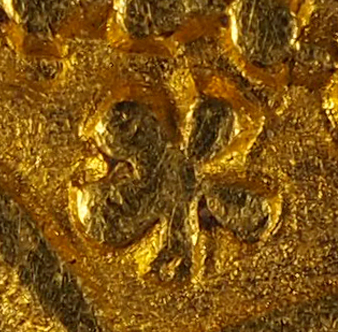 Edited by austrokiwi
03/26/2016 5:04 pm
|
|
|
|
Pillar of the Community
 2087 Posts |
A second test same but this time using a Schneider Kreuznach APO 45/4 HM enlarger lens. On the OMD-E M10II that lens is operating within its optimal magnification zone...Best results I have ever had with that lens. NO changes to the lighting but obviously lens to subject distance changed I changed to a better 1 cent subject the first was a light strike  100 % crop  100% crop 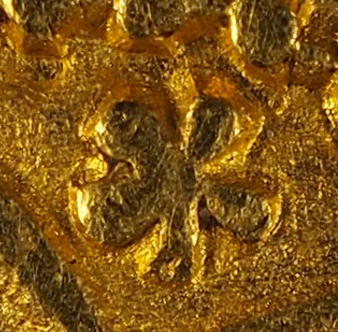 |
|
Moderator
 United States
56855 Posts |
Would an 18% gray scale back ground help any? John1  |
|
Pillar of the Community
United States
4051 Posts |
Any reason your lights are at a low angle? They are the same in both shots, and I am sure the 135mm lens will allow higher lighting, so you must have chosen to make them low. It creates edge-highlighting on the devices.
|
|
Pillar of the Community
2087 Posts |
The black edge ring is actually the remains of the background the coin was photographed against I didn't edit it out fully. I could have used a grey background in editing but I used white.
To save any one hunting around for the specs of the camera:
MFT sensor (17mm by 13 mm sensor)
16mp with 3.75um pixel pitch ( pixel size and density if scaled up to full frame would be 60.8mp)
Has Electronic front curtain shutter(Olympus calls it anti Shock in its menus)
Has fully electronic shutter( called Silent shutter)
No anti-aliasing filter; When you check reviews you will find contradictions some say it has an AA filter others say it hasn't. Olympus doesn't advertise the fact that most of its newest cameras don't have an AA filter. I emailed Olympus who confirmed to me that there is no AA filter( I had already ordered the Camera assuming it had an AA filter so this was a very nice surprise). One person suggested to me that Oly leaves out the AA filter for cost and relies on the fact that the smaller pixel size reduces the frequency of the occurrences of moire in shots ( I have no idea if that is accurate) I do know the in camera processor is coded to reduce the effect of moire
It also does focus stacking but you need a native lens to use this function. The camera doesn't compile the stack and Olympus recommends Helicon for this( I already have Helicon). Using the stacking feature( Olympus calls it focus bracketing) you can take up to 999 pictures for a single stack)
Has five axis in body stabilization but it isn't as good as the next models up. This scaled down IBIS means it doesn't have the high resolution mode of the next models up. That was of no concern to me as the Hi res mode on a 16mp sensor would only produce a 40mp picture and my main camera(Sony A7rm2) has a 42mp full frame sensor. I don't use image stabilization for coins but in every day photography every lens put on the camera is image stabilized. For me the 5axis IBIS was a significant consideration( but its not needed for coins)
Has a touch screen ( I am already starting to wish the A7rm2 had this)
The pixel pitch of 3.75 sees diffraction cutting in at around F 6.9( that is from memory) but this is balanced by the fact the small sensor demands much lower magnification than my Sony camera. Lower magnification means the DOF is deeper( for the same field of view)
The camera is minuscule It makes the A7rm2 feel huge!
My only major complaint so far is that while it has focus peaking it doesn't have zebra
I purchased it as a back up camera but it would make a brilliant first camera for someone starting out. I have two lenses in the post to me. The 60mm F 2.8 macro and the 50mm F2 macro. The 50 mm lens is designed for the Olympus 4/3 DSLRs' it will work on the M10m2 but requires an adapter( that is also in the mail). The adapter allows nearly full electronic connection to the camera body...I am hoping it will allow focus stacking ( but I wouldn't be surprised if I run out of luck on that one)
I have already noticed that it takes high resolution shots with more ease than my Sony A7rm2. So at US$600.00 for the body and almost the same amount again for the 60mm macro it comes out at a quarter of the price of the Sony with its 90mm macro( total of US$4000). The benefit is at that price the Oly will do focus stacking without having to spend another $600.00 for the cognisys stackshot rail( assuming it works ok for coins). This makes the Oly a nice travel camera ( for coins as well as every day shooting)
For me its definitely a second(backup) camera. The Sony allows a lot more customization ( programming camera buttons to specific function buttons) and, this surprises me, the menu on the sony is easier to use. On buying the Sony A7rm2 I had given away my other two cameras to my two children ( and I sold my A7r) I very quickly found that a spare camera is useful( absence highlighted the need) and ,for me, the smart phone does not count. I picked the OMD-EM10ii after several months of consideration ( but never even thought it wouldn't have an AA filter) for me I had to go Mirrorless as the second camera would need to use most of the every day lenses I have( mostly legacy lenses) The SOny A7rm2 can be set to APSC capture ( and I do use it often for coins as it increases DOF) so MFT ( even though I think in 5 years this format will have gone the way of the betamax) was my very considered option.
Getting the next model up( for the Hi resolution mode) was very tempting. being realistic I would have just been paying more money for a feature I really didn't need.
If some one had the money and was looking at a MFT as a first Camera ( with coins in mind) I suspect it would be worth spending the extra money for the next model up so that you would have the Hi resolution mode.
Edited by austrokiwi
03/27/2016 01:36 am
|
|
Valued Member
United States
67 Posts |
Quote:
No anti-aliasing filter; When you check reviews you will find contradictions some say it has an AA filter others say it hasn't. Olympus doesn't advertise the fact that most of its newest cameras don't have an AA filter. I emailed Olympus who confirmed to me that there is no AA filter( I had already ordered the Camera assuming it had an AA filter so this was a very nice surprise). One person suggested to me that Oly leaves out the AA filter for cost and relies on the fact that the smaller pixel size reduces the frequency of the occurrences of moire in shots ( I have no idea if that is accurate) I do know the in camera processor is coded to reduce the effect of moire That last sentence would appear to clarify the AA situation. They've left out the physical AA filter, and are doing AA in software to save money. I think the photos are pretty good, but appear a bit more contrasty than I'd like. I'm not sure if this is because of the dramatic low lighting (especially against a hammered coin) or whether the camera is set to bump up contrast a bit. |
|
Pillar of the Community
2087 Posts |
Quote:
I think the photos are pretty good, but appear a bit more contrasty than I'd like. I'm not sure if this is because of the dramatic low lighting (especially against a hammered coin) or whether the camera is set to bump up contrast a bit For now take it as the users fault. there is one thing that I am really struggling with and that is the EVF/rear screen. They are not showing the pictures as they will turn out. So my guess, for now, is its me not the camera. It will take a few more days playing around to work out the best settings. It took me a good few hours just to work out how to set the white balance( The menu, for me, is horrible). It was nice to find(finally)that it has four customizable WB settings. The A7rm2 only has three and that has been annoying as I was always having to reset one WB slot. Probably in a week I will be whinging that it needs five customizaable WB settings. Edit: Is this any better? Its a new photograph adjusted in post processing I just want to get an idea if my eye is right before I start changing the cameras settings 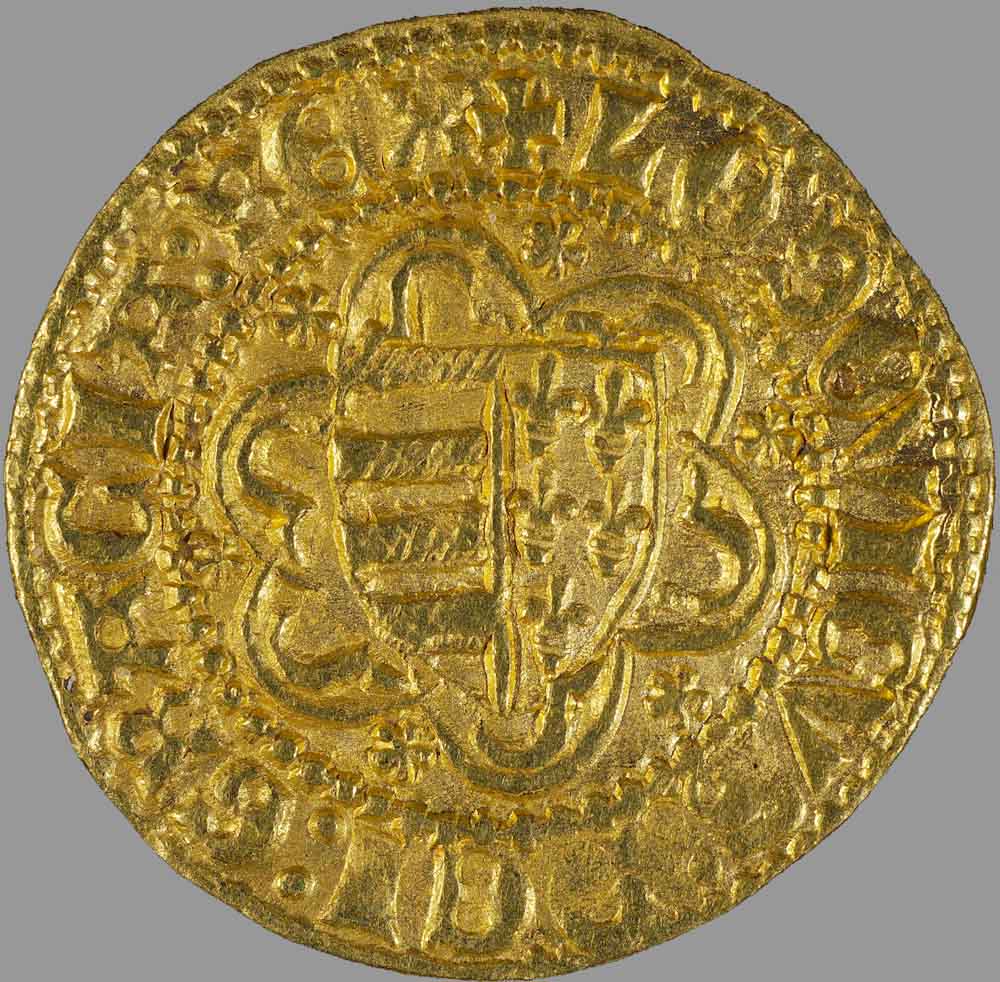 Edited by austrokiwi
03/27/2016 1:42 pm
|
|
Pillar of the Community
United States
4051 Posts |
Still too low a lighting. Did you change it at all? Edges are brighter than surfaces...
|
|
Valued Member
United States
67 Posts |
Better contrast setting to my eye, yes.
|
|
Pillar of the Community
United States
9395 Posts |
Quote:
MFT sensor (17mm by 13 mm sensor) The more-squarish MFT sensor (about 4:3) should be better suited to whole-coin photos than the 3:2 (6000x4000 pixels) found in the newer Canon APS-C DSLRs. |
|
Pillar of the Community
2087 Posts |
NO I didn't I thought you had mis-interpreted my editing. Here is a shot With the lights high( as pictured... lens is the SK 45/4 @5.6 Pictures are reduced substantially. I can see what you mean now: 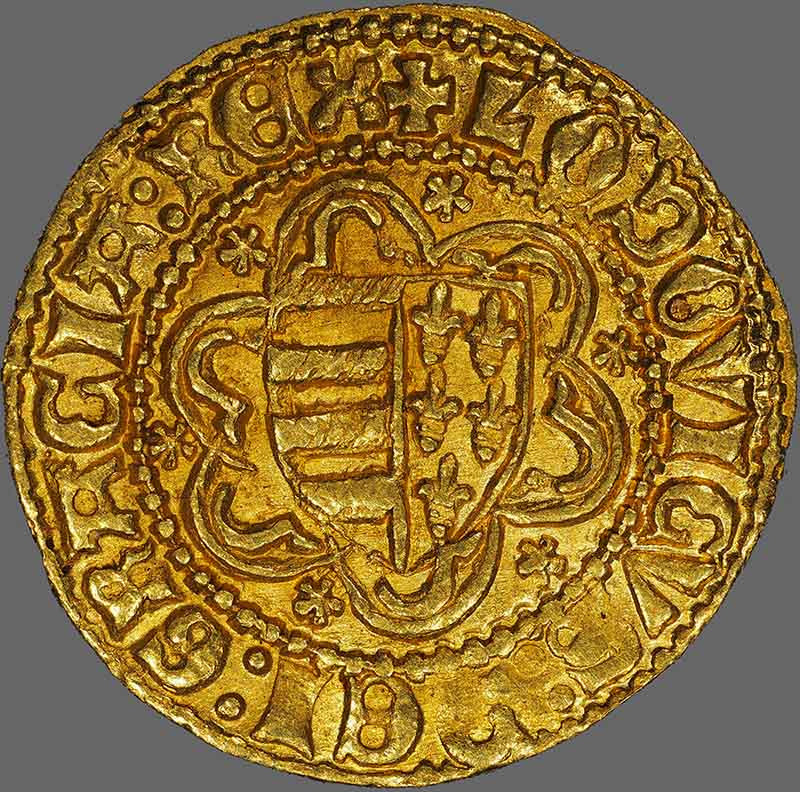 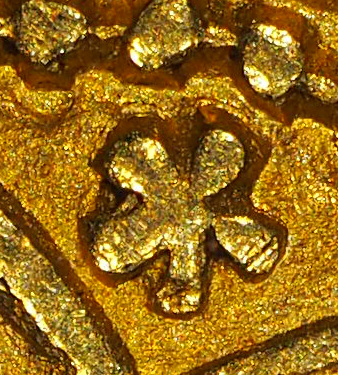 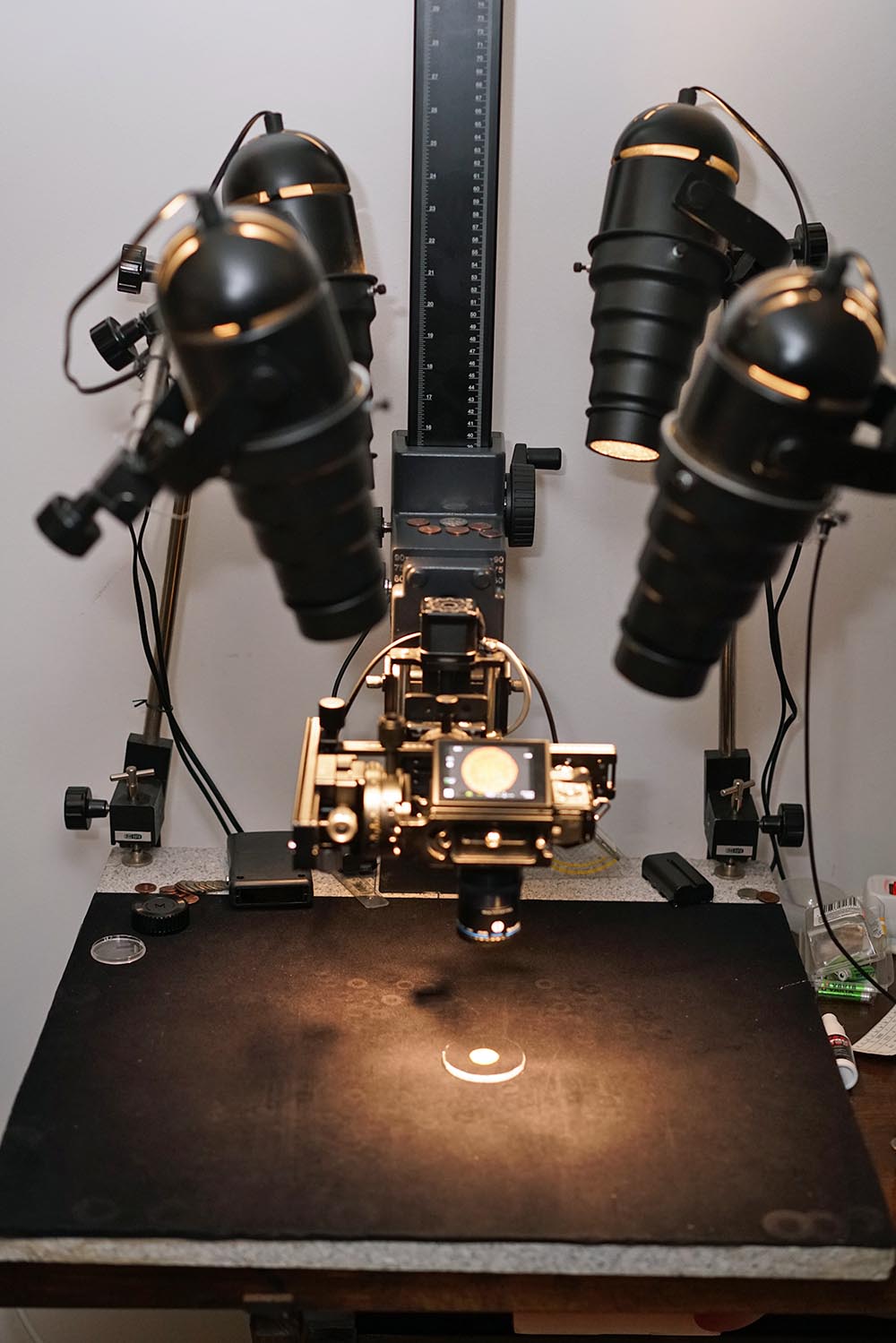 Looking at the 100% crop it appears that there is diffraction blurring at the surface of the coin...... Usually I would fix this with diffusion set very close to the coin. However I need to checkthe lens was @5.6 but it was getting close to 1-1 so it may have passed the diffraction limit for the pixel size. Edit: I was wrong about the magnification it was only .45 but that meant the effective f stop was F 8 so it was diffracation blurring from the F stop 2nd edit: I tried at F4 which gave an effective aperture, at that magnification, of 5.8 and it was clear the only way the SK 45 will work at that high level of magnification( for the SK) is with stacking. I had tried some thaler coins (at about .3 magnification) and the results were impressive at the 100 % crop level... seems the 45mm is ideal for my main collecting interest....for US penny sized its not so good Edited by austrokiwi
03/27/2016 5:41 pm
|
|
Pillar of the Community
United States
4051 Posts |
That's WAY better.
I calculate your DLA to be around f6. I doubt you're seeing any visible diffraction effects at f8. Most likely it's just DOF issues, though M=0.45 should have reasonable DOF at f8. It may be that your hammered coin topography is deep enough that DOF starts to become an issue earlier than it does on low-topography milled coins.
|
|
Pillar of the Community
2087 Posts |
OK so how did you calculate the Diffraction limit aperture? I used one of Cambridge color's calculators. Given the different result what was I doing wrong?
Edited by austrokiwi
03/28/2016 12:41 am
|
|
Valued Member
United States
67 Posts |
Looking nice! Definitely better with the lights this time.
|
|
Pillar of the Community
2087 Posts |
Had another play this afternoon. Its a real novelty getting decent resolution shots using very low magnification. I had previously assumed that high(er) res needed close to life sized magnification or more. First shot is reduced substantively to post, but that is the only editing.Second shot is a 100% crop from the full sized image. Ruler is in cm with mm graduations. Unless I have done my maths very poorly magnification is 0.17333 which is in the optimal magnification range of this lens. The working distance is very usable at this level....problem is not many coins are large enough for this magnification level. 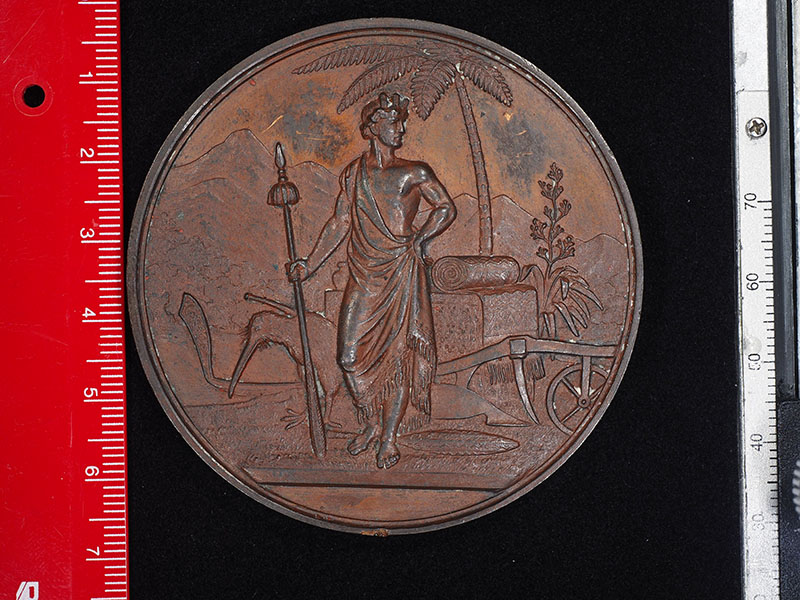 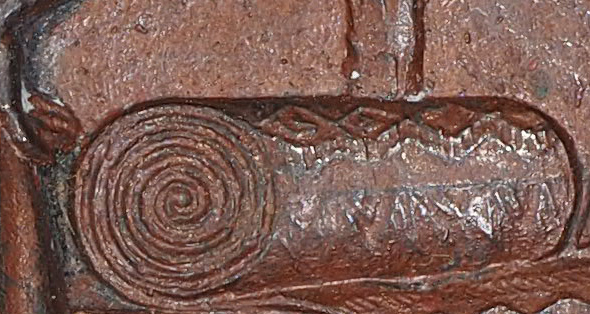 Edited by austrokiwi
03/28/2016 2:52 pm
|
|
Pillar of the Community
United States
4051 Posts |
I just do a relative calculation. I know the DLA for my T2i, which has 4.3um pixels, is f6.8. So the DLA for your camera with 3.75um pixels would be 3.75/4.3 * 6.8 = f5.93.
|
| |
Replies: 27 / Views: 5,383 |






 Posted 03/26/2016 6:56 pm





