Coin Community Family of Web Sites Join Thousands of Coin, Bullion, & Money Collectors
Royal Estate Auctions - $1 Coin AuctionsSpecializing in Modern Numismatics 300,000 items to help build your collection! Coin, Banknote and Medal Collectors's Online Mall Royal Canadian Mint products, Canadian, Polish, American, and world coins and banknotes. Join Thousands of Coin, Bullion, & Money Collectors Vancouvers #1 Coin and Paper Money Dealer


Username:
Password:
Save Password
Forgot your Password?


This page may contain links that result in small commissions to keep this free site up and running.

Welcome Guest! Registering and/or logging in will remove the anchor (bottom) ads. It's Free!

Is A Lack Of Cracking Along The Edge Of A Coin A Sign Of Counterfeit?

To participate in the forum you must log in or register.
Author Previous TopicReplies: 6 / Views: 1,504Next Topic  
New Member

United States
15 Posts
 Posted 04/05/2016  08:09 am Show Profile   Bookmark this topic Add Thunderpaste to your friends list Get a Link to this Message Number of Subscribers
I have been looking at various silver Denarii and some of the older and seemingly more desirable ones have smooth edges as opposed to some more modern ones that usually show a few cracks. Should this be a concern or is a result of better process or higher silver content or some other factor?
New Member
United States
15 Posts
Pillar of the Community
DavidUK's Avatar
United Kingdom
2624 Posts
 Posted 04/05/2016  09:01 am  Show Profile   Bookmark this reply Add DavidUK to your friends list Get a Link to this Reply
The second coin is a "serratus" meaning the edge is like a bottletop. This is by design on some coins and not others. It is a separate issue to cracked metal (as a result of crystallisation)

Sometimes cracking is a giveaway to the authenticity (close inspection can show whether it is natural or it is imitative) but a good coin with no cracks is preferable IMO.


Moderator
Learn More...
echizento's Avatar
United States
23731 Posts
 Posted 04/05/2016  09:08 am  Show Profile   Bookmark this reply Add echizento to your friends list Get a Link to this Reply
to the community.

Most coins were struck with the rounded edge which might show cracks. Some coins were struck with a serrated edge as shown in your second example. Neither are a sign of being real or not, there are many more factors to consider to determine a genuine from a fake coin.

While there are many go sellers on ebay it's best to not look their until you you are able to tell the good from the bad. I would recommend buying from Vcoins. Here is a link to the Denarius they have listed for sale.
https://www.vcoins.com/en/Search.as...signed=False
Moderator
Learn More...
Sap's Avatar
Australia
16850 Posts
 Posted 04/05/2016  9:19 pm  Show Profile   Bookmark this reply Add Sap to your friends list Get a Link to this Reply
These "cracks" around the edge of a coin formed when the coin was first struck. Whether or not cracks formed depends partly on how heavily the coin was struck and partly on how "plastic" the metal was at the time, which in turn depends on the exact composition of the alloy and whether or not the blanks were heated prior to striking. Another variable that can affect the appearance of cracking is the original shape of the blank: a coin struck from a round ball of metal is more likely to crack than a coin struck from a blank that was flat to start with.

Minting techniques varied over time, as did metal composition. So it is not surprising that denarii from different periods show different levels of edge cracking.

In my experience, the earliest denarii, made of very high fineness silver (typically 95%) show little evidence of flan cracking, except of course for the serrated denarii where edge cracking was deliberately induced by carving notches into the blanks. After about the reign of Hadrian, the fineness started a gradual decline and the alloy became more dilute and more brittle; coins of Commodus and the Severan dynasty (Septimus Severus and his descendants) appear to be the worst, with their coins often showing severe flan cracking. But as time progresses and the alloy continues to decline in fineness, the appearance of flan cracks tends to diminish once again, with usually only one or two large flan cracks present if any, rather than multiple smaller ones.
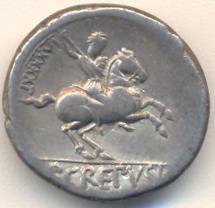
Is-A-Lack-Of-Cracking-Along-The-Edge-Of-A-Coin-A-Sign-Of-Counterfeit?
Denarius of the Republic period - no flan cracks
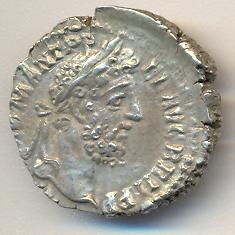
Is-A-Lack-Of-Cracking-Along-The-Edge-Of-A-Coin-A-Sign-Of-Counterfeit?
Denarius of Commodus - very rough edge caused my multiple small and medium-sized flan cracks

Is-A-Lack-Of-Cracking-Along-The-Edge-Of-A-Coin-A-Sign-Of-Counterfeit?
Denarius of Elagabalus - edge cracking still present but less severe
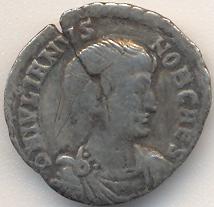
Is-A-Lack-Of-Cracking-Along-The-Edge-Of-A-Coin-A-Sign-Of-Counterfeit?
Siliqua of Julian II - single unusually large flan crack.
Don't say "infinitely" when you mean "very"; otherwise, you'll have no word left when you want to talk about something really infinite. - C. S. Lewis

Pillar of the Community
lrbguy's Avatar
United States
949 Posts
 Posted 04/06/2016  11:38 am  Show Profile   Bookmark this reply Add lrbguy to your friends list Get a Link to this Reply
Sap,

I think the OP was confused in his use of terminology, referring to what we know as "serration" as simple "cracking." His choice of illustrations suggests that interpretation. Still, a bit of perspective about flan splitting on striking is of interest to the rest of us, and worth while as another subject, I think.
New Member
United States
15 Posts
 Posted 04/07/2016  09:46 am  Show Profile   Bookmark this reply Add Thunderpaste to your friends list Get a Link to this Reply
I believe what I was trying to ask is that does a lack of cracking indicate a cast forgery or not? The responses have been helpful on multiple levels. Thanks to everyone!
  Previous TopicReplies: 6 / Views: 1,504Next Topic  

To participate in the forum you must log in or register.


Disclaimer: While a tremendous amount of effort goes into ensuring the accuracy of the information contained in this site, Coin Community assumes no liability for errors. Copyright 2005 - 2026 Coin Community Family- all rights reserved worldwide. Use of any images or content on this website without prior written permission of Coin Community or the original lender is strictly prohibited.
Contact Us  |  Advertise Here  |  Privacy Policy / Terms of Use

Coin Community Forum © 2005 - 2026 Coin Community Forums
It took 0.31 seconds to rattle this change. Forums


