| Author |
 Replies: 9 / Views: 3,262 Replies: 9 / Views: 3,262 |
|
|
Pillar of the Community
United States
3499 Posts |
Hi everyone, I acquired these two half penny tokens a couple of years ago from a dealer's junk bin. I assumed that they were just poor condition British contemporary counterfeits. But it appears that they are very similar to "blacksmith tokens" minted in Canada in the early nineteenth century. This website has examples which look very similar to my pieces. And it states that they were struck to look very worn. http://www.novanumismatics.com/engr...rth-america/Are they in fact examples of two different types of tokens of this type? How scarce are they? And what might be the going rate of such pieces? (I'm not selling; rather, I'm just curious since it's very hard to find a book value for esoteric Canadian tokens.) 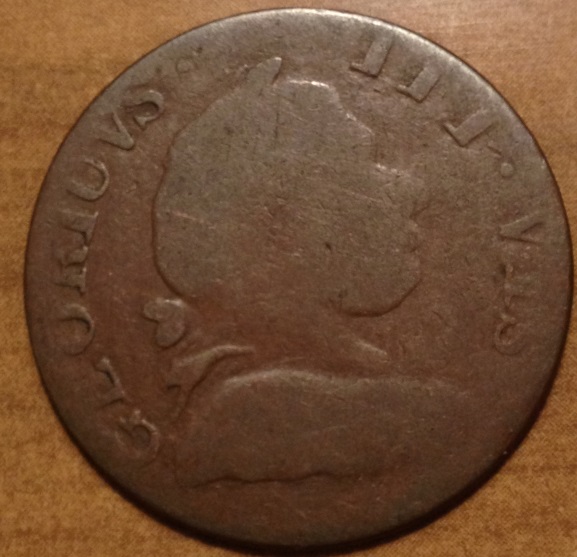 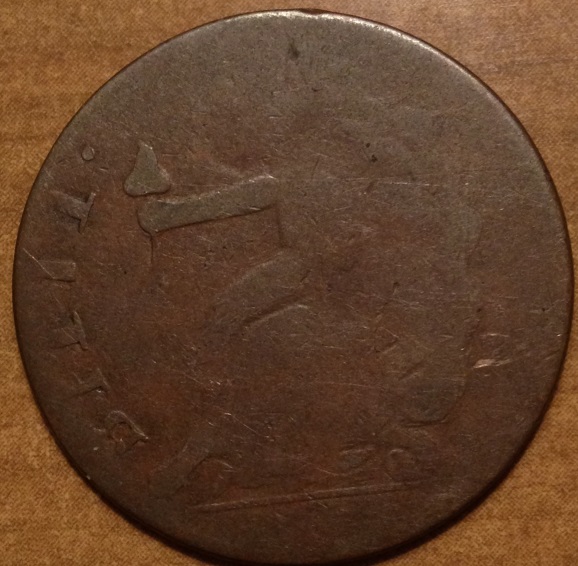 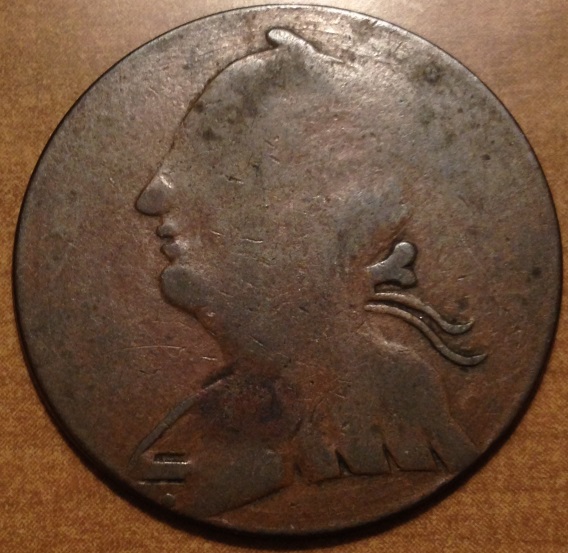 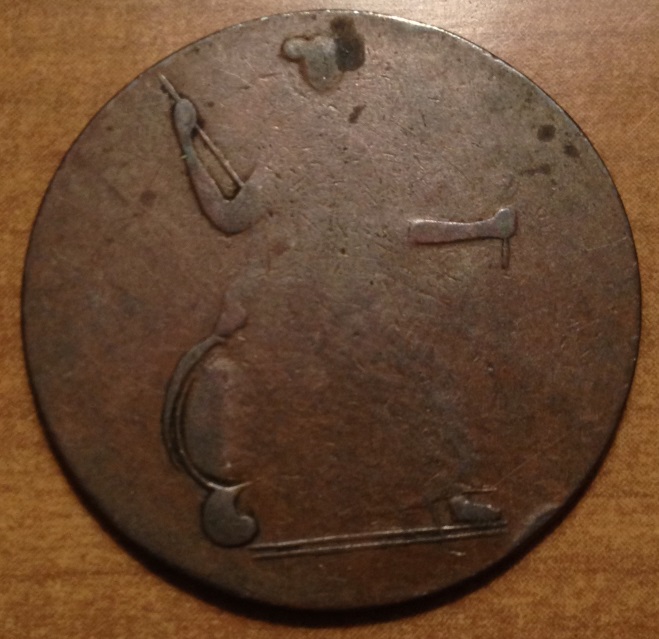 |
|
|
|
Pillar of the Community
Canada
5288 Posts |
The first one is not a Blacksmith token, which in this design have no inscription.
The second one seems promising. The weight will help to determine the variety.
My older Charlton catalogue gives a minimum of $20 in "F" condition, but I am sure that it is more now. Also, as you must be aware, all of these tokens look like they are in "about good" condition, which is how they were made, so your token is actually in good shape.
I think that we have some experts who can ID the variety. Some of the varieties are rare.
|
|
Pillar of the Community
 United States
3499 Posts |
oriole- Thanks for the input. My first example does look almost identical to the "Wood 33" specimens discussed and pictured in the article that I linked in my original post. Does this mean that my first coin is not a blacksmith token and, instead, is just a contemporary counterfeit piece that was also minted in Canada?
|
|
Pillar of the Community
Canada
5288 Posts |
Hi, Archraz:
My apologies, I should not have tried to answer so early in the morning.
I stand corrected, your example #1 does indeed look like BL37, also listed in Charlton but a few pages later in the book. It is listed as $15 in "F", and considered to be a common one. Your token is in "F" I think.
So, 2 blacksmith tokens, a good find for sure.
If you can give me the weight of #2 I could try to find the variety, but I was hoping that someone more knowledgable could step up to the plate. I know that there are a few such in the CCF.
|
|
Pillar of the Community
United States
840 Posts |
Charlton's BL 37 and BL 7 respectfully.
Both are F 15; the BL 7 is possibly a VF 20.
doug
|
|
Pillar of the Community
United States
3499 Posts |
oriole & colonialtokens - Thanks for the info!
colonialtokens- is there any mention in your Charleton text as to the respective values of my coins? Thanks!
|
|
Pillar of the Community
United States
840 Posts |
These are two of the most common of the Blacksmiths and are readily obtainable.
The BL 37 is as common as mud and sells in the neighbourhood of twenty dollars.
The BL 7 is also common, and in recent years would sell for about forty dollars,
but Blacksmith tokens have become a bit more popular and many sellers desire nearly
double the forty. The BL 7 is common and forty dollars is still a reasonable price.
doug
|
|
Pillar of the Community
United States
3499 Posts |
colonialtokens- Great! Thanks for all of the help.
|
|
Valued Member
Canada
93 Posts |
I am confused by the grading of blacksmith tokens. They were make to look like well worn coinage of the day. The shortage of coinage aided in the acceptance of these pieces in commerce. As there was no standards among blacksmiths, the strength of the strike varied from token. How do you assign a grade for a token? What do you compare it to? Are there UNC tokens out there? I want to see an MS65 blacksmith token.
|
|
Pillar of the Community
Canada
2632 Posts |
Bungtowns, The legend was deliberately garbled to circumvent counterfeiting, according to 'Coins of Canada'.
|
| |
Replies: 9 / Views: 3,262 |
|










 Posted 04/16/2016 11:41 am


