| Author |
 Replies: 10 / Views: 1,763 Replies: 10 / Views: 1,763 |
|
|
Valued Member
United States
477 Posts |
What is oldest continuous bullion sovereign government issued coin program that is still in existence today?
Also, generally speaking when a bullion coin program becomes discontinued and newer dated coins are no longer issued, does that generally speaking increase the demand for the coins or lowers them?
Thanks for sharing some history.
|
|
|
|
Bedrock of the Community
Australia
21789 Posts |
Depends how you define a coin program.
In some cases, a coin program is not worth bothering with.
There is a very large number of dates in the Victorian 19th century sovereign series, that are not worth any more than bullion value, and can be obtained in quite reasonable condition.
|
|
Pillar of the Community
Russian Federation
5186 Posts |
The word "sovereign" applies, in this context, to the British program specifically.
But assuming you want other examples as well, I'd say Netherlands gold ducats (they've been minted with essentially the same design since at least the 17th century - though I'm not sure they were minted every year of said period).
|
|
Pillar of the Community
United States
711 Posts |
As for recent ones, I know the Mexican ones started before the US Silver Eagle program (by like a year or two).
I think China's Panda series was before the Eagle too.
|
|
Moderator
 Australia
16969 Posts |
The British gold sovereign is probably the longest-running "bullion coin" programme still in existence, though it did go into hiatus a few times during the 1900s. The sovereign, as currently implemented, dates back to 1817. It began life as a circulation coin, not as a "bullion coin" per se, but it became so widely accepted and recognized throughout the world that numerous countries adopted the "sovereign standard" for their own gold bullion programmes, even those countries which did not have direct colonial links with Britain.
The Dutch ducat does have a longer history, but it also has had a longer period of hiatus.
If you're after the specific concept of bullion "coins" issued in standard troy weights, then you'll have to look to Krugerrands for being the oldest, inaugurated in 1967. For silver, I believe the Mexicans were first with their Onzas in 1982.
Both Krugerrands and Onzas are unusual in not being nominally denominated in the currency unit of the issuing country, but rather simply in troy ounces.
Don't say "infinitely" when you mean "very"; otherwise, you'll have no word left when you want to talk about something really infinite. - C. S. Lewis
|
|
Pillar of the Community
Canada
695 Posts |
I think the Maria Theresa Thaler deserves to be mentioned too. It has a very long history and is still being minted in Austria.
|
|
Pillar of the Community
Russian Federation
5186 Posts |
Quote:
I think the Maria Theresa Thaler deserves to be mentioned too. It has a very long history and is still being minted in Austria. I wanted to mention them, but they're very different from regular bullion programs - there's no such thing as "newer dated coins" for them, they had the same frozen date for all of their history (or, I suppose, for about 90% of their history, if we count the brief pre-1780 issues). Incidentally, does anyone know any further details on Dutch ducat history? I'm not aware of any specific hiatus, but I hadn't researched much; from what I've heard, it must've been during the 20th century. |
|
Pillar of the Community
Norway
1358 Posts |
You may add a few criteria, like: does it need to be a continuous coin program or can there be a hiatus or two? Is the country allowed to have changed names, shape or currency? Does it apply to the exact same coin with the same value or can there be exceptions? Which metals do you want included?
You may have a good shot with the golden Dutch Dukaat. The oldest one is from 1672 and there are still Dukaat coins being produced. However, there have been some years (decades, even) that there was absolutely nothing produced.
The golden Krugerrand has been produced continuously since 1967 and is, for what I know, the oldest continuously running show right now.
Special mention here for the silver Maria Theresa Thaler from Austria. It's been minted since 1741 and still is being minted. Mind that the year 1780 is used on many coins (as Maria Theresa died that year), even though the minting year may be 100 years later and done in a completely different country.
EDIT (and that's what happens when you press publish too fast)
There's also the British golden Sovereign coin. It dates back to 1817, but even much further back if you include its predecessor, the Guinea (worth one Shilling more than the Sovereign). Then you can date it back to 1663. There are nowadays still golden Sovereign coins being produced. However, there are quite some gaps, as during quite some years no coins were struck.
Edited by UltraRant
05/04/2016 5:56 pm
|
|
Pillar of the Community
Australia
7096 Posts |
The term "Bullion Coin" is a pretty new one I am pretty sure that these type of coins were called "trade coins" in the past.
There are many examples of these including the pillar dollars, Ducats and many others.
In 1800 Governor King issued a proclamation setting out the values for various trade coins from different parts of the world that were commonly used in the new Australian Colony for commerce.
|
|
Moderator
Australia
16969 Posts |
Quote:
Incidentally, does anyone know any further details on Dutch ducat history? I'm not aware of any specific hiatus, but I hadn't researched much; from what I've heard, it must've been during the 20th century. There were several gaps in which the ducat was not issued, most notably two 20-year gaps 1850-1871 and 1938-1959. The Maria Theresa thaler is also different from regular bullion coins or trade coins in that it was struck, officially and unofficially, at half a dozen different mints in different countries (Austria, Belgium, Britain, France, Italy and the Netherlands). As such, it's more a "world bullion coin" than a bullion coin of a specific country. Don't say "infinitely" when you mean "very"; otherwise, you'll have no word left when you want to talk about something really infinite. - C. S. Lewis
|
|
Pillar of the Community
United States
2543 Posts |
I believe that this is generally considered the first gov't issued bullion coin. It has no denomination and was issued only for it's silver value. 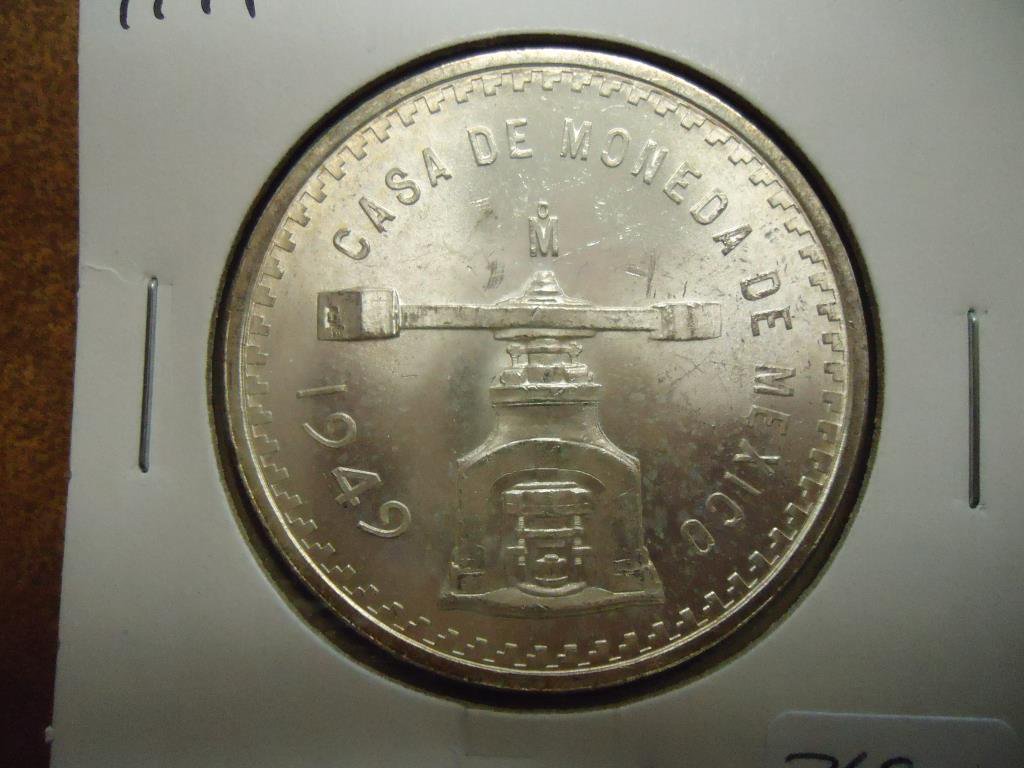 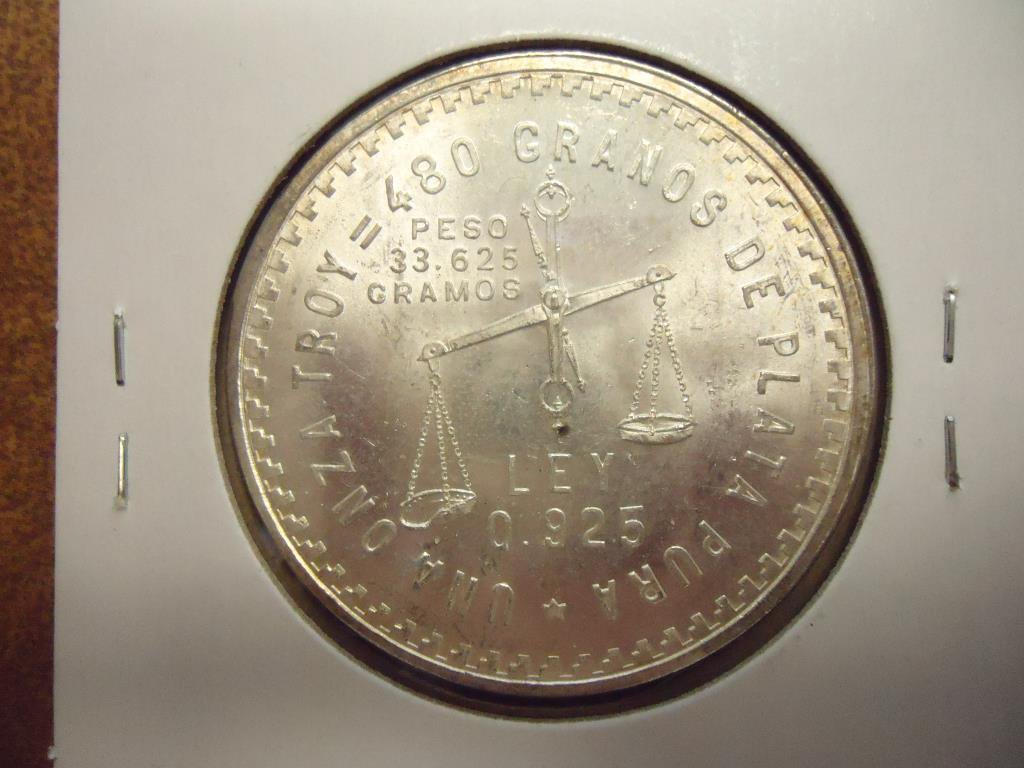 The early Onza's were sterling silver, issued in 1949 then 1978, 1979 and 1980. The series started up again in 1982 as the redesigned Libertad in .999 silver and has been continuous since. The Silver Panda was first issued in 1983, then '84 and '85 as .900 proofs. Again in '87 as a sterling proof. The Panda as we know it now was first issued in 1989 in .999 silver and has been continuous since. The ASE was first issued in 1986. The Libertad is still the only gov't issue without a denomination. |
| |
Replies: 10 / Views: 1,763 |
|










 Posted 05/03/2016 06:37 am


