| Author |
 Replies: 17 / Views: 3,435 Replies: 17 / Views: 3,435 |
|
Pillar of the Community
United States
6130 Posts |
Interesting question that popped into my head, but I can't seem to find a solid answer.
What was the very first coin to sport a "from life" portrait of a real person? Not an idealized portrait of Athena or any other deity, but rather a reasonably accurate image of a historical person.
I know that lifelike portraits became standard fare during the Hellenistic age; certainly made popular by Alexander, whose stern mug graces nearly all of his coins. I also have a coin of his father, Philip II, again with his face.
I'll have to see if I have anything older, but I think all of my Greeks from the early 4th and 5th centuries BC have animals or various supernatural beings.
|
|
|
|
Pillar of the Community
United Kingdom
2624 Posts |
I thought it was Alexander III.
Up until that point I was led to understand that images on coins was the sole reserve of dieties. It was only that Alexander III claimed to be the son of a god that allowed him to put his portrait on a coin. After which time it ended up being extended to those "appointed by god" in the form of emporors etc.
Maybe this is wrong but definitely something that I have read or been told.
|
|
Pillar of the Community
United Kingdom
2624 Posts |
On the coins of his father isn't the image of Herakles and just the name alongside? Alexander then used his face adorned in the Numidian lion skin as a homage to Herakles.
Don't take what I am saying as fact...but I would like to know if I am correct one way or the other.
|
|
Pillar of the Community
 United States
6130 Posts |
You know, you are actually right. Philip II's coins do indeed feature Apollo, not himself.
So Greek coins might be out of the running in that case. I think I remember that the Archaemenid kings were issuing some coins before being sacked by Alexander. I wonder if they have our answer?
Other than that, I think only India and China were issuing coins outside of the Greek sphere of influence, but China never issued a coin with a portrait until the 1900s, and India issued punch-marked coins until the arrival of the Greeks.
|
|
Pillar of the Community
United States
7067 Posts |
There were antecedents. The first may have been Kherei, who ruled the Dynast of Xanthos from 425 - 400 BC. His portrait appears on the reverse of this issue: 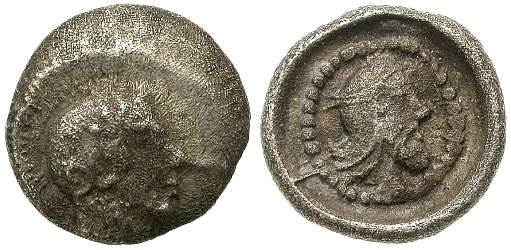 Others include the Persian satrap Pharnabazos, c.410 BC...that's him on the obverse here: 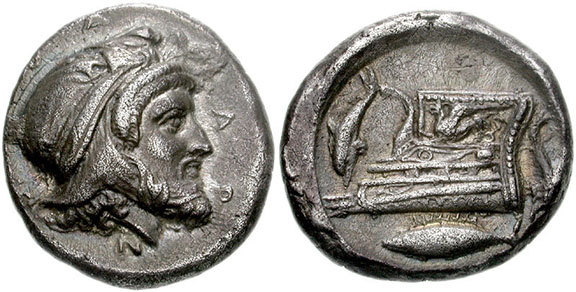 Tissaphernes, Satrap of Astyra, Mysia from c.400 - 395 BC...obverse portrait: 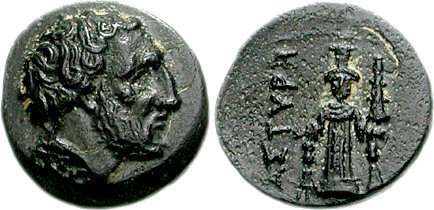 Mithrapata of Antiphellos, who ruled c.380 - 360 BC...reverse portrait here: 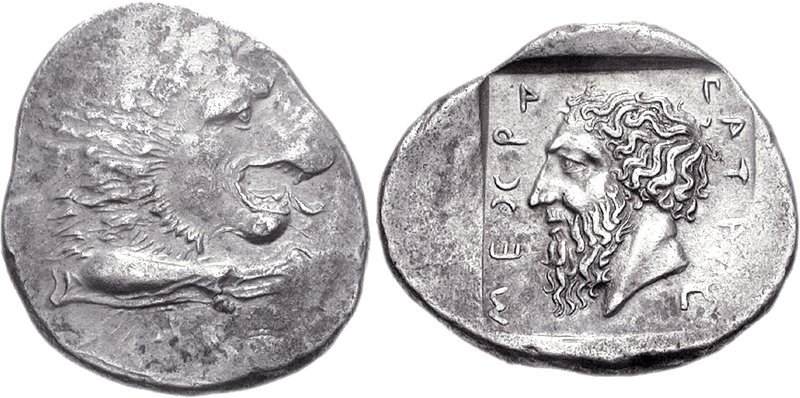 And, also from Antiphellos, Perikles, c. 380 - 360 BC...obverse portrait: 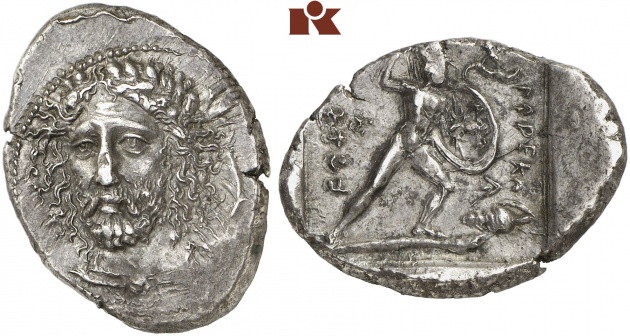 Edited by Kamnaskires
06/16/2016 2:28 pm
|
|
Pillar of the Community
United Kingdom
2624 Posts |
Well trust Bob to make me look foolish. I guess the Alex story just refers to Greek coinage then.
That Pharnabazos...what a beauty.
|
|
Pillar of the Community
United States
7067 Posts |
Edited by Kamnaskires
06/16/2016 2:49 pm
|
|
Moderator
 United States
23731 Posts |
Interesting thread, I would have also said Phil II and Alexander.
|
|
Pillar of the Community
United States
949 Posts |
Quote:
Alexander then used his face adorned in the Numidian lion skin as a homage to Herakles.
Not trying to make anyone look foolish, just setting the record straight for the visitor. The lionskin in the stories of Herakles was of the Nemean lion. Nemea in the Peloponnesus. Impressive list of examples Bob. |
|
Pillar of the Community
United Kingdom
2624 Posts |
Thanks IRB... better to look ignorant for a moment than stay ignorant for a lifetime... Nemean...wonder if that will stay in my head this time... wonder where I got Numidian from... maybe its that beetle that attracts condensation....
|
|
Valued Member
Canada
266 Posts |
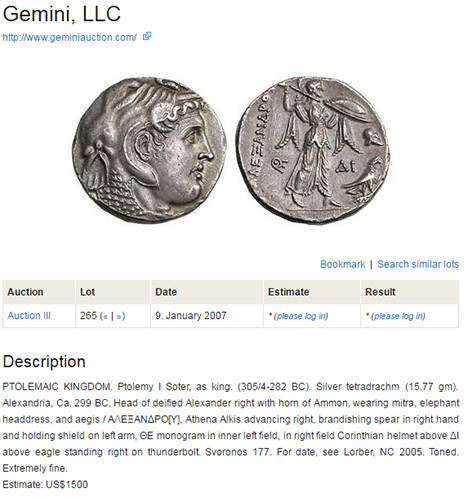
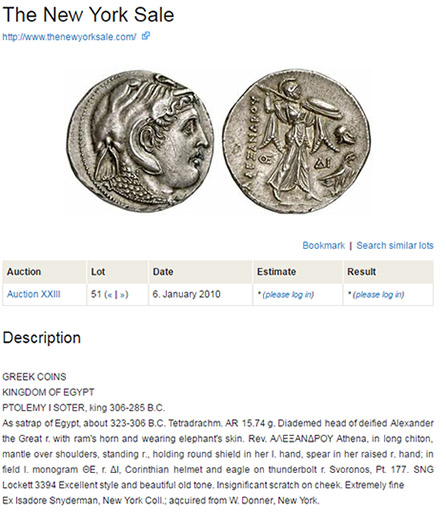
I think The first Macedonian coin to actually have a portrait of a king wasn't until after Alexander Died Philp and Alexander never had their portraits on a coin, it was usually Zeus on Philip's coins, and Herakles on Alexanders Ptolemy coin with portrait of Deified Alexander first struck in 311 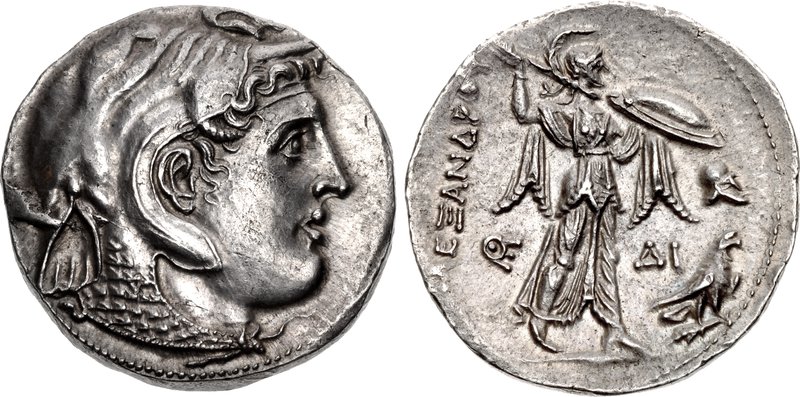 Lysamachos coin with Portrait of Deified Alexander struck beginning in 297 BC 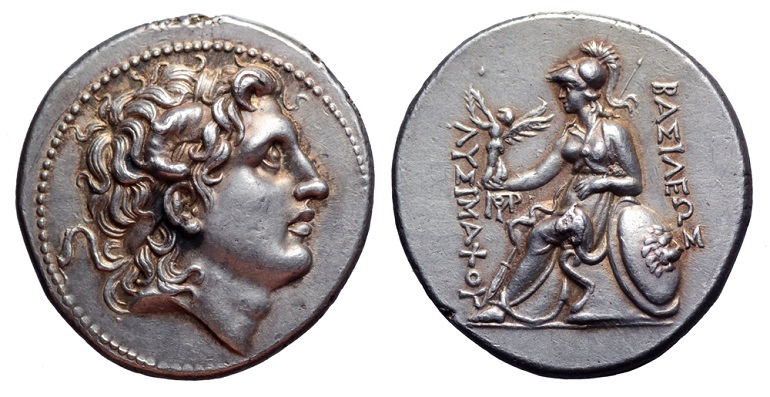 Portrait of Ptolemy I, struck around 300 BC 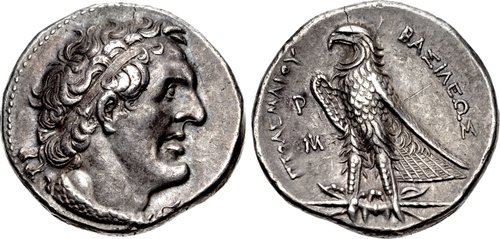 Edited by arnoldoe
06/16/2016 3:37 pm
|
|
Pillar of the Community
United States
6130 Posts |
Yeesh, so that's what the Ptolemies had to work with *before* a dozen generations of sibling marriage?
|
|
Pillar of the Community
United States
7067 Posts |
Wow, that Lysimachus is stunning...a real masterpiece.
|
|
Pillar of the Community
United Kingdom
2624 Posts |
I think it is a matter for debate whether the picture is of Heracles or Alexander, Arnold.
To quote "When Alexander the Great (r. 336-323 B.C.) became king, he issued coins that were purposely similar to popular coins picturing Herakles. Claiming that the god was his ancestor, Alexander portrayed himself as the hero wearing the lion's skin as a helmet."
Most coins are advertised as "head of Heracles" but some dealers do say "Head of Alexander wearing Nemean lion skin"
The explanation for which is that it was purposefully ambiguous because putting his own image on the coin was breaking a taboo given the Greek belief that money was a godly thing.
|
|
Pillar of the Community
United States
949 Posts |
Arnold, can you tell us a bit more about that first tet of Alexander you showed? The posthumous one with the devices on the reverse: 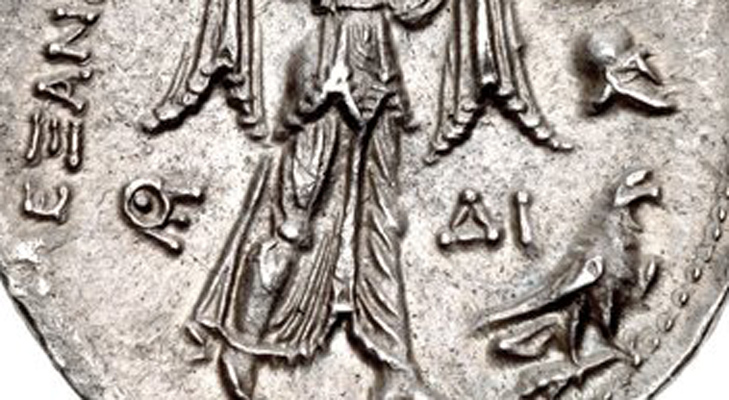 I am particularly interested in the ligatured letters reading "thedi" Any notes on that? |
|
Pillar of the Community
United States
7067 Posts |
|
| |
Replies: 17 / Views: 3,435 |








 Posted 06/16/2016 11:27 am