| Author |
 Replies: 12 / Views: 1,492 Replies: 12 / Views: 1,492 |
|
|
Valued Member
United States
58 Posts |
So this coin came from a bank roll stamp fed. resrv. It was somewhere in the middle. I believe it has 2 or maybe 3 errors. Input? Price ranges? Anyone care to give it an MS grade? I know my pics not the best. Thanks ahead of time. great forum btw. 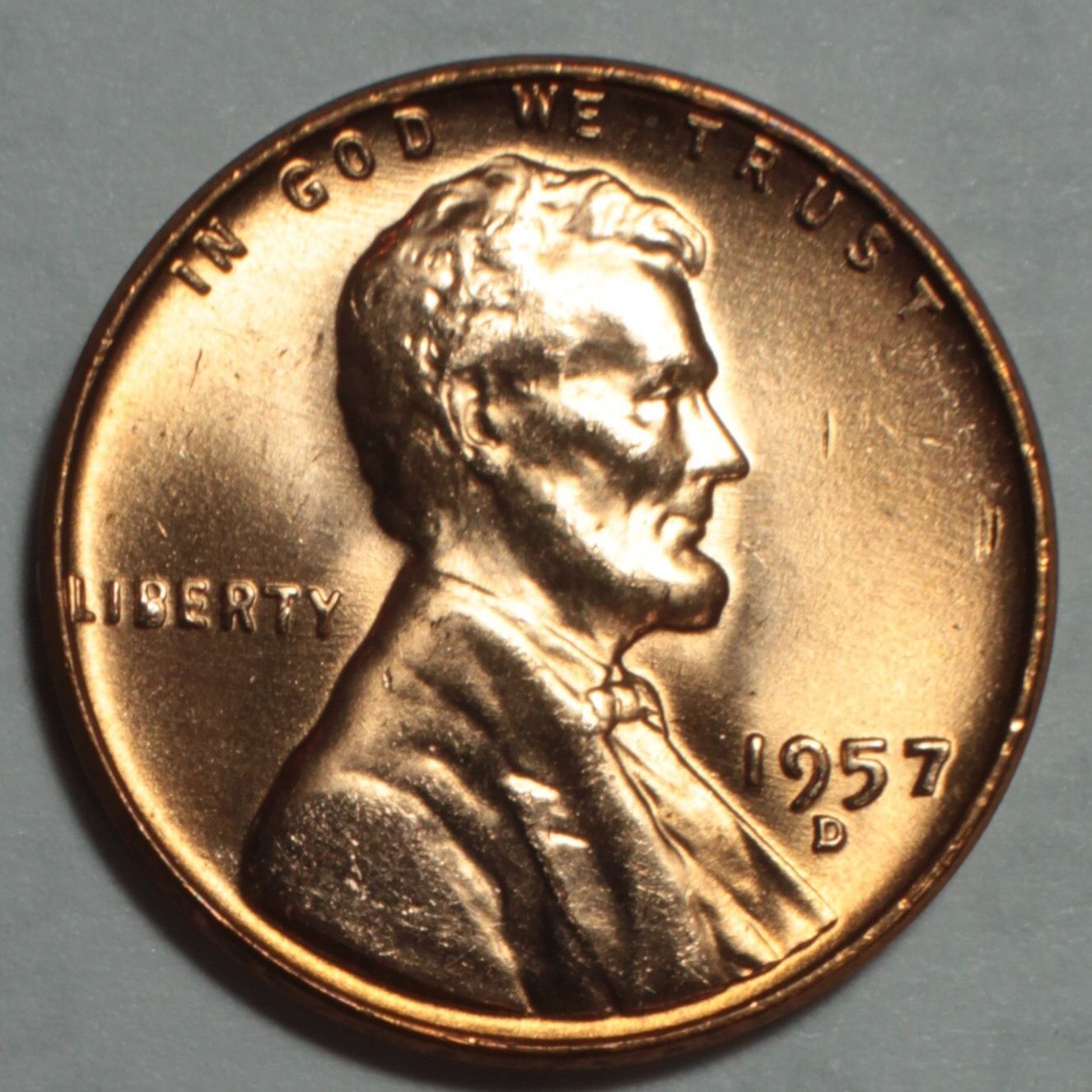 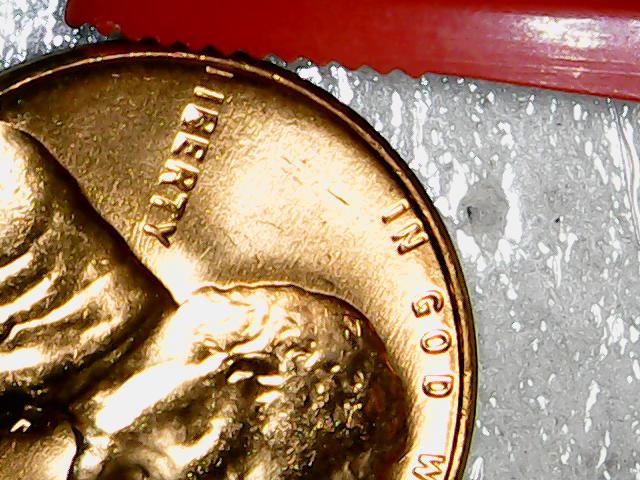 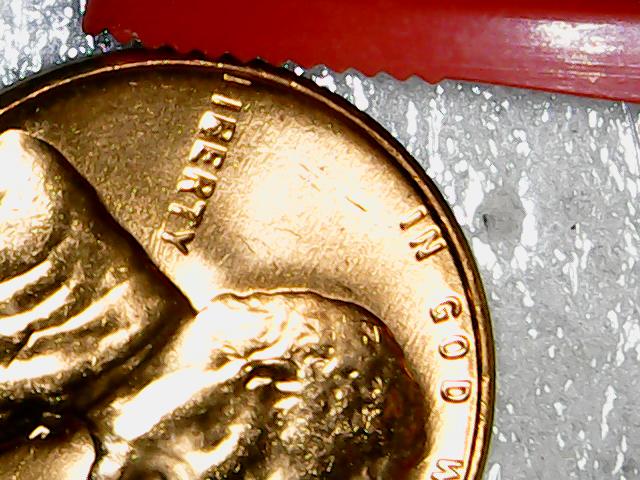 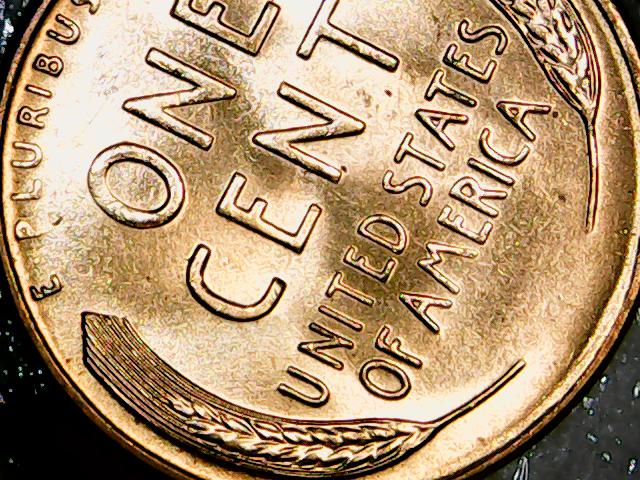 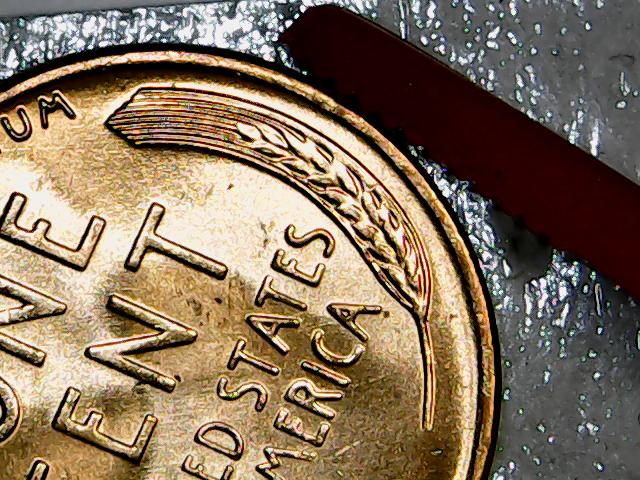 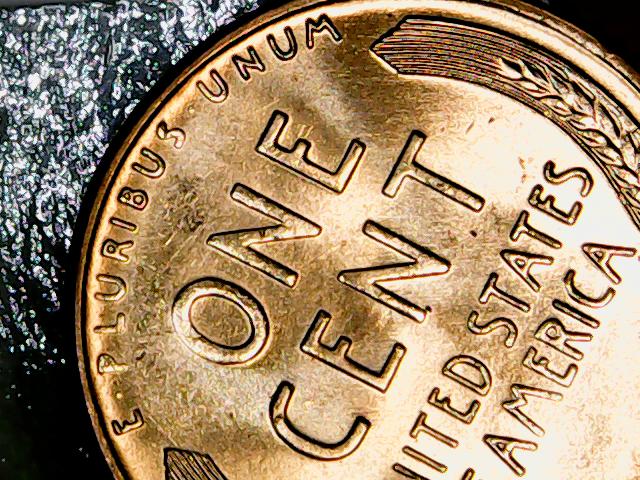 |
|
|
|
Valued Member
United States
131 Posts |
What errors are you seeing?
|
|
Valued Member
 United States
58 Posts |
Boo, I believe the B in liberty is a Cud fill (bottom half of b) and same with the wheat stalk on the right....not sure on the upper left Reverse, like the die was worn out on the E and P(e plur...) and/or the O beginning ONE Cent. |
|
Bedrock of the Community
United States
62064 Posts |
Here is how I view error coins: 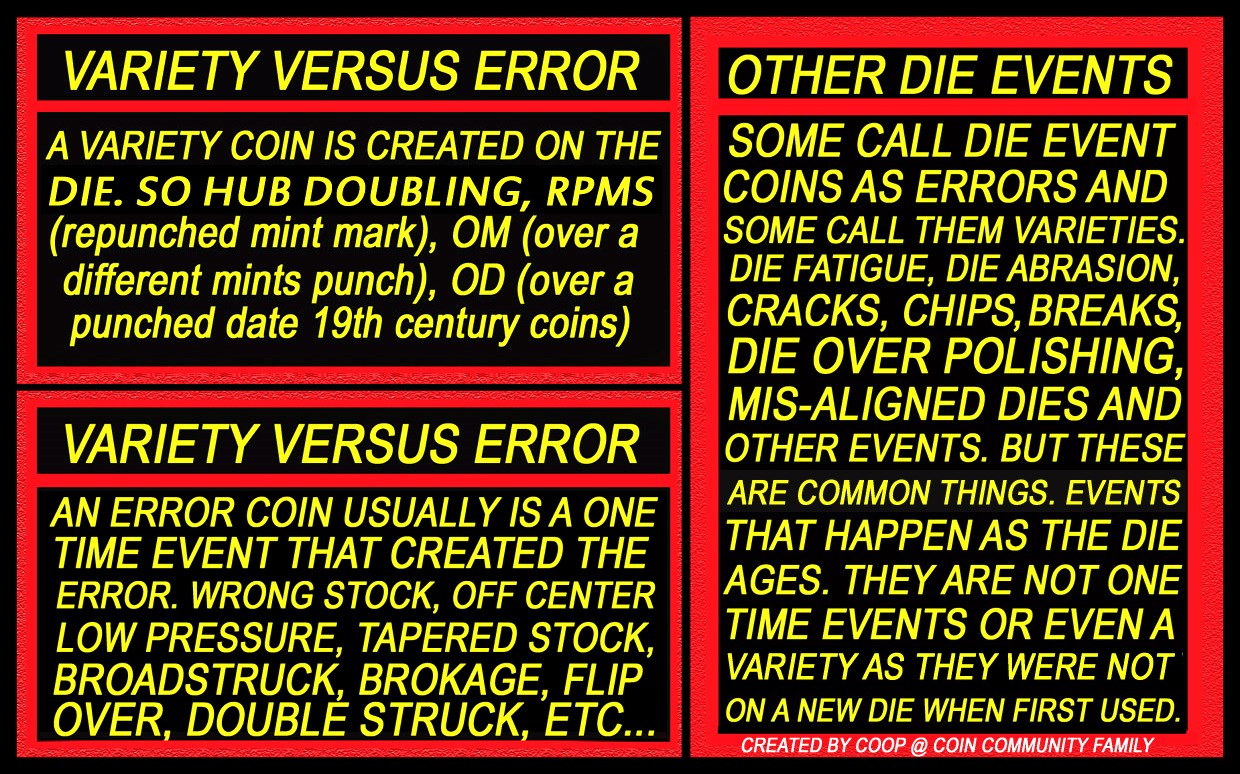 A lot of what people call errors, I refer to them as events. Die cracks, chips, breaks, Struck Through Grease, debris, oil, water, ETC. These are just die events from what I see. Most are not a premium. But to me an error coin is a one time event. Wrong this or that, struck with wrong planchets, struck through planchets (indents) ETC. Just one time events. When it is the die that is at fault, I feel these just events. The die will keep on striking the same problem over and over. Probably some coins in the VLDS has Tens of thousands of the same event on the coin struck that year. I refer to errors as a one time event. ( Cuds are an exception as are close to the dies retirement and fewer coins will have these. But clashes, missing letters from over polishing to me are events. An event caused the problem, the event was removed from the die, the die was altered by the event. So my view is different than others. I'm more into varieties that are incorrectly hubbed, incorrectly punched etc. The all happened to the die before the first coin was struck and is passed on from coin 1 through the last coin struck. Back to the coin at hand, I see a broken post on 'B' on LIBERTY. Some coin contact marks, but in general a very nice BU coin. That would be more value to me than the errors that some see on this coin. |
|
Pillar of the Community
United States
3516 Posts |
What you have is a LBD4 also known as a bie, which is a die variety, not an error. Still these coins are valuable, especially in Mint state. Try to match it on Cudsoncoins.com. Good luck and nice find!  |
|
Valued Member
United States
131 Posts |
Looks like coop beat me to my post!  Pretty good explanation there. I wouldn't see it get a premium error wise, but in terms of condition I can see this getting a premium not only because it's around in MS grade, but it's a wheatie. Nice find! Edited by BoojiBoyTravis
06/21/2016 7:08 pm
|
|
Bedrock of the Community
United States
62064 Posts |
Probably in my book MS-63-64 in that area.
|
|
Valued Member
United States
58 Posts |
coop, thanks so much, learned so much just in my first 2 posts. I don't know much about Lincoln coins but I am learning fast. I know much less about the die making process, so not too sure what a broken post is.
Also, coop, so back to variety vs Error...so Error happens less often then? maybe once or ten times... but variety type erros can occur in runs, tens to hundreds if not thousands?
also, what about the wheat on the reverse, it too then is a variety die fill?
|
|
Bedrock of the Community
United States
62064 Posts |
Quote:
1. not too sure what a broken post is.
2. variety vs Error...so Error happens less often then? maybe once or ten times
3. variety type errors can occur in runs, tens to hundreds if not thousands?[quote]
4.what about the wheat on the reverse, it too then is a variety die fill? 1. A post is what forms the center of a device. On your coin the post broke off the bottom of the 'B'. Which is fairly common. 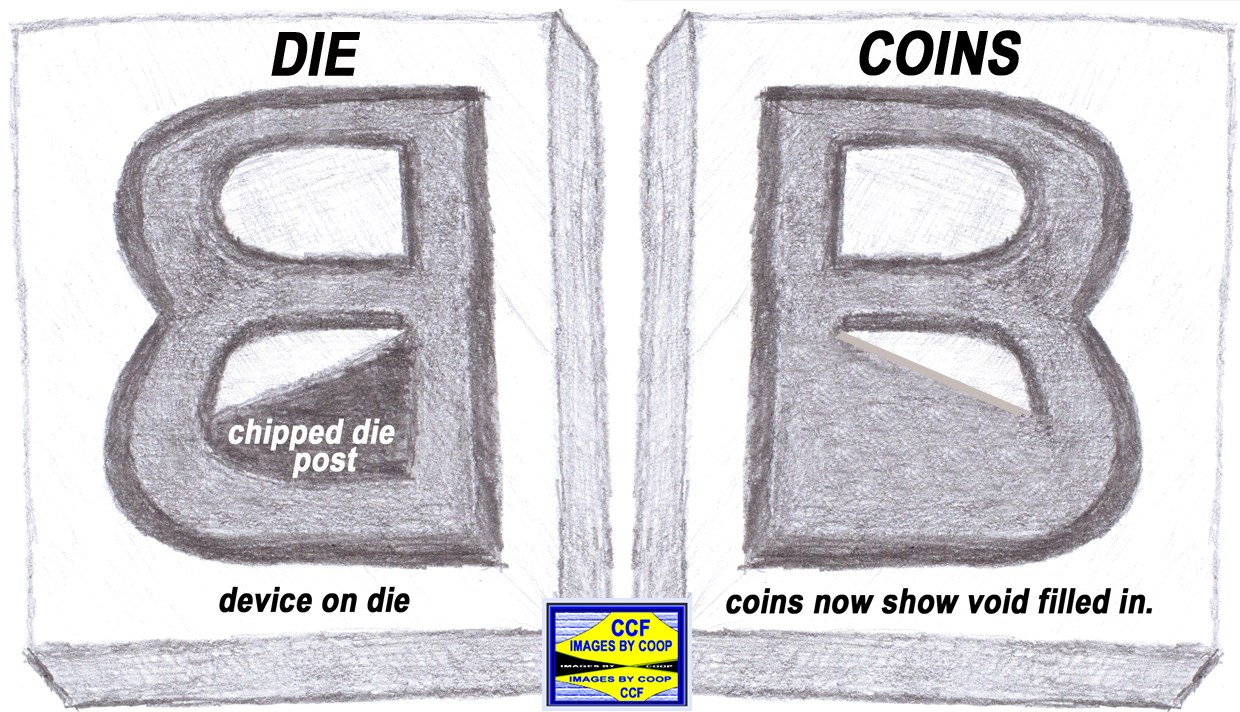 When this breaks off then the center of that device doesn't show. It appears filled, but the die shows a void. 2.A single error is probably less 1 in thousands of coins. Wrong planchet, capped die strike. (which can happen more than once, but not a lot of these happen), off center, die cap, double struck, thinned planchet, ETC 3.Variety coins can happen in the 1-1,000,000 category with a full run. But to find even one, you would probably need to look through an average of 5,000 cents to find one of these. Some are so rare that only two examples are known. 4. Not sure what you meant, but the wheat reverses can show die wear, can be filled with grease and prevent a strike, can be altered by machine damage after the strike. So not sure what the question is on this one. |
|
Valued Member
United States
58 Posts |
coop, thanks again for your amazing knowledge. This is truly speeding up my learning on coins.
As for my last question, forgive me for I am yet learning the exact terms. What I mean is that when looking on the reverse, the wheat and wheat kernels are perfect on the left but not on the right wheat/ and kernels of wheat. They look as though they are smashed or as if the die was now perfect anymore when this coin was made.
And the O in One cent is weak as is the P & S in pluribus. This does seem to be fairly common though.
Coops, much thanks.
|
|
Pillar of the Community
United States
3644 Posts |
Id go ms64 (although cant tell what the full rev looks like or whats going on at 12 oclock there) Edited by Slamnbass
06/21/2016 11:36 pm
|
|
Valued Member
United States
58 Posts |
slamnbass, I appreciate the ms64, not sure how much more value but nice nonetheless. As for the 12 o' clock portion of the reverse, I too wonder what is going on, as well as the wheat on the right. But at 12 0'clock, the S seems extra thick in pluribus and the P looks very weak as well as a portion of the O in one cent. From what I learned from coop, these are variety type coins and not True Error coins. These types of errors are caused by what I will term dying Dies or broken dies that churn out a bunch of these versus a true error which is 1 or 2 or so.
Not sure if because of this it would grade so high though, or add value.
I don't think it's worth having them professionally graded either.
But I think I have found a True Error coin or Two. Will try to post soon.
Thank you all.
|
|
Bedrock of the Community
United States
62064 Posts |
The weak 'O' is common as it is from the striking up of the obverse side. A lot of moving metal going on there. Possibly that is whey the other devices of the EPU are affected as well. If not that, then a slight amount of grease could weaken devices. But I'm leaning more toward the first theory on happening during the strike. I can see the left wheat close enough to see what is going on there. There maybe a die crack forming on that area. Hope it isn't damage as it would lower the grade. If it were a crack then it wouldn't affect the grade. (unless it is really distracting)
|
| |
Replies: 12 / Views: 1,492 |
|









 Posted 06/21/2016 6:47 pm


