| Author |
 Replies: 75 / Views: 10,534 Replies: 75 / Views: 10,534 |
|
|
|
Pillar of the Community
United States
9395 Posts |
Quote:
You guys realize you can turn software updates "off", right? I was under the impression that you can't disable automatic updates anymore in Windows 10, unless you have some professional or enterprise edition (or something like that). At least the anniversary update will give us something: bash and Ubuntu binary support, which could be interesting. Maybe gcc will work, which will give us an alternative to Visual Studio (which is actually pretty good nowadays, in terms of C++11/14/17 support). |
|
Pillar of the Community
 2087 Posts |
I have the family version and the settings show I can receive a notification before it happens, but in effect I have absolutely no choice
|
|
Pillar of the Community
 United States
4051 Posts |
Ahh, only version I've used is Enterprise or Professional version at work, which I have turned updates off. I don't know why my IT guy doesn't do this, as it breaks my laptop every time an update happens. Maybe he allows it for job security. I did not know that the home version kept you from turning off updates. I still have WinXP on all my computers except for one, which I keep current for compatibility purposes.
|
|
Pillar of the Community
United States
4051 Posts |
Quote:
All My 10X stacks with microscope objectives are fuzzy when looking at a 100% crop, compared to low magnification shots (at 0.5x, for example). Even the highly-regarded 10X/0.28 Mitutoyo is not sharp, even though it seems to have the best (or maybe 2nd best?) resolving power of any 10X infinite objective I have. Some of the blurriness may be due to sensor demosaicing, but indeed the 10x/0.28 is operating at f18 so is well into diffraction territory. When you say "2nd best", which other objective are you getting better performance from? I'm currently trying to nail down the best objective for 10x, and am very interested in any comparisons. Contact me for photographic equipment or visit my home page at: http://macrocoins.com |
|
Pillar of the Community
Canada
2784 Posts |
austrokiwi schneider kreuzach APO-Componon HM MC 4,0/45mm I mounted this lens on a nikon PB-6 bellows . I lengthen the bellows to maximum lenght. the lens is of course reversed. the camera is a sony A7R mark II. here is my images this lens preforms very well. the full image an crop no editing 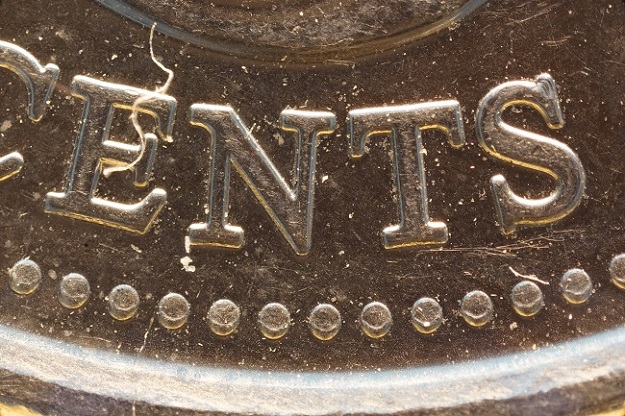 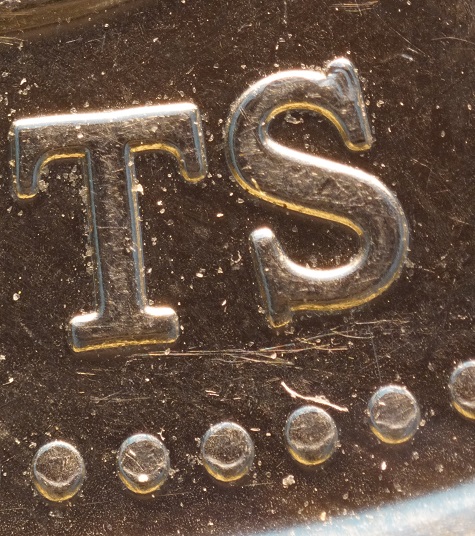 |
|
Pillar of the Community
2087 Posts |
The SK APO 45/4 HM is a good lens. As I have stated previously I once owned one but I sold it once I got the 40/2.8. The SK45/4 is limited due to its slow speed. that F4 maximum aperture sees diffraction becoming an issue much sooner in comparison to the faster F2.8 maximum aperture of the 40mm.
|
|
Pillar of the Community
United States
9395 Posts |
Quote:
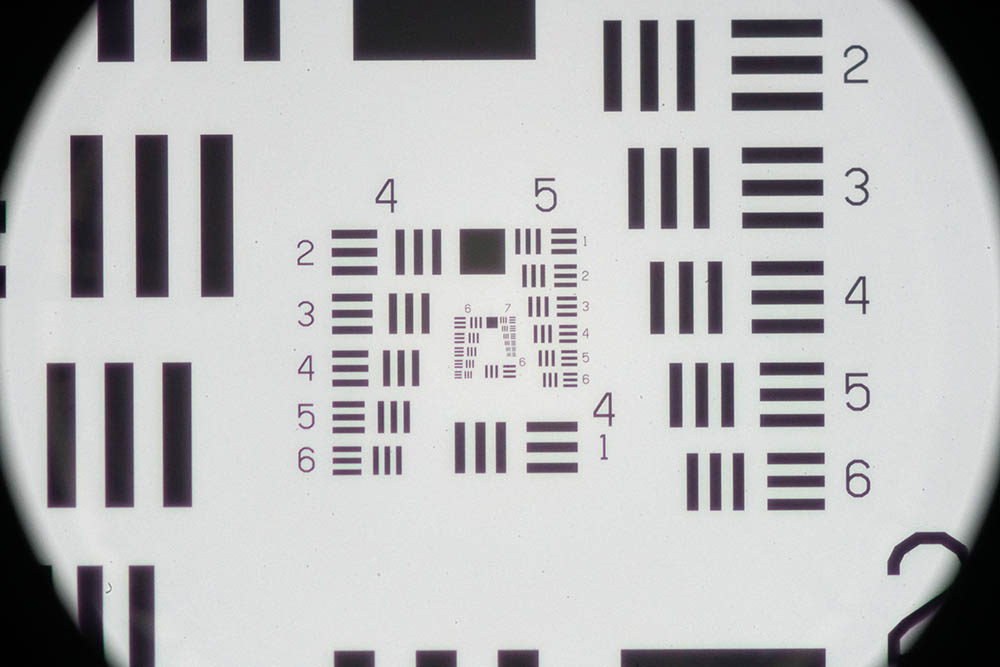
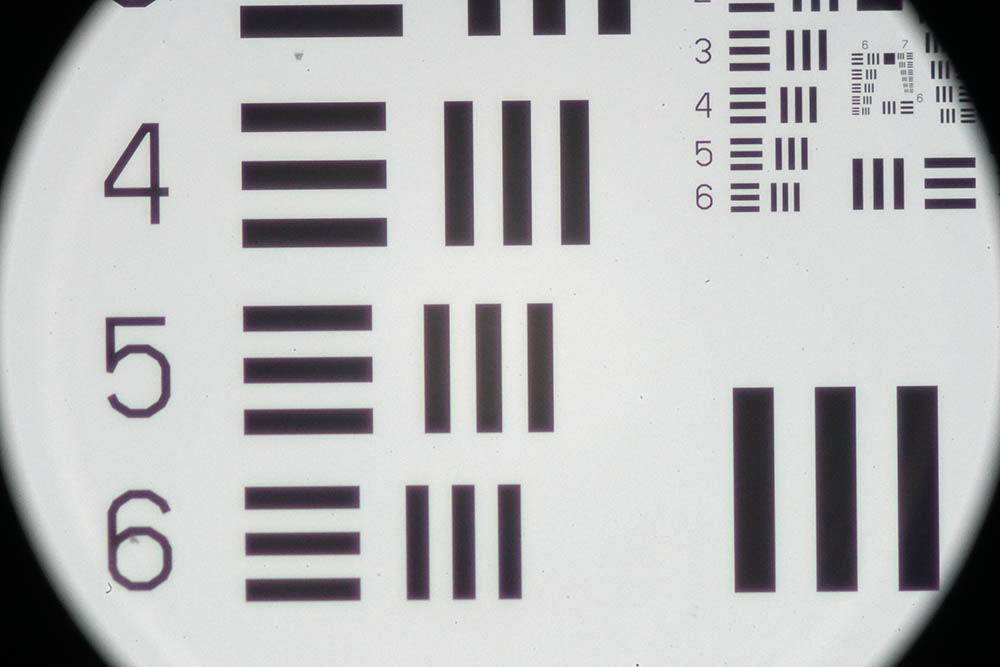
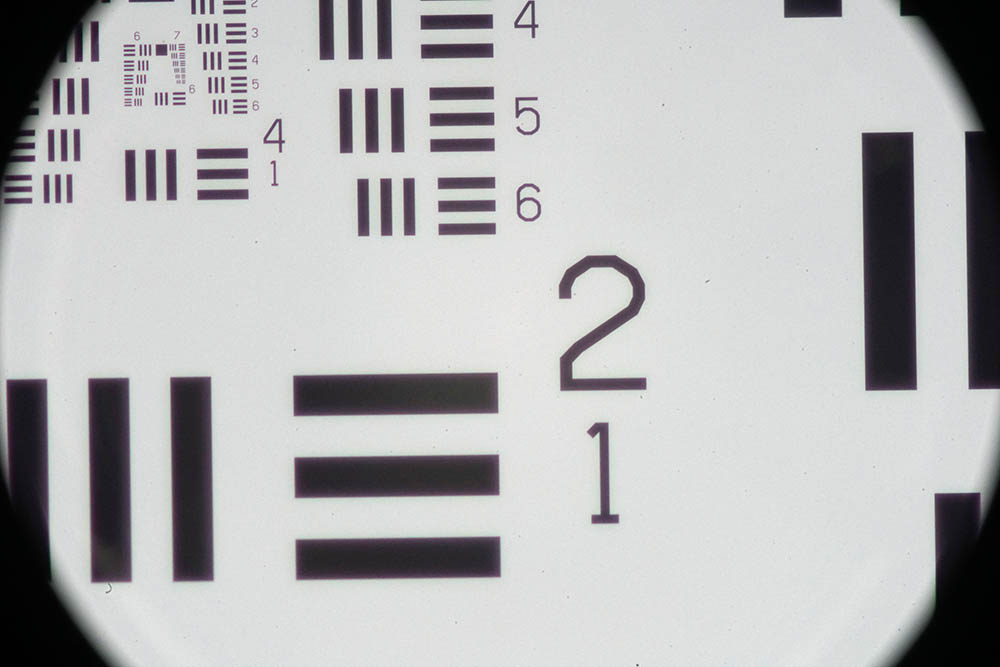
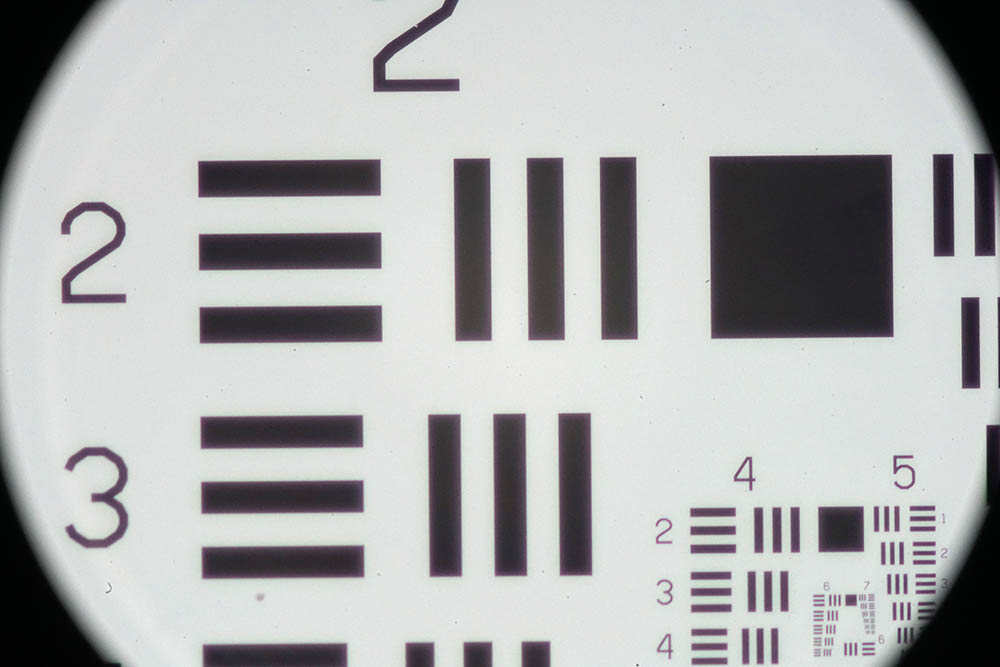
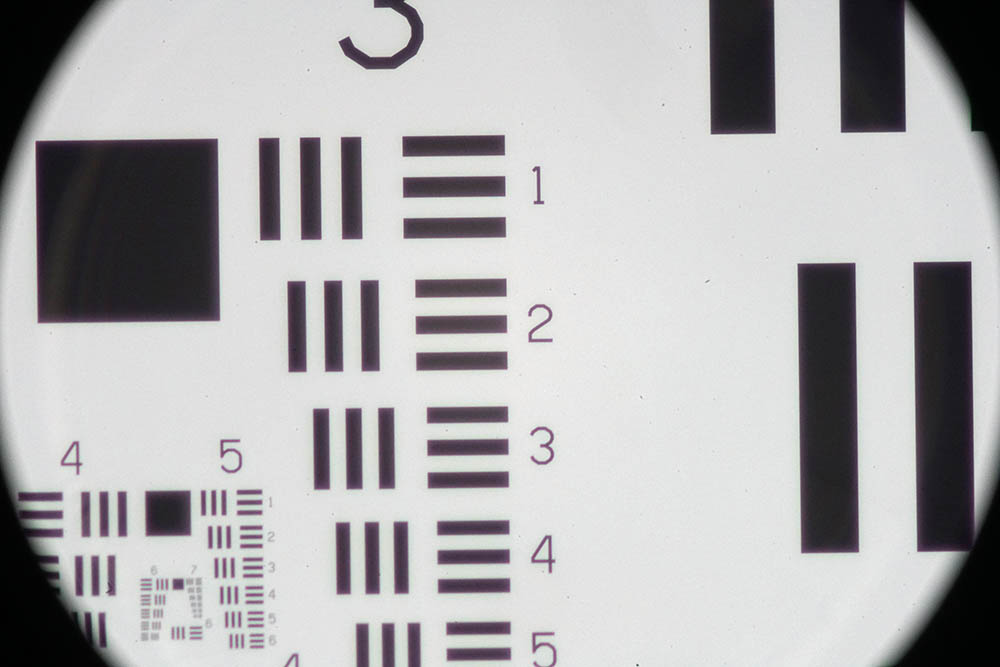
When you say "2nd best", which other objective are you getting better performance from? I'm currently trying to nail down the best objective for 10x, and am very interested in any comparisons Its possible that the Nikon objective labelled "MUE10100 LU Plan Fluor Epi OFN25 10X/0.30 A oo/0 WD 17.5" might slightly outresolve the Mitutoyo M Plan APO (378-803-3, new version) at the center. It's hard to be sure due to the limitations of my tests: - I used a 2X teleconverter to magnify the image from the objectives, and not another microscope objective (4X might be good here). - Apparent chromatic aberration? from the all the objectives other than the Mitutoyo made if hard to tell where the best focus really was. So, I did a stack with 1um increments around the apparent best focus point and let Zerene Stacker PMAX mode pick the image with most luminance? contrast. - The AF test chart I used only goes down to element 9-3 (645 Line pairs per millimeter), and this is not really small enough to test 10x objectives. All objectives could outresolve the test chart, even the cheapest ones. Anyway, it looked like the Nikon might possible outresolve the Mitutoyo, but it's not clear. I suppose, to eliminate the effects of chromatic aberration, it might be best to do tests like these using a narrowband filter (O-III, for example). That way, you'd be measuring the resolution with a known wavelength. With my Jansjo white light source, it's possible that I'm comparing the Mitutoyo using some weighted average of wavelengths, against the Nikon using subset of these wavelengths (the best Nikon images selected by Zerene Stacker are red/purple, not the dark gray of the Mitutoyo images). Note: I compared only my infinity-corrected objectives using a Thorlabs 200mm ITL200 tube lens, and a Canon T6s using a Canon EF 2x teleconverter. These include the two good ones already mentioned, plus a bunch of cheaper Nikon ones that are highly regarded over at PhotoMacrography.net. Overall, I'd say the Mitutoyo was the best, given its good working distance, and low CA, even though it doesn't clearly outresolve the Nikon. Edited to add a list of the ones I compared: Mitutoyo 378-803-3 ---- M Plan APO f=200 10X/0.28 oo/0 Nikon MUE10100 ---- LU Plan Fluor Epi OFN25 10X/0.30 A oo/0 WD 17.5 Nikon MRL00102 ---- Plan 0X/0.25 oo/- WD 10.5 Nikon MRP70105 ---- MTB C20 Plan 10X/0.25 oo/- WD 7.0 Nikon MRP70100 ---- MTB CFI E Plan Achromat OFN20 0X/0.25 oo/- WD 7.0 Nikon MRN70100 ---- BE Plan OFN18 10X/0.25 oo/- WD 6.7 Edited by pepactonius
08/14/2016 11:54 pm
|
|
Pillar of the Community
United States
4051 Posts |
I was wondering if the Nikon NA 0.3 objectives would be better than the Mitutoyo. I have a Unitron 10x 0.3 that is very sharp in the center, but has worse coverage and flatness. How is your 10x 0.3 for the APS-C corners and for flatness? Flatness is very important to me when I do the 3D renderings. They get badly distorted when the objective does not have flat field. I published some questions about the Mitutoyo 10x, and my bad luck at getting a good sample, over on Photomacrography forum. Rik suggested I bite the bullet and buy a new copy of the lens, and I took his advice. I tested the new Mitutoyo against my Nikon 10xMM and Nikon MPlan10, my two best 10x objectives, and it did very well. It was sharper than the 10xMM, which was expected since the 10xMM only has NA 0.21. It had reasonable working distance as well, not as much as the 10xMM but very workable. The sharpness was similar to the MPlan, but the MPlan has much shorter working distance. And of course its CA was much better than either. So it won the shootout, and I am keeping it. You can see the thread at: http://www.photomacrography.net/for...5b21cd8adf08I used the mintmark on a 1954-S RPM#4 as my subject for the shootout, so it is very numismatically-relevant! Contact me for photographic equipment or visit my home page at: http://macrocoins.comEdited by rmpsrpms
08/15/2016 12:23 am
|
|
Pillar of the Community
United States
9395 Posts |
Quote:
How is your 10x 0.3 for the APS-C corners and for flatness? In the next few days, I'll test the Mitutoyo again against the Nikons. To get the APSC corners, I won't use the teleconverter, so unless there is a big difference in sharpness, it'll be hard to draw any conclusions (because the camera pixels and AA filter get in the way). To eliminate problems with CA (we already know that the Mituoyo is way better than any of the Nikons), I'll probably shoot through a green filter. This means I won't have to let Zerene Stacker pick the sharpest frame. Since I can't do live wiew focusing at the corners, I'll still have to take a bunch of pics, and then pick the sharpest one after they've been uploaded. Note: the image circle required to cover the T6s sensor is 26.8mm, which exceeds the image circle of all the Nikons (18mm, 20mm, or 25mm). I don't know what the field number is for the Mitutoyo. However, 26.8mm also exceeds the 25mm "diffraction-limited" image circle for the Thorlabs ITL200 tube lens. I suppose a full-frame 200mm camera lens would get around this problem, but there's the problem of mounting it solidly enough to eliminate vibration problems. What method, other than doing a 3D shot with Helicon Focus, is good for measuring field curvature? It needs to correct for non-flatness of the AF test target (assuming the target is not optically flat), and also for any tilt of the target (I doubt that my setup is exactly level down to the micron level). |
|
Pillar of the Community
United States
4051 Posts |
Quote:
What method, other than doing a 3D shot with Helicon Focus, is good for measuring field curvature? It needs to correct for non-flatness of the AF test target (assuming the target is not optically flat), and also for any tilt of the target (I doubt that my setup is exactly level down to the micron level). You can get a good idea of the curvature by simply taking note of distance between the center and corner focus on a flat surface. Better if the surface is flat versus the lens as well, but if it isn't you will know how far off it is by taking note of the distance between corner to corner focus. The surface flatness is the average of the center-highest corner and center-lowest corner. Contact me for photographic equipment or visit my home page at: http://macrocoins.comEdited by rmpsrpms
08/15/2016 10:23 pm
|
|
Pillar of the Community
2087 Posts |
Quote:
You can get a good idea of the curvature by simply taking note of distance between the center and corner focus on a flat surface. Please elaborate. How is that distance going to indicate curvature? How accurately do you have to measure that distance? Quote:
Better if the surface is flat versus the lens as well, but if it isn't you will know how far off it is by taking note of the distance between corner to corner focus. The surface flatness is the average of the center-highest corner and center-lowest corner. At high magnification how do you know which is the highest corner and which is the lowest corner? To my old eyes I just see that part of the image is out of focus I can't tell if it is high or low( at high magnification) I understand the need for a flat field lens. The 10X microscope objective that I use is a shocker... it takes well over 150 shots to create a sharp stacked image. The SK this thread is about takes only 50-60 shots. (Note this relates to a 14th century coin. A US cent, being a much more 2 dimensional design, would need considerably less shots) I find I can assess field curvature using focus peaking. It isn't accurate but it assists as I can actually see the shape of the area in focus and by moving the focus I can observe how it shifts on the subject. Edit: this is the only way my old eyes can tell if part of the subject is high or low. Edited by austrokiwi
08/16/2016 12:15 am
|
|
Pillar of the Community
United States
9395 Posts |
Quote:
Please elaborate. How is that distance going to indicate curvature? How accurately do you have to measure that distance?
I already tried my first field curvature run (the Nikon LU Plan Fluor). What I did was step the focus (manually) using a 2 micron increment from "20" to "100" (actually wraps back to "0" on the fine focus scale). The file numbers run from 8590 to 8630 for this series of shots. I just need to find the file number that's sharpest in the center, and then try to find the ones that are sharpest in the corners. The sharpest file number in the center should be the average of the two/four corner file numbers. If not, there is measurable field curvature. The USAF test target I used is supposed to be flat to +-2.54 microns, if all is in spec, and the old? version I used has the same spec as the current one being sold by Edmonds Optical. I did the test using a Astrodon green filter from an LRGB set to reduce CA and make guessing the sharpest frame easier. Before doing any careful analysis, I can tell that this test will probably be inconclusive, since the file number with the best central sharpness is around 8610, and the sharpest corners are not very far off from that. Trying to detect differences between the average corner and center may run into problems with uncertain/inaccurate data. Anyway, when the results are in, I should probably start a new thread for microscope objective comparisons. |
|
Pillar of the Community
United States
4051 Posts |
Sounds like the LU Plan Fluor has a very flat field. My experiments showed that my best 3 objectives were within ~13um (2x 6.5um steps).
|
|
Pillar of the Community
2087 Posts |
Edited by austrokiwi
08/17/2016 4:36 pm
|
|
Pillar of the Community
United States
9395 Posts |
Quote:
... how does it relate to the Mitutoyo's working distance? ... I think the working distance for the Mitutoyo M Plan APO 10X/0.28 is supposed to be 33.5 mm. How does this method of testing field curvature distinguish between tilting of the top surface of the test target and actual field curvature (and any increased aberrations away from the center)? |
| |
Replies: 75 / Views: 10,534 |





 First Page
 Previous Page


 Posted 08/06/2016 02:01 am