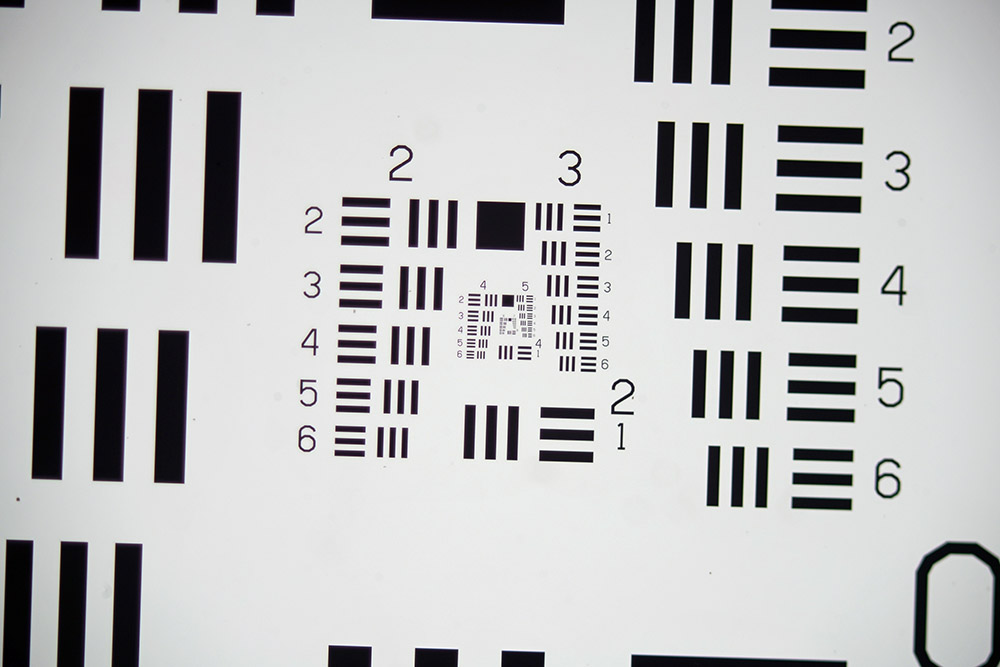
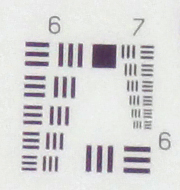
Quote: I think the working distance for the Mitutoyo M Plan APO 10X/0.28 is supposed to be 33.5 mm.
Given my measuring is subject to a degree of error I would guess the SK 40/2.8 has about the same working distance( at high magnification).
Quote: How does this method of testing field curvature distinguish between tilting of the top surface of the test target and actual field curvature (and any increased aberrations away from the center)?
This is probably at the heart of my not getting my head around the complex technique you and rmpsrmps are using.
First to answer your question( followed by an elaboration of that last sentence): I use focus peaking in combination with the cameras manual focus assist( 7X-12X magnification of part of the image), as a double check. It is the best practical tool available to me. Even without the manual focus assist I can still get an indication of the degree of curvature( or tilt) as at this magnification level if I use an objective with a curved field of focus only the center of the subject, when in focus will be high lighted if I then adjust the focus( by moving the camera and bellows ) slightly either I loose the focus highlighting or I see a ring of focus highlighting( depends on the direction of movement and the shape of the curvature). If part of the system is tilted( either the bellows camera... or the target or a combination of the two) I see a line of focus highlighting which moves across the target as I change the focus.
To elaborate on my not getting my head around the method you use. I understand the concept behind it, but have great difficulty with the practical application. As I imagine it, it is dependent on an extremely well tuned macro rig. My rig is vibration resistant, sits on a very stable table which has been "accurately" leveled. Likewise the rig has been leveled. I can also adjust the positioning of the camera-bellows set up, in the X and Y axis, for level. the big weakness is that I only use a spirit level for this. With all that effort and knowledge of how my rig operates(including its faults)I still doubt that I have the necessary accuracy in the set up to trust the method of measuring in the manner outlined. Simply put: for the time, effort and required equipment, the margin of error is still so high that in my mind it would provide no practical advantage over the method I use. Not every one has the ability to adjust the focus in the micron range as we each appear to have. Although I have that ability it just seems too much work for indicative results.
There are issues with focus peaking... it relies on contrast detection so it only gives an indication of where the focus is.. however I don't need optical lab accuracy. I find it hard to see how any one using less than 20X magnification would need optical lab levels of accuracy.
For those wondering what focus peaking is:
Hyyjp89YPGE
Better tutorial
GH_3f5xmJ_k
*** Edited by Staff to add YouTube tags. [youtube][/youtube] Please use them in the future. We prefer embedded video. ***
- Install a flat surface object on the stage - Adjust the focus plane until the center is in focus. Use focus peaking to verify. Record the height setting. - Adjust the focus plane until the highest of the corners is in focus. Record the height setting. - Adjust the focus plane until the lowest of the corners is in focus. Record the height setting. - Calculate: Flatness = Center - (Highest Corner - Lowest Corner)/2
This will give you a fairly precise measure of the flatness, within the accuracy of your stage vertical adjustment.
Contact me for photographic equipment or visit my home page at: http://macrocoins.com
Yes it is simple. But why do it? Other than putting a figure to the curvature what is the practical advantage you are gaining? (The two questions are the same question)
I know from my experience of needing to use huge numbers of photographs to get a good stack when using my cheap 10X objective the lack of a flat field is annoying. The SK 40/2.8 requires less than a third of the photographs the 10X objective requires to produce a sharp final image. All I need to know is which of my lenses are suited for each purpose. I now know the SK has a much flatter field and if necessary can do a better job than the 10X objective that is now going to gather dust on the shelf. For me that is all I need to know ( with my current understanding).
It may well be that a Mitutoyo has a much flatter field, but with a second hand SK40'/2.8 at around US$400.00 against a Mitutoyo M plan APO 10X plus tube lens and associated adapters dissolving most of €1000.00 I am quite happy taking a few extra shots in a stack. As I understand it stacking makes a flat field lens a "nice to have"
Edit. Yes I could buy a second hand Mitutoyo however you have to be an expert to tell whether the objective is OK and more often than not( from what I have read) second hand mitutoyo objectives can be less than satisfactory performers( it doesn't take much to destroy them)
Flatter-field objectives are usually better color-corrected and exhibit better sharpness out to the corners. Standard objectives were designed for viewing through an eyepiece, and the designers put priority on central sharpness, where the viewer's eyes would be focused. Flat field objectives were designed for more critical tasks that needed good performance out to the edge of the frame. If you don't care if the image is blurry at the corners, no need to make it have low distortion and CA, and a better center correction can be designed. Many objectives I've tested are excellent at the center, but very poor even halfway to the corners. These are not good objectives for photomacrography, even given the focus improvements that can be had with stacking.
In my own work in coin photography, flat field is important because the 3D rendering software uses the depth map information to decide at which plane to render the in-focus pixels. In 2D rendering this is no issue, but in 3D if the pixels are in the wrong plane, the rendering becomes distorted and does not properly represent the original.
Contact me for photographic equipment or visit my home page at: http://macrocoins.com
I see we are looking at two different types of objectives. I have absolutely no relevant experience with microscope objects. I have three very cheap generic microscope objectives, and really get nothing out of them. I have much more experience with Legacy lenses and a small range of enlarger lenses so my comments really relate to that experience. my best lenses generally cast a much bigger image circle than my sensor... so Flat field is a relative term as the sensor( even full frame) is at lower magnifications not using light from the edges of the lens optics. The standard image circle of the 40/2.8 is just over 43mm in diameter. I am happy to be corrected as I could be wrong==>I believe the vignetting that starts at just over 9.5 times and is clearly evident at 12 times is due to the length of the extension.
I can really see the need to assess curvature is greater for microscope objectives.
Hmm, longer extensions should not result in vignetting. Something odd is going on if you are seeing vignetting with a lens that has a large image circle.
Contact me for photographic equipment or visit my home page at: http://macrocoins.com
Quote: Hmm, longer extensions should not result in vignetting. Something odd is going on if you are seeing vignetting with a lens that has a large image circle.
I had the same experience with a Schnieder Kreuznach componon S 210/5.6. which is designed for producing large format prints I only noticed the vignetting with the 210 when I migrated to a full frame camera.
I have already disassembled the combined bellows but given each bellows has a maximum extension of 210 mm and I added in two extension ring sets plus an adapter of 40mm I would guesstimate a total extension of 500mm-600mm.
What I believe is happening is the long extension is acting like an aperture and restricting the full image circle, effectively decreasing it. However the image that hits the sensor is only from the center of the lens not the edges. the center of lenses is always the best performing (optically) and tends to produce a flatter field of focus. Any testing of such a lens under such extension has to be interpreted in that light. To explain my thoughts further. Take the Agfa repromaster 80mm F4 ( or F 4.5) as an example. Its designed to produce an image circle that covers at least a letter sized page( at the designed 1-1 or 2-1 Magnification range). On an APSc or full frame sensor a very small proportion of the image circle( in reality image hemisphere) covers the sensor, and that portion of the image has been projected from the best performing part of the lens( the center) It could well be the case that the Repromaster has a curved field but for an APSc or FF sensor the image that is recorded comes from the flattest area of the image circle/hemisphere.
It sounds like your extension tubes may be limiting you. Do any of your tubes have a clear aperture that is smaller than your sensor? With enough extension, the lens will eventually be set for closer and closer to infinity focus in reverse. Setups such as the Multiphot or similar were designed for very long extensions but did not vignette, even for large format. I think you just need to make sure there is nothing restricting the coverage in the light path.
Contact me for photographic equipment or visit my home page at: http://macrocoins.com
Perhaps... or it is the choke point created by the joining of the two bellows. The extension tube elements as well as camera and lens mount points could be well causing the issue. The multiphot bellows does not have such a choke point. I believe I may well discuss with the Uk firm that makes bellows the option of making a new bellows that provides 400- 450mm of extension. I can get an arca rail to which I can attach two bellows rails( I suspect it would be cheaper than obtaining a multiphot bellows
Very long extensions begin to approach "infinity" focus. You might consider using a prime tube lens instead of humongous extensions. I've often thought of trying my Multiphot objectives with tube lenses for this reason. Your 40mm would achieve 5x magnification with a 200mm lens. Add a 2x teleconverter to get 10x. The effective aperture of this arrangement will be nearly the same (actually just slightly better) than using extensions, and it might be easier to set up. Alternatively you could use your 210 on bellows, set for infinity focus, though it's not clear how good the 210 would be at infinity. Experimentation is key and will tell you what works and what doesn't.
Contact me for photographic equipment or visit my home page at: http://macrocoins.com
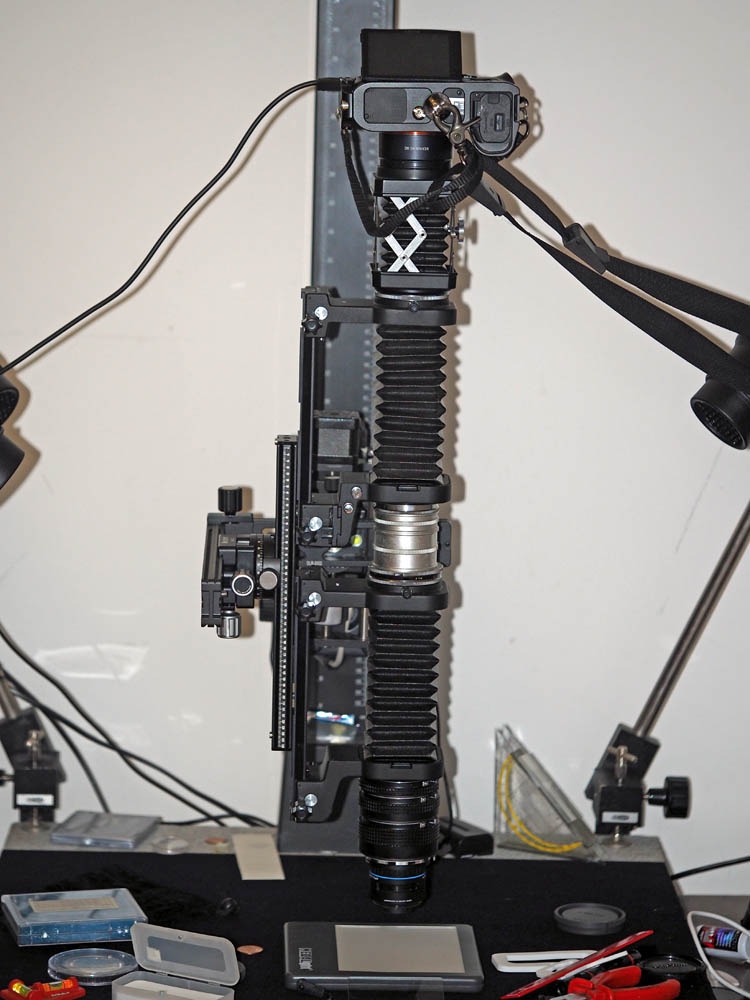
LOL I have the necessary coupling ring in the post already ( 10 days and counting). I have tried using the PN105 mm with the SK and it was disappointing as the working distance was so close as to be useless( for me). While you (rmpsrmps) were responding I had re-assembled the long extension and checked the two extension ring sets. The Hama Minolta SR extension ring set was the offender; its aperture is 34mm. I then realized I had a minolta compact bellows. So in reassembling my version of the Loch Ness monster I put the Hama extension rings at the front where they would do the least damage. I used the Minolta extension ring set ( silver in the first photo)as the coupling between the two bellows and then at the top I added the Minolta compact bellows( great piece of kit). I can now say that in the last shots at 12 times I was using 500 mm of extension. with the compact bellows its 600mm. What amazed me I have not yet hit empty magnification. You can see that the vignetting is improved but not gone. I now have a second original Minolta extension ring set on my hunt list. At 600mm its getting a little cumbersome, so I hope that coupling with the SK 210 will work( a 2X convertor is a great idea)
So here is my "Loch Ness monster"
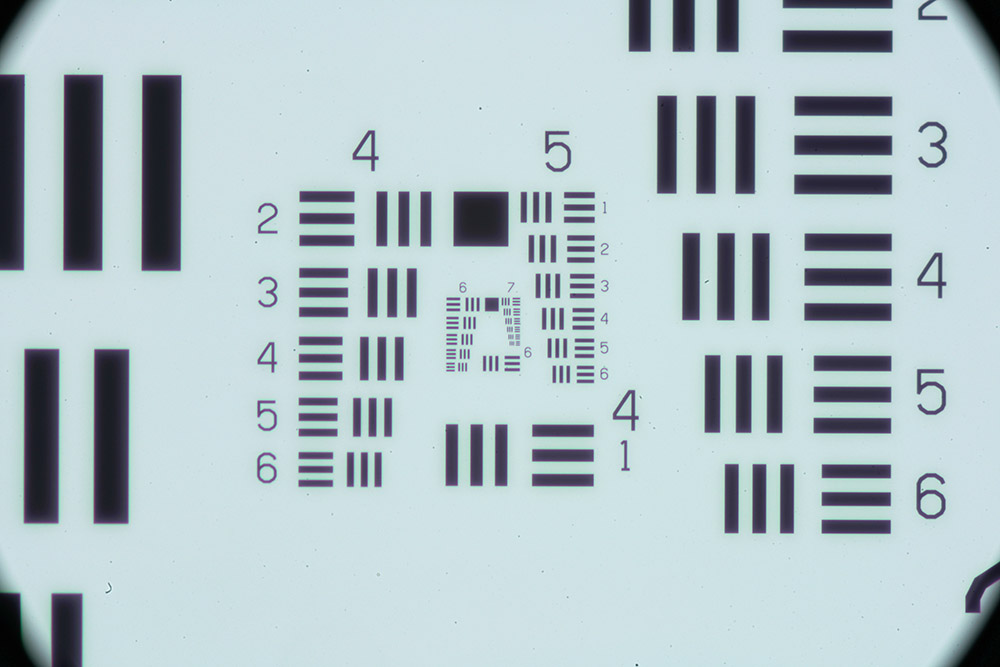
The resultant magnification is 14.4 X
Unfortunately the APO designation of the lens is shown to be a little bit of a marketing stretch with the following 100% crop
A month ago I would have laughed if any one had told me I could get this SK 40/2.8 to produce 14X images. I hope some one on this forum got the SK 40/2.8 I posted in the el cheapo thread. Even with the CA, in the right hands it will perform very well. I will be impatiently awaiting the arrival coupling ring.
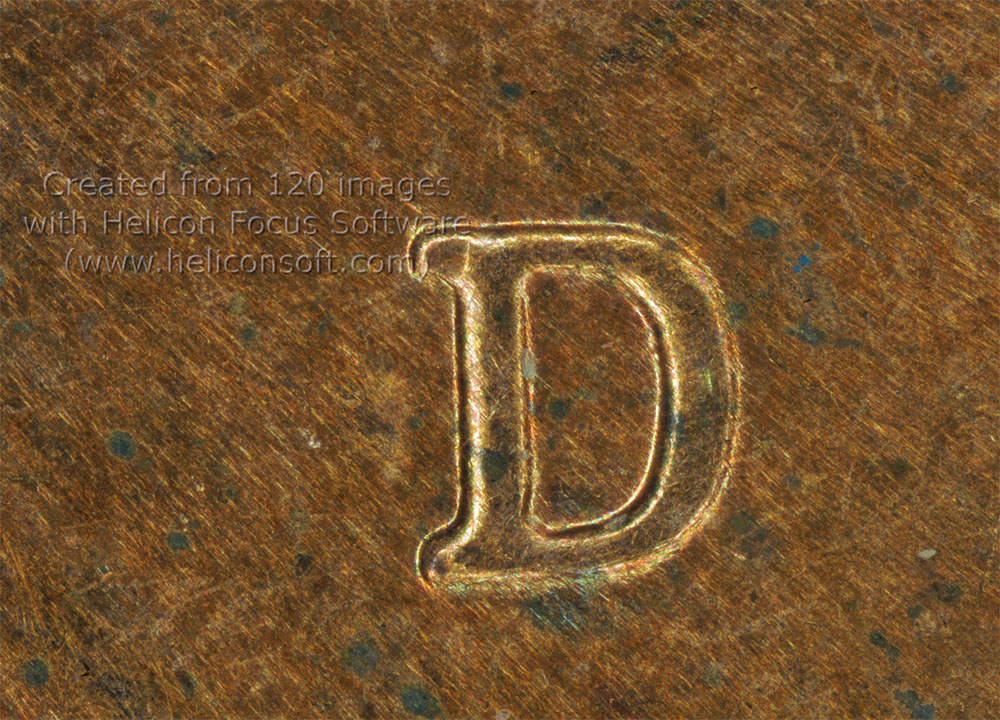
Last night I tried a stack at the last extension. It was only a test with just a ring light. For a proper shot I would have done a lot more work on the lighting.
Again Helicon played up and plastered a water mark over the resultant image. I have 32 days left on my Helicon Focus licence. Helicon Support has no idea what is causing the problem and I know others have had the same issue. It only started after the last Helicon update( not windows update). I will be trasnferrign to Zerene stacker.. as I have had enough of the "we have no idea" responces from Helicon. At least I know Rik will move Heaven and Earth to solve a Zerene stacker issue.
Here is the stacked image:
On using the SK 210/5.6 as a tube lens:
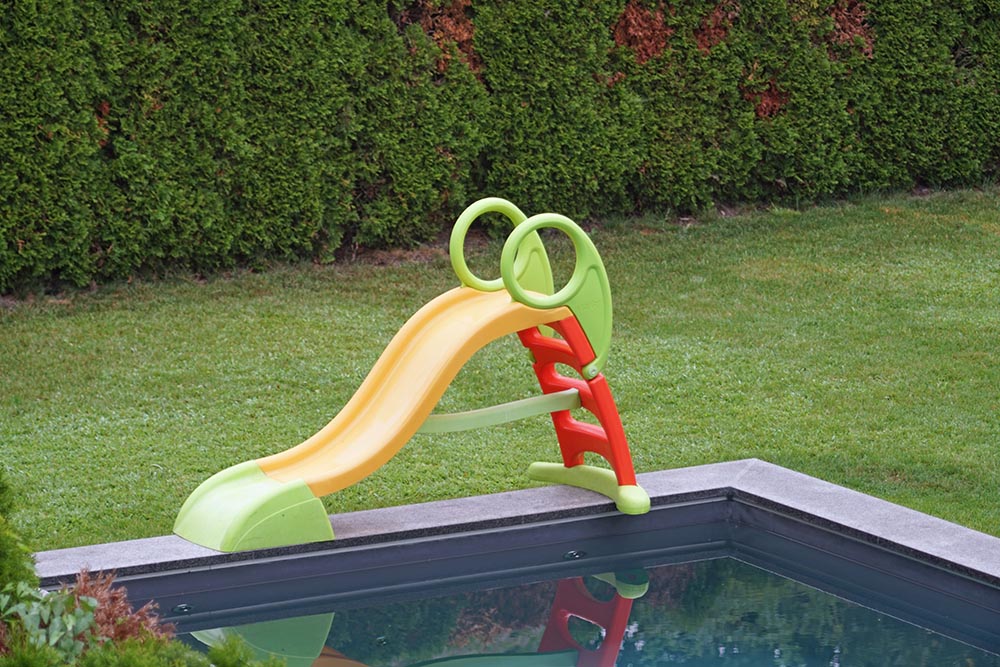
Its been at least four years since I tried to set this monster enlarger lens to infinity focus. I tried this morning. It needs approximately 180mm extension to get infinity focus. At 5.6 it does a reasonable job:
Given the above photo was at 5.6 I am reasonably confident it will perform Ok as a tube lens. On the teleconvertor. I have had one on my "to-buy-sometime" list for my Normal photography. To match my Legacy lenses I will Likely get the Minolta MD 300-S 2X convertor ( designed for lenses up to 300mm). Are there any issues I need to be aware of before I pull the trigger.
I assume the teleconvertor should be placed between the bellows and Camera.
Edit. Noting the weight and size of the SK 210, I do wonder whether a Raynox 150 might be more usable...Would the diameter of the Raynox's optical system be an issue?
For the teleconverter, I highly recommend the Vivitar 2x Macro Teleconverter. It is the best teleconverter I've tried, plus it includes an extra focusing helicoid with 18mm of adjustable extension. It's available in MC/MD mount quite inexpensively.
The D mintmark looks very good. I suspect with small lighting changes it will be excellent.
Contact me for photographic equipment or visit my home page at: http://macrocoins.com
Being impatient about the tube lens idea, I went through my adapters and found I had the necessary step up rings and coupling rings to couple the SK 40/2.8 with the Oly 135mm Bellows lens. theoretically that should provide just over 3 X magnification. When I put the coupled lenses on the bellows I discovered that I was getting 4.5X. I reduced the bellows extension till I was getting 3X. This following picture has been reduced for posting here, so it has been degraded by the reduction process. The 100% crop that follows gives an idea how successful these two lenses are together:
Compared to just using bellows extension this was much simpler and it appeared to give sharper results. Does the coupling create a faster effective aperture?
Disclaimer: While a tremendous amount of effort goes into ensuring the accuracy of the information contained in this site, Coin Community assumes no liability for errors. Copyright 2005 - 2026 Coin Community Family- all rights reserved worldwide. Use of any images or content on this website without prior written permission of Coin Community or the original lender is strictly prohibited. Contact Us | Advertise Here | Privacy Policy / Terms of Use








 First Page
 Previous Page


 Posted 08/18/2016 07:07 am