| Author |
 Replies: 32 / Views: 5,158 Replies: 32 / Views: 5,158 |
|
|
|
Pillar of the Community
United States
538 Posts |
|
|
Pillar of the Community
United States
3516 Posts |
Congrats on the new listing!  |
|
Pillar of the Community
United States
3656 Posts |
Awesome & Congratulations CM.
Got a question on nickel die cracks and didn't want to make a whole post for it.
You know how you get the die cracks off the bottom of the monument on the Cents? - I found one like that on my 2007 Nickel. I don't really look at nickels except what I get in pocket change - is this a common die crack on a nickel as well?
thank you very much
|
|
Pillar of the Community
 United States
5964 Posts |
Very nice! You do good work JC, thank you. I like having my name in the "lights" next to coins I have found. It's almost like being famous. Sometimes when we have friends over, I'll show them some of the best ones (this one will be included). They all seem to be impressed. Being human, that makes me feel good.  Thanks all for looking and comments. |
|
Pillar of the Community
United States
5964 Posts |
Yes CC, if they're off the bottom corner to the rim on a penny or nickel it's pretty common. That's a stress point at the strike. Jean Cohen calls them Drain Pipes.
|
|
Pillar of the Community
United States
3656 Posts |
Thanks for answering - I figured as much.
|
|
Pillar of the Community
United States
5964 Posts |
 Funny, but I just noticed Die cracks at the rim by LIBERTY, joined at the T. What's this called? Click on the first picture to see it. |
|
Pillar of the Community
United States
3656 Posts |
If it is raised possibly a die gouge or die dent. We'll see what the others think.
|
|
Pillar of the Community
United States
2752 Posts |
A nice example of an arcing, rim-to-rim die crack. These are sometimes called "pre-cud" die cracks, although there's no guarantee it progressed to a full-blown Cud or even a Retained Cud. Nor is there any guarantee that it progressed to an asymmetrical split die. This die could have lasted in this state for quite some time before being retired. Error coin writer and researcher.
|
|
Pillar of the Community
United States
5964 Posts |
Thanks Mike, I'm sure you're right, I imagine the arc allows it strength. Did you see the cracks at LIBERTY? Click the first picture to see it best.
|
|
Pillar of the Community
United States
5964 Posts |
Here's a better pic of what I'm talking about. Shattered Die? It also shows better where the Bisecting rim to rim ends. 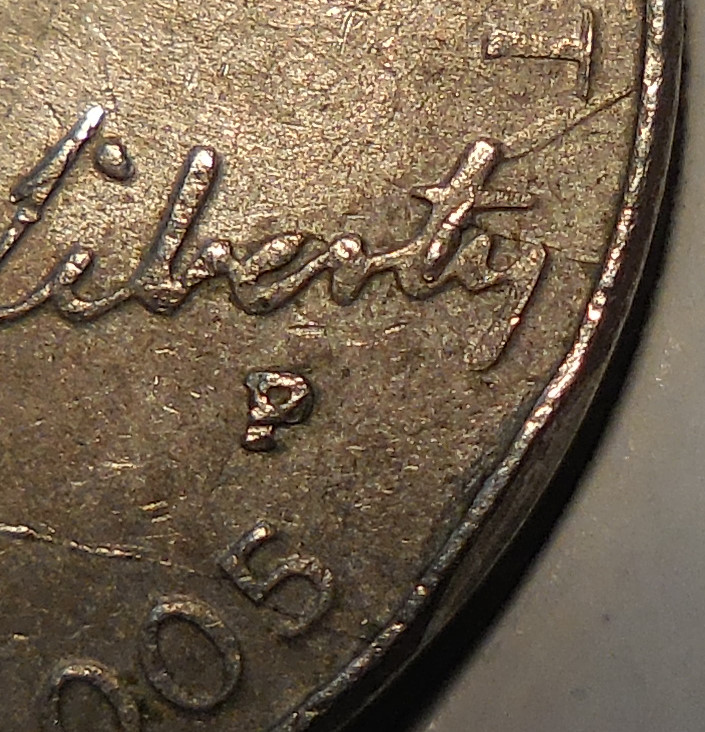 Edited by CoinMasters
08/11/2016 8:53 pm
|
|
Pillar of the Community
United States
5964 Posts |
The third picture on this post clearly shows the crack ends at the rim. Would that not make it a Bisecting Rim to Rim Die Crack? Also, does anyone know what's going on in the above picture at Liberty?
|
|
Pillar of the Community
United States
2752 Posts |
"Bisecting" indicates that the crack divides the coin into two equal (or at least subequal) parts. This crack is far off the midline.
Error coin writer and researcher.
|
|
Pillar of the Community
United States
5964 Posts |
Ohhh! That's my bad on the bisecting. I should have researched it, I know now it means equal parts or almost equal parts. Thanks for that Mike. I think what threw me is it's listed as an Unusual Die Crack with a comment that the crack ends at the end of the five. Rim to Rim is mentioned, but in quotation marks. I know now it couldn't be listed as bisecting, but I've always known it's definitely rim to rim.
I know the arced crack lends strength to the die as opposed to a straighter crack, but with the area around Liberty factored, I think maybe this die wasn't around much longer after striking this only known specimen. I'm reasonably sure there are others, but I think probably not too many. Every time I've neglected to express an opinion, I was never corrected whether I needed it or not.
Edited by CoinMasters
08/21/2016 12:31 am
|
|
Valued Member
United States
83 Posts |
Awesome find, and a good eye. Upon first glance, it looks like just a scratch but that's a pretty big die crack. It'd be nice to have the patience to look at each individual coin carefully for errors such as this.
|
| |
Replies: 32 / Views: 5,158 |







 First Page


 Posted 08/09/2016 1:05 pm





