

 Posted 11/04/2016 02:42 am


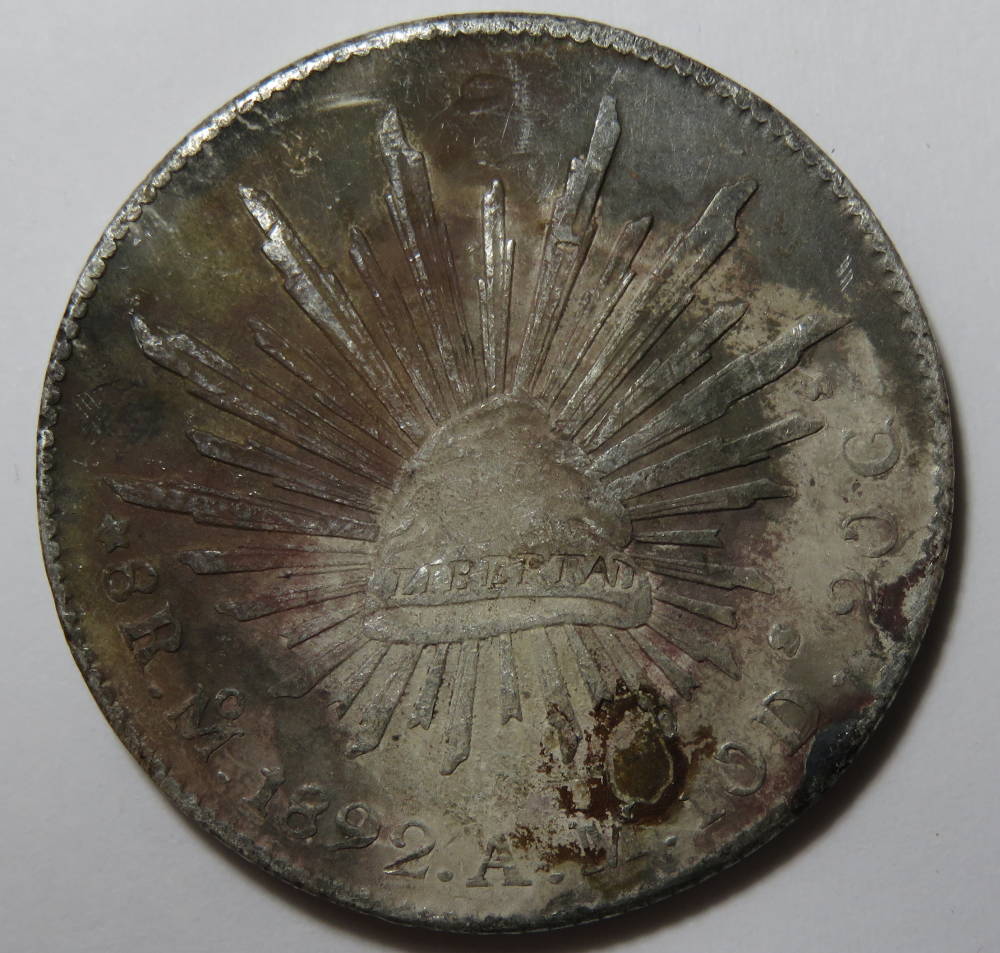
bungle First of all - the coin appears to be genuine almost no concerns there.
I agree with cara - a coin - particularly an older one can loose density when exposed to extreme heating especially when the temperature approaches the point where the alloy becomes plastic.
A struck coin is actually harder than a raw blank. That is why pure silver and hammered silver have different densities listed in most tables of density. This is due to the way a malleable metal like silver behaves under stress. Not all metals behave in this way.
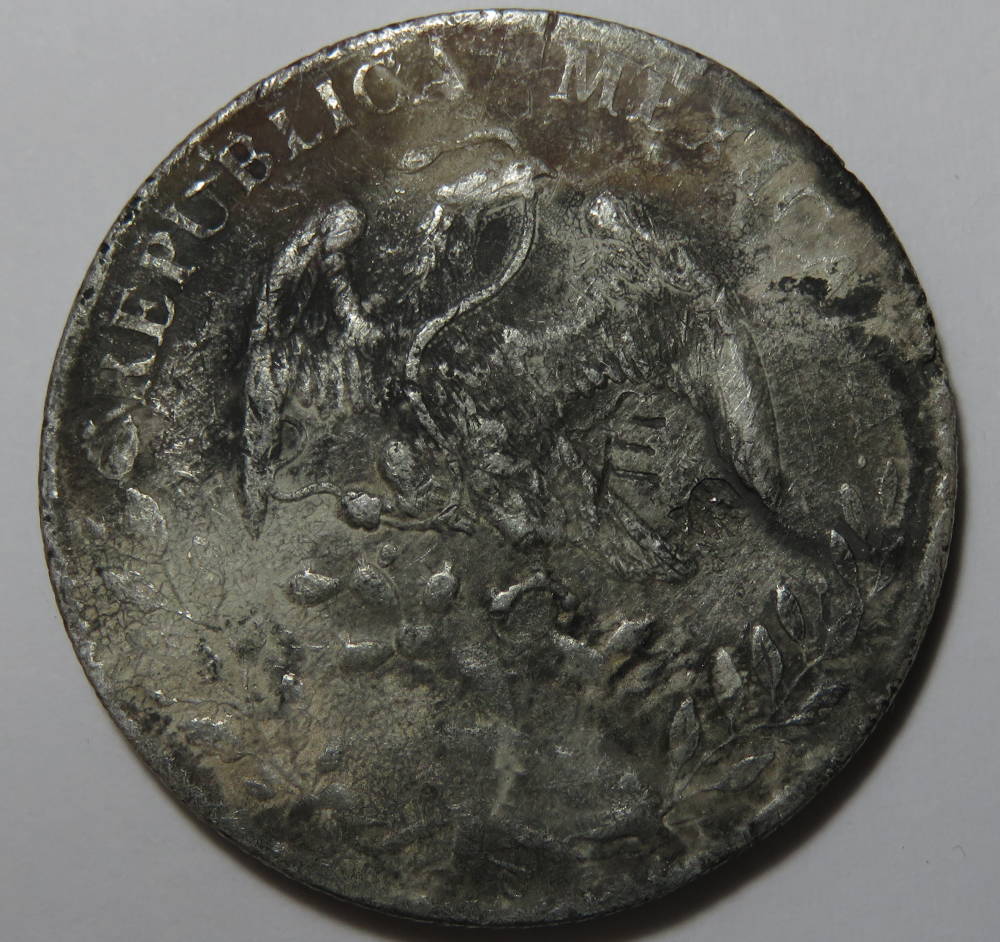
The (obverse - eagle side) has several spots that show the heat reached plastic state or possibly beyond that point. Anyone who has ever cast their own bullets or fishing weights should understand what I mean.
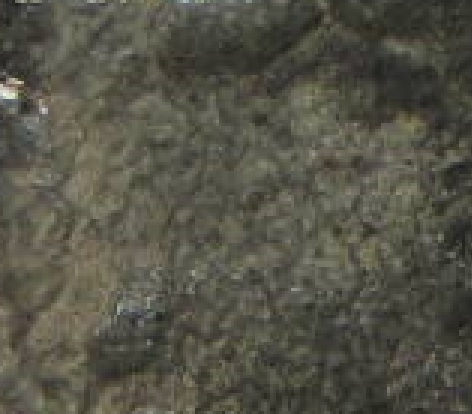
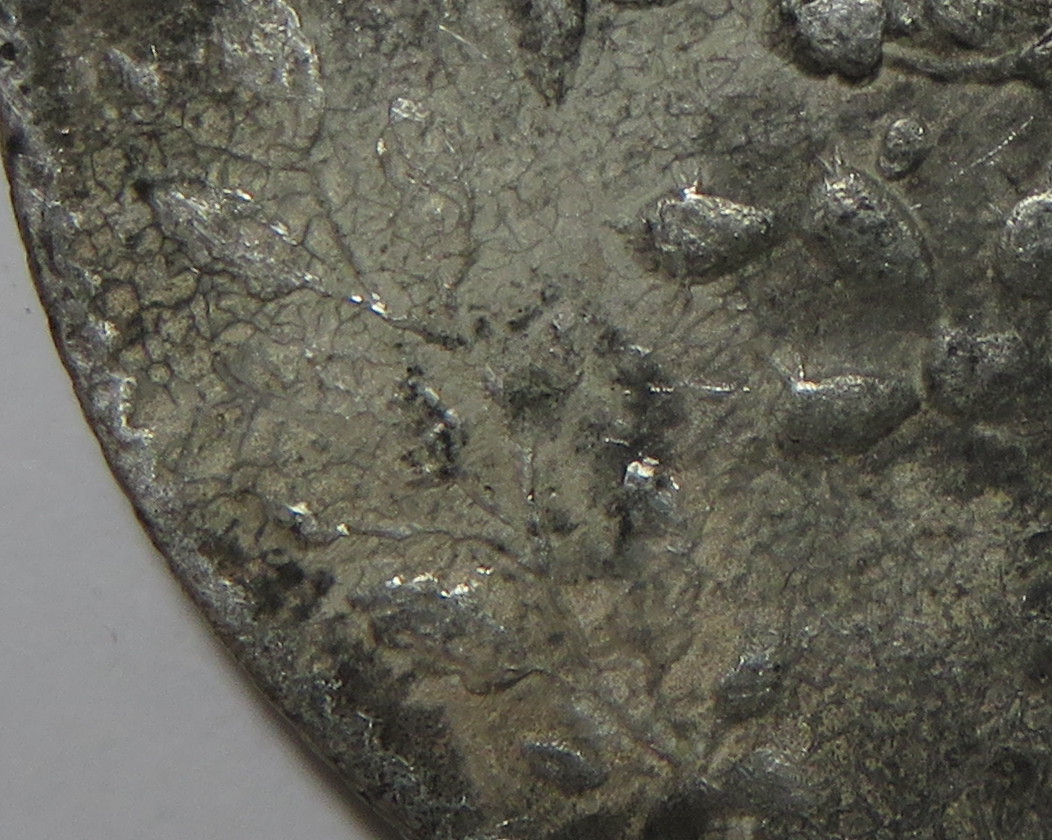
This picture shows surface crazing - small cracks that look like the bottom of a dried mud puddle. That is seen when silver cools after approaching but not crossing the melting point (silver bends under its own weight at this point.)
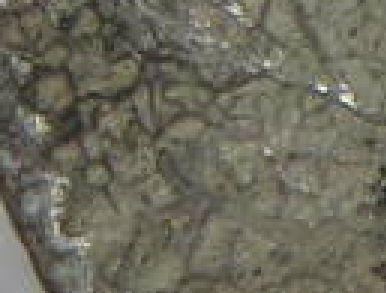
This picture shows a nearby area that may have melted at the surface and then re-solidified from a liquid state. The surface of a melting piece of metal resembles "rounded" cracks like bubbles as opposed to cracks that intersect at angles.
Why is this critical to density? Pure silver melts at 1761 degrees F (961 degrees C). Sterling silver (0.925) melts at 1640 (893) and coin silver (0.900) melts at 1615 (879).
Notice that the addition of copper lowers the melting point of the alloy.
At these temperatures near 1600 degrees F most organic contaminants found in older silver can volatilize (turn to a gaseous state). This gas can force the plastic (softened) silver apart. When the coin cools the gas condenses and leaves a vacuum inside the coin. These small but empty bubbles occupy space (volume) but contribute no weight. The mathematical effect is to lower the apparent density of the coin. The temperature and the contaminants combine to lower density.
Here is a second way of loosing density/weight in a silver coin. A fire fed by wood will reach just over 1000 degrees C. So a wood fire would melt a silver coin (about 900 fine) eventually.
Lets say that the fire also contained a lot of sulfur (from paper, cardboard or another source) and a reducing agent such as zinc. The sulfur could theoretically combine chemically (re-dox) to create a copper II sulfate that would degrade (disappear when heated to over 650 degrees C.) This would deplete surface copper with NO volume change but reduce the weight and density as well.
So is 10.1 a possible density? Yes because we do not know what kind of a fire heated the coin and we do not know what chemicals or compounds were present.
I agree with cara - a coin - particularly an older one can loose density when exposed to extreme heating especially when the temperature approaches the point where the alloy becomes plastic.
A struck coin is actually harder than a raw blank. That is why pure silver and hammered silver have different densities listed in most tables of density. This is due to the way a malleable metal like silver behaves under stress. Not all metals behave in this way.
The (obverse - eagle side) has several spots that show the heat reached plastic state or possibly beyond that point. Anyone who has ever cast their own bullets or fishing weights should understand what I mean.
This picture shows surface crazing - small cracks that look like the bottom of a dried mud puddle. That is seen when silver cools after approaching but not crossing the melting point (silver bends under its own weight at this point.)
This picture shows a nearby area that may have melted at the surface and then re-solidified from a liquid state. The surface of a melting piece of metal resembles "rounded" cracks like bubbles as opposed to cracks that intersect at angles.
Why is this critical to density? Pure silver melts at 1761 degrees F (961 degrees C). Sterling silver (0.925) melts at 1640 (893) and coin silver (0.900) melts at 1615 (879).
Notice that the addition of copper lowers the melting point of the alloy.
At these temperatures near 1600 degrees F most organic contaminants found in older silver can volatilize (turn to a gaseous state). This gas can force the plastic (softened) silver apart. When the coin cools the gas condenses and leaves a vacuum inside the coin. These small but empty bubbles occupy space (volume) but contribute no weight. The mathematical effect is to lower the apparent density of the coin. The temperature and the contaminants combine to lower density.
Here is a second way of loosing density/weight in a silver coin. A fire fed by wood will reach just over 1000 degrees C. So a wood fire would melt a silver coin (about 900 fine) eventually.
Lets say that the fire also contained a lot of sulfur (from paper, cardboard or another source) and a reducing agent such as zinc. The sulfur could theoretically combine chemically (re-dox) to create a copper II sulfate that would degrade (disappear when heated to over 650 degrees C.) This would deplete surface copper with NO volume change but reduce the weight and density as well.
So is 10.1 a possible density? Yes because we do not know what kind of a fire heated the coin and we do not know what chemicals or compounds were present.
Edited by swamperbob
11/04/2016 02:44 am
11/04/2016 02:44 am