









 Posted 11/08/2016 01:12 am


Quote:
1) What is the maximum magnification of the Minolta 35-70?
1) What is the maximum magnification of the Minolta 35-70?
Exactly as you say the maximum magnification, without extension is 1:4.
Quote:
I'm curious if it has high enough mag to be used for shooting Dollars on APS-C. You need around m=0.4 to fill the APS-C sensor.
I'm curious if it has high enough mag to be used for shooting Dollars on APS-C. You need around m=0.4 to fill the APS-C sensor.
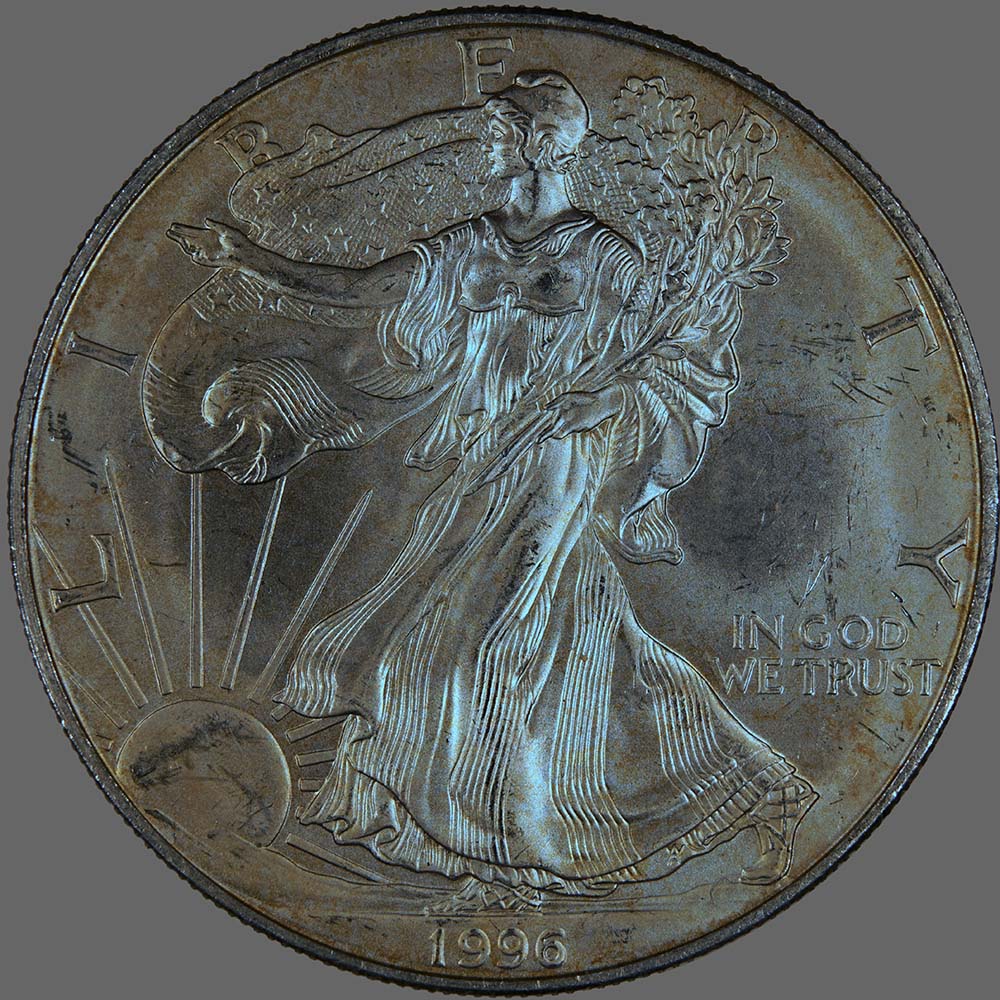
On my bellows with the lens set to 1:7 (0.14X) It was easy to get the lens to 1:1 and higher (It filled a full frame sensor with a penny)
Here is a shot ( just a quick test shot so its not a good one) taken with the 35-70 mounted on bellows the coin filled the sensor:
Quote:
I see a reference to setting macro switch to 1:7...what is this?
I see a reference to setting macro switch to 1:7...what is this?
To use the lens for macro this particular lens( and the Leica examples) has a small switch that you use in conjunction with the zoom ring. You turn the zoom ring until you hit the stop at 70mm, then press the switch and this allows you to move the zoom ring past the 70mm point and then you can adjust the zoom between 0.14X and 0.25X. MY understanding is this switch ( in combination with the zoom helicoid) also adjusts the lens elements so the that the Field of focus is flattened( by how much I don't know)
Quote:
2) What teleconverter did you use? .............................. It almost looks like you lost critical focus.
2) What teleconverter did you use? .............................. It almost looks like you lost critical focus.
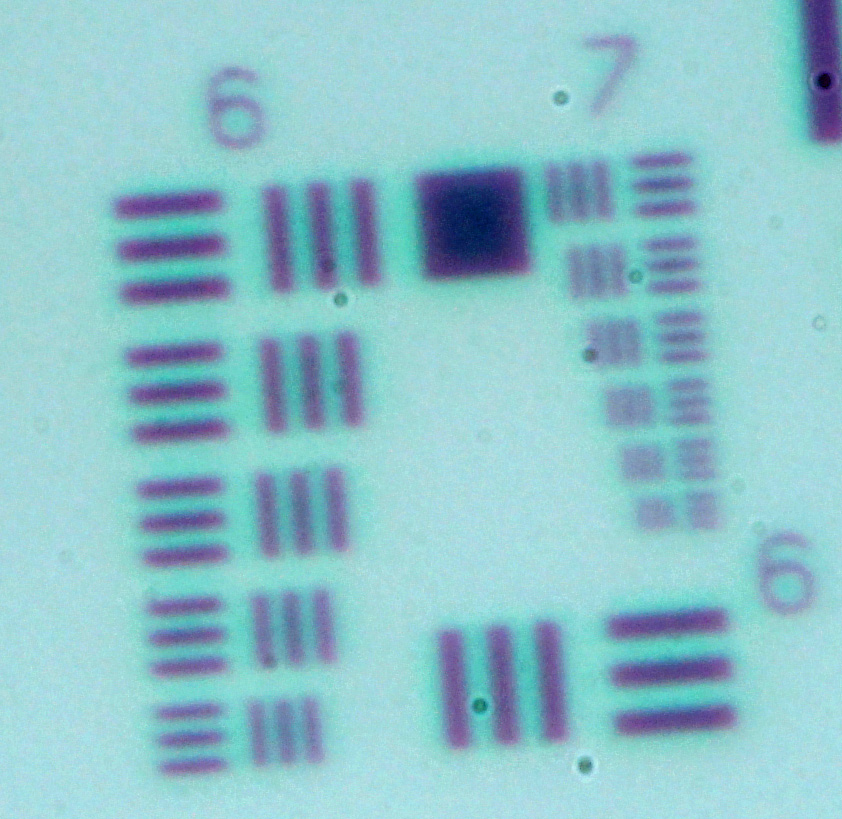
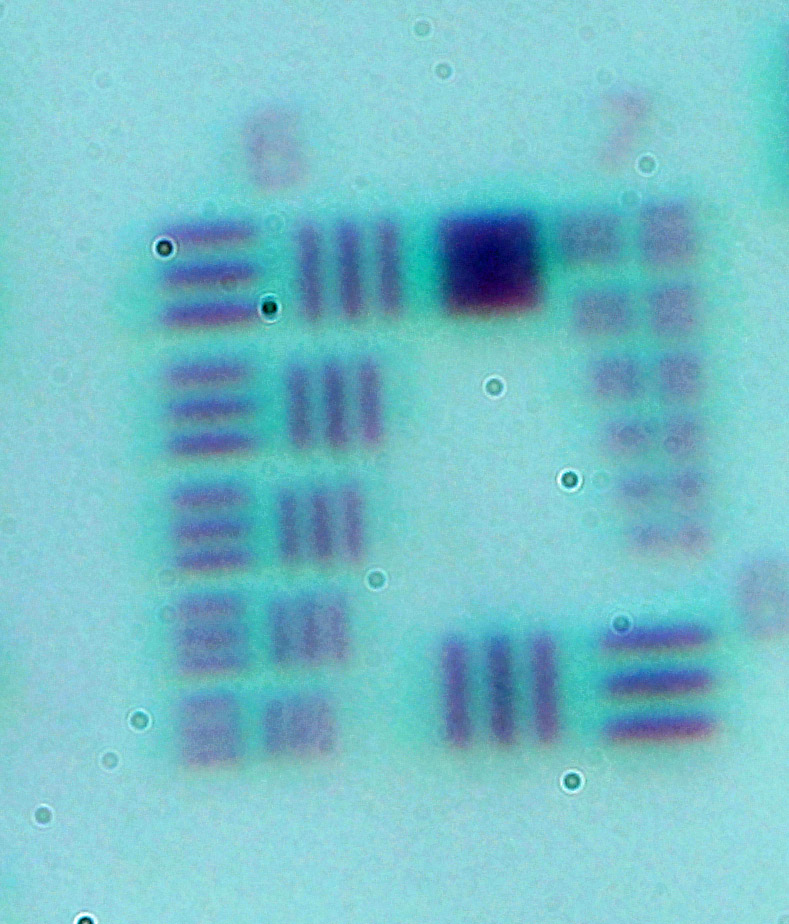
Minolta 300S which is a 2X Achromatic teleconvertor. I didn't loose critical focus I repeated the exercise three times to ensure that this didn't happen( basically I made sure my results were repeatable). I first noticed the issue when comparing some shots taken at around 10X magnification, despite the diffraction the shots taken using bellows extension had significantly higher IQ than those using a tube lens and the teleconverter.
Quote:
I've never seen that kind of IQ degradation when using teleconverters.
I've never seen that kind of IQ degradation when using teleconverters.
I have to ask have you really looked? I ask that as your statement seems to mismatch the context within which I was reporting my experiences.
To expand:
At this microscopic level, that this resolution test was conducted at, the camera's sensor, a full frame 42MP, has a resolution limit of group 6 element 3. So even in the teleconverter picture the demonstrated degradation is occurring at a level beyond the ability of the sensor to resolve. I would anticipate in "normal" magnification shots of coins( based on my recent experiences; from 1:4 times through to 1.5:1) the only observable degradation might be some minor loss of contrast. On a lower resolution camera it would be even harder to notice any difference. { on a higher resolution camera it would be much more noticable: I didn't try but I suspect the results on a MFT camera would even worse. this is taking into account the smaller pixel size and the increased noise of an MFT camera}
AS I stated I only noticed the issue when comparing high magnification by extension, with those made using lens stacking plus the 2X convertor.
In normal photography I have always taken note of the oft stated and repeated warning that 2X teleconverters degrade image IQ. Many people recommend 1.4X teleconverters for that reason. There is nothing wrong with my 300S teleconverter( apart from not being APO) it performs solidly when paired with lenses such as the Minolta MD 24mm 2.8 VFC( a unique perspective control lens), Minolta MD 135mm F2 and the MD 200 F2.8. However what the test has told me( confirming my experience) is that using a 2X teleconverter to get to 10X magnification is going to disappoint. Edit: I had dismissed theidea of buying a Mitutoyo 10X objective some time back but with my recent experiences I am really starting to reconsider the situation. I can get 10X magnification using a reversed 40mm F 2.8 but the required extension is cumbersome to use,.
Here are the points ( summarized and quoted from the book "Digital Photography For Science" Section 6.3.4 pages 313 - 315) made by Enrico Savazzi:
1; Teleconverters magnify any lens aberrations and reduces the lens resolution by the same factor it increases the focal length.
2; Teleconverters of a low magnification produce lower degradation.
3. 2X teleconverters produce visible decrease in image quality( certainly my experience has reflected this)
Savazzi concludes the section saying:
(page 315) any typos are mine
Quote:
In principle, teleconverters can be combined with extension tubes and/or add-on lenses. However, this technique is not recommended, and rarely makes sense in close-up photography. In an emergency, and in the lack of optimal equipment, a photographer may combine these accessories in order to achieve an otherwise impossible amount of magnification
In principle, teleconverters can be combined with extension tubes and/or add-on lenses. However, this technique is not recommended, and rarely makes sense in close-up photography. In an emergency, and in the lack of optimal equipment, a photographer may combine these accessories in order to achieve an otherwise impossible amount of magnification
My testing illustrated what Savazzi had stated, and also reminded me to read the book/conduct proper research before trying any new technique( and buying new gear). I don't doubt that at low magnifications ( 5X and less) with low resolution cameras the image degradation produced by a teleconverter will be minimal to the point of not being noticed. But I have to add, at those low levels of magnification why bother?( rhetorical). A reversed 50mm F 2.8 enlarger lens on extension tubes or bellows will cost the same (or cheaper) than a teleconverter and achieve better results.
Edited by austrokiwi
11/08/2016 03:26 am
11/08/2016 03:26 am


